Smelling the Lilies

Star Lilies 4       Of all the flowers with delightful scents, there are three that are favorites of mine: Lilies, Roses, and Hyacinths. So it was that when I was shopping in Trader Joe’s last week and saw the Star Gazer Lilies for sale I could not resist buying a small bunch and bringing them home. As I had hoped they would they have filled our small apartment with their wonderful scent.

As I sit here writing my column I am breathing it in. As I do, these colorful lilies with their glorious perfume remind me over and over again how important it is to give to myself as well as to others. It has taken me more than a few years to recognize the importance of doing that. My dear mother called such thinking selfish. She was raised in a home where children came last, after guests, parents and other adults. To think of oneself first, if at all, was not encouraged.

There was no intentional cruelty involved in this attitude. It sprang from a different way of seeing the world and of acting on that viewpoint. There is a strong behavioral edict that sprang from traditional thinking that it is better to give than to receive. While it is good to give, there are psychological reasons that were not taken into account by this edict that need to be addressed. In addition there is the question of balance versus imbalance to be considered.

I was raised in much the same way. I remember once being surprised when a friend said that we must be home by four o’clock for her children’s TV program. That the wishes of children were something to consider was a new thought for me. As a young mother it never occurred to me that children’s choices were anything to be considered.

In the years since then I have done a lot of learning. A most important lesson of my lifetime has been that if I do not give to myself I will not have much to give others. My cup must have something in it before I can give from it freely. My giving must be in balance with my receiving. What I have discovered, sometimes the hard way is that if I give only to others and not to myself I develop unconscious resentment that can lead me to act unkindly, or be overly critical without meaning to. This can creep up on me and I need to make sure I notice it when it happens.

From the time I was small being kind has always been very important to me. Thus it has become vital that from time to time I assess my behavior to make sure I have been giving to myself enough to balance my graciousness to others. It is not always easy to remember to give to oneself. It often initially feels so good to give to others that it is easy to forget to include oneself. As I inhale the perfume of the wonderful lilies I am reminded again of how grateful I am for this gift I gave to myself, and of how glad I am that I bought them.

Text and Photo by Tasha Halpert

The Importance of Mental Focus

Crystals5When I began to meditate I noticed that I was much more aware of the contents of my mind. The longer I practiced meditation, the better I became at following my thoughts. This ability has grown for me over the years, and I am very grateful to be able to be aware most of the time of what I am thinking. The reason this is so important is that it enables me to monitor my mental focus.

The importance of mental focus cannot be overstated. Certain habit patterns are built into the human psyche. They are intrinsic, an inborn aspect of our consciousness. They are intended to function as a kind of safety mechanism for keeping us alive. One of these is the “fight or flight” response. As you may know, the human body is programmed to react to any perceived threat with the appropriate input for what it believes is required.

I have read statistics to the effect that much of our modern high blood pressure as well as other stressful conditions of the physical body have come about as a result of this built in response to perceived danger. This particular response was useful in the days when death in the form of an enemy or feral beast lurked behind any bush or tree. It was important when the crocodiles in the river were patrolling for breakfast. It was helpful when the early settlers of any new homeland encountered its dangers.

Now for the most part it is not only unnecessary to modern life but actually harmful. Yet in times of perceived stress our bodies continue that response. The perceived stress could be a need to get somewhere on time or to dodge someone’s criticism as a result of inadequate preparation. It is seldom a response to a true threat of death or physical harm.

One of the main ingredients of this response is that our minds have a built in tendency to notice what is wrong. This can be very helpful if, for instance, you wake up in the night and hear sounds you know are not normal, or you suddenly notice that your child is very quiet and might therefore be up to some mischief. However, as a general rule, consistently noticing what is wrong can lead to a focus upon it that prevents us from seeing what is right and good.

When I practice actively looking for all for which I am grateful, I am much less apt to be focused on what may be wrong. If there is real danger or a need to notice that something is amiss, I know I can and will. However for the most part when I focus on that for which I am grateful, I am much less focused on the negative thinking that can lead to any number of difficulties. The key to success is being mindful of the direction of my thoughts. That way I can reinforce my positive focus or change the direction of my thoughts if I need to.

Photo and Text by Tasha Halpert

Cooking With Love and Parsnips, by Tasha HalpertSnow scene 3

I believe that when you cook with love because you love to cook, the food tastes better. From the time I was small I have enjoyed and appreciated all things to do with cooking. One of my favorite occupations as a child was to arrange the items in the pantry off our kitchen. The wide shelving held all sorts of pots, pans, bowls, and other cooking supplies. In my mind I can still smell the wooden shelves covered with shiny oilcloth. Was it held on with thumbtacks? My memory stops there.

My mother considered food to be for nourishment, not pleasure. She used her food money carefully, and she did not like to spend extra money on the ingredients for desserts, which was all she permitted me to cook. She never ever baked anything, nor did she use much in the way of herbs or spices. My dad never cooked, nor did anyone else in my family. Why I so love to cook is a mystery to me.

Another reason my mother didn’t let me cook was that she considered me careless and irresponsible–perhaps I was, though most children without experience might be considered so. Occasionally I was permitted to make brownies and later, salads. As a young bride I had to teach myself to cook from a cookbook. Today although I have a fine collection of them, I seldom refer to my general cookbooks except for inspiration, unless I am baking. Successful baking generally requires exact measurements.

I also have many small cookbooks in my collection. These include recipes collected for church fund raising, pamphlets featuring commercial ingredients, and others that friends have given me. Most have one or two recipes I refer to on a regular basis that can be found nowhere else. While many of the small collections are for baked goods and casseroles there is one in particular that I have found to be very useful: Marjorie Standish Chowders Soups and Stews.

The recipe in it I have used most is for Parsnip Stew. Being a lover of parsnips for their sweet, meaty taste, I was delighted to come across this recipe. Easy to make and universally popular, I thought my readers would enjoy it. Although the original calls for salt pork, I make it with butter and a touch of olive oil. Ingredients: 2 tablespoons butter, 1 tablespoon olive oil, 1 small onion diced, 2 cups peeled, diced potatoes, 2 cups water, salt and pepper to taste, 3 cups cubed parsnips, 1 quart milk–any kind will do; Being somewhat lactose intolerant I use oat milk.

Method: Melt butter and add onion, stir and cook until transparent. Add potatoes and water, salt and pepper. Bring to a boil then simmer for 10 minutes. Add parsnips, bring back to a boil, simmer 10 more minutes. Test for doneness and add milk. Heat to serving temperature or pour into a container and store until ready to reheat. Serve with several tablespoons or more of minced parsley.

Love Begins With Me

Love Begins With Me

While little children learn to love by observing the behavior of those around them, they also, as any parent of a toddler knows come with a built in ability to love. The human heart has an inborn tendency to emotional cherishing. From what I have seen both on television and in the movies, this is true of other mammals as well. Perhaps it is chemistry, or maybe it is a gift from the Creator, however it is certainly evident, especially in small children.

Furthermore, the emotional heart that dwells within us is infinitely expandable. However, in order to keep expanding it needs to stay elastic. This elasticity requires a certain amount of maintenance. When individuals harden their hearts–even if they do it because they feel they must in order to survive, they reduce the heart’s elasticity, and possibly begin a process that will eventually result in the heart’s inability to expand at all. The way the heart becomes hard is through the resistance to and denial of pain.

That is not say it is easy to admit pain into the heart. There is so much of it around. The media confronts us with pain at every turn. Each day when I open my computer I am confronted with samples of disaster or tragedy, sometimes many of them. In our personal lives there is much opportunity for pain of all sorts even in the best of lives. Major trauma can strike at any time, and on any given day there are many small deaths or sadnesses to be dealt with.

When I am willing to allow my emotional pain into my heart, I also take an important step toward compassion for myself and for others as well. Compassion is a natural response to pain. Even very small children will try to comfort you if you are sad or hurt. It seems to be a built in reaction. There are animals that will do the same. I remember a day long ago when I was feeling sad and began to cry. At the time we had three cats and all three came over and tried to climb into my lap.

It can be difficult for me to open my heart to emotional pain. I was brought up not to cry, to be tough and to ignore hurt. Yet that meant ignoring rather than acknowledging it. I had to learn to open my heart enough to take in the pain in order for compassion to find its way in as well. I had to be taught to love myself enough to admit that I felt pain, and that I needed to address that pain. In this I had the help of a fine therapist. I will always be grateful to her.

By loving myself enough to be honest with myself and others, I keep my heart flexible and elastic. By comforting myself with that love, I acknowledge what I feel, and then I can do what is necessary to address that pain. Being emotionally honest is being loving to myself. When I am loving to myself in this way I expand my heart. This makes it possible for me to love others even more. The more I love myself, the more I am able to love others, and that makes me happy in my heart.

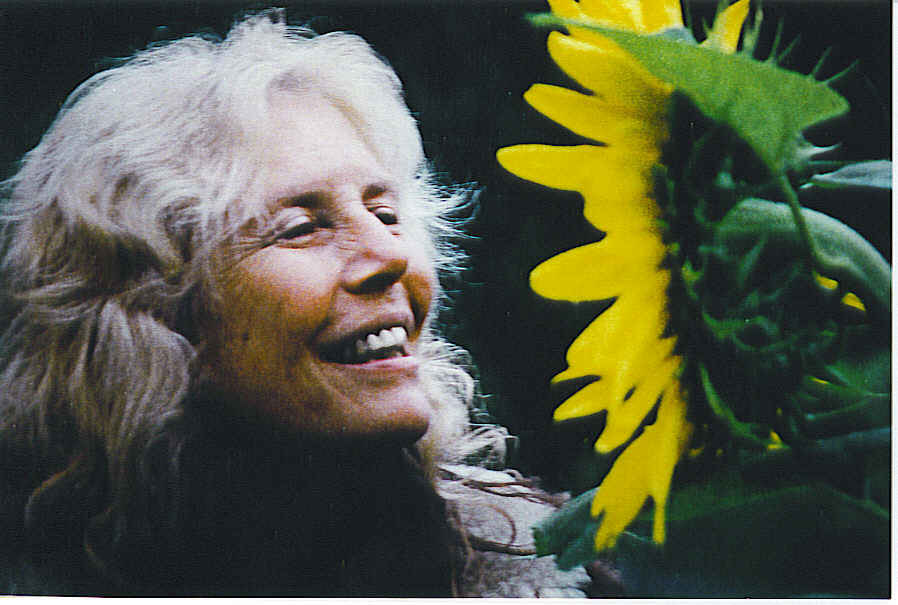
Tasha and Sunflower, best

Photo by Marcia Ruth Text by Tasha Halpert

Conveying Love

Selfi with art 4The stores are filled with red and white decorations, candy and gifts labeled for Valentines’ Day. The newspapers overflow with ads for various ways to express one’s fond affection on this day dedicated to lovers and those who love–whether romantically or otherwise. There are cards galore for any and everyone on your “fond of” list, and the internet also has plenty of humorous to mushy cards to be sent out to anyone with the ability to receive them.

Once it was difficult to convey one’s love on Valentine’s or any day except in person. Several centuries ago, when a loved one set out on a journey, most especially across an ocean, months, possibly years might elapse before they would be reunited. Letters took weeks, even months, if at all to arrive. The postal service was not organized until the 1840s when stamps were first issued.

We take the telephone call for granted. However, universal telephone service only began in the 1880s, and coast to coast long distance was not available until 1915. Not until 1927 could telephone calls be made overseas, though telegraph service was available. Twenty five years ago my daughter living in Africa and I found it necessary correspond for the most part by mail. Phone calls were expensive and unless she was home, pointless as a result of language barriers with those working for her.

Children born in the last decade have absolutely no concept of a time when communication was not instantaneous. Once the Dick Tracy two way wrist radio was a cartoon fantasy. Now there is a wrist radio that acts with your cell phone for two way communication. Until fairly recently, face to face communication on the computer, known as Skype did not exist.

The ubiquitous cell phone, first available 1983, was still fairly rare even in the early nineties. I know I didn’t have one back then, and people who did were considered quite trendy. Camera phones came into use in the last decade. Does it seem that short a time ago? It seems no time at all to me. Once something is present in our lives it is not easy to remember when we didn’t have it.

While Valentines’ day was celebrated in Europe from the 14th century on in a variety of ways, the actual Valentine card began in England at the very end of the 18th century. If you wanted to convey your affection with a card, according to Wikepedia, the first Valentines were generally available in Europe just prior to 1800, and in the USA in 1847.

Today Internet cards are often sent instead of paper ones. However, it really doesn’t matter how our love is conveyed or what method is used to share it. To paraphrase the words of a dear friend of mine, “Miles may separate us, but in our hearts we are no further away than a thought.” There is no postage or fee of any kind for this Valentine expression.

Words and Photo by Tasha Halpert

In An Orderly Fashion

Column VistaIn An Orderly Fashion

Remember fire drills? There are even some of my readers who might remember such a thing as a bomb drill. When the bell clanged we were always told to “proceed in an orderly fashion.” I suppose that meant lining up and staying in line so the teachers or whoever was shepherding us could keep track. In an orderly manner usually meant no talking, and certainly no fooling around.

I think about this phrase sometimes when I am dithering about my apartment working to get things done. Being a writer I spend most of my time at home and can make my own schedule. This has its positive and its negative points, because I do not have the same parameters necessitating order as someone working outside the home, however I do need to make my own order.

There is priority, there is the immediate demand, and then there is what I hope to get done. Each day presents its challenges. I can only do my best. For instance, take the insistent telephone. say I am about to begin a task when it rings. Stephen would tell me to ignore it, and my experience is that if I do it will only create another difficulty I haven’t anticipated. I answer the phone, conduct whatever necessary conversation and go back to what I was doing. Meanwhile, I may have lost the thread of the process and need to begin again.

It may be that I am called away while I am cooking. I ought to know better than to leave the stove unattended. However having had years of training as a mother to answer the immediate need of the moment, I have a tendency to rush over to do what seems to need doing. In the meantime, something boils over on the stove and that necessitates a huge cleanup.

When I plan ahead it seems to help. When I set out on a series of errands it works better if I think about the best arrangement for doing them. This works fine unless I forget my grocery list and either have to go back for it or try to remember what was on it. Stephen suggested I put the list in my purse and keep it there. I explained why I don’t: when I wish to add to it, I have to find it and write down the new item– if I don’t forget what it was in the meantime. It’s far easier to keep it on the counter.

I am all too easily distracted from my orderly progress. Sometimes this is simply my own fault. In the midst of doing what I intend to do I remember what I meant to do and didn’t, go do that, and meanwhile think of something else that needs doing. When I finally return to my original task it may have become more difficult or more complicated. The other day I realized that there is no such thing as an orderly fashion in my life, there is only keeping track as best I can and being content with that.

Text and Photo by Tasha Halpert

Unexpected Consequences: the New Tablecloth

Unexpected Consequences:

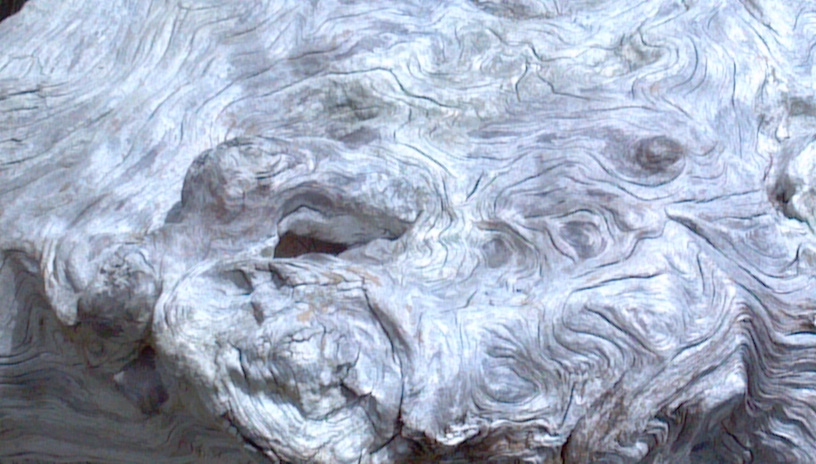
Driftwood Dragon

Driftwood Dragon

With the new year comes a desire for a new look. To that end we’ve been talking about changing some of the art on our walls for some that is presently in storage. Although the furniture in our apartment needs to stay as it is, we figured we could freshen up its appearance in other ways. Toward that end we were walking through one of our favorite home goods stores checking out the merchandise when we came upon a sale table. On it were several dark blue tablecloths.

“One of these could be a nice for our dining table,” Stephen said. “How about one of these for our home for the new year?” Searching through the pile he found a round one. Checking it out I read on the packaging that material would not allow liquids to penetrate and would easily wipe up with a damp cloth. Deciding that this was a win/win situation, we brought it home and put it on the table. It looked splendid. I was curious to see if it would live up to its promises.

It did. The first time a few drops spilled on the cloth they beaded up and were easily blotted away. I was duly impressed. Several days later I tried sponging off the occasional spots that had occurred since, and they too came away relatively easily, leaving the cloth looking as pristine as ever. However I discovered one drawback: Being dark blue it also revealed the presence of all crumbs, bits of herbs and other mealtime sprinkles. If it is not cleaned off after a meal that produces any sort of small debris, the table looks messy.

Thinking about this I realized that life can be like that. Promises are often fulfilled as they are spoken and things work out as indicated, yet other factors I haven’t planned for or thought of may complicate matters. I’m not complaining, I often find it humorous when I have to cope with the unexpected results of what appears to be an improvement or an upgrade. Fortunately, the small dust buster vacuum I had purchased along with its big sister does a fine job on the crumbs. So that situation is not a big deal, just something I didn’t anticipate.

The lesson I took from this experience is that it is important to be flexible, and to not be concerned when the unplanned for experience arises. What often happens for people is that they focus on lamenting the difficulty rather than seek a solution. This attitude can be a result of what is termed the “victim mentality” or the “Oh poor me” syndrome.

What needs to be realized is that complaining only postpones the discovery of a solution because the focus is not on the resolution of the difficulty but on the difficulty itself. This attitude is a blind alley that leads nowhere. When my focus is correctly directed, most often I find a solution without much trouble. In this case the crumbs are nicely swept up with little effort and quickly disposed of. As my dear son Robin used to say, flexibility is the answer to so many problems, and I would add: correct focus.

Words and Image by Tasha Halpert

The Blessings of Simple Pleasures

Queen Ann's Lace with BindweedThe Blessing of Simple Pleasures,

by Tasha Halpert

I was fortunate in that I learned fairly early in life to practice my attitude of gratitude. There were two experiences in my life that prompted me to do this. One came in the form of a telephone call from a friend and teacher telling me to be grateful and to say this prayer of gratitude daily: Beloved Lord I do greatly thank Thee for the abundance that is mine.” When I protested she said sternly, “You have much to be grateful for–a roof over your head, food to eat, people who love you, now do as I say and repeat that prayer at least three times daily.” Because I respected her, I did as she suggested.

That was the beginning. Then I encountered mysterious woman at a spiritual gathering who told me a little about myself and then said, “Never take anything for granted.” Her words gave me pause and have resonated in my life ever since. At the time I did not know that my entire life would change radically within weeks. And while it changed for the better, almost everything in my life as I knew it then disappeared to be replaced by new and different circumstances. Nothing could have prepared me for that, however I was blessed to move through it to a new life for which ever since I have been grateful.

That was a great many years ago; and much time has passed with many experiences lived through. As I have moved through them I have grown in the expression of my gratitude. Nowadays when I turn on the shower on a cold winter evening and climb into its warmth, I give thanks. Although they may not live close to me, there are many who do not have the luxury of hot water from a faucet. When I cuddle my clean cotton sheets and the warm covers on my bed around me, I think of, and send a prayer for those who are homeless and have little to comfort them in the cold.

An attitude of gratitude as we are often reminded by teachers from Oprah to Eckert Tolle is one of the pillars for the foundation of a happy life. My own personal experience has proved this to be true. I have also learned to realize how important it is to be grateful for that which at first seems less than fortuitous. However in general I prefer to focus on those things that bring me joy rather than those that do not, even while being grateful for those as well.

Small and simple pleasures–a phone call from one’s child or grandchild, the wagging tail of a treasured animal companion, the smile of a neighbor encountered unexpectedly in the supermarket, or the friendly help of a stranger in locating a hard to find item–these lovely, serendipitous experiences provide a splendid symphony of joy. As I live my life, it plays in the background as an accompaniment to my everyday doings. Listening to it I am reminded again and again to be grateful.

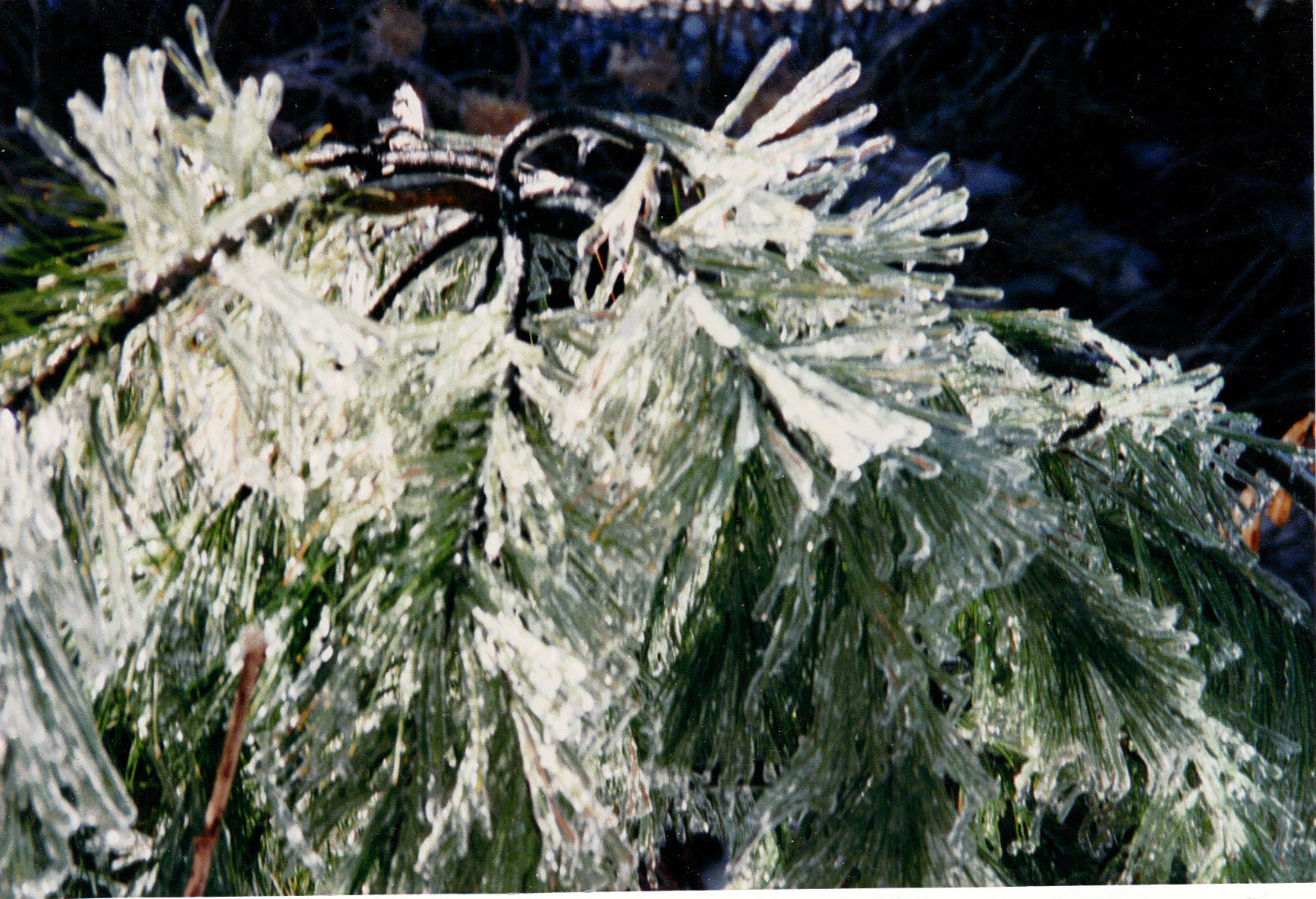
Here Is My Feast Of Crystal Splendor

Now the landscape is still.

Grasses are stiff, rimed with frost.

Bare trees sleep,

dreaming of warmth as yet  distant.

But a new beauty imbues their branches

their essential selves emerge

in a pattern of graceful tracery

against the winter sky.

I am become ice,

caressing the garden with my cold kisses,

taming wavelets to stillness.

Here is my feast of crystal splendor

displayed in masses of diamonds

that sparkle everywhere to see.

How beautiful I am,and how pristine.

relish my beauty,  but do not touch me

lest you suffer from the frost.

I magnify the light,

extending its power to dazzle the eye.

Soft snow shrouds me in a white fur cloak,

muffling sound, softening hard edges.

But I crack branches,

scour stones, and buffet cliffs.

Locked out of life I pry at openings to get in.

I am envious of warmth,

nd will not melt before my time,

nor give way when the light begins to lengthen.

Some call me cruel, others kind,

knowing that  all life needs to sleep,

that old forms crumble to make way for new.

But  light  persists. At last  I soften in the warmth,

beguiled,  I loosen my clasp until

irresistibly compelled I yield myself at last

to Spring’s embrace and fall asleep

to drowse the warm away

knowing one day I will return.

Photo and Poem by Tasha Halpert Winter  Day Ice

The Gift and the Wrapping

by Tasha HalpertKathy's Christmas tree

Being somewhat uncoordinated when it come to things like wrapping packages, I have always struggled with trying to make my presents look reasonably attractive. Some people are really creative with how they wrap their presents. I envy them. I wish I had that kind of creativity. My mind tends to run along more utilitarian tracks and I don’t always think to add the trimmings.

I have a friend who does lovely wrapping. She told me about the finishing touches she had put on the colorful hand made gifts she had crocheted. She went on to tell me that someone said to her that the decorative packaging she had purchased to do this was extravagant, asking why she had spent so much money on something that would soon be discarded.

I understood completely why she had wanted to do this. Her gift was special and she wanted it to look that way. Her expenditure made perfect sense to me. While I tend to be less decorative in my thinking I can admire someone who knows how to do up a package and make it look special. My artistic friend has very clever fingers and knows exactly how to fix up a package to make it look extra special. I wish I had her skills.

The care with which a gift is presented says something important about the giver as well as the gift. Stephen and I accumulate presents for family and friends all during the year; my wrapping though not fancy is part of the caring. I used to have a dreadful time wrapping presents until a friend who had done professional wrapping for a department store showed me some useful tricks. Now I can make my packages look much more attractive.

There was a time when wrapping paper for Christmas gifts was not as inexpensive or as available as it is now. When I was a child we used to save all our Christmas gift paper from year to year and reuse it as often as we could. The use of scotch tape was discouraged and gift paper was sturdier as well. I remember one special piece of wrapping paper that appeared every year on a different present. It had an elaborate design and was very lovely as well as quite durable. In her elder years as the Christmas presents were opened my late mother would spend her time folding the wrapping papers. I expect this brought back vanished memories of when we were all young.

At this season of giving many feel compelled to spend money they don’t have to buy gifts for others who probably don’t need them. The simple gift of a hug and a plate of home made cookies or a hand made card might do just as well. Even young children need to learn to be content with less rather than yearn for more. Whatever I give at Christmas is primarily a token of my affection, and it need not be expensive or fancy. I will, however, wrap it with care and love because these are the real gift I am giving.