The Habit of Being Happy by Tasha Halpert

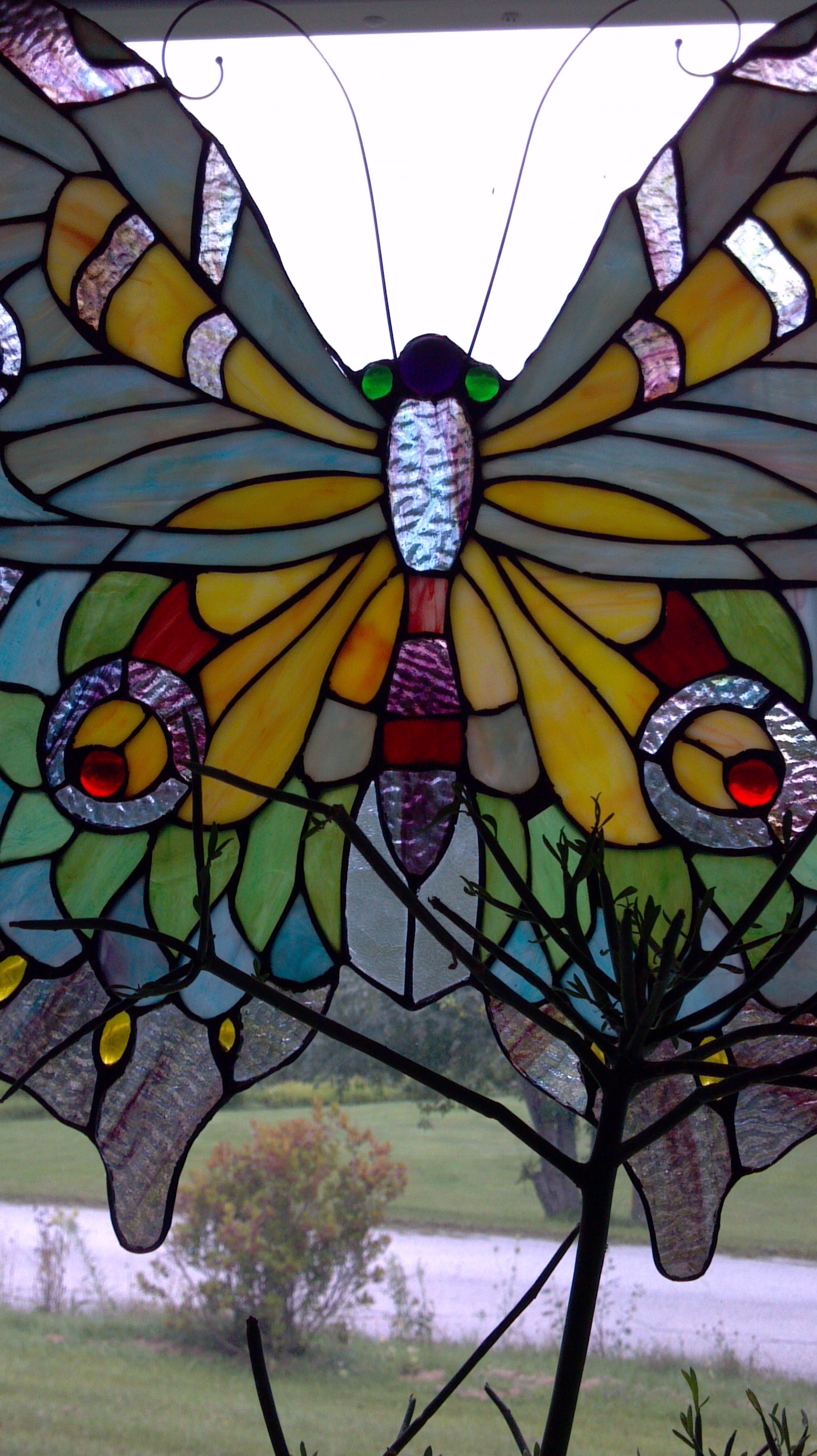
LLisa's butterfly Each day I open and enjoy a quote sent to me by Gratefulness.org, an Internet site dedicated to the expression of gratitude. Their specialty is the relaying of positive and uplifting news and views. A recent quote I enjoyed from Robert Louis Stevenson struck me as being an appropriate subject for a Heartwings Love Note. “The habit of being happy enables one to be freed, or largely freed, from domination of outside conditions.”

I know that this sounds odd, yet it has proven to me to be a truth to live by. I used to think if had thus and so or such and such it would make me happy. And it is true that making a change in circumstances can sometimes make a difference to anyone’s happiness, yet in the main it is the acknowledgement of those things in my life that I cherish and that gladden my heart that form the core of my own inner happiness.

All too often, and most especially at this time of year, the bringing of happiness becomes a selling point for practically every kind of gift or even donation to a cause. These appeals completely ignore the fact that happiness is not something that can be given or bestowed by any act on the part of someone else. Happiness can only come from within. It may come briefly as the response to the gift or act, yet that feeling soon fades if it is not habitual.

On the other hand, if I have the habit of happiness, my response to conditions that could create unhappiness will not be one of dismay but rather one of patience, tolerance, or even when I am able to see the situation in the right light, gratitude. R.L.S. as he was often known, had a great many challenges in his lifetime, one severe one being the health problems that plagued him for most of his life. Yet he persevered and wrote remarkable stories and wonderful poems that have endured in popularity through many generations.

As a child I enjoyed his poems and to this day can still quote a few. As I grew older I became enthralled by his wonderful stories of heroes and villains, Treasure Island and all the rest peopled by characters that caught my imagination and made me want to be part of their world. His adult short stores are also most entertaining. He is still one of my favorite authors. Yet I did not know much about his personal life until later on, and when I read about it I admired him even more.

A current hit song, heard everywhere these days is called “Happiness.” A catchy, bouncy tune, it exemplifies to me the light hearted feeling that the habit of happiness sings in my heart. As I work to stay with my attitude of gratitude for my life and all is holds I can feel this happiness glowing within me. It is an all season inner sense of rejoicing that helps me feel good no mater the weather or the circumstances. Practice makes perfect, and I find that this practice of inner happiness is most enjoyable.

Indulgence Versus Overindulgence by Tasha Halpert

  Stephen plopped another load of catalogs from the postman on the table. “The poor mailman must be tired having to lug all this stuff around,” he said as we prepared to recycle most of them. “I agree,” I said, “And it’s amazing how fast they found us at this address. We’ve only been here a few months and already we’re getting all kinds of stuff from our former address and other places too.” As I glanced at the shiny covers before dropping them into the wastebasket I thought about the catalogs from my childhood.

I remember when the number of catalogs my parents received were few and far between, not the quantities that arrive annually in the mail from October through most of December. For me as a child they were fun to look through and very helpful. My opportunity to shop in actual stores was rare. Young people growing up today have no idea what it might be like to have one car in the family, limits on gasoline, and no malls–only local stores.

Today’s plethora of opportunities for shopping indulgence can easily make for overindulgence. Tempting ads in catalogs, shiny online images of pretty items plus the ease of online shopping–not to mention the heaps of catalogs the postman delivers present would be Santas with a banquet of goods. Credit cards–buy now pay later, make it even easier to spend more than might be wise given one’s resources.

I remember how good I felt a number of years ago when I got my first credit card. Now I didn’t have to wait to buy something; I could have it right away. Prior to this I had to put things I couldn’t afford to pay for immediately on layaway, which meant waiting until the item was paid off to take it home. The opportunities to spend as well as the ease of access to goods makes for a potential for unexpected debt. It is amazing to me how even small purchases add up to a grand total that always seems more than I anticipate.

In addition, while the items in a catalog or online might seem quite wonderful by description, the reality may be quite different. I have all too often been disappointed in the actuality of the gift once it arrived and was opened. This is also true of food from catalogs which often is not nearly as tasty as it appears in the pretty pictures. It is not only easy but also more tempting to be less choosy when one is not putting limits on one’s indulgences.

However, as well as a downside, there is also a good side to this situation. The opportunity to indulge with limits rather than overindulge without them, can present a chance to practice restraint as well as detachment. Life, that marvelous daily Buddha, offers us many opportunities for important spiritual lessons. Reining in the appetite for spending as well as choosing wisely the absolutely perfect single gift can be a marvelous chance for spiritual practice as well as a way to save.

Deb's party food 2

Giving and Receiving

My loving Heart
gives without thought,
without stint of itself;
gives and is given in return.
And I am given that I may give,
and give that giving may be and continue.

All life is a giving and a receiving,
that the giving may have a purpose
and the receiving a place to be.
Unfolding the gifts means
unwrapping the giving
to discover the receiver
and by accepting
the receiver in turn gives
as the circle becomes complete.

With a full heart my giving is.
With an open heart, my receiving is.
The love that gives and receives
has endless supply and never lacks;
the love that gives without stint
receives the same and more,
and finds in the giving
and in the receiving
endless joy.

Tasha Halpert Pictures downloaded from my camera 2. 115

I am Thankful

Stephen and Tasha Hug          I make a practice of being thankful. I have often shared the little prayer I say a dozen or more times a day for various and sundry blessings. However it is not necessary to pray one’s thanks. It enough to simply acknowledge that one is grateful. My gratitude for what I have is enormous. I am also very grateful for much that I do not have, or may have had and no longer do.

What we have and what we do not have may both are something to be thankful for. Did you ever think back to when you were little and wanted something–a pony, perhaps? Most likely you didn’t get it, and most likely if you had you would soon have tired of taking care of it. Ponies require daily brushing, cleaning up after, feeding, petting, riding, and more: taking care of the saddle, bridle and all the required tack. They are a lot of work, and the child who wants the pony doesn’t think about that.

We seldom think about the consequences of receiving what we wish for. There is an old adage that goes: be careful what you wish for, you may get it. I remember admiring big houses, and oh how I wished for a swimming pool. One day I acquired both. That pool was more work than it was worth, although many people enjoyed it. However they weren’t tasked with the care of it as I was.

I used to think I wanted more space, and now having had two large houses–though one was smaller than the other, I have learned that every bit of space I may have requires care and looking after. I have learned to be content with a lot less space that I ever thought I would be.

As well I am thankful for those difficulties I have left behind. It is lovely not to have to clean three bathrooms each week, tend a huge garden, prune lots of bushes. When I hear a child yelling in the supermarket I am delighted it’s not my job to care for a howling toddler. I am also glad not to have be cooking a big Thanksgiving dinner and hosting a large group of people. I enjoyed and was thankful at the time I did all these things, now I am glad that time has passed.

There is much else I am just as glad not to wish for any longer. I used to think I would like to go up in a balloon, I don’t feel the need to do that any more. I don’t want to jump out of an airplane with a parachute either. I am thankful that I don’t need to do these things to be happy or feel fulfilled.

Thinking about thankfulness as I do each and every day but most especially at Thanksgiving I am struck by the way I have learned what I truly want and how fulfilled I feel. Once I yearned to be more popular. Now I am thankful for the friends I do have. I have learned that what is important to me are the small daily pleasures of contact with people and our communications. Most of all I am grateful for my beloved partner and best friend Stephen. Having a special friend with whom to share my life is my greatest blessing.

Yesterday’s Glasses

Because of the way my mind works I have a tendency to see symbolism in ordinary experiences. To me what some might call a simple coincidence is in reality synchronicity–the definition of which is a meaningful coincidence. To an extent, this is one aspect of what makes me call myself a mystic. However, I believe I am something of an anomaly, because for all my leanings toward mysticism, I am also extremely practical. As a definition, a practical mystic might be considered an oxymoron. Here’s an example of what I mean.

Today, as I prepared to make breakfast I noticed our water glasses from yesterday. They were still on the table. In order to save a bit of extra washing I use the same water glasses for each meal of the day, refilling them as needed. I always prefer to begin each day with a fresh glass. As I looked at them it suddenly occurred to me that here was a meaningful symbol. I asked myself what does it mean metaphorically to use yesterday’s glasses again today?

A fresh glass for the day could be a symbol of a fresh beginning for the whatever might happen that day. The water it would hold would represent what I might absorb in the way of observations and experiences. It could also be symbolic of what I might find to be of use to me in my thirst for knowledge.

Years ago I attended a lecture with a yoga teacher who told all his students to constantly repeat: I know nothing, I want to learn.” I remember that then I didn’t like saying, “I know nothing.” I was taking it literally. However, as time went on I recognized the words as simply being the equivalent of what Buddhists call, Beginner’s Mind. It didn’t mean I knew nothing at all but rather that I was open to learning more.

If I think I know everything there is to know about anything my ability to learn more about it is greatly diminished. When I feel as though my understanding is complete, I cannot add to it. My mind automatically becomes closed to any additional information or insight concerning whatever subject or situation I am involved in or working with. In order to do my best I need to be willing to admit to at least some ignorance and to affirm a willingness to learn.

I picked up yesterday’s glasses and put them in the sink, took fresh ones from the cabinet and filled them with filtered water from my new birthday pitcher. It is good to remind myself to remain open to opportunities for new ideas and experiences. As I get older I’ve noticed a tendency to feel as though I know lots about life and how to live it. After all, I’ve lived such a long life. However, I want to keep on expanding my mind and heart for all of my life. So besides having a fresh glass to fill each morning, I also want to have a fresh mind to fill with new knowledge and understanding

.DSCF0108Photo by Tasha

Boo

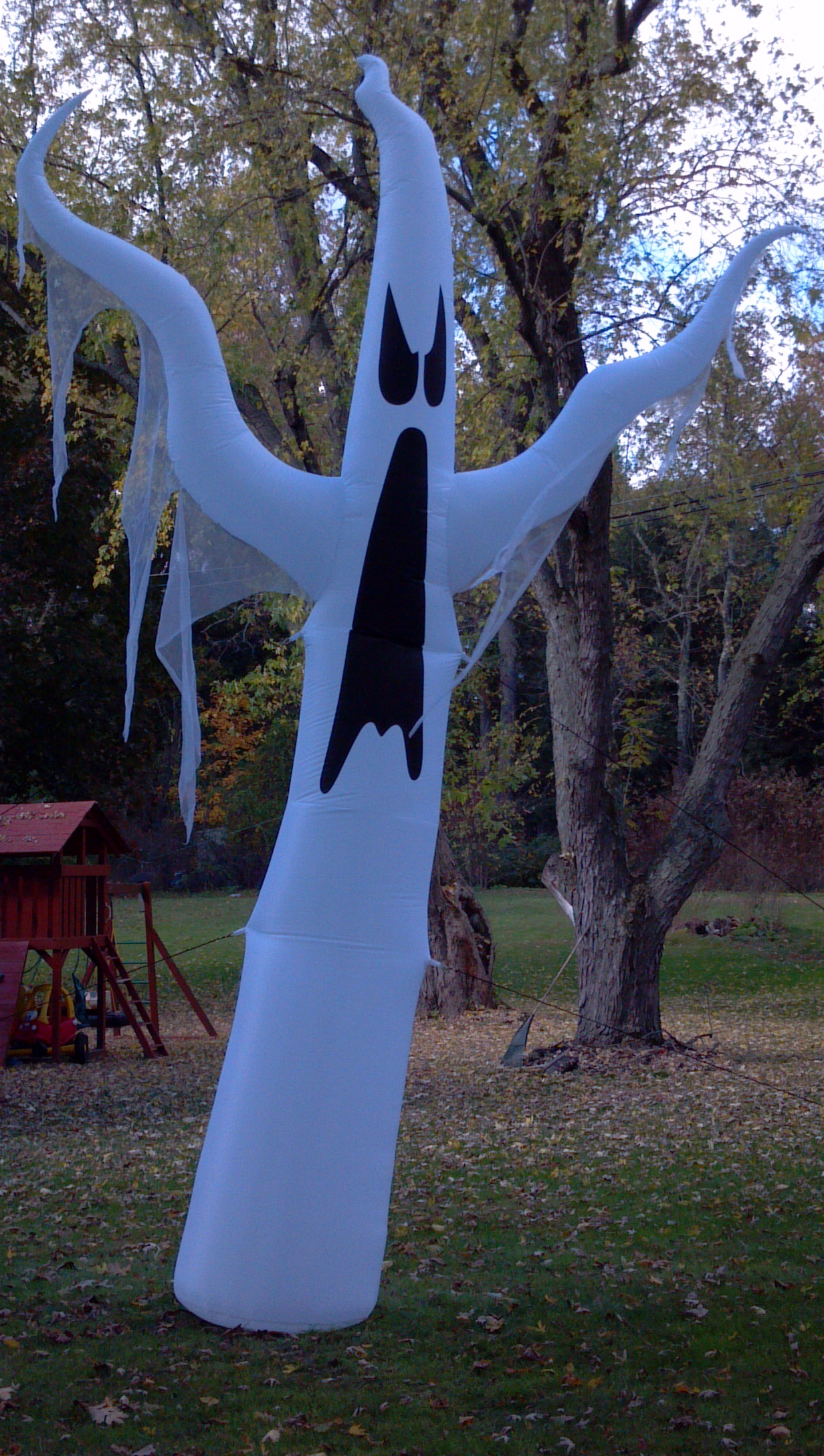
Halloween GhostieBoo!

When I was a young mother and my children were afraid in the night I used to address their fears as best i could. I remember stomping on the “tigers” that lurked in the closet. Whatever they feared no matter how silly it sounded, I treated their trepidation as real. Because of the way children were brought up then, my own childhood experience was very different. I didn’t want them to go through what I had as a young child of five, six or seven.

I suffered from what is now known as night terrors. Something I read, was told or heard would affect my active imagination. For instance, a radio tale of the collapse of a tunnel and the subsequent drownings became an irrational fear for me. For months afterward I would lie in bed shaking, afraid of death or what seemed worse, the death of those I loved. My most powerful fear as a child was of my parents dying. If I went to them with my fears they would ridicule my them and send me back to bed. Eventually I outgrew these episodes, yet at the time they were very real and painful.

When it came to Halloween my experience was also very different. When my children were little we lived in a small town where children dressed up for trick or treat and went door to door to the neighbors. I used to make them amusing costumes and even dress up myself to give out candy at our kitchen door. Occasionally they would be invited to a party.

Halloween for me as a child was mainly about carving up a pumpkin. I lived out in the country, where trick or treating was not an option. I did not really understand what Halloween was until I grew older and became interested in mythology. Then I learned that Halloween is a seasonal celebration of death. When people were closer to nature, death was everywhere and more natural. The fear was of spirits and the harm they might do. The holiday itself was celebrated as a sacred time, a kind of New Year dedicated to change of seasons.

Many of the customs surrounding Halloween evolved from observances dedicated to fearlessness. The pumpkin faces, the scary costumes, and many of the rest of the traditions surrounding this playful holiday proceed from the idea that at this significant time the gates between this world and the next are open. It was believed that spirits of the departed were free to come and go and perhaps to appear in some way. This could be good or bad, depending on the nature of the spirits. What was important was to protect oneself.

The Halloween traditions of games originally about contacting spirits for information or of practicing divination has pretty much removed the element of fear from the day. As people took Halloween less seriously, it became more of a party holiday. The emphasis on games and costumes, candy and trick or treating has turned the feast of the dead–one of the sources of dressing up and seeking treats, to something for fun. Whatever fear remains lurks somewhere deep inside. Occasionally it might even come out and say, “Boo!”

by Tasha Halpert

Making Improvements

Belfast veggies 8Making Improvements, by Tasha Halpert

When I look at a situation it is often with an eye as to what can be done to improve it. I think I developed this habit at an early age because my dear mother was seldom satisfied with anything. She always seemed to have a suggestion for an improvement. Most likely I inherited my attitude from her. However, this is not a bad way to be, and I’m not complaining. Yet it’s not necessary to see a flaw or a need. Perhaps another way to think about that is to see what I might do in general to be of help or to make an improvement..

My late son Robin greatly enjoyed gardening. He loved the earth and felt very close to nature. Wherever he was living he would plant vegetables and carefully tend them. He was proud to feed himself from his efforts. In addition as do the Native Americans, he believed in leaving a gift at the site of any herb or vegetable that he harvested. He always gave back as much as he could. The size of the gift was not as important as the effort.

I was reminded of this as I thought about what someone recently said to me: “I believe in leaving the world a better place than I found it.” The speaker went on to tell me how he had learned this when he was around ten years old and had made an effort to practice it always. This conversation stayed with me for a time, and I considered ways I might make the world I lived in a better place–not because it was lacking but because I might add something.

Paying it forward is one way to make a positive difference. There are drivers who pay the toll of the person behind them, or those who pick up the tab for a stranger in a restaurant. Some businesses do a holiday practice where small gifts are given in secret. I have always enjoyed sharing little presents or passing on what I enjoy or find useful. One friend of mine liked to say a prayer when he left any seat where he sat: “May whoever sits here after me be blessed.”

It may be that sometimes we think that small gestures are not significant. I find it is surprising how a little effort can make a big effect. Smiling at people, for instance, or saying hello to people you might not know personally. Of course there are those who might look at you suspiciously, still, it is not possible to please everyone and if a person feels uncomfortable with a smile, perhaps they need more of them in their lives.

If I can’t use a grocery coupon I leave it where it may be found. I often pay a stranger a compliment. I look around for ways to bring unexpected joy when and where I can. If I see someone who needs help I offer mine. Small efforts like these are my way of adding something positive. Mother Teresa said it so nicely: “We ourselves feel that what we are doing is just a drop in the ocean. But the ocean would be less because of that missing drop.”

Keeping My Eyes On theRoad

There is something about New England that is very special to me, and a large part of it has to do with the fall here. I grew up in a town (now) called Manchester by the Sea. Every year I anticipated the joy of the fall leaves and the crisp air that made me feel so good. A brief seven year stay in Virginia only confirmed my love of New England. I thought the weather there was much too bland. Happy to return, I have found this area to be a special place to live.

These days as I drive along Grafton’s scenic roads my eyes are drawn to the brilliant changes in the foliage. The green of summer has faded and grayed the leaves. Now the cool nights and days transform the landscape as the dusty pallor of early fall gives way to fresh reds and yellows. I can’t help ooing and ahing while I work to keep my focus on the road. I am grateful for the speed limit. It is easy to maintain it because I simply cannot drive faster and also gaze at the enthralling color.

I have loved the autumn ever since I was a young child. The smell of burning leaves–no longer common in these days of pollution control, as well as the sharp, damp smell of the brown, fallen leaves after a rain have always warmed my heart. I even enjoyed going back to school because it meant a change from being bored at home. Fall meant new things to learn and new books to read.

There are many reasons fall is my favorite season. I am grateful for the bountiful harvest of fruits and vegetables that it provides. I also enjoy the crisp air, the opportunity to wear a cozy sweater and scarf. Most of all, I love it for its rich palette of color. In some mysterious fashion each fall seems the most beautiful. It seems to me that every year the previous autumn pales in comparison to the one I am entranced by now. In addition as the days grow cooler, my mind grows sharper.

This increase in mental acuity helps me to be more mindful. Being mindful is vitally important, especially at this season, because it helps keep me focused. It is all too easy to be distracted when I am driving along past the colorful autumn vistas as they unfold before me. My attention could be caught and held–dangerous when I am driving a car.

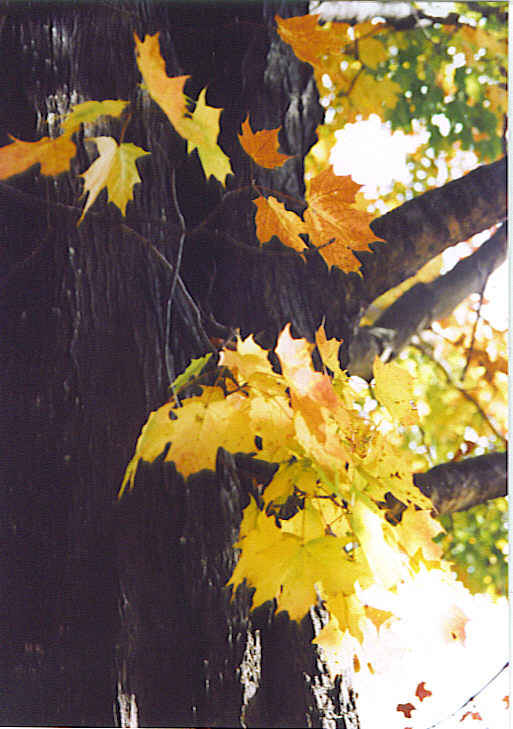
The years Stephen and I have spent meditating have had many benefits, but most especially I value the beneficial impact meditation has had on our minds. Meditation as we practice it is a way of doing exercises for the mind. The time we spend working to stay focused is like lifting weights or doing sit ups, only for mental rather than physical strength. As I drive through the autumnal glory I am grateful not only for the beauty that fills my eyes, but also for the ability I have to keep my eyes on the road.Light Through Leaves

The Permanence of Impermanence

Stones and leaves, fallThe Permanence of Impermanence by Tasha Halpert


Stephen and I were strolling along on Thayer Street in Providence on our way to meet my granddaughter who is a freshman at Brown. My daughter and her fiancé were with us, and Stephen was pointing out various landmarks from his years living in that city. We were almost to the place we were to meet my granddaughter. Stephen turned to point out a building of special significance to him, stopped still and gasped.

“It’s gone!” he exclaimed. He stood looking across the street to where the house turned shop that he had known from his childhood had been. In its place was the gaping infrastructure of a soon to be Brown University dormitory. Stephen had grown up in Providence, and his family had once owned the now totally vanished building for all of his young years. In his childhood it had housed a shop that his mother and father had managed and in which he had spent many hours as a boy.

“It was such a lovely little house,” he said. There was another house on either side. My mother ran the Scotch Shop in it, and I think she was happy there. My grandmother used to say that one day the building would be mine, but they sold it after I got married. I suppose they thought I wouldn’t be interested. Why did they have to tear it down?”

He turned to me and the expression on his face was sad. I felt for him. When something special you have known from your childhood is gone it is as though you have lost an old friend. The experience brings to mind other losses as well. I know I was reminded of other vanished childhood places as well even as people who have disappeared from my life. As a wise person who had been one of my teachers was fond of saying, “The only constant is change.”

It seems important to be able to take this kind of experience in stride. While it is appropriate to mourn a passing of significance, it is also vital to move on from it and to accept the inevitability of change. Growth cannot take place without it. Brown University had outgrown its current ability to house students and needed to expand. To make way for that, buildings or houses of lesser importance to them had to be razed. In life, what we have left behind must be removed to make room for what is to come.

As a mystic, I see a potential for symbolic meaning in this experience. Perhaps something from Stephen’s past has been eliminated to make room for something new that is being built for him. I am always curious to see what develops when a major change has taken place. Our lives are subject to the currents of energy that take us where we need to go for our next adventure. Meanwhile, as another wise person has said, there is always the laundry and the grocery shopping.