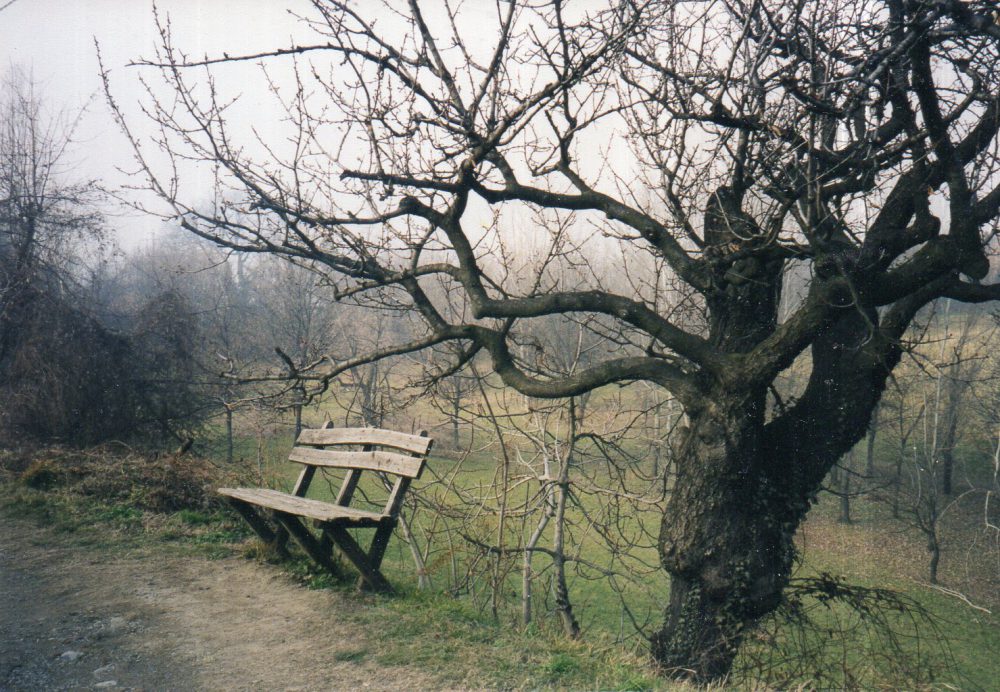
Elegy for a Friend

Into the All
Memory serves to preserve
the likeness, the beingness of you:
not bound by boundaries
nor circumscribed by circles,
tethered only by thought
you have entered
the timelessness of ever after
you have filled
your allotted space
in our time.
Deeds, gifts, words,
these remain’
to remind us of dear ones
no longer within
the warm circle of our arms.
They are now part of us
part of the heart of us
ever present
in the moment of memory,
of loving thought.
Expanded to the timelessness
that is part of the All,
you have joined
all that is infinite,
that is unlimited by flesh.
Mortal remains dissolve with time.
Memory thins, fades, shrinks.
Our dear ones live on in our hearts
until we too join them
and all our hearts are one.
Finishing a Book
 Like most who like to read I have several favorite authors whose books I look forward to. When I finish one it is always with a sigh, as I anticipate a wait of one to whatever amount of years before the next one emerges from her or his pen. I was fortunate that when I discovered one of my very favorite authors, Diana Gabaldon, she had already written seven books in the Outlander series. I found her books so fascinating that I read nothing else for nine months. This is very unusual for me. However, it was justified.
Now I have just finished reading her latest book, Written in My Own Heart’s Blood. While I don’t normally read 814 page books, hers are a very special exception. They are written with a background of accurate information about the 18th century, both in America and in Scotland, and what it was like to be alive then. The characters are vividly portrayed and their interactions are authentic as well as interesting. Even though the size of her books is somewhat daunting, they are a compelling read.
Her characters are extremely interesting. The villainous ones are seldom completely or gratuitously so; the well behaved ones occasionally misbehave. Moreover, her research into the time period she writes about is very thorough. I have learned facts I otherwise never would have known about the American Revolution together with its participants on both the British and the Colonial side. One of her chief characters, the heroine is a medical professional. Ms Gabaldon writes in astounding, sometimes wrenching detail about various medical procedures performed during the heroine’s adventures.
One of my favorite ways to occupy my mind is to think about something I am reading. I find that this helps greatly to keep me from worrying, fretting, or otherwise engaging in negative thinking. The antics and experiences of a good set of characters is a wonderful distraction from not only the usually dreadful news of the day but also any concerns I may have about things I can do nothing about.
One of the reasons I am sad to be finished with this current book, is that I more often than not thought about the intriguing characters when I was doing chores or performing other activities that did not occupy my whole mind. I greatly preferred wondering what was going to happen next or why one of the characters is acting in a certain way to being nervous or concerned about what was or was not getting done or happening.
Diana Gabaldon says it takes her four years to write one of her “big books.” I am sad to have to wait that long to read the next. If I get too impatient for the next one I can probably reread this one, as it is so rich I have most likely missed parts of it. However I am still so full with it I haven’t as yet chosen another book to occupy my mind.
What Does It Mean To Be How Old?
Young children are very definite about age. Once they know how to tell you they will often say proudly, “I’m four and a half,” or “I’m almost eleven.” They are eager to be as old as they can for however old they are. As we age we tend not to think in terms of fractions of years, and as we get older still we may even begin to fudge about the accumulation. One reason for this might be our expectations of what it is to be how old.
At an open mic I attended recently a man recited a humorous poem about turning sixty. It got me to thinking about age, and how at different times in my life I have had such different opinions about it. How old I am seems to have an influence on what I think about the number of years a person has lived. Then I recalled a conversation I had with a friend when we were both in our late twenties and had to laugh.
“I hope I look as good as she does when I’m that old,” I said. The person in question was in her very early fifties and at that time in my life she seemed to me to be positively ancient. My friend laughed and said, “You may feel differently one day.” Of course she was correct. I didn’t think much about age at the time except that to me anyone over forty must be getting on in years.
Time went by and the years I was accumulating took on more significance. I also discovered the various prejudices associated with any particular age. When I was in my fifties I thought people in their seventies or eighties were well–old. Now the more years I add on the more find myself revising my opinion of how old is old. It seems to me that judgments concerning one’s years are definitely a relative proposition.
When I was a seventeen year old high school graduate going off to college I thought and felt myself to be “all grown up.” When I married and had two children before I was twenty I felt very mature indeed. Today the idea of my eighteen year old granddaughter getting married and having children seems positively laughable. Yet no one at that time no one thought too much about it. Recently I was watching a movie made in the thirties; a white haired, obviously elderly woman with a cane proudly proclaimed herself in a shaky voice to be, “Eighty three years old.” Today eighty anything often looks nothing like that.
The world has greatly changed in this respect. People live far longer and in much better health than they did eighty years ago. When my grandmother died at what seemed the ripe old age of eighty that seemed quite appropriate. Now I have a friend older than she was and she seems far younger. When people ask me how old I am, I tell them I am ageless. I no longer have expectations concerning age. They interfere both with my own and with others’ observations about me. How old is old? I have no idea.

Perspective Makes the Difference
It is always interesting to see how different things appear as well as feel when one’s perspective has changed. The way I saw things when I was younger in years and experience has altered a good deal in the intervening years. Once in a while I am reminded of this, as I was recently in a conversation I had with a friend of mine. She was lamenting the fact that while she was happy, her children wanted things to be different.
I thought how years ago I visited my late mom and dad in the new home they had bought in Florida. Compared with other places they had lived, it seemed small and somewhat dingy. They loved it. My mother raved about her grapefruit tree, my father proudly pointed out their small swimming pool, about two and a half to three feet deep and maybe eight or ten feet square. It was inside a screened in room with a roof. Of course I said “How nice, I’m so happy for you.”
It’s true that I was happy for them, yet I felt sad too. It seemed to me that they would be happier if they were in something bigger and more grand. Previously for a few years Daddy had owned a large home in Bermuda. It had lovely gardens, many rooms and a resident ghost. The house they had lived in while I was growing up, while not grand, was quite a bit bigger and more spacious than where they were now. Even their summer home in Maine was larger than this one. How could they be content in this smaller space?
That was many years ago. I now fully understand why my parents liked their simpler, more manageable home. I’ve reached an age that is some years older than they were then and I relish the simplicity of my life in an apartment as opposed to what it was like in our two previous houses. It is a joy not to have to clean two or three bathrooms every week. I adore my little kitchen and function much more efficiently in it than in the roomier ones I cooked in, in the homes we owned in the past.
To be sure there are downsides to smaller, simpler living quarters, there is less room for possessions and that means eliminating certain items I might prefer to keep. There are limitations on what I can acquire and how much. However, the downsides and limitations are more than compensated for by the blessings.
My friend, who recently moved into a nursing home tells me she is really happy in her little space. “I wish my children could feel as glad as I do for my being here,” she told me. “I have no worries, the staff take wonderful care of me here, and I am so very comfortable.” Perhaps her children feel guilty and believe they are supposed to be caring for her themselves. That is a truism in our society, yet it is not always true. From my friend’s perspective, everything is just wonderful. I know exactly what she means.

Photo by Tasha
Complaining? Not I
 Because I went to high school in Boston I lived with my grandmother during the week. She was kind but stern. While I don’t remember why I was upset, I have a strong memory of the following incident: One afternoon after school I stood in front of her, tears running down my face. I was hoping for sympathy. Instead, she looked at me stonily and said, “You are unhappy? Just keep crying and I’ll give you something to cry about.” Unbeknownst to me then she was teaching me something important. However I didn’t recognize this for some time to come.
At the time I resented her attitude. She seemed mean and unkind. She came from the “chin up, bite the bullet” school of thought. She had been taught it was inappropriate to express one’s emotions and thought to help me learn the same discipline. It took me a long time to grow through this attitude in myself and learn the truth behind this way of thinking. Yes it is important to express my emotions, yet it is not a good idea to dwell on them.
Fast forward to many years later. I was in my kitchen in Virginia. The stove didn’t cook anything the way I wanted it to. The oven had entirely
Complaining seems to make things worse. When I try to be positive about a situation, it appears to improve. For me, focusing on the negative is a slippery slope. However, although it is not easy to reverse the downward trend I have discovered it can be done.
I began working with the situation I had rather than trying to change anything. I praised the stove I had insofar as I was able. I also called the landlord and asked him to replace the stove, which reluctantly he did. Did my stoves improve? Yes indeed they did. The next and subsequent stoves have all been an improvement on the one that helped me learn my lesson.
I stopped complaining and began looking on the bright side. I have not always remembered this lesson yet when I do, I am well rewarded. ceased to work, and I felt very frustrated. “Why is this happening to me!” I cried. This is the third stove that has given me grief. A little light went on in my head. I had complained endlessly about my difficulties with the other two stoves. This one had been difficult from the beginning. Was there a connection?
I may not immediately recognize when a unconscious negative attitude leads me in a downward direction. I need to keep an eye on my mind. However bringing up five children gave me the habit of listening to make sure everything was well. Now I listen to myself. Although it is healthy to complain, to gnaw on the bone of discontent may make things worse. While I may not be able to change a situation, I can learn to see it differently, become more flexible, or depending on the situation find compassion in my heart.
Easter is a Feast of Joy
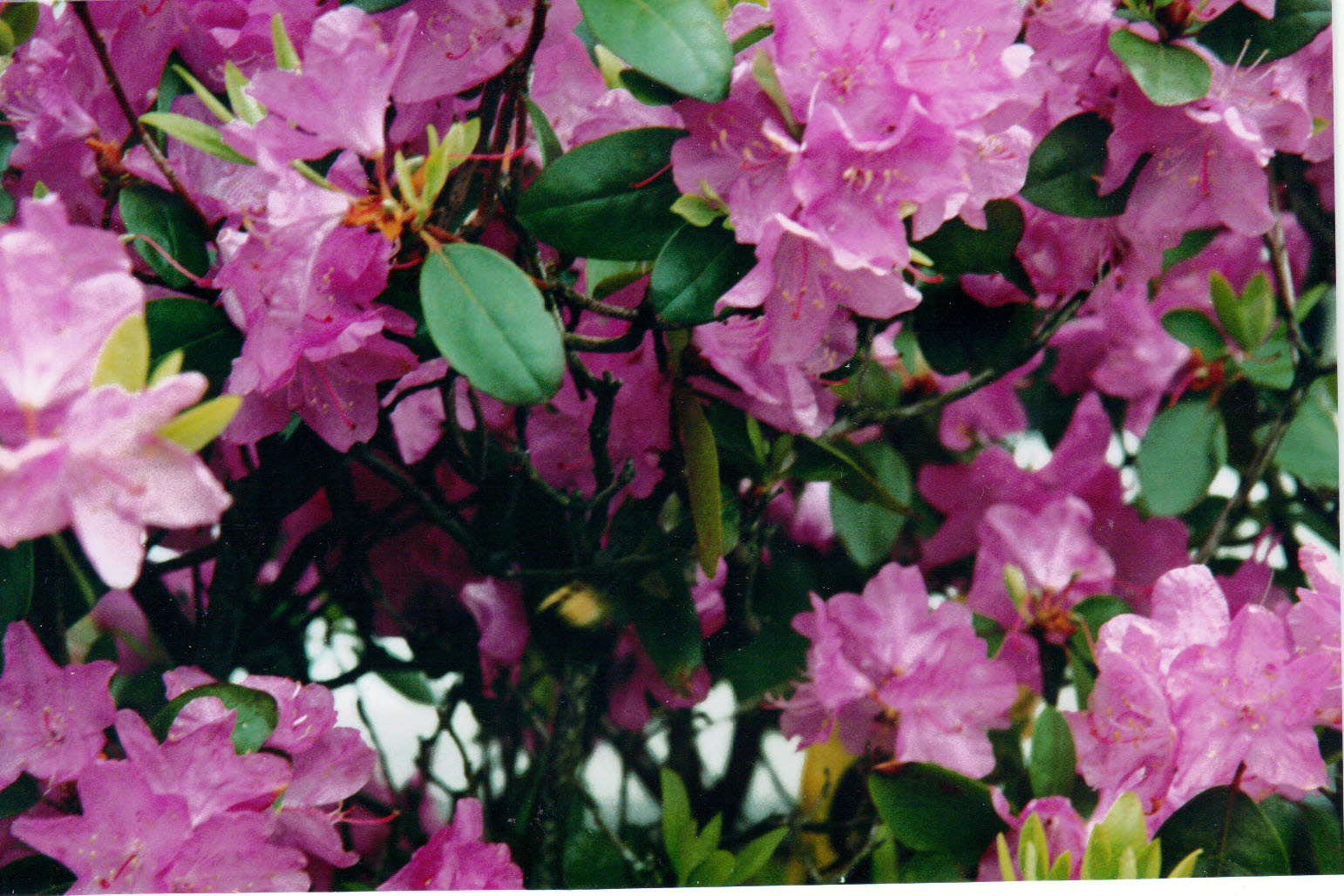 About two months before Easter chocolate bunnies wrapped in gold foil begin to appear in the stores alongside Passover coins and other items relating to these two great annual spring festivals. Slowly but surely a variety of items crowd the shelves: yellow marshmallow baby chicks and rabbits, egg dying kits, and more. As the time grows closer to the holidays, beside the glorious smelling hyacinths in the market, fragrant lilies bloom.
For me as a young child Easter was always more about flowers and the occasional candy treats it would provide. My dad’s corsages for my mother and me were a big part of my joy in the holiday. I also loved it that we got to go to my dad’s church as well as my mom’s because I enjoyed singing the hymns and was given a plant to take home. As I recall it was usually a potted geranium. Hats were important too, and nice clothes–perhaps even new ones.
As the time for celebration approaches, shoppers carry away the flowers displayed on supermarket tables. Parents make up baskets with candy eggs and other tasty treats for their children. Meanwhile, Passover foods go home to pantry shelves. Like Christmas and Hanukah, Easter and Passover are celebrated primarily with special foods that pronounce the symbolism of the season. However, both of these spring feasts are rich with family centered celebrations unrelated to a focus on commercialism or gift giving.
Easter and Passover are different from each other, yet both tell a story that is important to the traditions of Christian and Jewish peoples. Both are joyous and raise the spirits of those who celebrate. This season of joy even blooms in the hearts of those who do not celebrate it religiously. The flowers and the candy, the candles and the rituals call out to the traditions that go back more than two thousand years. There is a kind of memory that is built into our brains and resonates to these symbols, increasing the feast of our celebration.
My mother did not usually cook for us on Easter. Either my great aunt or my grandmother did the honors. I remember roast beef with Yorkshire pudding, or turkey or ham, and all the wonderful foods that went with them. Mostly, though we got to go to the family feasts where I might be given a small Easter basket and was usually the only child present.
Once primitive people rejoiced at the coming of a time when trees blossomed and green herbs provided a variety to the stored, dried foods they had subsisted on through the cold months of winter. Imagine what it must have been like to make a salad or pick wild greens to fill mouths weary of winter fare. Now though we can enjoy fresh vegetables and meats all year round we have special foods to provide a feast that not only rejoices the heart but also reminds us that we honor the great traditions of faith that have for so long fed and sustained us.
Seeds of Joy
Joy does not require anything of us. It may come as a gift of conscious acceptance of what is or is not given, or it may come as an unexpected breeze that blows through us–the sigh of an angel looking benignly down upon us wishing us well. Joy cannot be bought or sold, yet it can be spread and shared as well as flow through or be bestowed upon us.
The seeds of joy grow easily in a grateful heart. The practice of gratitude is one of the most if not the most important of all spiritual exercises. When we remember to be grateful for whatever good we have, it will increase. When we are grateful even for that which is difficult for us to endure, it becomes easier to tolerate. As I accept what is given with gratitude it can reveal its lesson and its purpose in my life.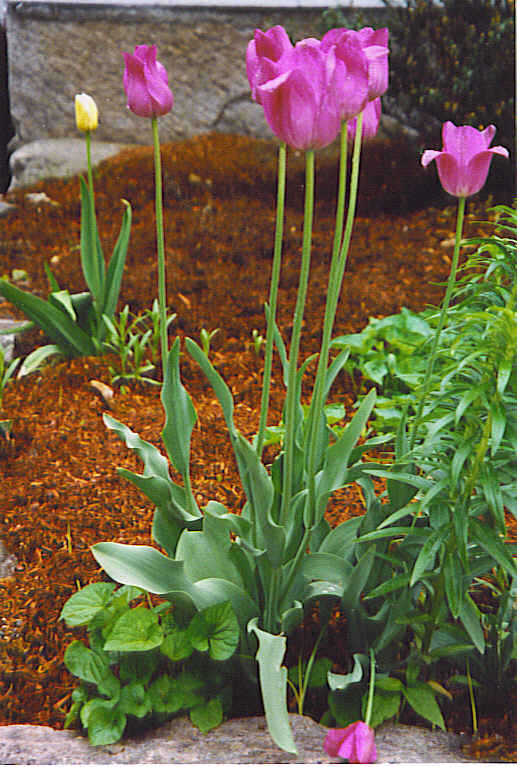
Joy, like happiness, is a byproduct of our attitude toward life. It cannot be sought, yet it can be cultivated. Joy essentially seeds itself in our lives when we feel good about ourselves and what we are doing. It is watered by love and fertilized by sharing. When I have good news, I can call my friends and tell them. When I feel joyful, I can smile at the world. It does not matter and I need not care whether anyone smiles back.
If I smile at the world without expecting anything back, I actually increase my returns because what goes around eventually returns to me. My joyous gift is made even more powerful because I have not looked for a payback of any kind. An unconditional gift generates a joy that opens my heart to a kinder, more loving energy that in turn increases my happiness.
Thicht Nhat Hahn the well known Zen Buddhist teacher suggests we smile often. He recommends a gentle, simple turn up of the corners of the mouth, a bud of a smile as he calls it. I can do this whether I feel like it or not at the time and it can bring joy to the heart regardless of the circumstances.
Joy does not need any special circumstances in order to manifest. Joy can come even in the midst of sorrow as a simple lift of my heart and the recognition that life goes on and I will too. As I am able to welcome change and all the potential it brings for my personal growth and happiness, I can also let go of the clouds of doubt that could obscure that potential.
Gratitude is like sunshine, blessing all it shines upon. Then as I am grateful for my blessings, the seeds of my joy grow and flourish. As I consciously work to accept with gratitude whatever gifts each day brings, I can discover these gifts for what they truly are: the lovely colors of my life woven into a tapestry threaded through and through with joy.
Spring Patterns
Spring crochets leaves onto branches,
stippling blue sky with green lace.
Pursed tulips await rain until sunshine
encourages petals to invite sun and bees.
Umbrella in hand, I shade my eyes
looking at the sky in speculation.
Birds crisscross skies cloudy to bright and back.
Spring is a both/and time of year.
Living a No Fault Life

Automobile insurance from Massachusetts companies is based on the principle of no fault. What this means is that if you are involved with other vehicles in a car accident, regardless who is at fault, each insurance company pays for damages experienced by their insured. There is no need to go to court, no tangle over who is right and who is wrong, or any other difficulties associated with the distribution of funds to those who need them.
What happens if this principle is applied to life? What if instead of spending time assigning blame or fault with all the resentment and anger that that can produce, no fault were placed upon anyone? If that were to be the case it could mean that any resentment or anger I might feel from a perceived injury, whether physical, emotional or psychological could be seen in a different light.
Think about it. If a cat scratches me, is it the cat’s fault, or is it simply the nature of a cat to scratch? If a small child breaks my precious piece of china or even pulls the dog’s tail, whom can I blame? Children are often careless and break things. Especially when they are very young, they may not recognize that dogs don’t like to have their tails pulled. Is the child at fault for how he or she acts, or is the child simply acting the way children do?
In my life there have been many people who metaphorically speaking stepped on my toes because of who they were. They didn’t do it on purpose. They were just being themselves. Can I blame them for being themselves? Do I resent them for their actions, or do I simply recognize that it’s not their fault that they are inclined to be forgetful, careless, ill informed or whatever else caused the problem?
I may do a disservice if I place blame on another instead of recognizing that he or she only acts as she or he is capable of acting at the time. The same is true of myself. I can take responsibility for my action; I can try to do better next time; yet I do not need to fault myself. It is my firm belief that at any given time people do only what they are capable of doing and that there is no need to assign fault. Blaming causes resentment and anger as well as tends to prolong the original difficulty.
I might gently call attention or discuss what was said or done, yet only if it seems important. It’s not my job to judge the actions of another. Perhaps this is why statues and other images of Justice are usually blindfolded. She holds scales symbolizing fairness. Perhaps she sees with the eyes of the heart rather than her physical ones. To be fair I need to take into consideration all the factors in a situation and not only my perceptions. When I can accept that there really is no fault, that it simply is the way it is, then compassion and forgiveness will guide my response.
 Pujakins