Blueberries Wild and Tame

Diana's Pond Reflections Beginning when I was around six or seven, every summer on a hot, sticky day in early August my mother and her friends would take me and go to a nearby hill where low bush wild blueberries grew. The grass was prickly. The sun beat down. My container seemed enormous and the berries were small. Quickly tiring, I would dawdle and eat berries while my mother and her friends picked on and on, eventually returning home with overflowing containers.

I don’t remember if she made pies or simply served them to us to eat. She might have made jam. The experience of the heat, the boredom and the tediousness of picking have overwritten any other memories I might have had. I haven’t picked any blueberries for a long time, and the little wild ones are pretty hard to find if you don’t. I have brought some home from visits to Maine.

Fortunately wild blueberries can be found frozen because they work best in the following recipe from a cookbook called When the Cook’s Away, by Peg Harvey. (If you can find this book in a second hand store, buy it for your collection. It is a wonderful source for simple, interesting easy recipes.) The pie in question, Roman Blueberry Pie, is made primarily with uncooked blueberries, “fastened together” with a cooked thickened blueberry sauce.

The first time I made it I was unsure how long to cook the sauce and ended up with an amazingly hard dark blue lump in the pot. Fortunately, by adding water and stirring vigorously, I was able to resolve the lump and finish the pie. When you make it, try not to let the sauce get too thick, yet if you do, don’t despair, with an effort you can thin it out again.

The recipe begins with a baked pastry pie shell–home made or purchased. Measure 4 cups of blueberries. Take out 3/4 cup and cook them in 1/4 cup water until soft. Push through a sieve. Add 2/3 cups sugar and 2 tablespoons cornstarch. Cook until somewhat thickened–it will grow thicker as it cools, and chill in the refrigerator. When the puree is very cold, mix it gently with the rest of the berries, being very careful that each berry is coated. Reserve the mixture until shortly before dinner, then put it in the pie shell and garnish with whipped cream if desired.

Researching on the Internet, I found that Elizabeth Colman White is responsible for cultivated blueberries. 1893 she began working on her father’s cranberry plantation. She wanted to utilize the land between the cranberry bogs for another berry harvest. In 1911, she read about Dr. Frederick Coville’s efforts in blueberry cultivation and contacted him with her ideas. By 1916, their combined efforts produced a blueberry that could be sold. Dr. Coville’s expertise in scientific cultivation and Elizabeth White’s good business sense helped create the blueberry cultivation business that enables us to enjoy this delicious fruit with all of its health benefits all year round.
Wrinkles by Tasha Halpert

As I went out to bring in my laundry, I reflected on how much I love hanging out my clothes. I have a number of racks I use to do this. Not only does it same money on the electricity for the dryer, it makes them smell good. I feel sad when the days get so cold I can’t dry my clothes out of doors. Even then I’ve been known to use the racks inside in the hallway. Dryers are probably the biggest energy hogs in any household, and I like to save the environment as well as my pocketbook from that burden.

The clothes I had hung outside were ready to come in. I’d been delayed hanging them up. My denim skirt crunched up in the washing machine since the night before had dried with its wrinkles intact. My first thought was, oh, now I’ll have to iron it. My second thought was no, nowadays wrinkles don’t seem to matter much. I laughed and hung up the skirt. By the time I was ready to wear it, some of the wrinkles would probably straighten out by themselves.

I grew up in an era when wrinkles were considered unacceptable. Making sure that my clothes were wrinkle free was an important part of my growing up years. Laundry was much more complicated than simply throwing the clothes in the washing machine and dryer. Though I never used it myself, I have memories of something called “bluing” that was used to make clothing whiter. I also remember starch used for shirts and other clothing as well.

Once an iron was an important household tool. From colonial times through Victorian ones, most homes, unless they sent out their laundry, had several flatirons. These would be heated on the ever burning cook stove or hearth. It was important to iron carefully because it was easy to scorch the white aprons, shawls or petticoats most women wore. Now heavy black iron flatirons are common in antique stores where they are sold for door stops.

I doubt many twenty-somethings own or have ever used an iron. Either they don’t need to eliminate wrinkles or they have clothes that don’t accumulate them. Permanent press probably eliminated many commercial laundries. In the past wrinkles were unacceptable, considered the sign of a careless or sloppy person. What I don’t remember is at what point clothing wrinkles ceased to be important to eliminate.

Wrinkles in the skin, most especially facial wrinkles seem to be another matter. Try to find a woman’s magazine without ads for wrinkle removing cosmetics or cover-ups. Judging from the ads, women and even some men also spend lavishly on plastic surgery. This seems sad. To me frown, smile and other lines present a record of a person’s lifelong expressions as well as of their attitude toward what life has had to offer. Perhaps one day these wrinkles too will become more generally acceptable.DSCF0175

Celebrating Birthdays by Tasha Halpert

Celebrating Birthdays

When I was little I looked forward to my birthday. Rarely there was a party with friends, more often it was celebrated quietly within the family. This was probably just as well. I clearly remember the embarrassment I suffered at my twelfth birthday party. There were two small nude statues displayed on our living room bookcase. They were by my mother who was an artist and sculptor. These created a small sensation among my invited classmates who pointed and giggled, looking at me strangely. To me they were simply statues.

My dear parents were more sophisticated than my friends’ parents. My mother played in a civic symphony; my father was in a local theater group. They didn’t talk about sports, discuss politics, or participate in the kinds of activities my classmates’ parents did. My days were spent either by myself or with adults. I welcomed the idea of growing up. Every birthday was a step in that direction.

My husband Stephen celebrates his birthday the day before the 4th of July, and we celebrate our anniversary the day afterward. This makes for a grand celebration for us, taking place over all three days. We will have enjoyed doing this now for thirty five years of marriage. Born so close to the birthday of the USA, and being an independent person himself, Stephen feels connected to the celebration of independence that it signifies.

For myself I enjoy celebrations of all kinds. Birthdays are a wonderful opportunity for this. Over the years making up for all the parties I never had, we have enjoyed commemorating both his and my birthdays with friends. I also enjoy sending cards and even making telephone calls to sing happy birthday to special people on their day. The internet provides wonderful animated cards that cost little or nothing. Sadly some people either can’t or do not wish to open them. It always makes me happy when they do.

The birthday of our country is an important one to celebrate. Despite our faults we have been generous and supportive to many. While our growing pains have sometimes been severe, we have in the long run achieved much as we have grown. By European standards we are a very young country. There are churches all over Europe that are over a thousand years old. Nothing in this country even comes close to that. Being a young country, like any other gawky adolescent we could perhaps be excused for some of our clumsiest actions.

Whether one is a person or a country, it is impossible to grow without making mistakes. The important things is to learn from one’s mistakes, and also to be forgiving of whatever stumbles have been made in the process. The acknowledgement of oneself as a person who lives and thrives makes a statement concerning oneself. To have a birthday is to have survived another year of ups and downs, of trials and triumphs, and of defeats and victories. This alone is a cause for celebration.

Sydney's Party Blowing out the candles

Smelling the Roses, by Tasha Halpert

Smelling the Roses

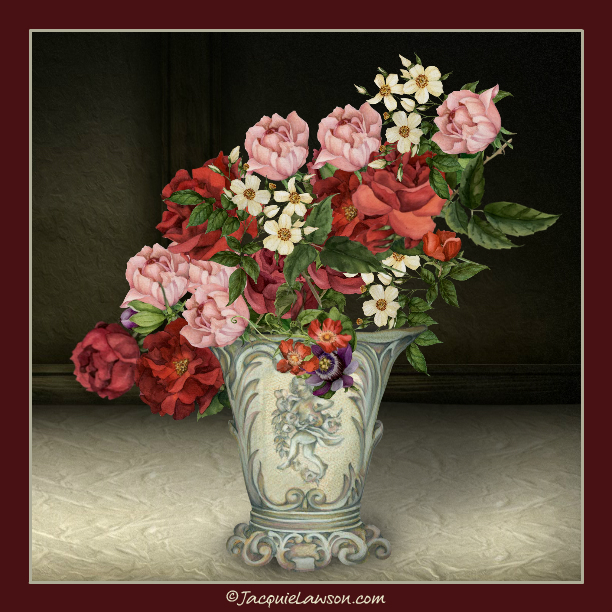
imageRoses in VAseWhen I was growing up my life was oriented around the calendar and the seasons. Living in the country I experienced the different times of the year vividly. Each time of year had its treats and its special occasions. That which was associated with them was not present at other times of the year. I am still very much in the habit of this kind of thinking. Most of all what I especially notice is the flowers that grow only at certain times of the year.

Driving along our country roads I am bewitched and blessed by the scent of the small white wild roses blooming along their edges. Essentially weeds, they are invasive in the extreme as I found out when once upon a time I planted some by the fence of our pool. It was something of a struggle to decide whether the lovely smell that lasted a couple of weeks was really worth the impressive work of trying to contain the thorny vines the rest of the time.

The tiny white petaled roses that grow wild everywhere they are left to grow are considered a nuisance and can be quite invasive. They are not welcome except where other vines grow wild. I am so glad when the season of their blossoming arrives. When I am outside I have my nose on the alert for their beautiful scent. There are a few growing near my porch. Every time I am there I am treated to their heady scent.

I also appreciate the profusion of daylilies that follow on their heels. The daisies that decorate the side of the highway are another welcome sight. There is something wonderful to me about the way different flowers arrive at different times, each bringing the gift of its color and scent to the eye and nose. Were they all to bloom at once they would lose their specialness and while they would still be lovely, they would not have the quality of unique appearance that enhances their presence.

Still, the roses are my favorite. The fact that the their season is so brief makes these tiny wonders extra special to me. Such brevity is growing rare in my life. Many foods I enjoy that used to be seasonal are now available all year round. Yet I wait to savor them in season. Local corn on the cob tastes finer than any other kind. No matter how good the peaches or plums from elsewhere might taste in the winter, I don’t buy them. I look forward to the local ones from the farm stand.

Growing up I enjoyed the different pleasures and treats that came during the year. I looked forward to certain occasions: the circus was one, another were the church fairs that I went to with my grandmother. When something nice is found rarely or seldom it becomes more special. When everything is within reach or readily available specialness diminishes. I don’t mind waiting for the Concord grapes of August. Perhaps like birthdays that come once a year, they taste better for the anticipation.

Friendship By Tasha Halpert

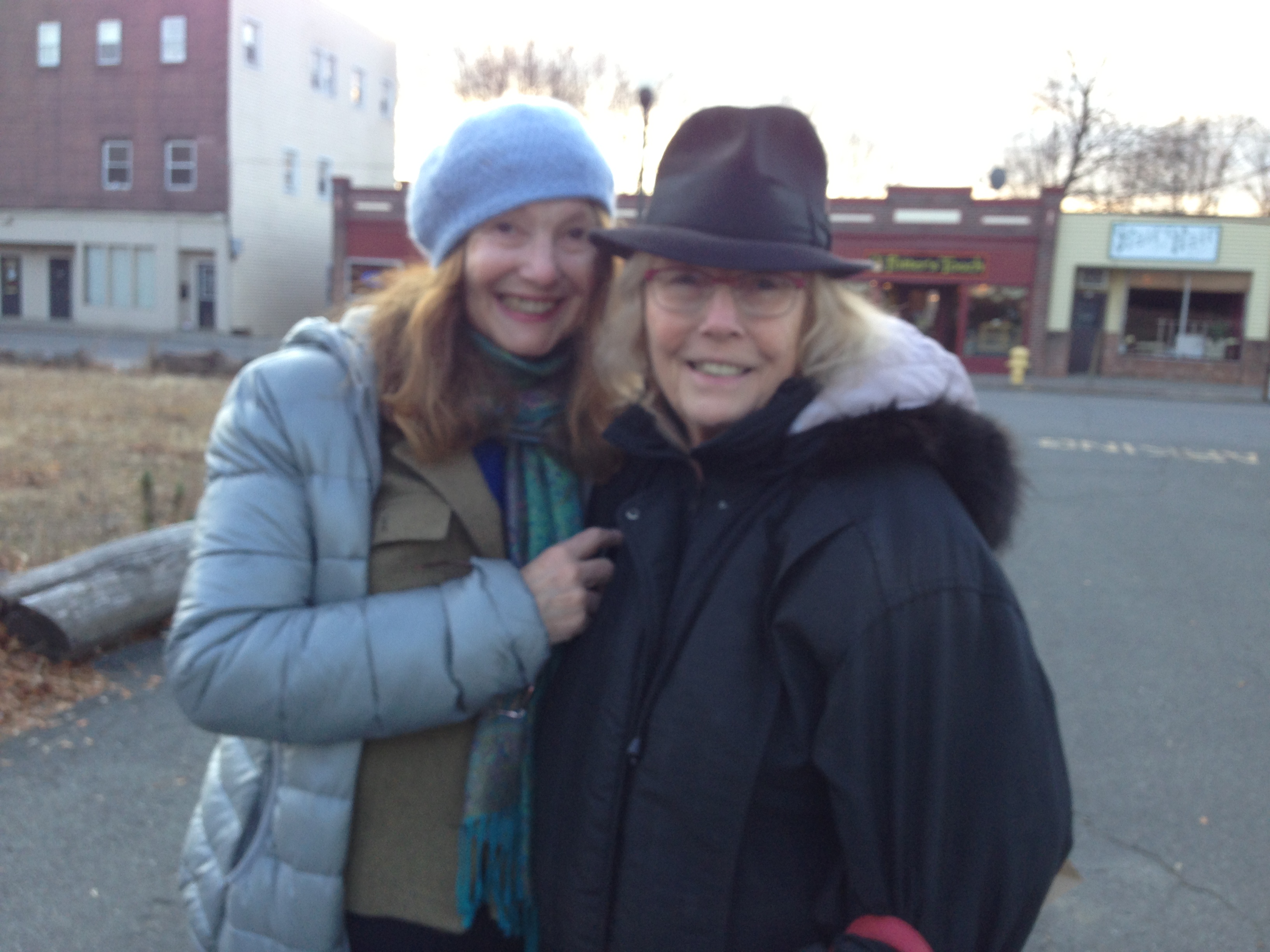
Tasha and Brenda          My friends have always been important to me. From the time I was quite small I have enjoyed the company and companionship of at least one or two close friends, and often more. Their lives and the experiences they have shared with me have become part of my life and my experience. At times I have for one reason or another suffered the loss of a close friend and mourned it as though it were a death. As time has gone on however, I have become more comfortable with the coming and going of people in my life, and I have realized that the hole left behind is soon filled.

As my life has been long, I have made as well as lost many friends. Some have been older than I though mostly as time goes by younger. In my heart I am very grateful for all the friends I have made. Whether the friendships were long or short, all have given me something to cherish. What seems to me to be most fortunate is that I still make friends with individuals younger than I am. This will prevent me from having to say–as someone remarked to me recently–that most of my friends have passed on.

My mother once told me that my great grandmother Florence told her, “All my friends are dead and I have no one to play bridge with.” Apparently she died soon after. She was well on in years, so I’m sure that was no coincidence, still it strikes me as a bit sad. I have been fortunate to have made many friends throughout my life in a variety of ways. Given the times and the formality of her life perhaps she did not have all of the opportunities I did.

When I was a young mother most of the people I called friend were women who had children of their own. We did things together. Often we would meet at the beach and watch our children play in the sand or in the waves at the edge of the water. We’d take turns bringing iced tea to share, visit together, and chit chat about life in general and motherhood in particular. Later, groups I belonged to such as the PTA or an amateur theater group brought friendships that flourished and then faded as our lives changed and we parted ways.

When I was quite young I had pen pals from distant countries. Through my writing I have also made friends that I have never actually met. At one time I published a bi monthly newsletter called Peacemail. Some of my subscribers became friends I never saw face to face yet enjoyed corresponding with. Now there is the Internet and FaceBook; correspondence is virtually instantaneous. My list of unseen friends has grown lengthy. While I do not expect to meet most of them, I have on occasion had a visit from someone I’ve met in that way.

Friendships flourish in many different ways. The soil of their growth may be shallow or deep, the time spent together short or long. What matters to me is what we have to give one another, whether it is comfort, recipes, advice or companionship. There is a saying that people come into your life for a reason, a season or a lifetime. I never know which it will be, and I cannot care. However it may end, what matters is that a friendship is formed, and for that I am grateful.

Thinking Of My Mother by Tasha Halpert

Me and mama by Bachrach     It makes me happy that there is a day set aside each year to be devoted to acknowledging mothers. The folderol that has grown up surrounding it is a product of the commercialism with which we are surrounded. Most mothers would probably be glad to do without the obligatory dinner out at a restaurant jammed with other families setting out to treat her to a meal she does not have to cook, or the trinkets she has to find a place to put on her crowded bureau.

To me what is more important is that Mothers’ day serves as a reminder that much of what mothers do all year round is usually taken for granted by their children. This ranges from the daily meals and laundry to the cleaning and tidying that goes with looking after a family. Trust me, I’m not complaining here, actually I’m thinking of my own mom and how much of what she did that I took for granted as I was growing up.

Of course she provided meals and did what she could to keep up a household with four children and a husband who was not inclined to help with housework. She wouldn’t let him cook because she said he burnt things and she intensely disliked wasting food. What she did do, personally for me, is more to the point in my memory.

She helped me with my homework, especially anything to do with languages. She worked hard to drill a proper French accent into me, and she faithfully reviewed my vocabulary and grammar lessons as well. She endured my piano practice as best she could. A trained musician with a perfect ear, I know that she cringed through my practice, and she quickly acquiesced when I said I didn’t want to take lessons any more.

When as a teenager I needed to reduce my weight she carefully counted my calories and helped me lose fifteen pounds two summers in a row. I remember that she did despair, Nor did she complain when I gained back most of what I had lost living at my grandmother’s, but set simply about doing it again. My robust grandmother did not count calories and she ate four good meals a day including tea with English muffins and home made cookies or cake.

My mother certainly tried hard to do the best she could for me. Often she went without to make sure I had what I needed. As I remember, at the time, I did not appreciate my mother’s efforts. I grew to understand how valuable they were once I had children of my own. It is truly said that one cannot fully appreciate what a parent goes through until one becomes one. I miss her. The four years since she breathed her last have sped by. I think of her often. Sometimes I feel her presence just as though she is with me, only in another room yet still within hearing distance.