Three Recipes for Healthy, Tasty Meals

onions-on-display When I visited Russia with my mother, in the guesthouse where we stayed we were served cabbage at every dinner. Although I got rather bored with it, I understood why it was so prevalent. It keeps very well and is inexpensive. It is also a most nutritional vegetable, especially raw. Its anti oxidant properties assist in cancer prevention, its anti inflammatory properties are helpful with arthritic conditions, it is a fine cardio vascular nutrient, and it is good for the lining of the stomach and intestines, helps with ulcers too.

Cabbage has lots of vitamins: C, B1, B2, Folate and a host of minerals, not to mention dietary fiber. Its vitamin content boosts the immune system and fortifies our bodies against the ever-present germs that lie in wait for us during the cold months in New England. While cooked vegetables are good for us, raw ones are extra important because none of their vitamins are cooked away. I have recently invented a new way to eat it: cabbage salads. This is not coleslaw.

Instead of grating it or using the food processor as I would for coleslaw, I cut the cabbage into very thin strips with a long serrated knife—kind of fun to do. I put it into a bowl and cut into the strips with scissors to shorten them. Then I slice off a chunk of sweet onion and cut that into thin strips that I also reduce in size. I add enough mayonnaise to moisten together with a tablespoon of horseradish sauce and a pinch of salt. I stir it well. Voila! Cabbage salad. This way of preparing it makes for more crunch, and the vitamins are a welcome addition. You can of course add other ingredients if you like—raisins, dried fruit, canned pineapple or herbs.

Another staple of my winter meals is a variety of hearty soups. My Lentil Herb soup provides herbal support for the immune system as well as good taste. In 2 Tbs Butter and 2 Tbs good olive oil sauté ½ large chopped onion, 1 cup or more chopped celery (I use scissors) and sauté until transparent. Add 2 cups water, 2 cups beef broth, 1 tsp each of dried savory, thyme, marjoram, ¼ cup chopped fresh parsley, 1 bay leaf, 1 large potato peeled and chopped into ½ inch chunks–about a cup, 3 cloves of pressed not chopped garlic, ½ cup lentils salt and pepper to taste. Bring to a boil, simmer for 1 ½ to 2 hours, and enjoy!

A tasty bread pudding finishes off any meal nicely. This one is easy and quickly made. Chop into 1 inch squares 4 slices any good (dense) bread (With or without crusts, your choice.) Put in a 1½ quart casserole (buttered or not, your choice). Stir bread together with ¼ to ½ cup sugar, 1 teaspoon cinnamon and a pinch of salt. Stir in 1 cup raisins. Beat together 2 eggs and 2 cups any kind of milk. Stir into bread. Cover casserole and place in 350 degree oven, bake for 45 minutes, uncover and bake another 15 minutes to brown the top. Serve warm or cold with any kind of cream poured on it, or just as it is.  Tasha Halpert

The Three Bite Rule

When I was growing up there was no such thing in my family as not eating what was put before you, or of getting up from the table before you had finished what was on your plate. The “starving children in China” statement was applied whenever I protested. I learned to swallow pieces of liver as if they were pills, with gulps of milk. However I was unable to cope well with the frequent soft boiled eggs, and finally my mother stopped giving them to me. I have memories of sitting at the table staring at the egg in its shell in the egg cup in front of me. That was one battle I won. Not until I was an adult did I learn to like soft boiled eggs and I never did learn to appreciate liver.

My mother built her cooking around my dad’s taste, so much of what we ate was pretty standard. She believed in providing nutritious food, and though plain, it was. Despite the fact that she really didn’t like to cook, she understood that providing nourishment is an important aspect of caring that nature has built into mothers, and she did her best. All too often family members, like me as a child, do not express appreciation for the family cook’s labors in the kitchen. Though it didn’t occur to me as a child, as an adult I personally think they might be grateful someone has taken the trouble to make a meal for them to eat.

As regular readers of my column know, I have always enjoyed cooking. I find it satisfying as well as enjoyable. One aspect of this is that I prefer to prepare meals from scratch. Some might be surprised to learn I don’t own a microwave, nor do I wish to. I even like chopping food by hand rather than using a machine, peeling my fruit and vegetables, and doing all the hands on work that is required to use completely fresh ingredients rather than prepackaged ones. I do not claim that this is particularly virtuous on my part. It is simply my preference.

This is because putting myself into the meal is part of my joy in the creation of it. My energy goes directly into the chopping, the peeling, the mixing and the stirring. This is my purposeful contribution to the health and welfare of those I love and fix food for. I am fortunate to have an appreciative husband who enjoys whatever I prepare. I had one once who wasn’t and his influence on our younger children made quite a difference in what they were willing to eat. He was a meat and potatoes man and we were on a casserole budget, so complaints were often made. Yet being hungry he still ate whatever it was.

I tried to make interesting meals, and I used to tell my children they had to eat three bites of whatever I served them or I would make them eat the whole thing. Fortunately young children are not logical and none of them ever figured out how if they wouldn’t eat three bites, how could I get them to eat the whole thing? I even did this with their playmates and guests. Today one of my delights is to introduce people to foods they may not have experienced–at least not the way I prepare it. However, I don’t tell them they must eat three bites or I’ll make them eat the whole thing.

Tasha Halpert

Salad and casserole 3

Hospitality by Tasha Halpert

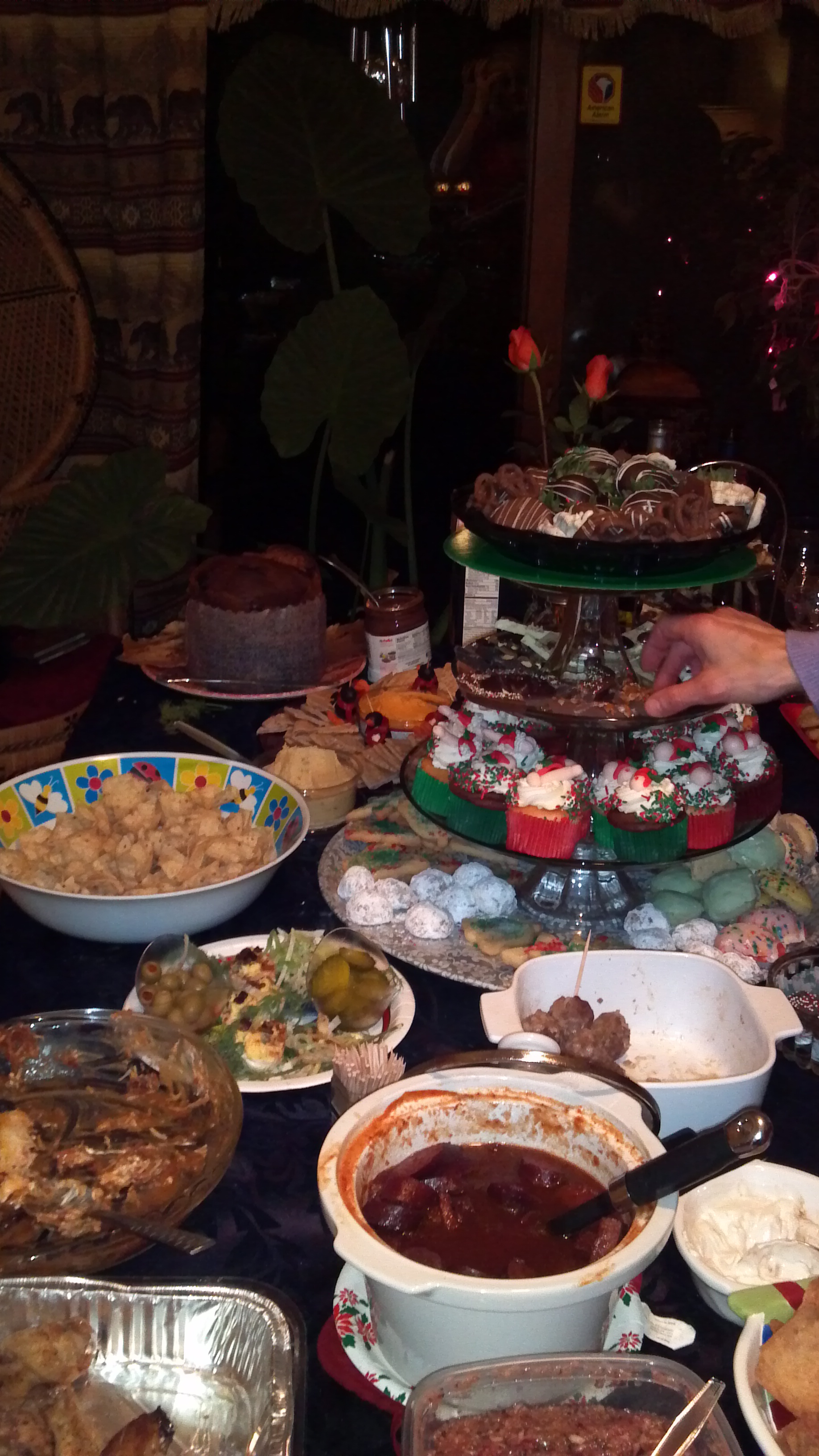
Deb's party food 2As she does whenever she comes to the States, our friend from Denmark was visiting us. Over a lunch I had enjoyed making for us all, we had fun catching up on our recent activities. She was exclaiming over the food, saying how good it was and how happy she was to be with us. “I love cooking for my friends,” I replied. I do. It is one of my favorite occupations. Stephen and I both enjoy entertaining friends, and making meals for them is a big part of my joy.

She commented that she too enjoyed cooking for her friends. She then went on to say that her experience here in the States was that when they were entertaining, many people seemed to prefer taking people out to eat rather than preparing food for them at home. She said that in Europe it was more common to prepare dinner for their guests at home and less common to take them to a restaurant. I thought this was an interesting commentary, and I wondered what it indicated about Americans.

Around the holidays, the newspapers overflow with advertisements for meals to which you are supposed to bring your whole family. Alternatively, supermarkets and other providers of food advertise “home cooked” meals delivered to your door. My parents would never have considered eating anywhere for the holidays but at the home of a relative. Eating out was only for very special occasions, perhaps to celebrate a victory or a special anniversary.

Thinking back on my childhood years I remember that when my parents entertained it was usually relatively spontaneously and for cocktails before luncheon after church or dinner. Afterward our guests either went home or to a restaurant. My mother did not like to entertain and seldom had people for dinner parties. She had had a lot of that as a young child in her parents home and had been as it were inoculated against it. Her mother had given her all sorts of jobs to do related to making ready for guests, none of which she particularly enjoyed.

Her father had been in he diplomatic service in Germany prior to World War II and they had lived all over the globe. Her mother had entertained at lavish dinner parties with food prepared by a cook or catered. To my mother fell the task of setting the table, arranging flowers and so on. Later she and her two sisters would be called upon to perform musically for the guests. No wonder she disliked parties.

My first husband didn’t care to entertain either. We had one big party a year. it. My cooking was confined to the family. I have found it wonderfully different with Stephen. He has always loved to entertain and there have been many times in our lives together when I never knew how many would be sitting down to dinner. Because I have plenty of supplies on hand, this has never bothered me. To be sure, I enjoy dining out, especially as someone’s guest, however I am very happy to eat loving prepared home cooking.

Cooking With Love and Parsnips, by Tasha HalpertSnow scene 3

I believe that when you cook with love because you love to cook, the food tastes better. From the time I was small I have enjoyed and appreciated all things to do with cooking. One of my favorite occupations as a child was to arrange the items in the pantry off our kitchen. The wide shelving held all sorts of pots, pans, bowls, and other cooking supplies. In my mind I can still smell the wooden shelves covered with shiny oilcloth. Was it held on with thumbtacks? My memory stops there.

My mother considered food to be for nourishment, not pleasure. She used her food money carefully, and she did not like to spend extra money on the ingredients for desserts, which was all she permitted me to cook. She never ever baked anything, nor did she use much in the way of herbs or spices. My dad never cooked, nor did anyone else in my family. Why I so love to cook is a mystery to me.

Another reason my mother didn’t let me cook was that she considered me careless and irresponsible–perhaps I was, though most children without experience might be considered so. Occasionally I was permitted to make brownies and later, salads. As a young bride I had to teach myself to cook from a cookbook. Today although I have a fine collection of them, I seldom refer to my general cookbooks except for inspiration, unless I am baking. Successful baking generally requires exact measurements.

I also have many small cookbooks in my collection. These include recipes collected for church fund raising, pamphlets featuring commercial ingredients, and others that friends have given me. Most have one or two recipes I refer to on a regular basis that can be found nowhere else. While many of the small collections are for baked goods and casseroles there is one in particular that I have found to be very useful: Marjorie Standish Chowders Soups and Stews.

The recipe in it I have used most is for Parsnip Stew. Being a lover of parsnips for their sweet, meaty taste, I was delighted to come across this recipe. Easy to make and universally popular, I thought my readers would enjoy it. Although the original calls for salt pork, I make it with butter and a touch of olive oil. Ingredients: 2 tablespoons butter, 1 tablespoon olive oil, 1 small onion diced, 2 cups peeled, diced potatoes, 2 cups water, salt and pepper to taste, 3 cups cubed parsnips, 1 quart milk–any kind will do; Being somewhat lactose intolerant I use oat milk.

Method: Melt butter and add onion, stir and cook until transparent. Add potatoes and water, salt and pepper. Bring to a boil then simmer for 10 minutes. Add parsnips, bring back to a boil, simmer 10 more minutes. Test for doneness and add milk. Heat to serving temperature or pour into a container and store until ready to reheat. Serve with several tablespoons or more of minced parsley.