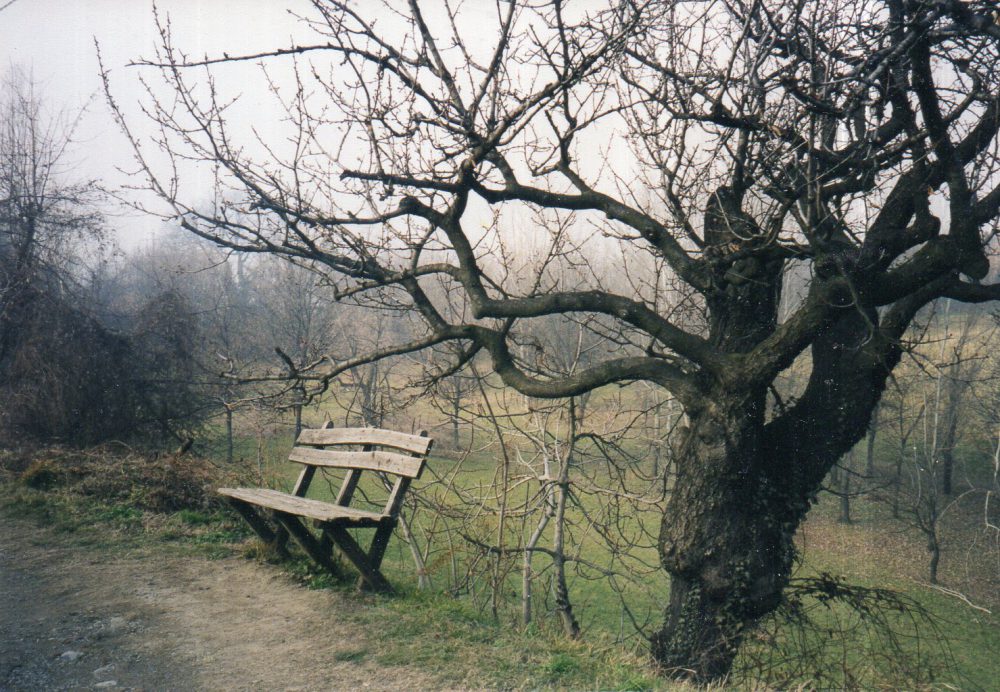
Struggles and Struggling by Tasha Halpert

Heartwings Love Notes

Heartwings says, “How we frame our experiences can help them help us grow.”

I participate in an internet group of people who deal with being in some way disabled. The chief experience they share is blindness. I have great admiration for the positive attitudes I’ve encountered among this group, and most particularly those of their founder and leader Patty Fletcher. She asked me to contribute some writing about my experiences with Parkinson’s and the disabilities I cope with.

There is a saying to the effect that if all of us were to hang our troubles on a tree, rather than exchange them, each would take back their own. I have only admiration for how others cope with being without sight. My Parkinson’s, a neurological condition, presents me with extreme slowness and considerable weakness. My hands are slow and rather clumsy; I can no longer sew and dealing with buttons is too challenging. My writing dwindles as I try to form the words. I tire easily, have balance issues, and walk bent over.

Coping with these conditions, at least for me, revolves around not feeling I need to try to do more or do better than I am able at the time. Some days are better, some worse. Making comparisons between the present and the past is negative, creating even more frustration than I already experience. I often underestimate how much time anything will take me and end up being late. Of course, I fear looking awkward or pitiable, although currently I do not shake and tremble as many with this condition do. That can change.

  At least at this time my mind remains clear, apparently unaffected except for some forgetfulness. I’d be surprised if I wasn’t somewhat so at my age. I feel blessed for that, and for the help I receive from my dear husband and the Elder Services available to me. My mother started losing her mental focus in her 70’s, and lost much of it by the age I am now—I’ll be 90 this fall.

My current best coping mechanism is to see my condition as graduate school, working on a Master’s in patience and detachment, enhancing my ability to keep on keeping on. I struggle with my attempts to maintain my equilibrium keeping my mind on the present and ignoring thoughts of what I was once able to do. Comparisons with the past have little to no use when it comes to making progress; avoiding that keeps me focused on what I am able to accomplish.

Human Folly

I used to smoke cigarettes. Most of my contemporaries did, and while that’s no excuse it does make it more understandable. To be sure, this was long before they were even five dollars a pack. Having quit more than twenty five years ago I marvel at what they cost today. I remember a trip to Canada while I still smoked. With Canada’s higher taxes, cigarettes cost five dollars a pack there.

I remember asking if the price made a difference to the number of people who bought them. I was told that the taxes on cigarettes and liquor paid for important things. Apparently the price to be paid was no deterrent. It might have been for me, but then I quit several times and still fell back into the habit. It took a lot more than cost to get me to quit. I reached a point when I really wanted to because I didn’t feel good when I smoked.

When I was growing up my mother and father smoked cigarettes. Most people did, even if only occasionally. Although she didn’t smoke, my great aunt kept a box with lots of cigarettes in it for smoking during cocktails or after dinner. It was the sophisticated thing to do. All the movie stars did it. If you watch a movie from the thirties or forties almost everyone is lighting up.

My mother did quit. She lived to be 98. Despite the fact that his smoke affected her, my father never did. He died at 76. I know smoking contributed to the illness that took his life. However in those days who knew? The romance of sharing a cigarette with one’s date or a boyfriend lighting two cigarettes before passing one over prevailed in the public’s consciousness.

I had my first cigarette at fifteen. I was in high school and out with two classmates at lunch. When they lit up I asked for one too. “I didn’t know you smoked,” one said as she offered her pack. I nodded, lit up nonchalantly and then coughed and coughed. They laughed at me. However I persisted. I wanted to be one of the cool girls. By the time I quit I was glad to do so.

I feel sad when I see people smoking cigarettes. They are paying money to deplete their immune systems and make their bodies vulnerable to a host of diseases. They are inhaling carbon dioxide as well as exhaling a substance that can make others ill. And I used to do it myself. I have no real excuse for my behavior. However, one thing that helped me was a realization that came to me some years before I quit for good.

I was on the telephone with a friend when I lit up. As I chatted I ignored my cigarette burned merrily away in the ashtray. After I hung up I looked at it. The cigarette was smoking itself. It didn’t even need me to smoke it. On occasion this thought would return to remind me I really didn’t need to smoke. One day I was able to confirm this truth and quit for good. I wish all smokers well and hope that one day they will be able to do that too.

Photo and Blog by Tasha Halpert

Image