Thanksgiving Nostalgia

Thanksgiving is a great time to remember past gatherings. I certainly have plenty of memories from my past, filled as it is with many years of living. Those from my childhood are even more vivid than those from the more recent past. It seems odd to me, however, perhaps that is because they made more of an impression to a child.

As a very young child of five or six I enjoyed playing with the unique to me toys at Great Aunt Alice’s. She had a wooden truck loaded with carved alphabet blocks. I remember setting it out on the lovely thick, white and red Persian carpet in the big living room downstairs.

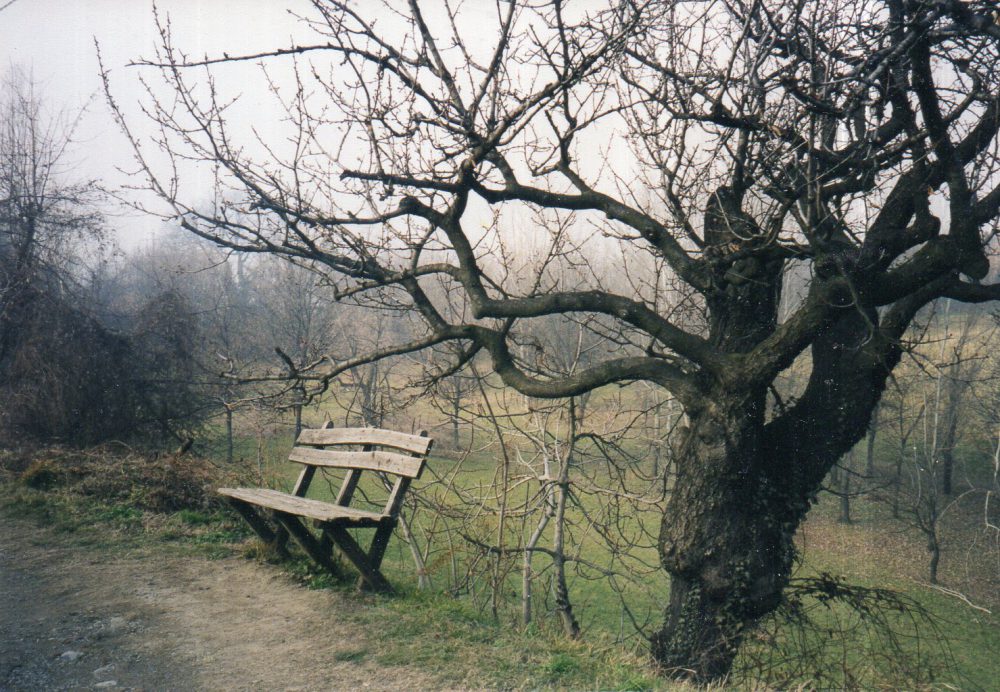
 At some point we must have moved upstairs to a smaller room where I remember sitting in the recessed window seat that overlooked the lawn and the huge old apple tree. There the grownups chatted and drank a pre-dinner cocktail and perhaps had a cigarette from the wooden box on the coffee table while I read my latest library book.

As a child of course I didn’t know this, but later I was told a non-family member, was always invited to these gatherings to help make sure everyone behaved in a kindly, courteous way—was on their best behavior, so to speak. I believe the invitee was probably a friend of Aunt Alice’s. Their names and faces do not stick in my memory.

Tales from the past were shared. One I recall was of my grandmother, Nonny. She spoke of a time when as a child she discovered the cooked bird sitting waiting to be served and tore off all the skin . She ate it before anyone caught her. Later in time that tale was a great source of merriment.

I remember being given a taste of wine or champagne at around the age of twelve. This was my father’s idea, which was not seconded by my mother. More vivid in my mind is the shallow, footed silver dish—there were two, one at each end of the table, filled with chocolates from a box. I was allowed to have some after dinner, but no more than two if even that many.

I was eight plus years older than my sister, and twelve and fourteen years older than my two brothers. I don’t have any distinct memories of my siblings attendance at these dinners; I do recall bringing my two oldest to them, though these dinners ended before their brothers were born. I’m happy my older daughters too have their recollections of them.

I am very thankful for these and other memories. they provide me with a precious reminder of a very different kind of lifestyle. The new ones of the present time bring different faces to the table, which is in a different room, yet equally laden and surrounded with smiles. Memories are an important part of the Thanksgiving feast. They provide a taste of the past brought into the present for all to share.

May you have precious memories to share in years to come.

Blessings and Best Regards, Tasha Halpert

PS Though I have less time to write these days, I welcome your responses and hope always to reply to any comments, questions, or suggestions you may make.
Heartwings Love Note 2010: Celebrating

Heartwings Love Notes 2010 Celebrating

Heartwings says, “Honoring an occasion makes it memorable and heartwarming.”

My birthday each year is always an occasion for celebration. There is almost always a party on or close to the day itself. In the past, when people asked my age, I would tell people I was ageless, but when I celebrated my eighty fifth year, I decided to state my age, and I am no longer shy about the information. My mother used to say, “You should be proud of your age.” I decided she was right. Now I am turning eighty-eight; I quote her again as she used to say, “How did I get to be this old?”

Remembering other celebrations, I am reminded of my eighth-grade graduation party. My parents held it at Wingarsheek beach, where my great aunt Alice had a cottage. They devised a treasure hunt and attendees had to seek out various clues with places to find the treasure. My memory does not include what it was, but it does hold an image of my very pregnant mom trudging around, helping the participants. The older of my two younger brothers was born soon after. The party might have helped facilitate that.

Most people enjoy celebrating and almost any occasion to do so will do. My father would often host a party for just about any reason, and my mother was good enough to be a gracious hostess. That meant supplying simple hors d’oervres, because the guests would all usually go out to dinner afterward. We used to do potlucks for our parties. Stephen has always enjoyed celebrating; our occasions used to include Friday the thirteenth gatherings we called the triskadecaphilia or lovers of the number thirteen society. We lived at number thirteen on our street, so it was quite appropriate. 

To celebrate is not only to observe but also to commemorate or to proclaim. In days long ago, celebrations were held to mark important times of the year. Harvest festivals, for instance marked the growing seasons, and our Halloween was the last of them, as it closed out the end of the gathering. They lasted from the beginning of August through the Equinox to November first. The act of celebration is an opportunity to proclaim or mark special days. Easter, May Day, Valentine’s Day, Mothers’ Day, Christmas and so on are all opportunities to make merry, and to turn a page with joy.

Regardless of the individual reasons to celebrate, the main overall reason is to highlight the importance of the time. In the days before clocks and calendars, celebrations were an opportunity to commemorate the season and emphasize the time. Later on, they became not only that but also opportunities for family and friends to get together, exchange news, introduce new members of the family, and enjoy one another’s company. My eighty-fifth was on zoom, a gathering of friends from all over the country. This one will be quieter, but no matter, it will be celebrated with just as much gusto and good fun.   

May your celebrations be joyous and memorable,

Blessings and best Regards, Tasha Halpert

PS How do you celebrate important occasions? Write and tell me, I so enjoy hearing from readers.  You can reach me at tashahal@gmail.com. For more Love Notes or better yet, to sign up to receive them weekly, visit my blog http://tashasperspective.com and click on Pujakins. Find me on Facebook too.

The Carols of Christmas

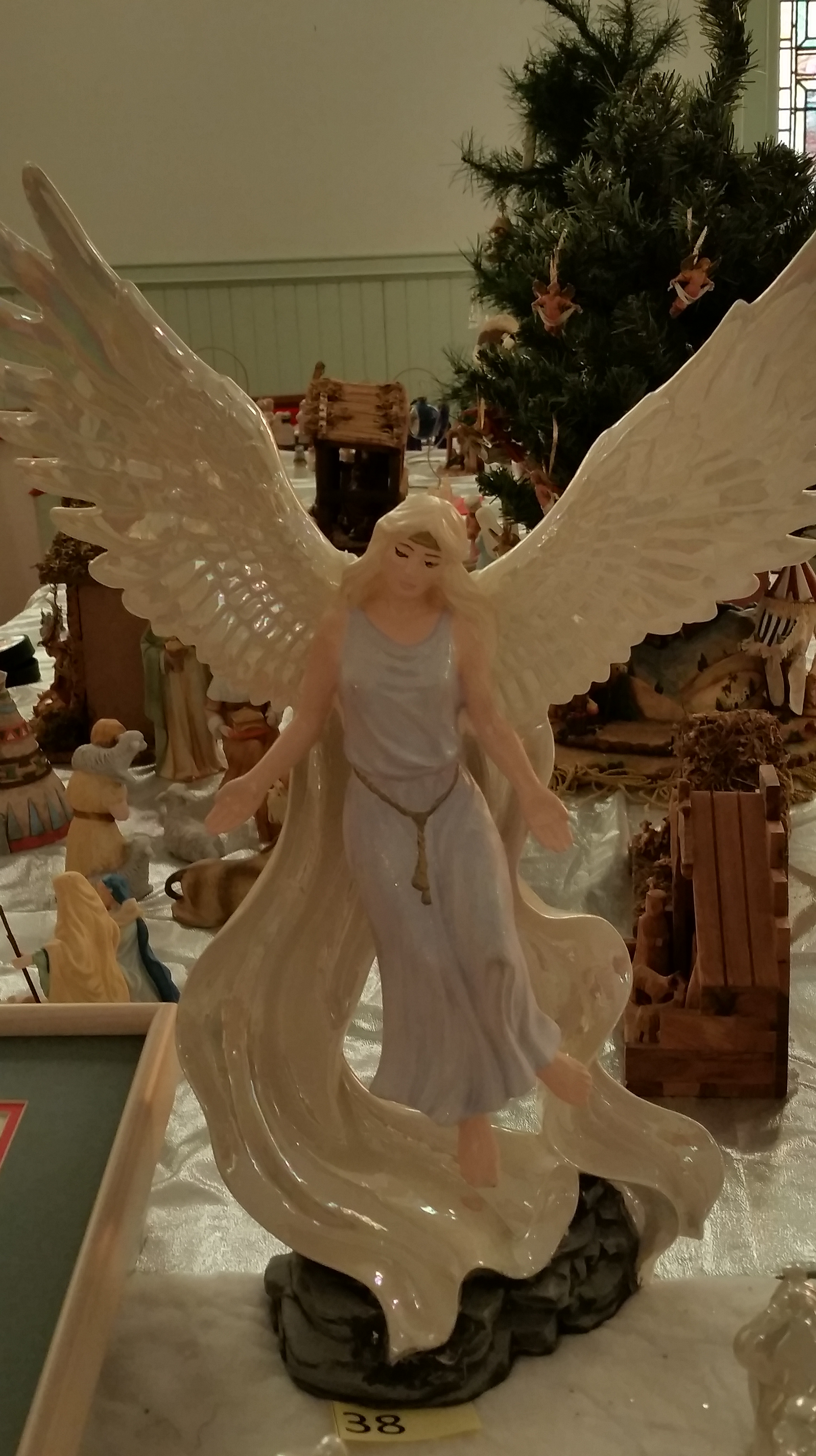
          One of my most precious childhood memories is of my mother with her violin tucked firmly under her chin, playing Silent Night on Christmas Eve. We sang it in German, the language of the land of her birth as well as the one it was originally written in. We also sang Oh Tannenbaum in German, and in English other carols we knew and loved. When I was very small, there were real white lit candles in holders that clipped to the Christmas tree branches.  My mother had brought them with her from Germany when she married my father.

          On Christmas Eve we would come together in the dining room around five or six o’clock to have a light supper with sandwiches, finger food, and sweets. Then we would go into the living room where the newly decorated tree stood in glorious splendor with silver strands of thin shiny Metal tinsel draped over its branches—we saved it from year to year. The small white candles were lit before we began to sing. After that we opened presents. In my home, Santa brought the stocking presents, not the ones under the tree.

          Some of the traditional carols of Christmas date back to the 17th century or even further. Others, like Silent Night  (1818) and Oh Little Town of Bethlehem, (1865)one of my father’s big favorites were written more recently. These words and melodies have a magical effect. They connect us with our past, and not only our own personal past but the pasts of our ancestors who sang them too. The old hymnal of my father’s Episcopal church had wonderful histories of the various Christmas carols. Whenever I have sung them I am always brought back to that church with its wonderful stained glass windows.

          One of my favorite hymns, Of the Father’s Love Begotten, has roots in the 10th century, and its majestic chords have a sound that invokes the soaring European cathedrals that predate the discover of America. There is a part of us all which has been called the collective unconscious that embraces the past that is encoded in our very bones and responds to the sounds of celebration throughout the centuries. For all of history, singing has been an important part of universally celebrated holidays like Christmas, New Year’s and Easter.

          These connections and others that we experience with the holidays heighten and expand how we feel. Our customs, too, connect us not only to our families but also to our ancestors as is fitting. Those who join Christmas carolers, for instance, are participating in a ritual that goes back centuries when children would go door to door in their villages begging treats and wishing the home owners Merry Christmas or Happy New Year.

          The word carol actually means a dance of praise and joy. It may be that we no longer dance to any of the carols of Christmas yet they do indeed bring joy to the heart and happiness as we raise our voices in celebration of the season of peace and good will we call Christmas.

The Expectations of Christmas Time

           I remember a few of the Christmas gifts I received as a child. My favorite was a large brown teddy bear around two and a half feet tall I called Bruin. He became the head of my teddy bear family of five. Another was a wood burning set from my Great Aunt Alice. I never could figure out how to use it. One of my most memorable was a gift from my Uncle Oliver, also the giver of the bear: a large balloon in the shape of a Zeppelin tied with a big red ribbon.

           For whatever reason, instead of placing it under the tree, he set it on the radiator in the front hall. In the middle of dinner there was a loud bang. We ran into the hall.What remained was an empty red ribbon bow and piece of burst rubber. My expectations were dashed. The teddy bear he gave me on another Christmas later may have been his way of apologizing. I don’t remember having expectations as to what I might receive. Most of my gifts were practical.

           The Holiday time carries a big burden of expectations. People are expected to be nicer, to be kinder to one another, perhaps even more forgiving of errors and mishaps.”It’s Christmas,” people say, and that is supposed to be a reason to behave in ways one might not otherwise. I’m not saying that this is a bad reason; it is good to be thinking kindly at this time of year. However, we don’t need to make it a given or to be critical of those who are not.

           Another set of expectations revolves around the giving of gifts. To whom do we owe a larger gift and to whom a token? Is a card enough or need we send or give an actual physical present? Even the difference between an online card and an actual one might be a consideration. Our expectations of what is appropriate, what we”ought” to do may govern our actions and present a need for decisions about what to do, as well as stress us out.

           Perhaps most of all, however, it is our expectations of ourselves that are the most difficult to deal with. There is much to be done and it all must fit into the time we have, regardless of the fact that life does not come to a halt at Christmas time. In addition to the holiday activities we still need to do the cooking, working, shopping and so on that we do anyway. It’s enough to take the fun out of the celebration. We often feel guilty if we can’t manage to do it all with grace and good humor.

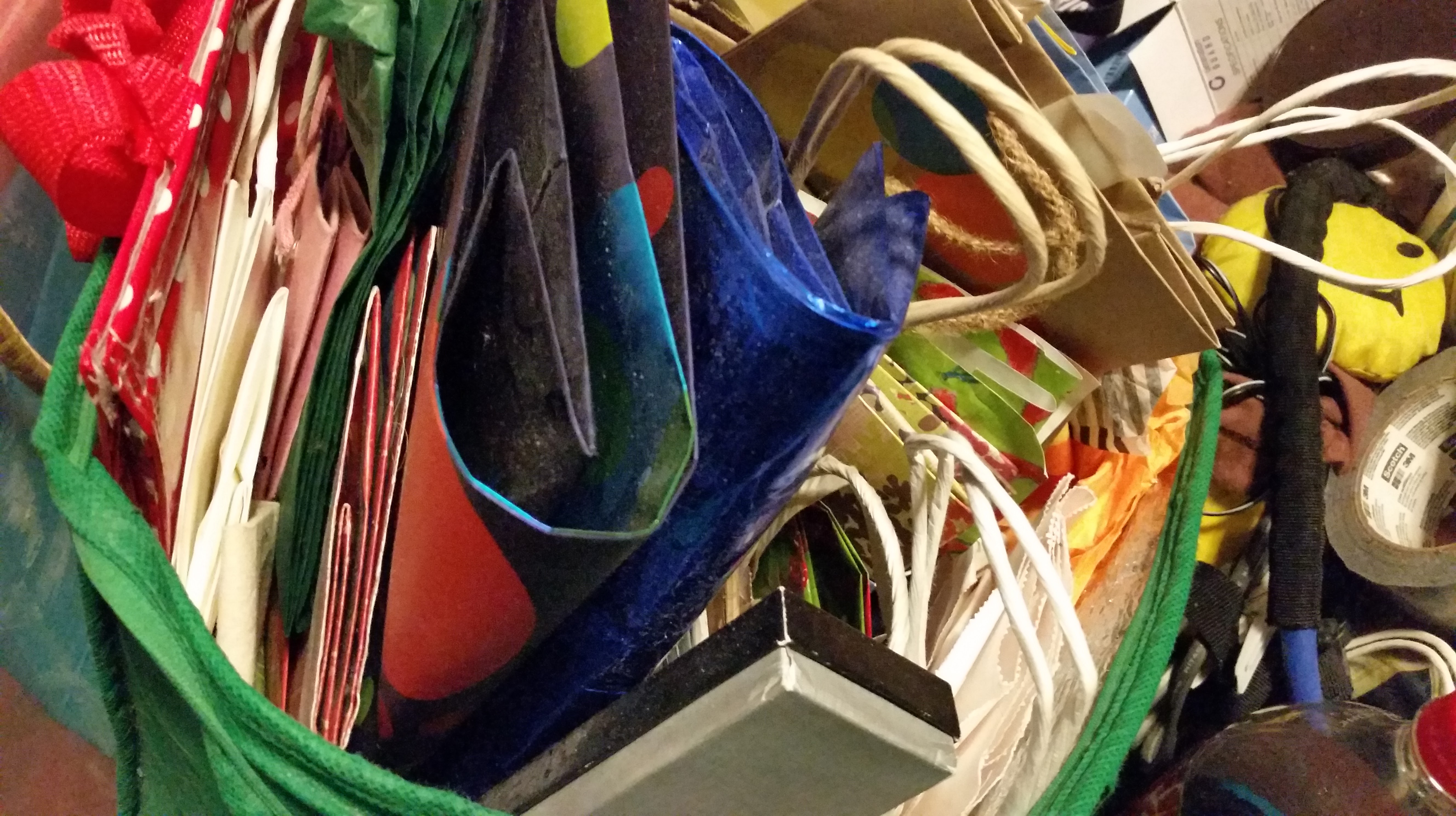
           Yet we and others might better benefit if we take some time for ourselves. If we use a gift bag instead of wrapping paper, send a card instead of an actual gift or even offer to take friends out for a treat at a later date or offer to babysit their children, we downsize the stress. Less stress means more holiday spirit,and diminished expectations mean less guilt. We need to remember that what we really celebrate now is the coming of a child of Light, or the Light itself,into a world that needs it. Expectations aside, we can remember the true meaning of this season is about the gift of joy to all of us, from all of us.