I am Thankful

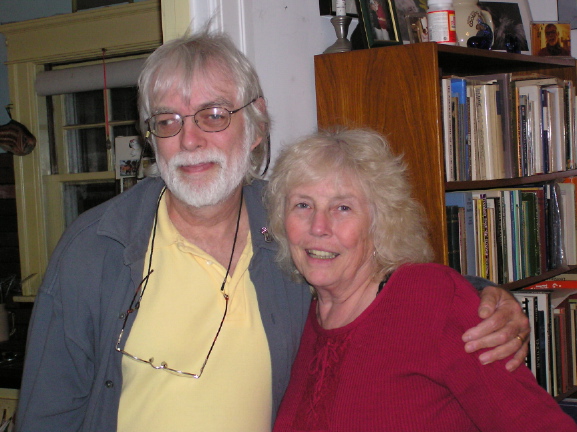
Stephen and Tasha Hug          I make a practice of being thankful. I have often shared the little prayer I say a dozen or more times a day for various and sundry blessings. However it is not necessary to pray one’s thanks. It enough to simply acknowledge that one is grateful. My gratitude for what I have is enormous. I am also very grateful for much that I do not have, or may have had and no longer do.

What we have and what we do not have may both are something to be thankful for. Did you ever think back to when you were little and wanted something–a pony, perhaps? Most likely you didn’t get it, and most likely if you had you would soon have tired of taking care of it. Ponies require daily brushing, cleaning up after, feeding, petting, riding, and more: taking care of the saddle, bridle and all the required tack. They are a lot of work, and the child who wants the pony doesn’t think about that.

We seldom think about the consequences of receiving what we wish for. There is an old adage that goes: be careful what you wish for, you may get it. I remember admiring big houses, and oh how I wished for a swimming pool. One day I acquired both. That pool was more work than it was worth, although many people enjoyed it. However they weren’t tasked with the care of it as I was.

I used to think I wanted more space, and now having had two large houses–though one was smaller than the other, I have learned that every bit of space I may have requires care and looking after. I have learned to be content with a lot less space that I ever thought I would be.

As well I am thankful for those difficulties I have left behind. It is lovely not to have to clean three bathrooms each week, tend a huge garden, prune lots of bushes. When I hear a child yelling in the supermarket I am delighted it’s not my job to care for a howling toddler. I am also glad not to have be cooking a big Thanksgiving dinner and hosting a large group of people. I enjoyed and was thankful at the time I did all these things, now I am glad that time has passed.

There is much else I am just as glad not to wish for any longer. I used to think I would like to go up in a balloon, I don’t feel the need to do that any more. I don’t want to jump out of an airplane with a parachute either. I am thankful that I don’t need to do these things to be happy or feel fulfilled.

Thinking about thankfulness as I do each and every day but most especially at Thanksgiving I am struck by the way I have learned what I truly want and how fulfilled I feel. Once I yearned to be more popular. Now I am thankful for the friends I do have. I have learned that what is important to me are the small daily pleasures of contact with people and our communications. Most of all I am grateful for my beloved partner and best friend Stephen. Having a special friend with whom to share my life is my greatest blessing.

Making Improvements

Belfast veggies 8Making Improvements, by Tasha Halpert

When I look at a situation it is often with an eye as to what can be done to improve it. I think I developed this habit at an early age because my dear mother was seldom satisfied with anything. She always seemed to have a suggestion for an improvement. Most likely I inherited my attitude from her. However, this is not a bad way to be, and I’m not complaining. Yet it’s not necessary to see a flaw or a need. Perhaps another way to think about that is to see what I might do in general to be of help or to make an improvement..

My late son Robin greatly enjoyed gardening. He loved the earth and felt very close to nature. Wherever he was living he would plant vegetables and carefully tend them. He was proud to feed himself from his efforts. In addition as do the Native Americans, he believed in leaving a gift at the site of any herb or vegetable that he harvested. He always gave back as much as he could. The size of the gift was not as important as the effort.

I was reminded of this as I thought about what someone recently said to me: “I believe in leaving the world a better place than I found it.” The speaker went on to tell me how he had learned this when he was around ten years old and had made an effort to practice it always. This conversation stayed with me for a time, and I considered ways I might make the world I lived in a better place–not because it was lacking but because I might add something.

Paying it forward is one way to make a positive difference. There are drivers who pay the toll of the person behind them, or those who pick up the tab for a stranger in a restaurant. Some businesses do a holiday practice where small gifts are given in secret. I have always enjoyed sharing little presents or passing on what I enjoy or find useful. One friend of mine liked to say a prayer when he left any seat where he sat: “May whoever sits here after me be blessed.”

It may be that sometimes we think that small gestures are not significant. I find it is surprising how a little effort can make a big effect. Smiling at people, for instance, or saying hello to people you might not know personally. Of course there are those who might look at you suspiciously, still, it is not possible to please everyone and if a person feels uncomfortable with a smile, perhaps they need more of them in their lives.

If I can’t use a grocery coupon I leave it where it may be found. I often pay a stranger a compliment. I look around for ways to bring unexpected joy when and where I can. If I see someone who needs help I offer mine. Small efforts like these are my way of adding something positive. Mother Teresa said it so nicely: “We ourselves feel that what we are doing is just a drop in the ocean. But the ocean would be less because of that missing drop.”

Sharing is Caring

Stephen’s computer had to go in for some work. So for the past week we have  had to share mine, for work and play both. Since we are writers, we both needed to be using it. Furthermore, the two of us have a lot of Internet friends, relations, and even fans of our writing we  communicate with regularly. Halving the amount of time each of us could be on the computer was challenging.


Stephen and I are used to sharing and we enjoy it. More often than not when we go to a restaurant, we share a meal. This inevitably involves compromise because there are things I simply can’t eat without a negative effect that Stephen is fond of, yet has to forgo. Of course, I am willing to share what he would like to order as long as it’s ok for me to eat it. However, much of the time he endures the discipline of giving up what he would like in favor of our sharing.


Certainly it is easier to compromise  if I care for the person with whom I am sharing. Frustration and feelings of being deprived also are easier to bear and considerably less important when there is affection in the picture, or at least kind regard. More times than not, sharing involves compromise. From a physiological standpoint, it is healthier to be willing to compromise without resentment. Anger and resentment have a very real, measurable negative effect on the body. 


When I offer to share, I do so from my heart. When I am sharing with someone I have a lot of love for, it enhances that love for me If resentment does arise, I can be aware of it, because while it might arise naturally it does not have to be more than a passing thundercloud I can disperse with a burst of love. Sharing brings me great joy. I greatly appreciate the opportunities to do so when they show up. I will also be very happy when his computer comes back home.Image