
Heartwings Love Notes 2045 An old fashioned Dessert

In the small town where I grew up, there were three food stores: a First National Store, resembling today’s supermarkets only much smaller, where you walked up and down the aisles, selecting your own groceries; and two other food stores–both of which sold liquor as well. These assembled your purchases for you and even delivered them to your house. You could even call in your order.

What I purchase on an average shopping trip today wouldn’t fit into my mother’s kitchen. It was small and utilitarian: a stove, a sink, and a refrigerator. She had a small pantry closet that held mixing bowls and a few cans. My mother shopped frequently and did not keep much food on hand. I don’t remember how old I was when we replaced the old icebox with a modern refrigerator, however I can remember the ice man clip-clopping down the street with the big chunks of ice in his wagon.

Except in the summer, fresh green vegetables were rare. A cellar closet held the glass jars of beans and other vegetables my mother had preserved, as well as jellies she made from summer fruit. Winter squash was stored to eat later on, as were potatoes. One of my tasks was occasionally to pick the sprouts off. We ate canned peas. Frozen food was not commonly available in the early forties.

One of my favorite recipes from my mother’s limited dessert menu (she didn’t believe in giving children many sweets) is Cottage Pudding. While it does not have the consistency of a pudding, it has acquired that name. A simple muffin type batter baked as a cake it is served with either strawberries or chocolate or lemon sauce. Try this when you are seeking some comfort food and see if it doesn’t do the trick.

Cottage Pudding and Sauces

Preheat oven at 400 degrees and grease an 8 inch square pan or six cupcake tins.

Ingredients: 1 1/2 cups flour

1/2 teaspoon salt

2 teaspoons baking powder

1/2 cup sugar

1 well beaten egg

1/2 cup milk

1/2 cup melted butter

1 Teaspoon Vanilla

Sift together flour, baking powder, sugar and salt. Mix egg, milk vanilla and melted butter. Stir gently into flour mixture–like for muffins, only enough to moisten ingredients. Do not beat. Pour into greased pan or muffin cups. Bake until browned and pulling away from pan. (20 to 25 minutes) Serve WARM with the sauce of your choice. This is not as good the next day unless you warm it up.

Choice Sauces

Strawberries and Cream (Avoid pesticide laden inorganic berries!)

Slice up strawberries, mix with a little sugar, let sit for half day or if the berries are large and tough, cook for about 15 minutes then cool and serve with whipped cream or topping.

Bittersweet Chocolate Sauce

Melt together 2 squares unsweetened chocolate, 1/4 cup butter. Add 1 cup sugar, stir well. Sprinkle in a few grains of salt and add 1/2 cup water. Cook and stir until sauce is as thick as you like. Cool slightly and add 1 teaspoon vanilla. Serve warm or cold.

Mary’s Lemon Sauce

Melt 1/2 cup butter over moderate heat. Stir in 1 cup sugar, 4 Tablespoons water, 1 beaten egg, 1/4 cup lemon juice, and the grated rind of 1 or more lemons, to taste. Cook and stir until it boils and thickens a bit and then remove from heat. It will thicken further as it cools.

A poet and writer, I publish a free weekly blog, Heartwings Love Notes for a Joyous Life. My Books: Up to my Neck in Lemons, and Heartwings, Love Notes for a Joyous Life are available on Amazon. My latest publication available there is my first chapbook, Poems and Prayers, and I have two more in preparation. You can sign up for my blog at http://tashasperspective.com.

Heartwings Love Notes 2032 Learn by Doing it Wrong

Heartwings says, “If the cook enjoys the cooking, the food often tastes better.”

As any of my long-time readers know, I had to teach myself to cook. My mother didn’t like to and didn’t really want me in the kitchen. She lacked the patience to teach me and was usually too busy with my three younger siblings to have the time to do much besides put simple meals on the table. She hadn’t learned to cook from her mother, having grown up with a father in the diplomatic service, so that servants were a necessity.

As a new bride, with cookbook in hand, I set out to feed my new husband. I made some simple mistakes, and soon learned from them. Some of them were good learning experiences. One of my first was the belief that we ought to have meat at least twice a day, at both lunch and dinner. My husband’s ROTC salary was small and had to cover all our living expenses, so we ate a lot of the cheapest meat I could find, which was hot dogs.

We ate a lot of them, boiled, as my mother had cooked them. Fortunately, my new husband was fine with that, and as we were only eighteen and twenty, we did just fine on our simple diet. Our new baby daughter ate along with us. To save money, I began experimenting and soon learned to make casseroles. Our family grew and so did my range of expertise. My husband preferred simple meat and potatoes meals. My two little girls liked casseroles, and that was encouraging. My sons imitated their father. However, I instituted a “three bite” rule. They learned not to automatically reject what I served.

Baking came later. I spent a long time learning to make good muffins. The mixes available were not very good, and frankly, I’ve never wanted to use a mix if I could use my own ingredients. My early muffins suffered from my attempts at baking cakes. Lots of beating is the standard for good cakes. Quite the contrary for muffins. After many batches of non-rising, tough, though edible muffins, I finally found this out.

As the years have gone by, I have also had other important lessons. For instance, there is a type of pie pan made with holes in the bottom that is meant only for baking the crust of a pie to be filled after it has been baked. I learned this when as I was sitting with my dinner guests, the blueberry pie filling I had put into the unbaked pie shell began dripping onto the floor of the oven. This was a shock. Fortunately, my guests were understanding.

Cooking is both a science and an art. Even as a child, I enjoyed it, though I am the only one in my birth family to do so. Once, I contemplated making a mud pie cookbook. As an adult I wrote two simple cookbooks: one for cookies, one when we became sugar free and vegetarian.

May you enjoy your adventures with food.”

Blessings and best regards, Tasha Halpert

P.S. Do you have recipes or cooking adventures to share? Please do let me know what you know, I so enjoy hearing from readers. Please write me by hitting reply. Sign up at my blog for more at https://tashasperspective.com/Pujakins.

Easter or Anytime Treats

Heartwings Love Notes 2029:  Easter or Anytime Treats

Heartwings says, “Home made treats are a labor of love, and so welcome they’re worth it.”

These recipes would be perfect for an Easter treat or one to make for any special time. You need an angel cake for them, so you can use a mix–which I recommend, make it from scratch– very labor intensive, I actually did it once, or bought from a store. The one you make from a mix is preferable because it’s larger, and the texture is better. I also prefer the taste. Serves 6 to 8.

The lemon pudding can also be made from a mix, though the fresh version with the actual lemons is far superior to the mix. Still, needs must and perhaps using a commercial product is better than not having the time to make it at all.

For the second version of the dessert, which is much simpler, the source of the ingredients is not as important. There are also several ways to use the versatile pudding, and you can make a number of desserts with this ingredient. For version one, assemble the following ingredients: One angel cake, the following lemon pudding, and 2 cups whipped cream or substitute. For the pudding, use 1 cup sugar, ¼ cup cornstarch, 1½ cups cold water, 3 eggs, separated, juice and rind of 2 lemons, 1/3 cup sugar for the meringue.

Method: In a stainless steel or glass pot, mix sugar and cornstarch. Add water, whisking or beating with a fork until all is well blended. Whisk in egg yolks, then cook over a moderately high heat stirring constantly until mixture begins to thicken, then boil for one minute. You must keep stirring or it will stick on the bottom and make a mess. Remove from the heat, add lemon rind and juice, stir well. Set aside and make meringue. If you want to, you can use a double boiler—very secure, or keep the heat lower. Doing it this way takes longer. However, if you tend to burn things, this is safer.

To make meringue, beat the egg whites until stiff either with a wire whisk—lots of work although good exercise, or in a mixer–easier by far! Sprinkle in the sugar very slowly. It helps to use a ¼ or ½ teaspoon measuring spoon. When your meringue is nice and fluffy and you have incorporated all of the sugar. Carefully fold the meringue into the pudding, keeping it fluffy.

To put the dessert together, tear small pieces off angel food cake and place a layer in the bottom of a pretty glass dessert bowl. Pour 1/3 of pudding over cake. Scoop out 1/3 of the whipped cream and spread lightly over pudding mixture. Alternate cake, pudding, and cream, ending with cream. Chill for 4 to 24 hours, depending on your schedule, and serve.

You can also substitute a can of blueberries—do NOT use blueberry pie filling– or two cups blueberries boiled for 5 minutes together with ½ cup water and ½ cup sugar. Using a glass loaf pan, layer torn up cake, alternating it with blueberries and whipped cream or dairy free substitute. Let it sit in the ‘fridge for at least 12 to 24 hours, and serve to 4 to 6.

The fluffy lemon pudding is also great served just by itself or served on large sized baked meringue nests, in which case, omit mixing the meringue into the pudding and bake it as 3 to4 inch nests, baked at 250 on parchment paper for 45 minutes or until dry to the touch.  Cool and fill with lemon pudding and whipped cream too if desired.

May your celebrations be filled with joy, regardless what you serve.

Blessings and best regards, Tasha Halpert

PS If you have any holiday treats to share, I’d love to try them, or at least read about them. Write to me at tashahal@gmail.cm or hit the reply button and make my day.

Heartwings Love Notes 2019: Soup to Warm You Up

Heartwings says, “Warm up on cold days with good, nourishing soup.”

It’s definitely soup weather, and while there are many recipes floating around, I thought I’d share some ideas and suggestions of my own. When I want something hearty to serve Stephen and me for several meals, I check my pantry shelves for lentils, split peas, or mung beans. Any will do in this recipe. Measurements are not fixed in stone and really depend on your taste.

The starting lineup is applicable to any good soup recipe and is the beginning of most of mine: Have onion, celery, and (optional) garlic, together with butter and olive oil for sauteing. Chop onion and celery to make approximately ½ to 1 cup each. 2 Tbs chopped garlic will be enough for good flavor.

I use celery labeled organic celery hearts. I prefer sweet onions for their tear free chopping and milder taste. Try using scissors to cut the celery stalks. Sauté these two for around 10 minutes in around 2 tbs each of butter and olive oil. Add chopped garlic toward the end, when onion and celery are beginning to look transparent.

Have rest of ingredients on hand: 1 tsp dried thyme leaves, 1 or 2 bay leaves, ½ tsp dried savory leaves, I tsp ground garlic or ½ if using fresh–see above. Salt and pepper to taste. If you have other herbs you like, feel free to use them, or none.

Have ½ to 1-quart rich beef or chicken broth, 2 to 4 cups water, 1 cup lentils, mung beans or other dried legumes as desired.

Add liquid and legumes to sautéed vegetables: ½ box broth to 2 cups water, double for 1 cup dry ingredients– ½ cups to 1 cup lentils or other legumes. Bring to a boil and return to simmer for upwards of one hour or more. This keeps well and is better the day after making, it when flavors have a chance to develop.

The same base, perhaps minus the fresh garlic, works well for a good chicken soup. I use the boxed bone broth unless I have some I made from the bones of a recent chicken dinner, boiled up with half an onion and a stalk of celery for flavor. The vegetables for a tasty chicken soup can include more celery and some carrots, if you like. You might substitute dried or fresh rosemary for the savory. If you wish, you can add rice or pasta once you sauté the onion and celery.  If you are using cooked or canned chicken you need to cook the vegetables and rice or pasta in the broth but add the cooked chicken only at the end just to heat it up nicely. Snipped fresh parsley can be added then too. In addition, one or two cups sauteed mushrooms will enrich any of these soups, as will chopped carrots.

I often cook and store rice in the ‘fridge to have handy, either to add to soup or to heat up for a meal.

May you enjoy making soup as well as eating it.

Blessings and best regards, Tasha Halpert

PS If you have comments, suggestions, or recipes to share, please write to me at tashahal@gmail.com. It is my great delight to hear from readers. You can sign up to receive my blog weekly at http://tashasperspective.com.

Waste Not Want Not

Glittering Glass 2The phrase “waste not want not,” sounds as though it might have come from the Bible, however it did not. It also sounds like old fashioned New England thrift. My mother being German, definitely learned the concept from her experience. I have found it useful in trying to utilize whatever food I might have left over from any meal. In my book, wasting food is not to be done.
It helps to be prepared. I usually cook enough rice to have plenty for extra meals. This saves me cooking time later.  I am always happy to see some leftovers in my refrigerator. One reason is that they help me to fix meals quickly, another is that they help make it less work to do so. I love to cook, and I also love to write poetry and do many other things. Cooking is fun, but not if I have to neglect the rest of my various duties and activities. I usually make enough food for a meal to create another or part of one from what is left over.

It is also true that by utilizing my leftovers, I save not only time but money. My mother, who grew up in war torn Germany, felt food was very precious. I was made aware of this very early on and it stuck. I often use small amounts of vegetables, for instance, or cheese, bread, rice or pasta and so on to incorporate into what I call a “Never Again,” because I will most likely never have just that combination of ingredients to use.

It is important to make sure to blend flavors appropriately. For instance, I’d never combine a curry with an Italian flavored dish. I would blend anything plain into something spicy or tangy. I don’t generally combine a cheese and pasta dish with something involving a strong fish, however you might. One of my favorite tricks is to add shrimp I’ve baked at 425 for 10 minutes to any leftover rice or pasta, then put in herbs to taste, some sautéed onions and any leftover vegetables I might have.

Try spreading leftover chicken or seafood salad on bread, cover it with cheese, and bake in a toaster or regular oven at 425 degrees for 10 minutes. Add a salad to make a fast, tasty supper meal. There are several rules I follow in my thrifty ways with leftovers: I never combine pasta and rice leftovers; I usually incorporate some chopped, sautéed onions to freshen the flavor; I try to use most leftovers within a week. Have fun, Leftovers present great opportunities to be creative.

Something from the Oven

Cooking with heartThere was an advertising phrase that went, “Nothing says loving like something from the oven…” however, I think the advertising agency had it backward. It’s the love in the preparation that does this. The oven only helps, as do the ingredients, preferably as clean and fresh as possible. Love helps us to choose them, as well as to guide the utensils used in the preparation. Furthermore, the focus of the mind is an important ingredient as well. If I am angry or upset when I am preparing food, it could affect the way it tastes as well as the way it is digested. Though I can’t prove it, it’s my belief that thoughts and feelings can be powerful in their effect on food.
A study of this potential would make an interesting experiment for a science project, though it could be difficult to set up. I do really enjoy cooking. Though I’ve never had any courses or training for it and am completely self-taught, I get great praise from those who taste my cooking. I remember one person saying, “This must be Tasha’s kitchen because it smells so good.” Another time, I had prepared a tropical entrée made with bananas with other ingredients, baked inside their skins. When I stopped one guest from cutting into his, he said, “Oh, I thought if you had cooked it, I could eat it.” I laughed and thanked him.

One of the most cherished comfort food desserts is bread pudding. According to the internet, sometime in the 11th or 12th centuries, a frugal cook somewhere in Europe needed to use up their stale bread and began thinking up ways to do it. Perhaps instead the cook needed a dessert and had only stale bread, eggs and milk to go with it. Be that as it may, bread pudding has become a staple food. Once called “Poor Man’s Pudding,” it is said to be served in upscale restaurants as well as homes all over the world. Many of the recipes for it call for some form of fat. My recipe omits this ingredient and I don’t think the calories or the taste of it will be missed. Feel free to experiment, I still do. You can butter the bread first if you wish to include it.

The recipe I have evolved from making it often is simple, and we eat it all the time. You do not have to wait until the bread is stale, though of course that is a good use for any you might have. Preheat the oven to 350. Grease a 1 ½ or 2-quart covered casserole. Put a pan of water the casserole will fit in into in the oven. Begin with 2 cups torn up bread—around 4 to 6 slices. I use a raisin bread and it’s on the small side. Sprinkle on ½ cup sugar and ½ to 1 cup raisins if not using raisin bread. Beat up 2 eggs and 2 cups any kind of milk. Add 1 plus teaspoon vanilla and 1 plus teaspoon cinnamon and beat again. Pour over bread and stir to combine well. Place covered casserole in the oven in the pan prepared with water. Bake 1 hour, remove cover and bake to brown for 15 or so minutes. If you can resist diving into it, the pudding tastes best the next day when flavors have developed.

I have no recollection of having been served bread pudding in my childhood; I have evolved this recipe from following one in a cookbook of recipes based on the Cat Who mystery series by Lillian Jackson Braun, both of which which I highly recommend.


Eggs are Delicious, Nutritious and Versatile

Cooking with heart Though I’ve never had it or made it myself, I remember Goldenrod Eggs–a dish made with hard boiled eggs that my mother served at luncheon parties. The eggs were carefully hard cooked—never boiled as this turns the yolks green. The whites were chopped up and stirred into a white cream sauce. This was spread over toast with the crusts cut off and made into triangles. The yolks were then pressed through a sieve and sprinkled over the top of the creamed whites.

This was a pretty dish yet far too labor intensive for me. Besides, I prefer hard boiled eggs cut up and made into egg salad or stuffed—but not by me. I can’t get the whites out of the shells easily. However in the days when I was little there was more time for cooking because life was simpler and less hectic. In addition, women like my mom had luncheons in their homes because her friends were home with their kids too and did not have to go out to work.

Easter brings thoughts of eggs, coloring them, cooking them, eating them. As a child I disliked eggs intensely. They were always served me in an egg cup with the top off the shell. I didn’t care for the taste much. Still, whether I wanted to or not I had to eat them because I couldn’t leave the table until I did. For some reason our egg spoons were silver which quickly tarnished from the yolks of the eggs, and this somehow made the experience even worse. It was many years before I was able to eat eggs with pleasure.

To prepare dishes with eggs requires careful timing. For garlic fried eggs with parsley—our breakfast favorite, slice garlic into butter, break eggs over it, cut parsley over them, wait until they are just set, then turn off the stove and turn the eggs over to finish cooking lightly. This insures that the whites are firm and the yolks cooked yet a little runny. Separating raw yolks from whites, is now simple since I learned the trick of holding the yolk in my hand as the white slips through my fingers. My Lemon Cloud Pudding is easy to make doing this.

I have fond memories of sharing a simple lunch of warm hard boiled eggs peeled and mashed with a little mayonnaise, some salt and maybe some chopped parsley with my best friend as our little ones played together. How tasty the eggs were with some saltine crackers and a cup of tea. In those days I dyed my eggs with pellets of color from the supermarket. Some years ago I tried dying them with onion skins. They turned lovely purple and red colors.

This is an ancient way to do them: Save up your papery onion skins. Tie them around your eggs with string and simmer the eggs for 20 minutes. Very beautiful and fun. To make a tasty egg salad, mash yolks and whites together, add mayonnaise to taste and some of your favorite mustard. Add ground dried garlic, chopped parsley and curry powder if desired. Serve with crackers, toast, bread or just lettuce and a fork.  This is good for any meal, especially for one of after Easter leftover eggs.

Want an autographed copy of my new book Up To My Neck In Lemons? Send me a check for $15 Postage included, to P.O. Box 171, North Grafton, MA 01536,  and learn about lemons–actual, poetical and metaphorical. Make your life’s lemons into lemonade and enjoy my book a sip or so at a time.

Green Recipes for Spring Health

Big Rock 1 Days and nights are equal now that it’s the Equinox, and it’s time to think balance. Green vegetables bring cleansing to the body and help eliminate the winter accumulation we inherit from the cold months. The following recipes can help. It’s good to connect with each season by serving the seasonal fruits and vegetables. This recipe uses dandelion greens, available in markets in the spring and later in your yard all later spring and summer,(though not tasty while they blossom) and either Asparagus or any leafy green such as kale, collards, curly endive, Swiss chard or spinach.
Dandelion greens are rich in vitamins and minerals, and this recipe is a good way to get loved ones to eat them. Many markets carry the cultivated sort, which are less time consuming to prepare than the ones from your yard. While dandelion greens can be eaten any time of year, they are especially good in the Spring or the Fall. They are extraordinarily nutritious and deserve an honored place at any table. On the other hand, unless your younger children are most unusual, they might not eat them—but you never know. A food processor makes this best, though chopping by hand is an alternative.

Green Blessings for Spring

Ingredients:

2 to 3 cups of Dandelion greens, well washed, tough lower stems removed

2 to 3 cups Asparagus spears chopped, tough ends removed

or Leafy Greens (kale, collards, curly endive, swiss chard or spinach)

2 to 3 Tablespoons olive Oil to taste

2 to 3 Garlic cloves to taste

Salt and Pepper to taste

Method: Lightly steam each vegetable separately until still a bit crisp. Drain well. Save cooking water to use in a soup or to drink. Add olive oil and garlic to taste to greens, and blend well in food processor. If you don’t have one, rough-chop or scissor greens by hand. Slice or chop desired number of garlic cloves into pan and sauté lightly. Add both chopped greens and mingle them gently in the pan. Or add food processed greens, oil and garlic mixture. Stir and sauté to let garlic cook, over moderate heat, then serve to 2 to 4.

Asparagus brings its own spring power to our bodies, being a good cleanser for the kidneys as well as full of vitamins and minerals. No leeks? Add more onion.

Asparagus Soup

1 bunch (around a pound) asparagus

1 leek, cleaned, washed and cut

1 medium onion

2 tablespoons olive oil

1 teaspoon tarragon

2 cups chicken broth

2 cups coconut, soy or other nondairy milk

Optional ½ pound or 8 oz. soft or silken tofu

Salt and pepper to taste


Method: Trim tough ends from asparagus. Cook and drain. Sautee leek, onion, tarragon in olive oil until translucent. Add cooked asparagus, onion, leek and tarragon to blender. Process. Start by adding 1 cup each non dairy milk and chicken broth to blender. Continue adding equal parts until you reach a desired consistency. Reheat in a pot and serve or store. To add more protein add in ½ pound silken or soft tofu and reduce other liquid by a total of 1 cup.


If you haven’t discovered my new book: Up to my Neck in Lemons, check it out on Amazon. It includes articles, poems and lemon recipes too.  You can purchase an autographed copy from me at P.O. Box 171, North Grafton MA for $15. Postage and handling included.

The Mystical, Delicious Peach

peaches-3529802_640

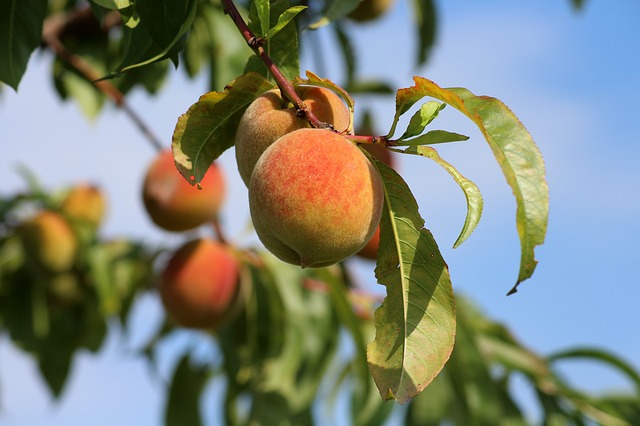
The peach has wonderful mythic associations. It is a Chinese symbol of immortality, and it is often prominently displayed in depictions of the sage Lao Tzu. There is also a legend that a famous Chinese heroine Ho Hsien-Ku who lived in 7th century BC was transformed into a fairy by eating a supernatural peach. They said ever after that she lived on a diet of moonbeams and powdered mother-of-pearl.

According to Paul Beyerl in A Compendium of Herbal Magick, in Shinto legend, Iznagi, a primary male deity, visits the Underworld where he defeats demons pursuing him by throwing peaches from the land of Light and the Land of Darkness at them. Beyerl adds that the peach is considered by the Taoists to be a sacred food.

I have a lovely amethyst carved pendant from China termed a “peach stone.” According to The Magic in Food, by Scott Cunningham carved peach pits are given to Chinese children as amulets against death. Sprays of peach-blossoms are placed over the front door during the Chinese New Year to guard Chinese homes against negativity. Symbolically they bring the blessings of longevity or perhaps confer immortality. He also suggests that as they have been in China for centuries, with appropriate visualization, peaches may be eaten to induce health, happiness and wisdom.

Every Summer I buy my peaches from a nearby farm stand. The owner always has local ones, ripened on the tree in the sun. They taste like heaven to me, and I understand why they might be considered the fruit of immortality. When I feel ambitious, I buy more than I can eat right away, peel and cut them, add a few drops of lemon juice or a sprinkle or two of sugar, and put them in bags in the freezer so we can enjoy them during the winter.

Versatile peaches can be eaten raw or cooked, as a condiment with meat or chicken or as a sauce over muffins or plain cake. Peaches in cobblers or pies, jams, muffins or even peach shortcake are all wonderful ways to enjoy this delicious fruit. Personally I like them best ripe and unadorned with anything more than the sunlight that warms their lovely plumpness.

I can remember my mother putting them up in canning jars. She would pour sugar syrup over them, then lower them into a big kettle of boiling water. Stored in the basement pantry closet, how good those peaches tasted during the long winters of my childhood. They were such a treat, especially when they were served for Sunday dinner over vanilla ice cream

Try this simple peach sorbet. Fill a plastic baggie or pint container with peeled chunked peaches sprinkled with lemon juice or a bit of sugar. Freeze them until solidly frozen. Have ready a simple syrup using two cups of sugar to one cup of water, stirred until melted, cooled and refrigerated. To serve two combine 2 cups frozen peaches with ¼ cup simple syrup, and 1 Tbs lemon juice. Process until you have soft serve ice cream and serve right away.

A Spring Recipe to Try

dandilionforwishingThe Joy of Cooking is a popular cookbook. I have a well-thumbed copy, which along with my ancient Fanny Farmer’s form the lynchpin of my collection. Cooking has been my joy since I can remember being allowed to do it. My mother was born in Germany at the onset of WWI and the resultant lack of food she endured as a child made a lasting impression. She was reluctant to let me make main dishes–I was assigned to salads and desserts, so I had to learn how to make meals for myself. My cookbooks were and still are a great help.

I enjoy reading cookbooks as well as checking the recipes in newspapers, magazines and on line. It’s fun to see what’s trendy. Some fashions I don’t care for—roasted broccoli, for instance. I also favor eating with the seasons; now that we are coming into spring it’s time for spring vegetables like asparagus and dandelion greens. Some think of dandelions as weeds, however they are beneficial in a variety of ways and good in salads as well as steamed or stir fried with other greens and/or vegetables. Their slightly bitter taste is diminished when they are combined with other vegetables.

Try this recipe for yourself, either digging the dandelion greens from your garden or purchasing them from a market. The purchased ones are milder and easier to use, yet the harvest of garden and lawn weeds can be seen as a bonus. Ingredients: ½ cup chopped onion

4 cloves of garlic minced or chopped fine

1 small to medium summer squash chopped small or 1 pound of aspargus

4 cups dandelion greens

olive oil as needed.

Method: Gardeners, remove dandelion roots and tough bottom stems. Wash them in several waters. Purchasers can skip this step. Rough chop or cut up with scissors. Steam greens briefly in a small amount of water until they have wilted down. Strain water into a cup and set aside. While you are preparing the dandelion greens, sauté chopped onion, garlic and summer squash in a olive oil, stirring occasionally, or steam asparagus. Add chopped steamed greens to sautéed vegetables. Cook until stems are relatively tender. You can stop here and serve squash as is or put into your food processor and pulse a few times to create more of a mash. Pulse steamed asparagus with dandelion greens and olive oil to taste. Delicious! Use salt and pepper as desired.

Many children and even adults are fussy about what they will and will not eat. I was brought up to finish what was on my plate or else, however I made my children consume only three bites of any food they thought they might not enjoy. They did grow up to be able to eat a good variety of foods. However, in the process I learned to be detached about any response to my cooking. Today this has made it easy for me to be a happy cook in a peaceful kitchen.