The Gift of a Smile by Tasha Halpert

bigsmile          One of my happy childhood holiday memories is of my father sitting by our fireplace near Christmas time, wrapping cartons of cigarettes, boxes of whiskey, ties and other items that he distributed to the various individuals he did business with. There was always a big pile when he was done. Then he would load them into his car and the next day he’d hand deliver them. Occasionally I got to ride with him. This was always a great treat.

Christmas memories are in themselves a gift of the season for me. I delight in recalling the images from my childhood: my mother playing carols on her violin on Christmas Eve, the table at my Great Aunt’s set with gleaming crystal and shining silver, the tree, all decorated with the carefully preserved ornaments and the foil tinsel that was always saved from year to year. I cherish these and other memories. It is always a treat to hear those of others as well.

As I was shopping in our local market a grocery wagon drew up next to mine. The sweet faced older lady pushing it beamed in my direction. “I just loved your last column in the paper,” she said. She went on to tell me a special Christmas story about her son when he was a child. I was very touched and thanked her, not only for the compliment but also for sharing her happy story.

To me that kind of experience is the same as receiving a gift from Santa Claus. Santa, whose origins go back hundreds of years to St. Nicholas, Sinter Klaas, and the Christkindl that became Kris Kringle, is seldom seen without a smile on his face, and no wonder. His job is to bring joy to the hearts of those who celebrate Christmas. The glee of young children who cherish Santa is not misplaced. Santa is about love. He does not spend money, just time and effort.

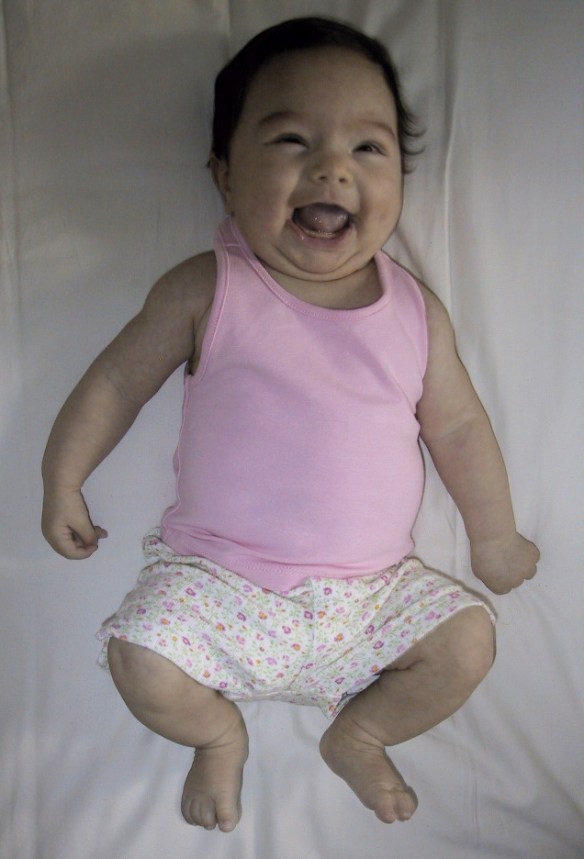
The smile of love cannot be purchased nor must it be paid for. Smiles and friendly words are to me more precious than anything money can buy. At Christmas we celebrate the birth of a baby. How appropriate! The smile of a baby is perhaps the most special of all gifts. Those who are privileged to receive such a gift know what a treasure it is.

To me a gift at the holidays whether given or received is a kind token of affection. When I give, it’s not because I feel under any obligation to do so, rather I like sharing something I believe the recipient will enjoy or appreciate, and if not that he or she will pass it on to someone who might like it more. When people give to me I am always delighted because someone has acknowledged their fondness for me. In other words, I feel blessed.

It is said that it is more blessed to give than to receive. Perhaps that is true. For myself I feel equally blessed whether I am giving or receiving. It does not matter to me whether I am the recipient or the donor. What does matter is the smile I see when I look into the eyes of my friend, family member or even a stranger and the exchange of kind regard that I feel free to accept.
 

Keeping Christmas Merry

By Tasha Halpert

Twinkles 3 (best)When I was growing up no one around me thought much about Christmas until after Thanksgiving, and even then mid December was when we would begin shopping. Once I knew the reality of Santa, I was eager to participate. I was taken to the Five and Dime in Beverly. There I would purchase stocking presents for my parents with my saved up allowance. My gifts were always practical: Pond’s Cold Cream for my mother, pencils for my dad. I usually made their presents for under the tree–Santa only brought the stocking gifts.

We didn’t put up the Christmas tree until the day of Christmas Eve. It stayed up until January 6. Elaborate house decorations were not part of our tradition, however we had lovely ornaments saved from year to year along with the real metallic tinsel that made the branches bow nicely. I do not remember much stress associated with the holiday, We had a few friends over on Christmas eve with simple snacks and went to a relative’s for Christmas dinner.

How nice it would be if today’s Holidays were as simple and lacking in stress as they used to be. I’ve had some thoughts on how to help that happen. For instance, it’s hard when the holidays bring back thoughts of those who are no longer with me. I remind myself to be grateful for the time we had together. Then I tell myself, be thankful for those who are with me still.

Music lifts my spirits. Playing Christmas carols, not to mention the lovely classical music written for this time, brings me back to myself and helps me remember what the holidays are really about. I especially like to play Christmas music while wrapping presents or preparing food. I prepare food ahead during the holidays, and I often combine kitchen tasks. Since I’m already in the kitchen, I chop vegetables for soup while I bake Christmas cookies.

Family traditions can be onerous. It is best not to “should” on yourself during the holidays. Instead, make new traditions of your own, more appropriate to your current life and lifestyle. One of mine is to bake cookies for those who have been helpful to me during the past year: My garage mechanic, the kind folk at the library, the postman, my hair stylist.

Here is one of my easy cookie recipes you might enjoy making and sharing. Jiffy Jam Delights: Bake at 375 for 10 minutes on a well greased cookie sheet. Makes 30 to 36 delicious cookies in a half hour from start to finish. Ingredients: 1/2 cup Butter, (no substitutes please),1/3 cup Sugar, 1 Egg, 1 Tsp. Vanilla, 1/4 tsp Salt, 1 2/3 cups all purpose Flour, 2/3 cup Jam (raspberry preferred by us. Method: Beat butter, sugar well. Add egg, vanilla salt. Blend in flour. Drop from a teaspoon onto greased sheets. Make a dent in the tops of the cookies and fill with a half teaspoon or so of jam. Bake only until firm and dry to the touch. Cool before eating. Jam is very hot.


Peace At Christmas, by Tasha Halpert

Johnnys tree2Even as a small child I was aware of the chaos of war. During the second World War my mother’s parents were still in Germany. My mother had not heard from them for almost ten years. Finally when the American forces broke through, her parents were able to communicate. I watched her wrap packages with food, clothing, and other necessities. Although there was still chaos and difficulty in Germany, at least my mother’s heart was at peace.

My cousin who lived in Cuba in the forties endured strife growing up. She wrote me of how shots might ring out and everyone took cover. I grew up without any direct experience of this kind, and I was fortunate. Now it seems that no one in the USA is safe from warlike behavior. What can we do to combat the fear that has begun to pervade our once peaceful atmosphere? I believe that on one hand we can raise up our courage and refuse to be intimidated, and on the other that we can work for peace within our own lives, most especially now.

The words “Peace on Earth” resonate throughout our Christmas carols and scriptural messages, and even our Christmas cards. Yet to think about peace amidst the hectic shopping, baking, wrapping, mailing hustle bustle of the holidays seems difficult. However I can promote peace in small ways.

I can invite a friend to Christmas dinner, bake cookies for the kind man who takes care of my car, listen sympathetically to someone who needs an ear. I can hold the door for someone or the elevator, volunteer to be of help where help is needed. Equally important, I can nurture peace in myself through meditation, eat well for a peaceful stomach, and of course, get enough sleep.

Taking time for myself is vital to my sense of peace. Remembering to breathe deeply, especially during a nature walk helps me feel peaceful. So does hugging a tree. When I am on my feet a lot I take fifteen minutes to lie on my bed with my legs straight up against the wall. This feels wonderful and it pacifies my body. When I feel more peaceful within myself, I influence the atmosphere around me to harmonize with my peacefulness.

I can talk all I want about the need for peace and the lack of it in the world, and that will change nothing. Alternatively I can set about making peace myself, promoting peace in my own way. I can be of service in the cause of peace. While I cannot influence nations or even large groups of people, I can be of help in small ways and thus help make peace.

There is a story about monkeys on an island learning to wash their food. When enough monkeys did that, those on neighboring islands began doing the same. There was no communication between them yet they were influenced. When we are peaceful within ourselves we help others to become more peaceful. When I work for peace in my own life, I am also working to bring peace in the world around me, and perhaps, who knows it may even spread out from there.

Smelling the Lilies

Star Lilies 4       Of all the flowers with delightful scents, there are three that are favorites of mine: Lilies, Roses, and Hyacinths. So it was that when I was shopping in Trader Joe’s last week and saw the Star Gazer Lilies for sale I could not resist buying a small bunch and bringing them home. As I had hoped they would they have filled our small apartment with their wonderful scent.

As I sit here writing my column I am breathing it in. As I do, these colorful lilies with their glorious perfume remind me over and over again how important it is to give to myself as well as to others. It has taken me more than a few years to recognize the importance of doing that. My dear mother called such thinking selfish. She was raised in a home where children came last, after guests, parents and other adults. To think of oneself first, if at all, was not encouraged.

There was no intentional cruelty involved in this attitude. It sprang from a different way of seeing the world and of acting on that viewpoint. There is a strong behavioral edict that sprang from traditional thinking that it is better to give than to receive. While it is good to give, there are psychological reasons that were not taken into account by this edict that need to be addressed. In addition there is the question of balance versus imbalance to be considered.

I was raised in much the same way. I remember once being surprised when a friend said that we must be home by four o’clock for her children’s TV program. That the wishes of children were something to consider was a new thought for me. As a young mother it never occurred to me that children’s choices were anything to be considered.

In the years since then I have done a lot of learning. A most important lesson of my lifetime has been that if I do not give to myself I will not have much to give others. My cup must have something in it before I can give from it freely. My giving must be in balance with my receiving. What I have discovered, sometimes the hard way is that if I give only to others and not to myself I develop unconscious resentment that can lead me to act unkindly, or be overly critical without meaning to. This can creep up on me and I need to make sure I notice it when it happens.

From the time I was small being kind has always been very important to me. Thus it has become vital that from time to time I assess my behavior to make sure I have been giving to myself enough to balance my graciousness to others. It is not always easy to remember to give to oneself. It often initially feels so good to give to others that it is easy to forget to include oneself. As I inhale the perfume of the wonderful lilies I am reminded again of how grateful I am for this gift I gave to myself, and of how glad I am that I bought them.

Text and Photo by Tasha Halpert

The Gift and the Wrapping

by Tasha HalpertKathy's Christmas tree

Being somewhat uncoordinated when it come to things like wrapping packages, I have always struggled with trying to make my presents look reasonably attractive. Some people are really creative with how they wrap their presents. I envy them. I wish I had that kind of creativity. My mind tends to run along more utilitarian tracks and I don’t always think to add the trimmings.

I have a friend who does lovely wrapping. She told me about the finishing touches she had put on the colorful hand made gifts she had crocheted. She went on to tell me that someone said to her that the decorative packaging she had purchased to do this was extravagant, asking why she had spent so much money on something that would soon be discarded.

I understood completely why she had wanted to do this. Her gift was special and she wanted it to look that way. Her expenditure made perfect sense to me. While I tend to be less decorative in my thinking I can admire someone who knows how to do up a package and make it look special. My artistic friend has very clever fingers and knows exactly how to fix up a package to make it look extra special. I wish I had her skills.

The care with which a gift is presented says something important about the giver as well as the gift. Stephen and I accumulate presents for family and friends all during the year; my wrapping though not fancy is part of the caring. I used to have a dreadful time wrapping presents until a friend who had done professional wrapping for a department store showed me some useful tricks. Now I can make my packages look much more attractive.

There was a time when wrapping paper for Christmas gifts was not as inexpensive or as available as it is now. When I was a child we used to save all our Christmas gift paper from year to year and reuse it as often as we could. The use of scotch tape was discouraged and gift paper was sturdier as well. I remember one special piece of wrapping paper that appeared every year on a different present. It had an elaborate design and was very lovely as well as quite durable. In her elder years as the Christmas presents were opened my late mother would spend her time folding the wrapping papers. I expect this brought back vanished memories of when we were all young.

At this season of giving many feel compelled to spend money they don’t have to buy gifts for others who probably don’t need them. The simple gift of a hug and a plate of home made cookies or a hand made card might do just as well. Even young children need to learn to be content with less rather than yearn for more. Whatever I give at Christmas is primarily a token of my affection, and it need not be expensive or fancy. I will, however, wrap it with care and love because these are the real gift I am giving.

I am Thankful

Stephen and Tasha Hug          I make a practice of being thankful. I have often shared the little prayer I say a dozen or more times a day for various and sundry blessings. However it is not necessary to pray one’s thanks. It enough to simply acknowledge that one is grateful. My gratitude for what I have is enormous. I am also very grateful for much that I do not have, or may have had and no longer do.

What we have and what we do not have may both are something to be thankful for. Did you ever think back to when you were little and wanted something–a pony, perhaps? Most likely you didn’t get it, and most likely if you had you would soon have tired of taking care of it. Ponies require daily brushing, cleaning up after, feeding, petting, riding, and more: taking care of the saddle, bridle and all the required tack. They are a lot of work, and the child who wants the pony doesn’t think about that.

We seldom think about the consequences of receiving what we wish for. There is an old adage that goes: be careful what you wish for, you may get it. I remember admiring big houses, and oh how I wished for a swimming pool. One day I acquired both. That pool was more work than it was worth, although many people enjoyed it. However they weren’t tasked with the care of it as I was.

I used to think I wanted more space, and now having had two large houses–though one was smaller than the other, I have learned that every bit of space I may have requires care and looking after. I have learned to be content with a lot less space that I ever thought I would be.

As well I am thankful for those difficulties I have left behind. It is lovely not to have to clean three bathrooms each week, tend a huge garden, prune lots of bushes. When I hear a child yelling in the supermarket I am delighted it’s not my job to care for a howling toddler. I am also glad not to have be cooking a big Thanksgiving dinner and hosting a large group of people. I enjoyed and was thankful at the time I did all these things, now I am glad that time has passed.

There is much else I am just as glad not to wish for any longer. I used to think I would like to go up in a balloon, I don’t feel the need to do that any more. I don’t want to jump out of an airplane with a parachute either. I am thankful that I don’t need to do these things to be happy or feel fulfilled.

Thinking about thankfulness as I do each and every day but most especially at Thanksgiving I am struck by the way I have learned what I truly want and how fulfilled I feel. Once I yearned to be more popular. Now I am thankful for the friends I do have. I have learned that what is important to me are the small daily pleasures of contact with people and our communications. Most of all I am grateful for my beloved partner and best friend Stephen. Having a special friend with whom to share my life is my greatest blessing.

Making Improvements

Belfast veggies 8Making Improvements, by Tasha Halpert

When I look at a situation it is often with an eye as to what can be done to improve it. I think I developed this habit at an early age because my dear mother was seldom satisfied with anything. She always seemed to have a suggestion for an improvement. Most likely I inherited my attitude from her. However, this is not a bad way to be, and I’m not complaining. Yet it’s not necessary to see a flaw or a need. Perhaps another way to think about that is to see what I might do in general to be of help or to make an improvement..

My late son Robin greatly enjoyed gardening. He loved the earth and felt very close to nature. Wherever he was living he would plant vegetables and carefully tend them. He was proud to feed himself from his efforts. In addition as do the Native Americans, he believed in leaving a gift at the site of any herb or vegetable that he harvested. He always gave back as much as he could. The size of the gift was not as important as the effort.

I was reminded of this as I thought about what someone recently said to me: “I believe in leaving the world a better place than I found it.” The speaker went on to tell me how he had learned this when he was around ten years old and had made an effort to practice it always. This conversation stayed with me for a time, and I considered ways I might make the world I lived in a better place–not because it was lacking but because I might add something.

Paying it forward is one way to make a positive difference. There are drivers who pay the toll of the person behind them, or those who pick up the tab for a stranger in a restaurant. Some businesses do a holiday practice where small gifts are given in secret. I have always enjoyed sharing little presents or passing on what I enjoy or find useful. One friend of mine liked to say a prayer when he left any seat where he sat: “May whoever sits here after me be blessed.”

It may be that sometimes we think that small gestures are not significant. I find it is surprising how a little effort can make a big effect. Smiling at people, for instance, or saying hello to people you might not know personally. Of course there are those who might look at you suspiciously, still, it is not possible to please everyone and if a person feels uncomfortable with a smile, perhaps they need more of them in their lives.

If I can’t use a grocery coupon I leave it where it may be found. I often pay a stranger a compliment. I look around for ways to bring unexpected joy when and where I can. If I see someone who needs help I offer mine. Small efforts like these are my way of adding something positive. Mother Teresa said it so nicely: “We ourselves feel that what we are doing is just a drop in the ocean. But the ocean would be less because of that missing drop.”

Finishing a Book

On the Edge       Like most who like to read I have several favorite authors whose books I look forward to. When I finish one it is always with a sigh, as I anticipate a wait of one to whatever amount of years before the next one emerges from her or his pen. I was fortunate that when I discovered one of my very favorite authors, Diana Gabaldon, she had already written seven books in the Outlander series. I found her books so fascinating that I read nothing else for nine months. This is very unusual for me. However, it was justified.

          Now I have just finished reading her latest book, Written in My Own Heart’s Blood. While I don’t normally read 814 page books, hers are a very special exception. They are written with a background of accurate information about the 18th century, both in America and in Scotland, and what it was like to be alive then. The characters are vividly portrayed and their interactions are authentic as well as interesting. Even though the size of her books is somewhat daunting, they are a compelling read.

          Her characters are extremely interesting. The villainous ones are seldom completely or gratuitously so; the well behaved ones occasionally misbehave. Moreover, her research into the time period she writes about is very thorough. I have learned facts I otherwise never would have known about the American Revolution together with its participants on both the British and the Colonial side. One of her chief characters, the heroine is a medical professional. Ms Gabaldon writes in astounding, sometimes wrenching detail about various medical procedures performed during the heroine’s adventures.

          One of my favorite ways to occupy my mind is to think about something I am reading. I find that this helps greatly to keep me from worrying, fretting, or otherwise engaging in negative thinking. The antics and experiences of a good set of characters is a wonderful distraction from not only the usually dreadful news of the day but also any concerns I may have about things I can do nothing about.

          One of the reasons I am sad to be finished with this current book, is that I more often than not thought about the intriguing characters when I was doing chores or performing other activities that did not occupy my whole mind. I greatly preferred wondering what was going to happen next or why one of the characters is acting in a certain way to being nervous or concerned about what was or was not getting done or happening.

          Diana Gabaldon says it takes her four years to write one of her “big books.” I am sad to have to wait that long to read the next. If I get too impatient for the next one I can probably reread this one, as it is so rich I have most likely missed parts of it. However I am still so full with it I haven’t as yet chosen another book to occupy my mind.

What Does It Mean To Be How Old?

Young children are very definite about age. Once they know how to tell you they will often say proudly, “I’m four and a half,” or “I’m almost eleven.” They are eager to be as old as they can for however old they are. As we age we tend not to think in terms of fractions of years, and as we get older still we may even begin to fudge about the accumulation. One reason for this might be our expectations of what it is to be how old.

At an open mic I attended recently a man recited a humorous poem about turning sixty. It got me to thinking about age, and how at different times in my life I have had such different opinions about it. How old I am seems to have an influence on what I think about the number of years a person has lived. Then I recalled a conversation I had with a friend when we were both in our late twenties and had to laugh.

“I hope I look as good as she does when I’m that old,” I said. The person in question was in her very early fifties and at that time in my life she seemed to me to be positively ancient. My friend laughed and said, “You may feel differently one day.” Of course she was correct. I didn’t think much about age at the time except that to me anyone over forty must be getting on in years.

Time went by and the years I was accumulating took on more significance. I also discovered the various prejudices associated with any particular age. When I was in my fifties I thought people in their seventies or eighties were well–old. Now the more years I add on the more find myself revising my opinion of how old is old. It seems to me that judgments concerning one’s years are definitely a relative proposition.

When I was a seventeen year old high school graduate going off to college I thought and felt myself to be “all grown up.” When I married and had two children before I was twenty I felt very mature indeed. Today the idea of my eighteen year old granddaughter getting married and having children seems positively laughable. Yet no one at that time no one thought too much about it. Recently I was watching a movie made in the thirties; a white haired, obviously elderly woman with a cane proudly proclaimed herself in a shaky voice to be, “Eighty three years old.” Today eighty anything often looks nothing like that.

The world has greatly changed in this respect. People live far longer and in much better health than they did eighty years ago. When my grandmother died at what seemed the ripe old age of eighty that seemed quite appropriate. Now I have a friend older than she was and she seems far younger. When people ask me how old I am, I tell them I am ageless. I no longer have expectations concerning age. They interfere both with my own and with others’ observations about me. How old is old? I have no idea.


Mama and her birthday cake

Perspective Makes the Difference

It is always interesting to see how different things appear as well as feel when one’s perspective has changed. The way I saw things when I was younger in years and experience has altered a good deal in the intervening years. Once in a while I am reminded of this, as I was recently in a conversation I had with a friend of mine. She was lamenting the fact that while she was happy, her children wanted things to be different.

I thought how years ago I visited my late mom and dad in the new home they had bought in Florida. Compared with other places they had lived, it seemed small and somewhat dingy. They loved it. My mother raved about her grapefruit tree, my father proudly pointed out their small swimming pool, about two and a half to three feet deep and maybe eight or ten feet square. It was inside a screened in room with a roof. Of course I said “How nice, I’m so happy for you.”

It’s true that I was happy for them, yet I felt sad too. It seemed to me that they would be happier if they were in something bigger and more grand. Previously for a few years Daddy had owned a large home in Bermuda. It had lovely gardens, many rooms and a resident ghost. The house they had lived in while I was growing up, while not grand, was quite a bit bigger and more spacious than where they were now. Even their summer home in Maine was larger than this one. How could they be content in this smaller space?

That was many years ago. I now fully understand why my parents liked their simpler, more manageable home. I’ve reached an age that is some years older than they were then and I relish the simplicity of my life in an apartment as opposed to what it was like in our two previous houses. It is a joy not to have to clean two or three bathrooms every week. I adore my little kitchen and function much more efficiently in it than in the roomier ones I cooked in, in the homes we owned in the past.

To be sure there are downsides to smaller, simpler living quarters, there is less room for possessions and that means eliminating certain items I might prefer to keep. There are limitations on what I can acquire and how much. However, the downsides and limitations are more than compensated for by the blessings.

My friend, who recently moved into a nursing home tells me she is really happy in her little space. “I wish my children could feel as glad as I do for my being here,” she told me. “I have no worries, the staff take wonderful care of me here, and I am so very comfortable.” Perhaps her children feel guilty and believe they are supposed to be caring for her themselves. That is a truism in our society, yet it is not always true. From my friend’s perspective, everything is just wonderful. I know exactly what she means.


Photo by Tasha

Photo by Tasha