The difficulty with anticipation, especially when one is an adult, is that it can suck the juice out of the actual event…
Source: A Sip of Spring in January
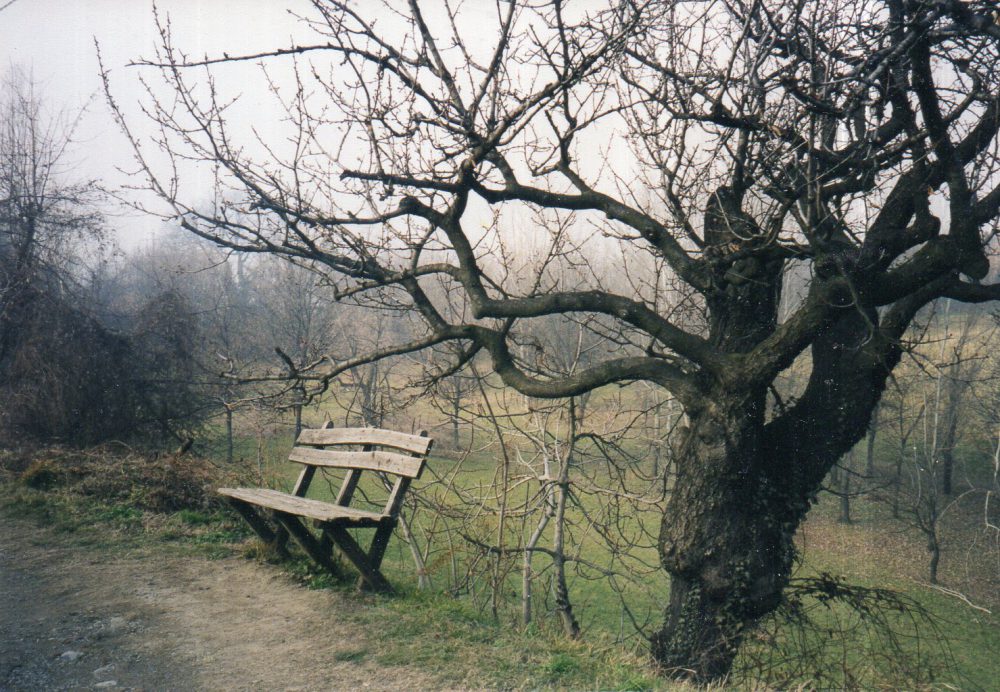
The difficulty with anticipation, especially when one is an adult, is that it can suck the juice out of the actual event…
Source: A Sip of Spring in January

The school I attended as a child had no weeks of vacation between Christmas and March. I had little to look forward to except an occasional snow day or being home sick with a cold. Not that I liked being home sick—my mother was not one to allow me to “enjoy poor health” as she put it. This meant I was confined to bed without much to do and no pampering. The best I could expect was an opportunity to listen to the radio. Television didn’t arrive in our household until I was twelve. The winter days were dreary with school and homework. I didn’t like skiing and skating was no fun so I spent my free time indoors reading. The advent of spring at least meant I could spend more time outside.
There is a deceptively warm period in the first month of the year called the January thaw. It usually comes at the end of the month, but sometimes earlier. It is the opening note of a long prelude to spring. Sadly, it raises hopes too soon dashed. February sets in, the snow falls, the cold descends, and winter reminds us that we have a long way to go. The upside is that at least the days are longer and brighter as the sun grows stronger and shines from higher in the sky. The burgeoning light keeps us apprised of spring’s actual advent.
Expectations often create disappointment. However it is difficult to avoid having them. The anticipation that is the creator of my expectations is what happens when I yearn toward something that is just out or reach or even beyond my control, like spring. This habit begins in childhood. Once we outgrow the present moment mindset of our early years, we are vulnerable to it. For instance, when the circus was coming to town it was a big event in my young life. My grandmother always took me and every year I loved it.
The difficulty with anticipation, especially when one is an adult, is that it can suck the juice out of the actual event. A few years ago Stephen and I took a friend’s two children to a local circus in a town nearby. Based on my memories of Barnum and Bailey, I had unrealistic expectations of the little circus and did not enjoy it nearly as much as I would have otherwise. On the other hand the two children we took had a wonderful time. Unexpectedly, my enjoyment ended up being about that rather than about the performances.
Today in the news I saw that the circus of my childhood—Barnum and Bailey, will be no more. This may have started I suppose when they released the elephants and now they are disbanding completely. I wonder if those who like me once anticipated the arrival of the circus will be disappointed. I haven’t been to a Barnum and Bailey performance in many years myself, however I have my memories. Thankfully I can sip those memories whenever I wish. That’s the blessing of memories, like food in the pantry or the refrigerator they are available when I wish to reach for them. Memories of spring, however, cannot compare to its actual advent, and that I eagerly await.
Tasha Halpert
Over the years I have enjoyed experimenting with different recipes and learning what works and what does not. For instance, it might be just fine not to use a recipe for a vegetable casserole but under no circumstances try to make cookies without one.

As I have said before, I did not learn to cook from my mother. She did not think me responsible enough to deal appropriately with food, something that to her was a precious substance and not to be wasted. After I got married I learned how to cook from a cookbook. I made some funny mistakes and we ate them anyway because we were on a rather limited budget. Back in the 50’s you could actually live on $30.00 a month for food. To be sure, we ate a lot of hot dogs.
Over the years I have enjoyed experimenting with different recipes and learning what works and what does not. For instance, it might be just fine not to use a recipe for a vegetable casserole but under no circumstances try to make cookies without one. Of all the many recipe collections I possess, my old Fanny Farmers cookbook is my got-to for recipes. I look there first when doing research. There is something tried and true about a book that has been around so many years.
In addition, I am what you might call an old fashioned cook. I do not use nor do I possess a microwave oven and I hope never to have to have one. I know many people love them and find them convenient. No doubt they are. However, I feel no need to hurry my food along that way. By definition comfort food need not be cooked quickly. Sometimes the very best food is some that takes its time and lets he flavors develop.
Here are two of my favorite comfort food recipes: Onion soup and Bread pudding. The onion soup recipe is one I devised from trying different ways to make it. The Bread pudding has evolved from several recipes, my favorite being from The Cat Who Cookbook by Julie Murphy and Sally Abney Stempinski created from dishes in the “Cat Who” series by Lillian Jackson Braun.
Onion Soup Tasha: To serve 4 to 6, thinly slice two medium to large onions to make 1½ to 2 cups. In a heavy bottomed pot melt 2 Tbs butter and 2 Tbs olive oil. Add and sauté the onion, stirring frequently over medium heat. When onion is transparent, reduce heat and continue to cook uncovered over relatively low heat for an hour, stirring occasionally. Add 4 to 6 cups beef broth. Low sodium is best. Cook 15 more minutes and serve with garlic bread, or melt some cheese on toasted bread and float it on top for the French version.
Pleasing Bread Pudding: Depending on appetites, serves 4 to 8. Butter a 1½ quart casserole. Remove the crusts from 4 slices of firm, not soft bread. Cut or tear into smaller pieces. Place in casserole. Measure 1 cup any kind of milk, beat in two eggs, pour over bread. Sprinkle on 1 cup dried fruit—black and/or white raisins, dried cranberries, cherries etc. Sprinkle on 1 teaspoon cinnamon and ½ cup sugar. Add 1 teaspoon vanilla. Stir well. Add another cup of milk to make 2 cups. Stir again. Place casserole in a shallow pan filled with water. Bake at 350 for 45 minutes or until nicely browned on top. Tasha Halpert
My grandmother lived alone in Boston. A widow for many years she had an unusual way of celebrating New Year’s Eve. As my father told it, she would pick a movie theater that was showing a film…
Source: A New Year, A New Beginning
 My grandmother lived alone in Boston. A widow for many years she had an unusual way of celebrating New Year’s Eve. As my father told it, she would pick a movie theater that was showing a film she wanted to see and go to the last show. In those days on New Years Eve the theaters would pass out noisemakers and at midnight everyone would sound off with them.
I don’t know if any movie theaters do this today; certainly when they did it then it was a wonderful way for her to celebrate. Seeing the old year out is a in whatever way chosen is a ritual that has been practiced by peoples of all times and places for centuries if not millennia. I enjoy my personal rituals, which include ringing all the bells in the house not to mention kissing my husband a midnight. Then there are the ones I also practice for New Year’s Day.
The old year now past holds both failures and successes. I need to take these into account as I do my rituals to begin the New Year. What are my expectations? My resolutions, my hopes and dreams for the next twelve months to come. Realistically I must base them partly on what has been as well as what I hope will be. The trick is not to limit myself by any failures nor be overly egotistical about any successes.
When I look out of my window in the morning after a fresh snowfall, the gleaming white expanse seems like a new beginning. The crusty, trampled, slightly soiled snow beneath is hidden from sight. Everything looks fresh, ready to be inscribed with the present. A new beginning is a blank sheet of paper, a bed newly made with clean sheets, the first breath of air I take when I walk out of my door. A new beginning is a wonderful opportunity.
However, I must remember that beneath the newly fallen snow are the remnants of the snows that fell days before. They lurk there like the mistakes, the mishaps, the opportunities not taken and the regrets I may have for all that remains undone. A new beginning must also take into account what has gone before. Mistakes and misses can be useful if I am willing to learn from them. If I am not, they remain like the old mounds of snow banks–freshly covered but still obvious in any parking lot.
I have always enjoyed my New Year’s Day rituals. I try to do a little of whatever I hope to be doing for the next year: corresponding with friends, calling family, writing a poem, cooking, and other activities that I enjoy. In addition I make two resolutions. Like most I haven’t always kept them. Still I keep hoping. My favorite activity on New Year’s Day is to look back, to see how far I have come, and to plan for the future. Each year brings its share of joys and sorrows, regrets and triumphs; I welcome them all.
In days gone by when my children were small and Christmas was something of a big production, by the evening of the 25th everyone was satisfied to play with his or her toys, eat the festival lefto…
Source: After the Gifts Are Unwrapped
 In days gone by when my children were small and Christmas was something of a big production, by the evening of the 25th everyone was satisfied to play with his or her toys, eat the festival leftovers and chill out. It was then that I would take my guitar in hand and drive with it to the Beverly hospital to play for the patients. I was a regular volunteer there so I would don my pink volunteer jacket and go around to the wards and private rooms to play Christmas music together with my usual folk tunes.
During my time in Manchester-by-the-Sea I used to play my guitar several times a month and sometimes even more often for the patients who were well enough to be listening. However I did have to be mindful of my lyrics. This being in the days of Pete Seeger and the Weavers, my repertoire consisted mainly of traditional folk songs, some of which had lyrics that might not sound cheerful such as: “Go tell Aunt Rhody the old gray goose is dead,” or one that began “When I’m dead and buried, don’t you weep after me,” a rousing spiritual that was great fun to sing as long as I omitted the first verse and went right into the body of the song.
On Christmas night I felt as though with all the visitors having gone home by then, the patients could use a bit of cheering up. After all, the visitors were returning to their families and friends while the patients were still in their rooms or wards and perhaps more aware of being there than usual. It was heartening to see the welcoming smiles on their faces and to receive their enthusiastic approval. More than once someone who had been relatively comatose would actually clap their hands and manage a smile.
Today my children are grown and gone and my family is for the most part scattered far and wide. Holidays are quieter. Nor do I play my guitar any longer, though next year I hope to have learned some carols on my new harp. However, I don’t expect to be singing them in a hospital. Life brings changes, some welcome, some not so. The happy memories of Holidays past become gifts to cherish with joy, more so perhaps than any other gift beneath the tree.
Now that the presents have been opened and our holiday meal consumed, I find myself reminiscing to myself over past holiday celebrations. I note familiar faces that have moved on from my life. Some still walk this earth others do not. I am reminded of the places where I have lived in the past and see again the rooms as well as the homes that hold the memories of holiday times. Each year holds its blessings. I am grateful for each and every one, and most of all I am grateful to be able to celebrate with joy the love that flows to me from those who each year remember me.
As a young child I was only allowed to decorate the back of our Christmas tree. An artist, my mother had a specific vision of how a tree ought to look. She once told me her ideal tree wou…
Source: Greens for the Holidays
 As a young child I was only allowed to decorate the back of our Christmas tree. An artist, my mother had a specific vision of how a tree ought to look. She once told me her ideal tree would have blue and silver balls, white candles or lights, and silver tinsel hung exactly evenly from every branch. Needless to say this was not the case in our home. We had a variety of ornaments, some of which were antiques handed down from another era.
As I grew older I was allowed to decorate more of the tree, and finally the front. The year I was twelve, my mother was too busy to do anything and I got to do the whole tree. I loved my task and gloried in my opportunity to arrange the lights, the colorful ornaments and the tinsel. We didn’t have any other greens in the house, however we always had a wreath on the front door.
Looking around at the gaily-decorated wreaths on the doorways of homes in my neighborhood, I had a funny memory. I was out for a walk one day years ago, and a gentleman stopped me: “I beg your pardon,” he said, “Why are there so many wreaths on these doors? In England that signifies that someone has died.” I laughed and assured him that it was a Christmas custom in the States to decorate one’s doors in this way. The presence of these evergreens, along with others is a symbol of the continuation of life.
Those who have celebrated the light festivals of the holidays have always decorated their homes with fresh pines, spruce, holly and mistletoe. With the prominent bare branches of deciduous trees, it would be only natural for them to see evergreens as representing hope for the future. The minds of people who lived in more primitive times would fasten on these as symbolizing a potential for a future that seemed distant and dim in the cold, dark days of midwinter.
The branches of greenery we place on mantles, over doorway, and use in table decorations were once thought to bring the benevolent spirits of the trees into people’s homes to bless them. There are many traditions from many countries concerning the use of greenery for the holidays. Mistletoe, the evergreen vine that is often hung over doorways has a long history as a symbol of peace, and later as an opportunity to steal a kiss, thanks to the evolution of a tradition.
The tree that we decorate with lights and other ornaments is another important symbol of the continuation of life. Various trees worshiped by the pagan religions were central to holiday celebrations. Our Christmas trees are part of a long line of traditions that goes back into the mists of history. Our decorations too come from a variety of sources, ranging from ancient Rome to Germany and the Scandinavian countries. Whether we are celebrating the Solstice, Hanukah, Yule or Christmas, what we are really doing is affirming the eventual return of life and light to a dark, seemingly lifeless earth.
 Pujakins