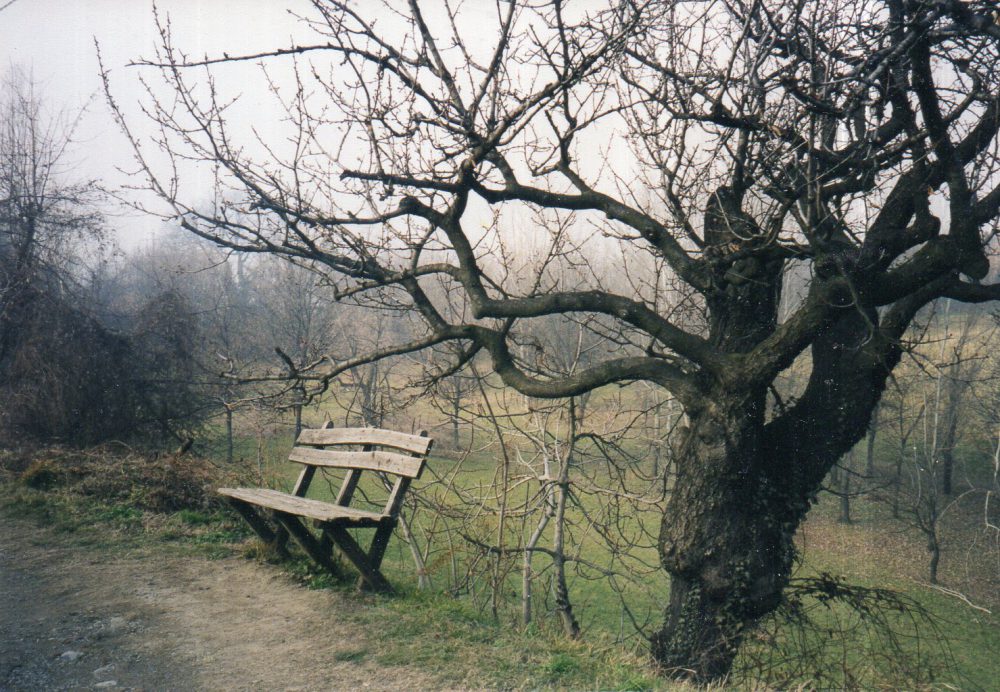
 On Easter after church, we usually went to dinner with my Great Aunt Alice in her big house next door to the cottage my parents rented from her. She would have a beautiful table with gleaning silver, fragile china and sparkling crystal goblets set in the large dining room she used for formal occasions. Once the soup course was done and dishes removed, people brought in to help, carried around platters of meat and dishes of vegetables. These would be followed by dessert and finally, finger bowls with a sprig of green lemon verbena floating in them. The silver candy dishes with chocolates I eagerly eyed all through the meal were finally passed around.
This weekend holds Easter, a Christian Holiday and Pesach or Passover, a Jewish one. Both are important in the tradition of family gatherings. Both have an element of ritual that is central to the celebration. Carl Jung the eminent psychologist taught us about what he called the collective unconscious. Briefly stated this is a kind of universal memory that underlies all of human consciousness. It is not individual– what we remember for ourselves, but comprised of the memories encoded in symbols, of the whole human race.
The collective unconscious is like a vast rich sea in which each of us is a drop. We swim in it, and thus make our connection to the psychic history of humanity. The symbols and rituals of the holidays are present within it. These provide pathways that we honor with our traditions. For instance, eggs are a universal symbol of fertility. They are found in myths from all over the world. The use of eggs in Easter baskets goes back to Germany. It was brought to this country by settlers in Pennsylvania.
The gathering for the ritual recitation of the history of the Exodus at Passover is another important connection to the past. Known as a Seder, it recreates the connection to Jewish peoples of history. The Easter bunny, actually originally a hare is an ancient symbol associated with the Moon. Both Easter and Pesach are full moon based, rather than on a fixed date. Lilies grow from bulbs, symbolic of regeneration and rebirth. Spring the season we celebrate Easter and Passover is when new growth, even before the sprouting of last year’s seeds, emerges from bulbs. We wear new clothes to symbolize this newness.
As we come together to celebrate, we are connecting to one another. As well we are expressing humanity’s roots. Our ancient religions and spiritual paths, even those lost to history live again in our minds and hearts. Yes, there are reasons we celebrate linked to historical events, and yes there are links within us to peoples and even to places in our distant past that we are part of through the symbols and rituals we incorporate. The chocolate rabbits, the marshmallow chicks, the flowers and feasts, even the lovely Easter hats are of greater significance to us than we might think, for our celebration is enhanced by these echoes from our shared human history.
 When I was a child there was a game called musical chairs that was often played at birthday parties. Enough chairs minus one, to represent the number of children present were placed in one or two rows and as a tune was played on the phonograph, participants marched or scurried around them. When the music stopped you had to find a seat. One chair was removed each time until by the end the winner was the person who sat in the remaining chair. I disliked the game intensely. I wasn’t an aggressive child and often lost out early. I hope it has fallen out of fashion. We never played it when my children were growing up.
 When I was a young child Easter was an exciting time. I got to wear new clothes and a big straw hat. I remember one with a pretty grosgrain ribbon around it. The ribbon hung down in the back and in my memory it is blue. At Christmas and Easter we attended my father’s church as well as my mother’s. I liked his best. Not only did they sing hymns but also at Easter geraniums lined the church driveway for children like me to take home after the service. Then we would go to a relative’s for lunch and there would be candy after dessert. My mother did not approve of candy so we seldom had it at home unless someone brought it. That was my Easter celebration.
 Pujakins