Fish for Dinner

Heartwings Love Notes:   Fish for Dinner

by Tasha Halpert

Heartwings says, “There are good reasons to enjoy eating fish, regardless when.”

My dear late mother was usually faithful to her Catholic upbringing and observant of its rules. She was aware that eating fish on Fridays was what good Catholics did. So we did, often on Fridays.  That was, of course, one of the rules. Her fear of the wrath of God for disobedience, was real, but did not extend to this most minor of transgressions if she didn’t happen to have fish on hand.

 When it came to us children, she was one to invoke the fear of God in us for our transgressions, large or small. “God will punish you if…” was often on her tongue when some misbehavior was in question or perhaps in evidence. The nature of God’s punishment was left unspoken, so I was never sure what that might be.

On the other hand, there were punishments she herself imposed. Her chief one for me was my having to sit on the piano stool for anywhere from 15 minutes to an hour, after being “put on silence.” For major transgressions there was also the application of the less frequent but more physically painful back of the old fashioned wooden hairbrush to the rear end. Physical punishment has gone out of style these days. Depriving children of cell phones may have replaced it—a different sort of pain.

Eating fish, however, is still in style whenever it is eaten. For some, this recipe could be useful for the season of Lent, for anyone it’s a good all around the year way to cook fish. If you are or wish to be cooking dairy free, use coconut milk, not the kind that comes in cans, but that which is unflavored and on the shelf in cartons or the ‘fridge.  My daughter remembers that years ago I used to use regular milk. I never bought fat free.

For a family of four, depending on appetites and preferences, plan on one and one half pounds of cod or haddock, or other firm white thick fish. Place it in a shallow baking dish and pour around a cup of milk over it to fully surround the fish. Bake at 350 around 25 to 35 minutes depending on the thickness of the fish. Fish is done when it flakes easily at the touch of a fork. Now or prior to start of cooking, as desired add seasonings such as thyme, tarragon, or your choice, salt, pepper, or garlic ground or powdered.  Serve with one or two vegetables (example: orange squash and green beans) for color and texture variety.
Heartwings Love Notes 2019: Soup to Warm You Up

Heartwings says, “Warm up on cold days with good, nourishing soup.”

It’s definitely soup weather, and while there are many recipes floating around, I thought I’d share some ideas and suggestions of my own. When I want something hearty to serve Stephen and me for several meals, I check my pantry shelves for lentils, split peas, or mung beans. Any will do in this recipe. Measurements are not fixed in stone and really depend on your taste.

The starting lineup is applicable to any good soup recipe and is the beginning of most of mine: Have onion, celery, and (optional) garlic, together with butter and olive oil for sauteing. Chop onion and celery to make approximately ½ to 1 cup each. 2 Tbs chopped garlic will be enough for good flavor.

I use celery labeled organic celery hearts. I prefer sweet onions for their tear free chopping and milder taste. Try using scissors to cut the celery stalks. Sauté these two for around 10 minutes in around 2 tbs each of butter and olive oil. Add chopped garlic toward the end, when onion and celery are beginning to look transparent.

Have rest of ingredients on hand: 1 tsp dried thyme leaves, 1 or 2 bay leaves, ½ tsp dried savory leaves, I tsp ground garlic or ½ if using fresh–see above. Salt and pepper to taste. If you have other herbs you like, feel free to use them, or none.

Have ½ to 1-quart rich beef or chicken broth, 2 to 4 cups water, 1 cup lentils, mung beans or other dried legumes as desired.

Add liquid and legumes to sautéed vegetables: ½ box broth to 2 cups water, double for 1 cup dry ingredients– ½ cups to 1 cup lentils or other legumes. Bring to a boil and return to simmer for upwards of one hour or more. This keeps well and is better the day after making, it when flavors have a chance to develop.

The same base, perhaps minus the fresh garlic, works well for a good chicken soup. I use the boxed bone broth unless I have some I made from the bones of a recent chicken dinner, boiled up with half an onion and a stalk of celery for flavor. The vegetables for a tasty chicken soup can include more celery and some carrots, if you like. You might substitute dried or fresh rosemary for the savory. If you wish, you can add rice or pasta once you sauté the onion and celery.  If you are using cooked or canned chicken you need to cook the vegetables and rice or pasta in the broth but add the cooked chicken only at the end just to heat it up nicely. Snipped fresh parsley can be added then too. In addition, one or two cups sauteed mushrooms will enrich any of these soups, as will chopped carrots.

I often cook and store rice in the ‘fridge to have handy, either to add to soup or to heat up for a meal.

May you enjoy making soup as well as eating it.

Blessings and best regards, Tasha Halpert

PS If you have comments, suggestions, or recipes to share, please write to me at tashahal@gmail.com. It is my great delight to hear from readers. You can sign up to receive my blog weekly at http://tashasperspective.com.

Heartwings Love Notes 2007: Fall is my Favorite Season

Heartwings says, “The colors of fall are equaled only by the tastes.”

On the road for a short trip recently, with my daughter at the wheel of the car, I was at liberty to feast my eyes on the fall color lining the highway. It was glorious, and I relished the rare opportunity. As I am usually the driver, I do not ordinarily have the opportunity to luxuriate in the passing scene. Keeping my eyes on the road while driving, rather than on the scenery must of course be my priority.

I love the colors of fall. For years they have inspired me to create poetry and photography. Fall is also when the apples ripen and are available in farm stands. The local apples are to me far tastier than any others, and the variety the farm stands offer is superior to those available in the market. I can almost never find my very favorite, Courtlands, anywhere except in local places that sell the older kind of apples that are not often mass produced.

There was once a wonderful orchard in Grafton. Sadly, it fell victim to the desire by the owners of the land for more houses. I will always remember the forest of white and pink blossoms adorning the trees that eventually became the fine local apples I bought every year. One spring day as I did every year, I drove over to see them; they were all gone. To my dismay, the beginnings of homes sprouted where they had once been. Perhaps to be fair, the land owners didn’t want to maintain the orchard. It requires a lot of work. 

Apples are versatile fruit and can be used in a great many ways. Of course, it is delightful to bite into a raw one. Though to my way of thinking there is no comparison between a Courtland and a Macintosh or worse, a so-called Delicious. If you are not familiar with the less commercial varieties, I urge you to check out a local apple barn if you can find one, or a farm stand. There are places you can pick your own, as well. My favorite ways to use them are, applesauce, baked apples, and apple crisp.

I make my own applesauce using a food mill-see the internet to buy one, a wise investment. You can make something that bears no resemblance to the bland applesauce you can buy, and you don’t have to peel or core the fruit. For three or four pounds of apples, I use two sticks of cinnamon, some cider, and no other sweetener or ingredients. After I halve them and remove the blossom ends to prevent black specks in my applesauce, I pour half water, half cider to not quite cover them and add the cinnamon sticks. Once they boil, I cook them on low for 4 or 5 hours stirring occasionally, or on low overnight in a slow cooker. 

Next, I remove the cinnamon sticks and grind the apples through the food mill. I put the applesauce in a container with the cinnamon sticks and store it in the fridge. Once you try this, you’ll never want to eat any other applesauce!

May you enjoy all that fall has to offer.

Blessings and best regards, Tasha Halpert

PS Do you have recipes or perhaps stories to share about fall or anything else? I’d love to hear from you. Thanks for reading and especially for commenting if you do.

Heartwings Love Notes : Autumn Soup for a Fall Treat

Heartwings says, “Homemade soup is fun to create and even more, to eat.”

Late summer or early fall is the peak time for fresh local corn. Stephen and I are very fond of it, but we can’t always get to the farmstand to buy it. Having grown up with a big garden, I’m something of a corn snob. Supermarket corn just doesn’t cut it. Fresh picked and eaten the same day is standard operating procedure for me. However, for recipes, canned or frozen corn will do. It’s usually fresher tasting than day old or maybe much more supermarket corn, and anyway, for a recipe it’s a lot less work than using any fresh corn kernels.

Stephen expressed a desire for corn chowder, so I got out some of my favorite cookbooks and began looking through them. The first snag I encountered was that without exception the recipes I found wanted me to use canned creamed corn. All I had on hand was regular canned corn. Since I didn’t particularly want to go out and buy that kind, I figured that was out. Next, I knew I didn’t want to use actual dairy milk or cream. Stephen has asthma and he is better off without actual dairy in his diet.

Coconut milk is my usual substitute for the bovine variety, and I had plenty of that on hand. Chicken broth makes a good soup base, so I figured I’d use that too. But how to thicken it? Normally I’d make a roux of butter and gluten free flour, however that seemed like too much work. I remembered seeing something about thickening soup with stale bread—was it perhaps in my ancient Fanny Farmer cookbook? I had some gluten free bread in the fridge I could use.  Then I wanted to add some onion, but I didn’t wish to take the time and energy to chop and sauté it. Cue in the blender. I was almost ready.

I opened a can of corn and poured it into my blender. Next came a cup of chicken bone broth—extra healthy, and a cup of coconut milk. I added about a quarter to a third of roughly chopped onion, some ground garlic, and a little lemon pepper. Last, I added a good-sized slice of bread torn into pieces, crust and all. If you use salt, add some now, but only a small amount. Stephen has to watch his blood pressure, so I leave it out and salt my own.

All the ingredients being present, I covered the blender and turned it on. With its usual grinding noises, it began to chop and combine the mixture it contained. Once everything in the blender was thoroughly combined, I turned it off, took off the cover and poured it into a jar to let it season a bit. I expected to cook it before we ate it so the onion wouldn’t be raw. When we had it for supper along with some toasted cheese sandwiches, we proclaimed it a success.

May your cooking experiments turn out to be delicious.

Blessings and best regards, Tasha Halpert

PS Do you have any recipes. Especially those you have created or any you are fond of, to share? I’d be so happy to see them. Meanwhile, Happy Autumn and joyous days to you. Tashahal@gmail.com

The Mystical, Delicious Peach

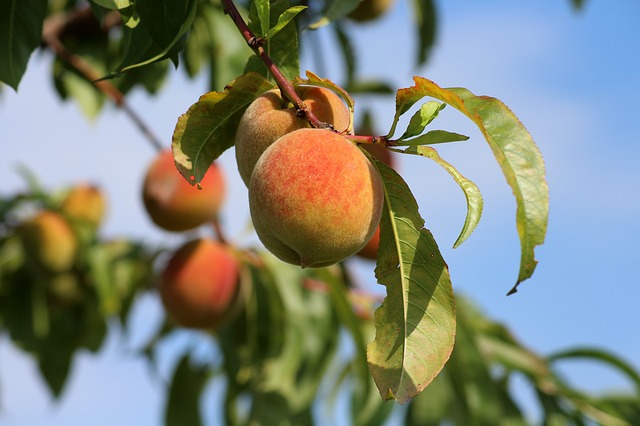
peaches-3529802_640

The peach has wonderful mythic associations. It is a Chinese symbol of immortality, and it is often prominently displayed in depictions of the sage Lao Tzu. There is also a legend that a famous Chinese heroine Ho Hsien-Ku who lived in 7th century BC was transformed into a fairy by eating a supernatural peach. They said ever after that she lived on a diet of moonbeams and powdered mother-of-pearl.

According to Paul Beyerl in A Compendium of Herbal Magick, in Shinto legend, Iznagi, a primary male deity, visits the Underworld where he defeats demons pursuing him by throwing peaches from the land of Light and the Land of Darkness at them. Beyerl adds that the peach is considered by the Taoists to be a sacred food.

I have a lovely amethyst carved pendant from China termed a “peach stone.” According to The Magic in Food, by Scott Cunningham carved peach pits are given to Chinese children as amulets against death. Sprays of peach-blossoms are placed over the front door during the Chinese New Year to guard Chinese homes against negativity. Symbolically they bring the blessings of longevity or perhaps confer immortality. He also suggests that as they have been in China for centuries, with appropriate visualization, peaches may be eaten to induce health, happiness and wisdom.

Every Summer I buy my peaches from a nearby farm stand. The owner always has local ones, ripened on the tree in the sun. They taste like heaven to me, and I understand why they might be considered the fruit of immortality. When I feel ambitious, I buy more than I can eat right away, peel and cut them, add a few drops of lemon juice or a sprinkle or two of sugar, and put them in bags in the freezer so we can enjoy them during the winter.

Versatile peaches can be eaten raw or cooked, as a condiment with meat or chicken or as a sauce over muffins or plain cake. Peaches in cobblers or pies, jams, muffins or even peach shortcake are all wonderful ways to enjoy this delicious fruit. Personally I like them best ripe and unadorned with anything more than the sunlight that warms their lovely plumpness.

I can remember my mother putting them up in canning jars. She would pour sugar syrup over them, then lower them into a big kettle of boiling water. Stored in the basement pantry closet, how good those peaches tasted during the long winters of my childhood. They were such a treat, especially when they were served for Sunday dinner over vanilla ice cream

Try this simple peach sorbet. Fill a plastic baggie or pint container with peeled chunked peaches sprinkled with lemon juice or a bit of sugar. Freeze them until solidly frozen. Have ready a simple syrup using two cups of sugar to one cup of water, stirred until melted, cooled and refrigerated. To serve two combine 2 cups frozen peaches with ¼ cup simple syrup, and 1 Tbs lemon juice. Process until you have soft serve ice cream and serve right away.

An Old Fashioned Apple Pudding

Fall is apple season, aoday I had some very special apples to process. They came from  trees growing in the yard of a house I’ve been helping clear out. Most of what Stephen and I had found was fit only for applesauce. However as I cut up our gleanings,I found to my great joy there were a few that had no worms or rotten spots to speak of and looked  easy to peel. We had recently eaten most of the things I usually make from apples–apple crisp, apple compote, and baked apples, so I wanted to find something new and different to make from this remarkable  fruit. I looked in my old Fanny Farmer’s Boston School of cooking cookbook and remembered something from my own childhood I had been fond of. Here is the recipe as Miss Farmer suggested making it, together with a note of what I did. I might add I used a hearty gluten free bread. Cream, whipped cream or any kind of sauce would taste good with this, as would ice cream. Prefer less calories? Use soy, rice, almond, oat or other grain non dairy milk..

Apple Brown Betty

This simple tasty recipe from my old Fanny Farmer’s cookbook is well worth making and eating at any meal, breakfast, dessert, or tea. Butter a 1/12 to 2 quart casserole. preheat oven to 350.

Ingredients:

2 cups fresh breadcrumbs, crumbled small

1/4 cup melted butter

4 cups sliced, peeled tart apples

1/2 cup brown sugar

1/4 tsp nutmeg or 1 tsp cinnamon

1/2 cup hot water

(Optional) grated rind and juice of half a lemon

Method: Peel apples and cut into slices–thinner is better than thicker, but not paper thin. Mix breadcrumbs and melted butter. Mix up brown sugar and cinnamon with optional grated rind and juice of half a lemon  or not. Put a layer of breadcrumbs on the bottom, pour half the apples over, sprinkle with half the brown sugar mixture.Put on rest of apples, top with rest of sugar and the crumbs. Pour hot water over all and bake for 45 minutes at 350 degrees. Important: Cover the top for the first 30 minutes.

Cook’s Note: I mixed the sugar with the apples because I read the recipe wrong, and it turned out just fine. I didn’t put in the lemon either. Make it simple if you like. This was delicious made with 3 Bakers white gluten free bread. You need a hearty crumb for best results, so use any hearty whole grain loaf, gluten free for those who prefer.

Image


Photo and article copyright 2013 Tasha Halpert