A Little at a Time


My Buddha by the sink

My mother was an artist. She went to art school and studied sculpture as a young woman. Later when my brothers were both in school she studied painting at the Boston Museum of Art. She had a studio over the garage where she occasionally worked. She also kept her art materials there along with lots of interesting women’s magazines. I loved to go up and read them. From them I learned many helpful household hints. I still remember one that told how to change a bed by walking around it only once. I used to do that. Now Stephen and I make ours together.

It may have been then or it could have been later on in my life that I came across the twenty minute system for accomplishing lengthy tasks. The article suggested allotting twenty minutes daily or whenever convenient, to a chore that was normally postponed because it might take too long or be otherwise tedious. When I tried the suggestion I was pleasantly surprised to see that it worked. One example was that instead of cleaning out all the bureau drawers, or every shelf in the pantry at once, take twenty minutes to clean and tidy one, stop and do another on another day.

At one time I practiced this technique quite frequently, however it slipped into the mists at the back of my mind. Recently I was reminded of it. What happened was this: For a very long time I had postponed cleaning out the refrigerator. Week after week each time I wrote out a new to do list, that particular task was at the top. Still I found reasons not to. Then I noticed how sticky one of the racks on the refrigerator door was. I decided to clean it off then and there. Because there were many small jars to be removed, washed off and replaced, it took me about twenty minutes or so to complete the task.

As I shut the refrigerator door I remembered the household hint from so long ago and laughed. The next day I cleaned off the second shelf of the door. Several days later I washed off the whole bottom shelf of the refrigerator. Today I cleaned the oven, and so it goes. Each task that takes around twenty minutes to complete adds up eventually to a thorough cleaning and tidying. I will probably go through my bureau drawers next, and perhaps after that a couple of other tasks I can think of that need attention.

I remember hearing someone say once that when he thought about what he had to do, it always seemed far more daunting than it turned out to be once he actually began to do it. The same holds true for me about the time spent doing something. Dividing a task into smaller segments works much better for me these days than trying to get it all done at once. As well, it spreads out over all the different times spent, the feeling of satisfaction I get from my small yet necessary accomplishment.

Tasha Halpert


Growing Up By Myself

Bed Friends 1

When I was growing up I lived a couple of miles from a small seaside town on a large property that belonged to my Great Aunt Alice. I didn’t have any siblings until I was almost nine. Virtually an only child, I was surrounded by busy adults and often told to stop bothering them and find something to do. A voracious reader, when I wasn’t nose deep in a book, I played games of pretend, making believe I was someone other than a lonely child in an isolated neighborhood with only herself to rely on for amusement.

I had quite a collection of teddy bears, dolls and other stuffed animals. When I was small I was sure they came alive at night. This belief was influenced by Johnny Gruelle’s Raggedy Ann and Andy books. These innocent stories about a group of toys that had adventures were written in the early 1900s and became even more popular in the 30’s and 40’s. In these stories, ice cream cones grew on trees, cupcakes and hot dogs could be plucked from bushes and lemonade and sodas were available in puddles and brooks.

Raggedy Ann’s magical woods full of “fairies and elves and everything” held all sorts of fun inventions that I yearned to experience for myself. I loved the stories and used to watch my toys to see whether they too might have adventures while I was sleeping. Sometimes I thought I spotted them in different positions than I had left them, though I could never be sure.

Later I moved on to books by Robert Louis Stevenson, Alexander Dumas, and Edgar Rice Burroughs. Then I wanted to be a pirate or have exciting adventures when I became a grown up. I made bows and arrows out of handy branches and tied string to my father’s hoe and rake to make a hobby horse. If my father needed his rake he knew where to look–in my lilac bush “stable.”

My family believed in fresh air and I spent a lot of time all year round out of doors in nature. Where we lived I was fortunate in having a large open area to play in There were all kinds of trees to climb and large fields of tall grass that I made into my private jungle. My pretend life was much more interesting than my actual one. The world I lived in as a young child was without TV or any form of electronic toy or game. I had to use my imagination to conjure up my entertainment.

I wonder if my childhood led me to grow up looking at the world from a different perspective than most. Steeped in nature and in the creativity of my mind, its sights and sounds enhanced my imaginary life. Today I perceive links and patterns everywhere. I find significance in synchronicity and receive messages from the nature around me. The world was and is alive for me in a way today’s youth may not discover. With the current focus on electronics, most children will not have my opportunities. I learned to listen to and observe nature and found there a sense of companionship and of comfort that is with me still.

A Place of Peace by Tasha Halpert

Peace Village Bridge ReflectionIt is easy to get caught up in the busyness of everyday life. For me it is often difficult is to pause and to take the time for an opportunity to do some self exploration. Such an opportunity was recently offered me. At first I found myself wondering how I could fit it in to my schedule, as well as make sure Stephen would have good food to eat while I was away. Yet because it included time to be with my daughter I didn’t hesitate long before saying yes.

She invited me to go with her to a spiritual retreat at a very special center in the Catskill mountains in New York State. Peace Village, a tranquil place of residence halls and meeting rooms is run by the Brahma Kumaris, a worldwide organization that originated in the 30s in India. The organization is devoted to self study and progress toward enlightenment. The Brahma Kumaris have created an atmosphere there that is highly conducive to personal growth.

At one time I studied and taught yoga. Later after we moved to Grafton my husband Stephen and I for many years had an inner peace center in our home where we held weekly meditations as well as what we called Peace potlucks, monthly. Stephen and I meditate almost daily, so I anticipated enjoying my time at the retreat which was said to include that as well as other opportunities to learn and to grow.

My happy expectations were fulfilled. During the three day retreat called By Ourselves In Company, the twenty-five of us were given a exercises designed to help us to become better acquainted with ourselves, as well as other techniques we could use to learn and grow. The participants were all ages and in all stages of life, more women than men, and several married couples. There were chances for us to interact and to learn from one another’s experiences as well as to be by ourselves and explore our own responses and reactions. The process was well designed and helpful.

Most special for me was the opportunity to do something with my daughter that we could share in as well as share. She leads a very busy life and while we do get to see one another often, it is always in the context of our days. The atmosphere the Brahma Kumaris have created in Peace Village is gentle and flowing. There is no hustle or bustle, no noise or stressful energy. On the hour music would play and everyone would stop what they were doing, breathe and reflect on the presence of the moment.

Here it was easy for me to absorb the lessons given as well as to learn to know myself better. The lack of distraction was key in helping me to focus. Yet what I really learned there was how important a peaceful atmosphere is to the nurturing of my being. The challenge will be to recreate it or at least to bring about some of the elements of that peace in my daily life so that I can continue to learn to see and to know myself more clearly.

Smelling the Lilies

Star Lilies 4       Of all the flowers with delightful scents, there are three that are favorites of mine: Lilies, Roses, and Hyacinths. So it was that when I was shopping in Trader Joe’s last week and saw the Star Gazer Lilies for sale I could not resist buying a small bunch and bringing them home. As I had hoped they would they have filled our small apartment with their wonderful scent.

As I sit here writing my column I am breathing it in. As I do, these colorful lilies with their glorious perfume remind me over and over again how important it is to give to myself as well as to others. It has taken me more than a few years to recognize the importance of doing that. My dear mother called such thinking selfish. She was raised in a home where children came last, after guests, parents and other adults. To think of oneself first, if at all, was not encouraged.

There was no intentional cruelty involved in this attitude. It sprang from a different way of seeing the world and of acting on that viewpoint. There is a strong behavioral edict that sprang from traditional thinking that it is better to give than to receive. While it is good to give, there are psychological reasons that were not taken into account by this edict that need to be addressed. In addition there is the question of balance versus imbalance to be considered.

I was raised in much the same way. I remember once being surprised when a friend said that we must be home by four o’clock for her children’s TV program. That the wishes of children were something to consider was a new thought for me. As a young mother it never occurred to me that children’s choices were anything to be considered.

In the years since then I have done a lot of learning. A most important lesson of my lifetime has been that if I do not give to myself I will not have much to give others. My cup must have something in it before I can give from it freely. My giving must be in balance with my receiving. What I have discovered, sometimes the hard way is that if I give only to others and not to myself I develop unconscious resentment that can lead me to act unkindly, or be overly critical without meaning to. This can creep up on me and I need to make sure I notice it when it happens.

From the time I was small being kind has always been very important to me. Thus it has become vital that from time to time I assess my behavior to make sure I have been giving to myself enough to balance my graciousness to others. It is not always easy to remember to give to oneself. It often initially feels so good to give to others that it is easy to forget to include oneself. As I inhale the perfume of the wonderful lilies I am reminded again of how grateful I am for this gift I gave to myself, and of how glad I am that I bought them.

Text and Photo by Tasha Halpert

The Importance of Mental Focus

Crystals5When I began to meditate I noticed that I was much more aware of the contents of my mind. The longer I practiced meditation, the better I became at following my thoughts. This ability has grown for me over the years, and I am very grateful to be able to be aware most of the time of what I am thinking. The reason this is so important is that it enables me to monitor my mental focus.

The importance of mental focus cannot be overstated. Certain habit patterns are built into the human psyche. They are intrinsic, an inborn aspect of our consciousness. They are intended to function as a kind of safety mechanism for keeping us alive. One of these is the “fight or flight” response. As you may know, the human body is programmed to react to any perceived threat with the appropriate input for what it believes is required.

I have read statistics to the effect that much of our modern high blood pressure as well as other stressful conditions of the physical body have come about as a result of this built in response to perceived danger. This particular response was useful in the days when death in the form of an enemy or feral beast lurked behind any bush or tree. It was important when the crocodiles in the river were patrolling for breakfast. It was helpful when the early settlers of any new homeland encountered its dangers.

Now for the most part it is not only unnecessary to modern life but actually harmful. Yet in times of perceived stress our bodies continue that response. The perceived stress could be a need to get somewhere on time or to dodge someone’s criticism as a result of inadequate preparation. It is seldom a response to a true threat of death or physical harm.

One of the main ingredients of this response is that our minds have a built in tendency to notice what is wrong. This can be very helpful if, for instance, you wake up in the night and hear sounds you know are not normal, or you suddenly notice that your child is very quiet and might therefore be up to some mischief. However, as a general rule, consistently noticing what is wrong can lead to a focus upon it that prevents us from seeing what is right and good.

When I practice actively looking for all for which I am grateful, I am much less apt to be focused on what may be wrong. If there is real danger or a need to notice that something is amiss, I know I can and will. However for the most part when I focus on that for which I am grateful, I am much less focused on the negative thinking that can lead to any number of difficulties. The key to success is being mindful of the direction of my thoughts. That way I can reinforce my positive focus or change the direction of my thoughts if I need to.

Photo and Text by Tasha Halpert

In An Orderly Fashion

Column VistaIn An Orderly Fashion

Remember fire drills? There are even some of my readers who might remember such a thing as a bomb drill. When the bell clanged we were always told to “proceed in an orderly fashion.” I suppose that meant lining up and staying in line so the teachers or whoever was shepherding us could keep track. In an orderly manner usually meant no talking, and certainly no fooling around.

I think about this phrase sometimes when I am dithering about my apartment working to get things done. Being a writer I spend most of my time at home and can make my own schedule. This has its positive and its negative points, because I do not have the same parameters necessitating order as someone working outside the home, however I do need to make my own order.

There is priority, there is the immediate demand, and then there is what I hope to get done. Each day presents its challenges. I can only do my best. For instance, take the insistent telephone. say I am about to begin a task when it rings. Stephen would tell me to ignore it, and my experience is that if I do it will only create another difficulty I haven’t anticipated. I answer the phone, conduct whatever necessary conversation and go back to what I was doing. Meanwhile, I may have lost the thread of the process and need to begin again.

It may be that I am called away while I am cooking. I ought to know better than to leave the stove unattended. However having had years of training as a mother to answer the immediate need of the moment, I have a tendency to rush over to do what seems to need doing. In the meantime, something boils over on the stove and that necessitates a huge cleanup.

When I plan ahead it seems to help. When I set out on a series of errands it works better if I think about the best arrangement for doing them. This works fine unless I forget my grocery list and either have to go back for it or try to remember what was on it. Stephen suggested I put the list in my purse and keep it there. I explained why I don’t: when I wish to add to it, I have to find it and write down the new item– if I don’t forget what it was in the meantime. It’s far easier to keep it on the counter.

I am all too easily distracted from my orderly progress. Sometimes this is simply my own fault. In the midst of doing what I intend to do I remember what I meant to do and didn’t, go do that, and meanwhile think of something else that needs doing. When I finally return to my original task it may have become more difficult or more complicated. The other day I realized that there is no such thing as an orderly fashion in my life, there is only keeping track as best I can and being content with that.

Text and Photo by Tasha Halpert

Unexpected Consequences: the New Tablecloth

Unexpected Consequences:

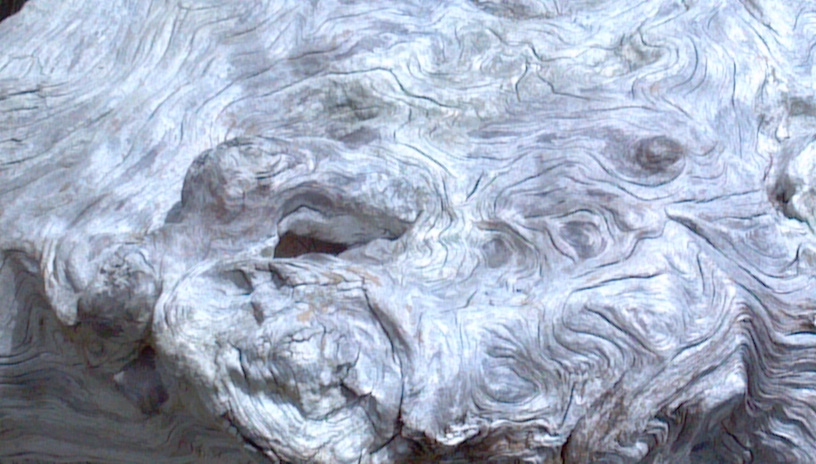
Driftwood Dragon

Driftwood Dragon

With the new year comes a desire for a new look. To that end we’ve been talking about changing some of the art on our walls for some that is presently in storage. Although the furniture in our apartment needs to stay as it is, we figured we could freshen up its appearance in other ways. Toward that end we were walking through one of our favorite home goods stores checking out the merchandise when we came upon a sale table. On it were several dark blue tablecloths.

“One of these could be a nice for our dining table,” Stephen said. “How about one of these for our home for the new year?” Searching through the pile he found a round one. Checking it out I read on the packaging that material would not allow liquids to penetrate and would easily wipe up with a damp cloth. Deciding that this was a win/win situation, we brought it home and put it on the table. It looked splendid. I was curious to see if it would live up to its promises.

It did. The first time a few drops spilled on the cloth they beaded up and were easily blotted away. I was duly impressed. Several days later I tried sponging off the occasional spots that had occurred since, and they too came away relatively easily, leaving the cloth looking as pristine as ever. However I discovered one drawback: Being dark blue it also revealed the presence of all crumbs, bits of herbs and other mealtime sprinkles. If it is not cleaned off after a meal that produces any sort of small debris, the table looks messy.

Thinking about this I realized that life can be like that. Promises are often fulfilled as they are spoken and things work out as indicated, yet other factors I haven’t planned for or thought of may complicate matters. I’m not complaining, I often find it humorous when I have to cope with the unexpected results of what appears to be an improvement or an upgrade. Fortunately, the small dust buster vacuum I had purchased along with its big sister does a fine job on the crumbs. So that situation is not a big deal, just something I didn’t anticipate.

The lesson I took from this experience is that it is important to be flexible, and to not be concerned when the unplanned for experience arises. What often happens for people is that they focus on lamenting the difficulty rather than seek a solution. This attitude can be a result of what is termed the “victim mentality” or the “Oh poor me” syndrome.

What needs to be realized is that complaining only postpones the discovery of a solution because the focus is not on the resolution of the difficulty but on the difficulty itself. This attitude is a blind alley that leads nowhere. When my focus is correctly directed, most often I find a solution without much trouble. In this case the crumbs are nicely swept up with little effort and quickly disposed of. As my dear son Robin used to say, flexibility is the answer to so many problems, and I would add: correct focus.

Words and Image by Tasha Halpert

The Blessings of Simple Pleasures

Queen Ann's Lace with BindweedThe Blessing of Simple Pleasures,

by Tasha Halpert

I was fortunate in that I learned fairly early in life to practice my attitude of gratitude. There were two experiences in my life that prompted me to do this. One came in the form of a telephone call from a friend and teacher telling me to be grateful and to say this prayer of gratitude daily: Beloved Lord I do greatly thank Thee for the abundance that is mine.” When I protested she said sternly, “You have much to be grateful for–a roof over your head, food to eat, people who love you, now do as I say and repeat that prayer at least three times daily.” Because I respected her, I did as she suggested.

That was the beginning. Then I encountered mysterious woman at a spiritual gathering who told me a little about myself and then said, “Never take anything for granted.” Her words gave me pause and have resonated in my life ever since. At the time I did not know that my entire life would change radically within weeks. And while it changed for the better, almost everything in my life as I knew it then disappeared to be replaced by new and different circumstances. Nothing could have prepared me for that, however I was blessed to move through it to a new life for which ever since I have been grateful.

That was a great many years ago; and much time has passed with many experiences lived through. As I have moved through them I have grown in the expression of my gratitude. Nowadays when I turn on the shower on a cold winter evening and climb into its warmth, I give thanks. Although they may not live close to me, there are many who do not have the luxury of hot water from a faucet. When I cuddle my clean cotton sheets and the warm covers on my bed around me, I think of, and send a prayer for those who are homeless and have little to comfort them in the cold.

An attitude of gratitude as we are often reminded by teachers from Oprah to Eckert Tolle is one of the pillars for the foundation of a happy life. My own personal experience has proved this to be true. I have also learned to realize how important it is to be grateful for that which at first seems less than fortuitous. However in general I prefer to focus on those things that bring me joy rather than those that do not, even while being grateful for those as well.

Small and simple pleasures–a phone call from one’s child or grandchild, the wagging tail of a treasured animal companion, the smile of a neighbor encountered unexpectedly in the supermarket, or the friendly help of a stranger in locating a hard to find item–these lovely, serendipitous experiences provide a splendid symphony of joy. As I live my life, it plays in the background as an accompaniment to my everyday doings. Listening to it I am reminded again and again to be grateful.

The Gift and the Wrapping

by Tasha HalpertKathy's Christmas tree

Being somewhat uncoordinated when it come to things like wrapping packages, I have always struggled with trying to make my presents look reasonably attractive. Some people are really creative with how they wrap their presents. I envy them. I wish I had that kind of creativity. My mind tends to run along more utilitarian tracks and I don’t always think to add the trimmings.

I have a friend who does lovely wrapping. She told me about the finishing touches she had put on the colorful hand made gifts she had crocheted. She went on to tell me that someone said to her that the decorative packaging she had purchased to do this was extravagant, asking why she had spent so much money on something that would soon be discarded.

I understood completely why she had wanted to do this. Her gift was special and she wanted it to look that way. Her expenditure made perfect sense to me. While I tend to be less decorative in my thinking I can admire someone who knows how to do up a package and make it look special. My artistic friend has very clever fingers and knows exactly how to fix up a package to make it look extra special. I wish I had her skills.

The care with which a gift is presented says something important about the giver as well as the gift. Stephen and I accumulate presents for family and friends all during the year; my wrapping though not fancy is part of the caring. I used to have a dreadful time wrapping presents until a friend who had done professional wrapping for a department store showed me some useful tricks. Now I can make my packages look much more attractive.

There was a time when wrapping paper for Christmas gifts was not as inexpensive or as available as it is now. When I was a child we used to save all our Christmas gift paper from year to year and reuse it as often as we could. The use of scotch tape was discouraged and gift paper was sturdier as well. I remember one special piece of wrapping paper that appeared every year on a different present. It had an elaborate design and was very lovely as well as quite durable. In her elder years as the Christmas presents were opened my late mother would spend her time folding the wrapping papers. I expect this brought back vanished memories of when we were all young.

At this season of giving many feel compelled to spend money they don’t have to buy gifts for others who probably don’t need them. The simple gift of a hug and a plate of home made cookies or a hand made card might do just as well. Even young children need to learn to be content with less rather than yearn for more. Whatever I give at Christmas is primarily a token of my affection, and it need not be expensive or fancy. I will, however, wrap it with care and love because these are the real gift I am giving.

I am Thankful

Stephen and Tasha Hug          I make a practice of being thankful. I have often shared the little prayer I say a dozen or more times a day for various and sundry blessings. However it is not necessary to pray one’s thanks. It enough to simply acknowledge that one is grateful. My gratitude for what I have is enormous. I am also very grateful for much that I do not have, or may have had and no longer do.

What we have and what we do not have may both are something to be thankful for. Did you ever think back to when you were little and wanted something–a pony, perhaps? Most likely you didn’t get it, and most likely if you had you would soon have tired of taking care of it. Ponies require daily brushing, cleaning up after, feeding, petting, riding, and more: taking care of the saddle, bridle and all the required tack. They are a lot of work, and the child who wants the pony doesn’t think about that.

We seldom think about the consequences of receiving what we wish for. There is an old adage that goes: be careful what you wish for, you may get it. I remember admiring big houses, and oh how I wished for a swimming pool. One day I acquired both. That pool was more work than it was worth, although many people enjoyed it. However they weren’t tasked with the care of it as I was.

I used to think I wanted more space, and now having had two large houses–though one was smaller than the other, I have learned that every bit of space I may have requires care and looking after. I have learned to be content with a lot less space that I ever thought I would be.

As well I am thankful for those difficulties I have left behind. It is lovely not to have to clean three bathrooms each week, tend a huge garden, prune lots of bushes. When I hear a child yelling in the supermarket I am delighted it’s not my job to care for a howling toddler. I am also glad not to have be cooking a big Thanksgiving dinner and hosting a large group of people. I enjoyed and was thankful at the time I did all these things, now I am glad that time has passed.

There is much else I am just as glad not to wish for any longer. I used to think I would like to go up in a balloon, I don’t feel the need to do that any more. I don’t want to jump out of an airplane with a parachute either. I am thankful that I don’t need to do these things to be happy or feel fulfilled.

Thinking about thankfulness as I do each and every day but most especially at Thanksgiving I am struck by the way I have learned what I truly want and how fulfilled I feel. Once I yearned to be more popular. Now I am thankful for the friends I do have. I have learned that what is important to me are the small daily pleasures of contact with people and our communications. Most of all I am grateful for my beloved partner and best friend Stephen. Having a special friend with whom to share my life is my greatest blessing.