Death is a Part of Life by Tasha Halpert

DSCF0192 The recent announcement of President Carter’s cancer follows on the heels of my hearing about many others whose illness of one sort or another has proclaimed their relatively immanent mortality. In other words, a multitude of serious sicknesses–cancer, heart problems and other conditions of ill health have invaded the lives of people I know and in many cases, love. Perhaps this has to do with getting older. I do not remember hearing as much about such things only a few years ago.

I may have been fortunate in this respect: The death of people I knew and loved wasn’t part of my childhood experience–I went to my first funeral, an aged cousin when I was twelve. Yet death as a part of life was no stranger to me. Growing up with pets and small farm animals I had an intimate acquaintance with it. Ducklings, rabbits, dogs, cats, and the chickens we ate for dinner all lived and died as I watched. I buried my pets myself with due ceremony. I watched as the chicken for dinner was beheaded with an ax.

When I was in my twenties I thought little about death. Then my children’s father nearly perished in an automobile accident. The thought of those I loved dying now forced itself on my attention and I began more to appreciate the specialness of life and of my relationships. Still, I was occupied with life and death wasn’t something I thought much about. Time went by and my grandmother died. She seemed to me an appropriate age to pass on. While I mourned her absence, I was busy with life and my little ones, we were no longer living close to one another and I did not miss her presence.

Years later death grew more familiar. I lost my father to illness, then my own precious son. Some years later several young friends died untimely deaths. Moe and more I was brought to an understanding of the place of death in life. As much as I mourned, I began to recognize that death was indeed a part of life; that dying was merely the blowing out of the candle that was lit at birth. Life is a gift for which I am grateful and the lives of those I love and have loved are very dear to me. Yet like flowers we grow, bud, blossom an finally wilt away.

Untimely death is harder to bear than what seems a natural process. My rabbits were killed when a dog got into their pen. My dog was run over in front of me. Later on my son died far sooner than he might have. Yet even untimely, this is still death as a part of life. Although I miss him still, my sorrow is not so much for his death as it is for the life he was not able to live. We are all most fortunate for whatever time we have on this earth. In my nightly prayers I make sure to express my gratitude for my dear ones, those whose candles still burn brightly. May they continue.

The Persistence of Nature, by Tasha Halpert

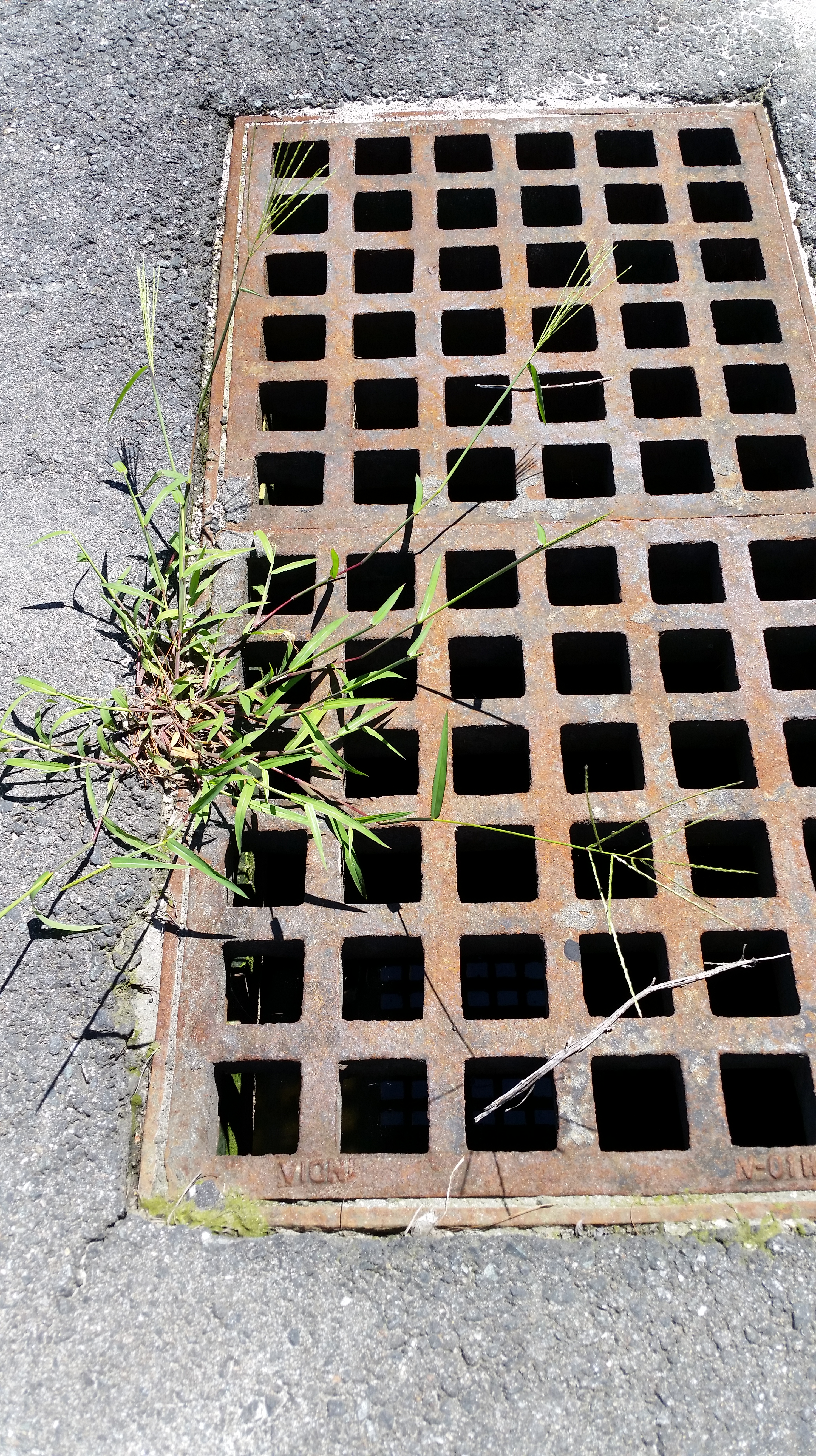
Weeds and GridWhen I was growing up my father was an active member of our local Horticultural society. At the age of twelve I used to go to the meetings with him and learn about growing trees, shrubs and plants. In addition every year there was a Horticultural show late in the summer. There was a children’s division with cash prizes. This was exciting to me. One in particular that interested me was a prize given for gathering and identifying wildflowers.

Although I had a garden, it held nothing prizewinning. However the wildflower competition was an easy one because we lived amidst a great variety of them. Each year I scoured the surrounding fields and woods for the 25 flowers to be gathered and identified. Most other young people who entered the show were content to do something easier, so I had no competition and usually won first prize. As a result I gained a lifelong interest in wild flowers and to this day remember a lot of their names and even their properties, for my interest grew into a study of herbs as well.

My eye is often drawn to flowers growing in the wild. Recently I was traveling down 495 when a lone Brown Eyed Susan waved at me from the concrete divider. As I drove by the dark center surrounded with bright yellow petals seemed to wink. I wanted to stop and take its picture however the traffic on 495 is pretty steady and to pull over to the center srip in the midst of a busy stream of cars is to court an accident.

A seed had taken advantage of whatever soil had collected in a crack along the edge and sprouted this brave, solitary flower. Nature is opportunistic. Wherever enough grains of soil fill a crack in a manmade surface, Nature plants any available seeds. Openings within the pavement host all kinds of new life. Abandoned buildings and properties are soon festooned with green decorations eagerly seeking a place to grow.

There is a saying, “Nature abhors a vacuum.” Certainly if the gardener is not vigilant, weeds fill up any empty space in a garden. Yet this also works to keep soil from blowing away. Poison ivy may be the bane of New England beaches, however it is one of the reasons the sand above the high water mark does not blow away. When the early settlers plowed up the prairies they lost the important topsoil that the grasses had kept in place.

I love the way Nature fills up empty spaces with greenery and flowers. Recently I noticed an evergreen hedge that had acquired a host of little white flowers courtesy of the bindweed that had decided to take root there. The small morning glory look-a-likes decorated the bland green hedge in a most complementary fashion. I rejoice that weeds are flowers too. As I pass by them, I enjoy the summer’s wayside offerings, and I thank Nature for its persistence.

Lilac Time by Tasha Halpert

Thinking about lilacs I remembered hearing a song with the words “Lilac Time” featured prominently in it. Looking it up on the Internet I found the full title Jeannine, I dream of Lilac Time, as well as an old recording of it to listen to. It brought back memories of my hearing it as a young child. What fun it was to listen again, courtesy of the Internet and whoever was kind enough to resurrect it. Seeing lilac,s like hearing the song, brings back a host of memories.

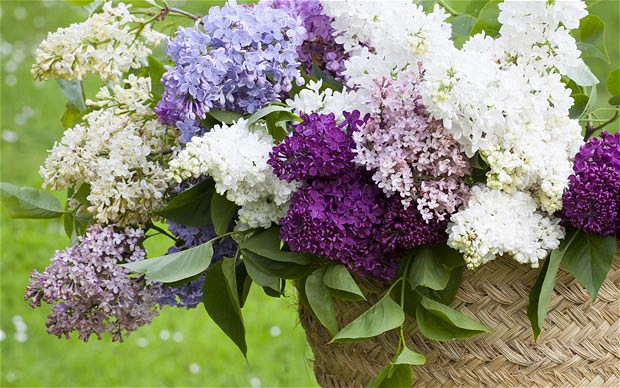
Stephen and I were driving to an appointment when I saw a lot of lilacs by the side of the road. They were so lovely I had to stop the car to look. What was even more wonderful was the fact that there were a several different varieties of lilacs in this particular collection. What I really wanted to do was get out of the car and pick some. However, I resisted the temptation and drove on before their lure grew too strong for my will power.

I have many memories involving lilacs that go back to my childhood. There was a cluster of bushes in the back yard of the home where I grew up. There was a lattice fence in the midst of them. This helped to form an enclosed space on one side where I played house. There I made mud pies using water I would scrounge from the house and berries from bushes nearby. I also mixed up other concoctions to feed my doll family.

I kept my doll sized dishes, pots and pans and other implements on shelves made from boards stuck into the branches of the lilac bushes. These usually collapsed when it was windy. For some reason that escapes me now I didn’t mind too much; I’d just pick them up and rearrange things as best I could. I even wrote recipe booklets of my efforts, though the pages became illegible when they got soaked in rain.

There were a great many different kinds of lilac bushes next door, growing at the end of my great aunt Alice’s back yard. Her father had been a horticulturalist and most likely chose the various different varieties so that they would bloom for longer as well as present different colors in display. Some were double, some had an incredibly sweet smell. All of them were lovely. I used to pick them and bring them home for my mother to put into vases.

Each year I worried that there wouldn’t be any lilacs still blooming to honor veterans on Memorial Day. My family always went to the parade in Beverly Farms where there was a square dedicated to my father’s father who died in World War One. The children who marched at the end of it used to carry lilacs to throw in the water when the parade ended at West Beach as the band played “For those who perished on the sea. Seeing the lilacs as they bloom now I greet them with joy and with gratitude for their beauty both today and in my memory.

lilacs_2582962b

Text by Tasha, photo courtesy of Olga Stewart

Thinking Of My Mother by Tasha Halpert

Me and mama by Bachrach     It makes me happy that there is a day set aside each year to be devoted to acknowledging mothers. The folderol that has grown up surrounding it is a product of the commercialism with which we are surrounded. Most mothers would probably be glad to do without the obligatory dinner out at a restaurant jammed with other families setting out to treat her to a meal she does not have to cook, or the trinkets she has to find a place to put on her crowded bureau.

To me what is more important is that Mothers’ day serves as a reminder that much of what mothers do all year round is usually taken for granted by their children. This ranges from the daily meals and laundry to the cleaning and tidying that goes with looking after a family. Trust me, I’m not complaining here, actually I’m thinking of my own mom and how much of what she did that I took for granted as I was growing up.

Of course she provided meals and did what she could to keep up a household with four children and a husband who was not inclined to help with housework. She wouldn’t let him cook because she said he burnt things and she intensely disliked wasting food. What she did do, personally for me, is more to the point in my memory.

She helped me with my homework, especially anything to do with languages. She worked hard to drill a proper French accent into me, and she faithfully reviewed my vocabulary and grammar lessons as well. She endured my piano practice as best she could. A trained musician with a perfect ear, I know that she cringed through my practice, and she quickly acquiesced when I said I didn’t want to take lessons any more.

When as a teenager I needed to reduce my weight she carefully counted my calories and helped me lose fifteen pounds two summers in a row. I remember that she did despair, Nor did she complain when I gained back most of what I had lost living at my grandmother’s, but set simply about doing it again. My robust grandmother did not count calories and she ate four good meals a day including tea with English muffins and home made cookies or cake.

My mother certainly tried hard to do the best she could for me. Often she went without to make sure I had what I needed. As I remember, at the time, I did not appreciate my mother’s efforts. I grew to understand how valuable they were once I had children of my own. It is truly said that one cannot fully appreciate what a parent goes through until one becomes one. I miss her. The four years since she breathed her last have sped by. I think of her often. Sometimes I feel her presence just as though she is with me, only in another room yet still within hearing distance.

Soaking by Tasha Halpert

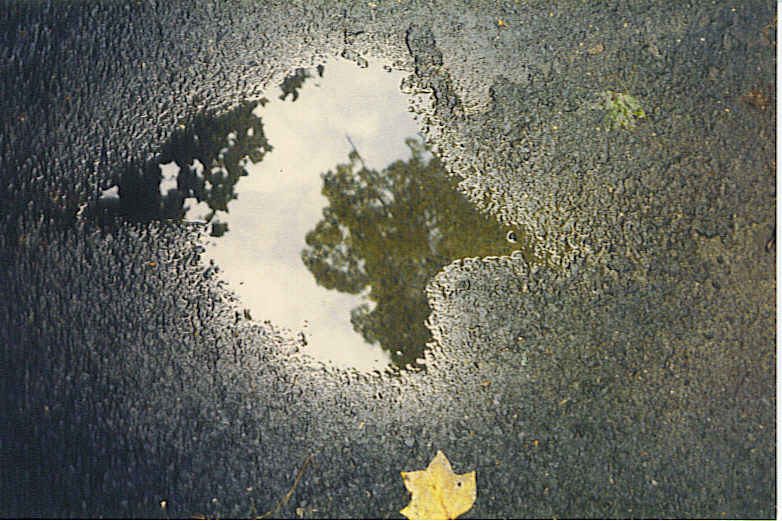
Tree, Leaf and Puddle    When I was small if I got a cut my mother often put iodine on it. I hated that because it stung like anything, and it turned my finger orange. Sometimes she used alcohol, which was equally bad. As a somewhat clumsy and heedless child I often fell down, banged myself, cut myself or otherwise got scraped up, so I was well acquainted with these disinfectants and the white Band-Aids that always hurt when they were pulled off.

As an adult I prefer something easier and more pleasant: soaking. I thought about this recently as I soaked my sore finger. I had stuck with a knife and the small wound was bothersome. As I did so it I thought of how well the application of hot water works to heal small cuts and infections as well as reduce swellings. Over time it speeds up the healing process and prevents infections from spreading. Heat is a remarkable healer. However I would probably have been too impatient as a child for soaking.

Heat also can work wonders in other ways. Last month I pulled a muscle in my thigh. Nothing seemed to help or make it better until my acupuncturist suggested applying a heating pad to it three times a day for twenty to thirty minutes. The pain soon diminished and it took only about a week or so to go away completely. Soaking the sore muscle in heat did the trick. Combined with a bit of patience, soaking is good medicine.

Soaking has a number of virtues. An important aspect of the soaking process, however, is time. For instance, the best way to clean a sticky, gummy pot, pan or dish is to soak it for a while. Often hot water is all that is needed to resolve whatever has adhered itself to the utensil. Occasionally the addition of soap or a scrubbing sponge helps. Once again, soaking plus time equals situation resolved. It is remarkable how much hot water helps to resolve a difficult or even a painful problem.

Stains on clothing also respond to soaking, though sometimes it is cold water that is wanted rather than hot, depending on the stain. Soaking also works as well for physical aches and pains. When the body is achy, one of the great luxuries in life is a hot bath in which to soak. Epsom salts, an inexpensive remedy added to the hot water in the tub increases its efficacy.

In today’s fast paced world impatient people often seek speedy resolutions. Medicine must work overnight if not immediately. With the correct chemicals clothes, pots and pans must sparkle right away. This attitude doesn’t allow for the gentle, safe application of time and soaking. An old fashioned way of doing things can often be more effective, less expensive and in many ways perhaps easier over all.

Dealing With Anger

There seems to be a great deal of anger circulating these days, whether in the form of “road rage,” destructive actions involving armed individuals, bullying that makes the news, and more. The majority of video games and even the comics and illustrated books for young people are very violent in nature. Furthermore, this country has been at war with some nation, group or another for a very long time. Anger is all around us, yet it is also a band aid over grief.

I am reminded of the fifties, a time for bleak news, back yard bomb shelters, and dark tales on TV and in the movies. The climate then was one of fear and to some extent, existential responses to dire circumstances. “Die young and make a good looking corpse,” was a popular saying. Although people were more polite on the surface, anger and fighting were also a common reaction. Bullying was almost acceptable–considered normal, many thought it would toughen someone up for the “real world.”

When I was in grade school I was often the object of bullying. One of the reasons may have been because I was slow to anger, yet when I did finally respond, I would explode into a fit of rage. Toward this end my classmates would taunt me, snatch my hat or my eyeglasses and do whatever they could to get me to that breaking point. Most likely they enjoyed the show. When my parents complained they were always told I had started it.

My father and mother were both rather fiery and temperamental, which might be why I disliked getting angry. I was uncomfortable with their arguments, which frightened me. Although they loved each other dearly, they disagreed about a lot of things. Being as young as I was I didn’t really understand much about this, I only knew I felt uneasy and afraid when their voices rose. This in turn made me want to avoid that kind of behavior.

Often it has been my job to try to get people who disagree to come to some kind of understanding. Yet each person has a point of view based on his or her experience and perhaps his or her beliefs. It is almost impossible to argue with someone’s beliefs. By their nature these are not based on logic but have an emotional base. What we feel generates and supports our beliefs. Perhaps the best that can be done may be to agree to disagree.

However, anger is a conditioned response that can be controlled and then changed to a different one. With practice, a compassionate response can be substituted. To me anger seems a waste of energy. When I encounter senseless violence or cruelty, I have taught myself to feel my sadness, and then to say a prayer for the afflicted. For my part, to counter the disturbing news items I read in the papers or see on TV I make an effort to be kind when and where I am given the opportunity. It might be only a drop in the ocean, however, it’s something I can do.

Photo and Text by Tasha Halpert

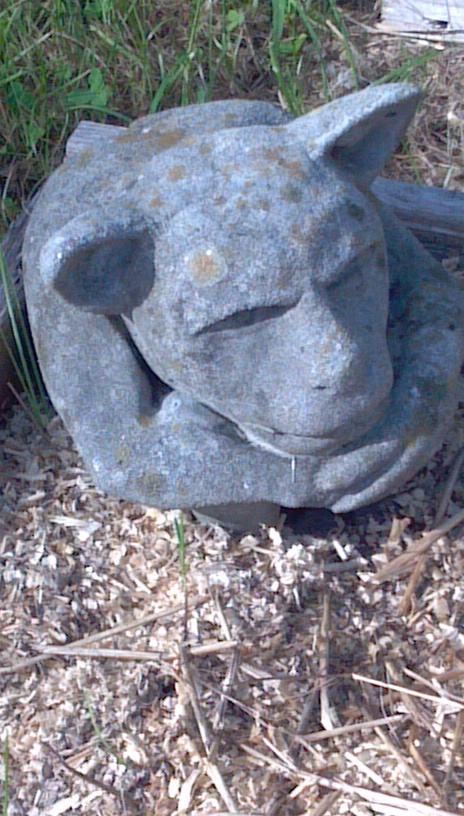
.Gargoyle

The Hands of Love, by Tasha Halpert

Reflections and window box          Sometimes people ask me where I get the ideas for my weekly columns. Lately I have realized that I often find inspiration for them as I am doing tasks around the house. This is probably because I prefer to write in a down-to-earth way about those things we all experience. In that way I can insure that the people who read my offerings can more easily relate to what I am saying.

I feel that by writing about what I experience and what happens as a result I can be of practical help to my readers. Although my mother did not think so, I am a very practical person and like to convey practical advice. Most of us can relate most easily to what happens on an everyday basis. The inspiration for this column came to me as I was folding laundry.

The spring sun shone through the double glass doors of our bedroom. It felt good to see the brighter light as it filled the room. I thought of spring and how nice it was to have more light coming in the windows. As I picked up one of Stephen’s tee shirts, I smiled to think of him wearing it. Then a phrase drifted through my mind: the hands of love. That’s right, I thought, when I fold the laundry and think with love of the ones who will wear it, I am folding the laundry with the hands of love.

Then I thought about what this meant and how it applied to what I was doing at the time. Over the past few years I have been working on a daily basis on staying in the present moment. Whenever I think to do it, I take a breath, center myself and become fully aware of wherever I am and whatever I am doing. Because I have been doing it for a while, I now find that this sometimes happens spontaneously. What helps a lot in the practice is to focus directly on whatever one is doing in order to be fully present as one is doing it. Eventually this can become a habit.

Maintaining a sense of awareness is an inner discipline of mindfulness that can be practiced when doing any ordinary task. It is also good practice to do it at that time because I find I am most easily distracted when I attempt to keep my focus on the present moment. My mind has a tendency to wander about on its own, most especially when I am doing a repetitive task. I have to realize this in order to pull it back and focus it on the work at hand. Then when I lose track, off it goes. This has become almost like a game I play with myself.

The nice things is that this little exercise in mindfulness can be done so easily at any time and so joyfully, wherever I am and often whatever I am doing. However, when I think of the person who will wear the clothing, eat the food or benefit in some way from what is being done, I find it much easier to keep my focus. Even as I write my words for my weekly column, when I think of the recipients, I am writing with the hands of love. This makes any task a more joyous experience. Thus as I move through my days with this focus, I feel the joy of doing and giving flowing through me and it feels so good.

Love Begins With Me

Love Begins With Me

While little children learn to love by observing the behavior of those around them, they also, as any parent of a toddler knows come with a built in ability to love. The human heart has an inborn tendency to emotional cherishing. From what I have seen both on television and in the movies, this is true of other mammals as well. Perhaps it is chemistry, or maybe it is a gift from the Creator, however it is certainly evident, especially in small children.

Furthermore, the emotional heart that dwells within us is infinitely expandable. However, in order to keep expanding it needs to stay elastic. This elasticity requires a certain amount of maintenance. When individuals harden their hearts–even if they do it because they feel they must in order to survive, they reduce the heart’s elasticity, and possibly begin a process that will eventually result in the heart’s inability to expand at all. The way the heart becomes hard is through the resistance to and denial of pain.

That is not say it is easy to admit pain into the heart. There is so much of it around. The media confronts us with pain at every turn. Each day when I open my computer I am confronted with samples of disaster or tragedy, sometimes many of them. In our personal lives there is much opportunity for pain of all sorts even in the best of lives. Major trauma can strike at any time, and on any given day there are many small deaths or sadnesses to be dealt with.

When I am willing to allow my emotional pain into my heart, I also take an important step toward compassion for myself and for others as well. Compassion is a natural response to pain. Even very small children will try to comfort you if you are sad or hurt. It seems to be a built in reaction. There are animals that will do the same. I remember a day long ago when I was feeling sad and began to cry. At the time we had three cats and all three came over and tried to climb into my lap.

It can be difficult for me to open my heart to emotional pain. I was brought up not to cry, to be tough and to ignore hurt. Yet that meant ignoring rather than acknowledging it. I had to learn to open my heart enough to take in the pain in order for compassion to find its way in as well. I had to be taught to love myself enough to admit that I felt pain, and that I needed to address that pain. In this I had the help of a fine therapist. I will always be grateful to her.

By loving myself enough to be honest with myself and others, I keep my heart flexible and elastic. By comforting myself with that love, I acknowledge what I feel, and then I can do what is necessary to address that pain. Being emotionally honest is being loving to myself. When I am loving to myself in this way I expand my heart. This makes it possible for me to love others even more. The more I love myself, the more I am able to love others, and that makes me happy in my heart.

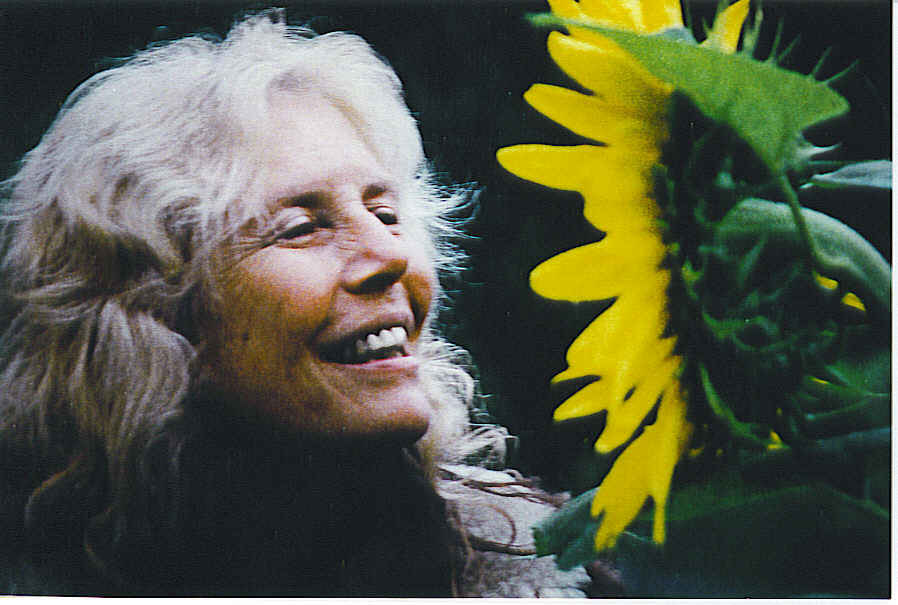
Tasha and Sunflower, best

Photo by Marcia Ruth Text by Tasha Halpert

Living With Small Deaths

by Tasha Halpert

My earliest experience with the death of a pet happened when I was too young to remember it. It became a family story my mother was fond of telling. The way she told it, when I was almost four my parents won a turkey in a raffle, brought it home and kept it in a cage in the yard. I was fond of the turkey and named it Tuty. At Thanksgiving as planned, the turkey was killed, plucked stuffed and roasted. As family and guests gathered to eat and my dad was carving the turkey I piped up: “Where is my Tuty? I want my Tuty.”  After that no one wanted any.

When I was small, death was not discussed in front of children. They were more sheltered than today’s children who from an early age see the adult world right before their eyes on television. I learned about it too, but in a way, first hand: seeing the small deaths around me. Baby ducks perished as they hatched; baby chickens accidentally drowned in the water pan; rabbits were attacked by a neighboring dog; and several dogs and cats were run over by cars speeding by our house.

My family lived in the country in a cottage on my Great Aunt Alice’s property. There were many animals, large and small whose living and dying were part of our everyday life. As a result death seemed to me to be quite natural. I mourned, yet not for long. There were always more animals to pat and to play with. I confess that sometimes I was not nice to them. The cat did not like it when I dressed her in doll clothes and tried to make her lie down in my doll bed. The dog did not appreciate this either. Sheeshee, a small white Spitz mix was gentle however, and did not, like the cat, protest too much or try to scratch me. She lived with us a good long time and was much loved. I have no memory of her passing, which makes me wonder if perhaps I was away at school then.

She managed to have two puppies when she was quite young and before my parents had her spayed. Peloto was left behind in Florida where he was born on a working vacation we spent there with my father. Tallahassee lived with us until tragically he was hit by a truck right in front of me. The driver, terribly upset drove the dog and me to the veterinarian to see if Tallahassee could be saved. I remember holding him on my lap and feeling very sad. His internal injuries were too severe for him to continue to live. I buried him with ceremony. Somehow even though I never attended a real funeral until I was 12, I seemed to know about reverently burying a loved animal and praying over its grave.

Our rabbits provided an experience of both birth and death. They were kept in a hutch outdoors. I remember asking my mother one day why one of them wouldn’t come out of the little house that sheltered them from bad weather. She showed me the infant rabbits that were emerging from their mother. That was wonderful to see and I was thrilled. After that I understood where babies came from although not how they got in there. Having animals helps children learn about these things naturally and under gentle conditions. When my children were small they had guinea pigs that helped them learn these important facts of life.

I believe we had the rabbits a year or two. Then somehow a fierce dog got in and mangled the ones he did not kill. When I was told the wounded rabbits were to be “put to sleep” by Carl, my great aunt’s gardener, I was very upset. In tears I walked past the boundaries of our property so as not to hear him shoot them. I remember that for this act of disobedience I was sent to my room without supper and made to go to bed early. Although I missed the rabbits, I did not mourn them for long. I was always encouraged to get over my grief quickly, and usually I did.

Life and death had their place, and so did religion. Each Sunday I accompanied my mother to her Catholic church while my dad went to his Protestant one. On Easter, Christmas and special occasions we also went to his. Although I found my mother’s simple Catholic church to be bleak and cheerless, I enjoyed my visits to my dad’s comfortable Episcopalian one;. Needing my own church for myself  I created one where I could go and pray when I wished.

I chose a corner outdoors between the chimney and the wooden wall of the small potting shed and greenhouse where Carl the gardener started plants for my Great Aunt’s garden. To substitute for the hard wooden kneeling benches of my mother’s church, I collected moss to kneel on. I used a brick for an altar and tied two sticks to make a wooden cross. On the other side of the chimney I created a cemetery where I buried small animals and birds as well as one of our cats. That church was my place of comfort. I often went there to talk to God. I also developed a small graveyard where I buried  baby chicks and ducks as well as a cat and dog that had perished.

My mother loved her animals. At one time she had two goats. Ebony, the larger of the two was very fond of Mama. The other escaped her tether and ate grass sprayed with arsenic from under my Great Aunt’s apple trees. They told me about her death but did not show her to me. I was often shielded from what was harsh or ugly. Ebony lived quite a long time and even though she had never been bred she used to give milk.

My great Aunt kept chickens as did we. I remember as a very young child being pinned down by a huge rooster that somehow escaped the coop and threatened to attack me as I walked through the apple orchard. Eventually someone came to my rescue and shooed the bird away. Chickens were food, not pets, so there was no sorrow associated with their demise.When they were to be eaten Carl used to kill them. He would cut off their heads with an ax and they would run around the yard headless. Then my mother valiantly plucked the feathers from the warm bird and either roasted or boiled it, depending on the age.

When I was six or seven it became my job to take care of our chickens. I didn’t mind doing it in the summer. There was a convenient faucet near the chicken coop where I could fill their water holder. However, in winter the water faucet was turned off so it wouldn’t freeze. I had to lug heavy pails of water as well as buckets of grain and mash all the way from the barn to the chicken house fifty feet or more away. This was how I earned my allowance so I didn’t dare slack off.

One March I had a brilliant idea. The hen house was close to a marsh that flooded every spring. Daily I filled their water bucket from this convenient source. A couple of weeks later our chickens began to die. At first no one knew why. Then my father called me into the living room. It seems Carl had seen me as I filled the bucket. I expect I was punished. Probably I lost my allowance for a time, though I don’t remember. I did feel very sorry for what I had done to the poor chickens. My parents were even more upset because they couldn’t eat them. I was reminded of that for years.

Worse than the death of Tallahassee was what happened to my mother’s dog Nicky. I was four or five at the time, and I did not eat with my parents but earlier, in my room. I remember the experience vividly. Nicky was my mother’s cherished black and white border collie. He was a bit rambunctious and tended to wander so we weren’t to let him out unattended. One day I accidentally let him out. I was upstairs eating when my mother rushed in. “Nicky’s dead and it’s all your fault.” She sobbed. It seemed that before he could be retrieved a delivery truck pulling into Aunt Alice’s driveway had hit him.

I remember that my mouth opened and the green peas I had just put in spilledback onto my plate. I began to cry. I felt guilty for Nicky’s death for a long time. However, he wasn’t the last dog for whose death I was responsible. Years later when I was driving down a snow banked highway at about 40 miles an hour with my children in the back seat, a great big German shepherd came running  right down the middle of the highway toward me. I couldn’t stop, and I couldn’t avoid the dog. Had I tried to swerve to the right or the left I would have hit a snow bank. I had three small children in the car. I had no choice.

Afterward I stopped my car and went back to get the dog’s collar so I could tell the owner. I dragged the body to the side of the road and drove home. I had made sure to hit the dog hard enough to kill it because otherwise it would have been crippled or maimed and suffered terribly. I felt dreadful. Yet I could not risk my children’s lives to try to save the dog. When I explained the owner thanked me. Apparently the dog had gotten out and had followed his truck. He was not upset with me and I was grateful. While I felt sad I did not feel guilty.

Death is part of life. Life is part of death. I learned this at an early age. Sometimes we cannot help causing the death of a loved pet. Sometimes we have to choose death over life because it is the best choice in a situation. Sometimes we have no choice because we simply do not know any better. I have spent many years of my life learning to be as conscious of my actions and their consequences as I could. Death seems to have followed me even as I have reached out to embrace it when need be. Animals are with us for a short time. Perhaps they are our teachers about the necessity for death. Perhaps we can learn from them to embrace it when it comes to us, knowing that we too are a part of creation and that like them we return to the Source.

ImageSt. Stephen’s Church, Bologna by Tasha Halpert