Dealing With Anger

There seems to be a great deal of anger circulating these days, whether in the form of “road rage,” destructive actions involving armed individuals, bullying that makes the news, and more. The majority of video games and even the comics and illustrated books for young people are very violent in nature. Furthermore, this country has been at war with some nation, group or another for a very long time. Anger is all around us, yet it is also a band aid over grief.

I am reminded of the fifties, a time for bleak news, back yard bomb shelters, and dark tales on TV and in the movies. The climate then was one of fear and to some extent, existential responses to dire circumstances. “Die young and make a good looking corpse,” was a popular saying. Although people were more polite on the surface, anger and fighting were also a common reaction. Bullying was almost acceptable–considered normal, many thought it would toughen someone up for the “real world.”

When I was in grade school I was often the object of bullying. One of the reasons may have been because I was slow to anger, yet when I did finally respond, I would explode into a fit of rage. Toward this end my classmates would taunt me, snatch my hat or my eyeglasses and do whatever they could to get me to that breaking point. Most likely they enjoyed the show. When my parents complained they were always told I had started it.

My father and mother were both rather fiery and temperamental, which might be why I disliked getting angry. I was uncomfortable with their arguments, which frightened me. Although they loved each other dearly, they disagreed about a lot of things. Being as young as I was I didn’t really understand much about this, I only knew I felt uneasy and afraid when their voices rose. This in turn made me want to avoid that kind of behavior.

Often it has been my job to try to get people who disagree to come to some kind of understanding. Yet each person has a point of view based on his or her experience and perhaps his or her beliefs. It is almost impossible to argue with someone’s beliefs. By their nature these are not based on logic but have an emotional base. What we feel generates and supports our beliefs. Perhaps the best that can be done may be to agree to disagree.

However, anger is a conditioned response that can be controlled and then changed to a different one. With practice, a compassionate response can be substituted. To me anger seems a waste of energy. When I encounter senseless violence or cruelty, I have taught myself to feel my sadness, and then to say a prayer for the afflicted. For my part, to counter the disturbing news items I read in the papers or see on TV I make an effort to be kind when and where I am given the opportunity. It might be only a drop in the ocean, however, it’s something I can do.

Photo and Text by Tasha Halpert

.Gargoyle
The Hands of Love, by Tasha Halpert

Reflections and window box          Sometimes people ask me where I get the ideas for my weekly columns. Lately I have realized that I often find inspiration for them as I am doing tasks around the house. This is probably because I prefer to write in a down-to-earth way about those things we all experience. In that way I can insure that the people who read my offerings can more easily relate to what I am saying.

I feel that by writing about what I experience and what happens as a result I can be of practical help to my readers. Although my mother did not think so, I am a very practical person and like to convey practical advice. Most of us can relate most easily to what happens on an everyday basis. The inspiration for this column came to me as I was folding laundry.

The spring sun shone through the double glass doors of our bedroom. It felt good to see the brighter light as it filled the room. I thought of spring and how nice it was to have more light coming in the windows. As I picked up one of Stephen’s tee shirts, I smiled to think of him wearing it. Then a phrase drifted through my mind: the hands of love. That’s right, I thought, when I fold the laundry and think with love of the ones who will wear it, I am folding the laundry with the hands of love.

Then I thought about what this meant and how it applied to what I was doing at the time. Over the past few years I have been working on a daily basis on staying in the present moment. Whenever I think to do it, I take a breath, center myself and become fully aware of wherever I am and whatever I am doing. Because I have been doing it for a while, I now find that this sometimes happens spontaneously. What helps a lot in the practice is to focus directly on whatever one is doing in order to be fully present as one is doing it. Eventually this can become a habit.

Maintaining a sense of awareness is an inner discipline of mindfulness that can be practiced when doing any ordinary task. It is also good practice to do it at that time because I find I am most easily distracted when I attempt to keep my focus on the present moment. My mind has a tendency to wander about on its own, most especially when I am doing a repetitive task. I have to realize this in order to pull it back and focus it on the work at hand. Then when I lose track, off it goes. This has become almost like a game I play with myself.

The nice things is that this little exercise in mindfulness can be done so easily at any time and so joyfully, wherever I am and often whatever I am doing. However, when I think of the person who will wear the clothing, eat the food or benefit in some way from what is being done, I find it much easier to keep my focus. Even as I write my words for my weekly column, when I think of the recipients, I am writing with the hands of love. This makes any task a more joyous experience. Thus as I move through my days with this focus, I feel the joy of doing and giving flowing through me and it feels so good.

Smelling the Lilies

Star Lilies 4       Of all the flowers with delightful scents, there are three that are favorites of mine: Lilies, Roses, and Hyacinths. So it was that when I was shopping in Trader Joe’s last week and saw the Star Gazer Lilies for sale I could not resist buying a small bunch and bringing them home. As I had hoped they would they have filled our small apartment with their wonderful scent.

As I sit here writing my column I am breathing it in. As I do, these colorful lilies with their glorious perfume remind me over and over again how important it is to give to myself as well as to others. It has taken me more than a few years to recognize the importance of doing that. My dear mother called such thinking selfish. She was raised in a home where children came last, after guests, parents and other adults. To think of oneself first, if at all, was not encouraged.

There was no intentional cruelty involved in this attitude. It sprang from a different way of seeing the world and of acting on that viewpoint. There is a strong behavioral edict that sprang from traditional thinking that it is better to give than to receive. While it is good to give, there are psychological reasons that were not taken into account by this edict that need to be addressed. In addition there is the question of balance versus imbalance to be considered.

I was raised in much the same way. I remember once being surprised when a friend said that we must be home by four o’clock for her children’s TV program. That the wishes of children were something to consider was a new thought for me. As a young mother it never occurred to me that children’s choices were anything to be considered.

In the years since then I have done a lot of learning. A most important lesson of my lifetime has been that if I do not give to myself I will not have much to give others. My cup must have something in it before I can give from it freely. My giving must be in balance with my receiving. What I have discovered, sometimes the hard way is that if I give only to others and not to myself I develop unconscious resentment that can lead me to act unkindly, or be overly critical without meaning to. This can creep up on me and I need to make sure I notice it when it happens.

From the time I was small being kind has always been very important to me. Thus it has become vital that from time to time I assess my behavior to make sure I have been giving to myself enough to balance my graciousness to others. It is not always easy to remember to give to oneself. It often initially feels so good to give to others that it is easy to forget to include oneself. As I inhale the perfume of the wonderful lilies I am reminded again of how grateful I am for this gift I gave to myself, and of how glad I am that I bought them.

Text and Photo by Tasha Halpert

Love Begins With Me

Love Begins With Me

While little children learn to love by observing the behavior of those around them, they also, as any parent of a toddler knows come with a built in ability to love. The human heart has an inborn tendency to emotional cherishing. From what I have seen both on television and in the movies, this is true of other mammals as well. Perhaps it is chemistry, or maybe it is a gift from the Creator, however it is certainly evident, especially in small children.

Furthermore, the emotional heart that dwells within us is infinitely expandable. However, in order to keep expanding it needs to stay elastic. This elasticity requires a certain amount of maintenance. When individuals harden their hearts–even if they do it because they feel they must in order to survive, they reduce the heart’s elasticity, and possibly begin a process that will eventually result in the heart’s inability to expand at all. The way the heart becomes hard is through the resistance to and denial of pain.

That is not say it is easy to admit pain into the heart. There is so much of it around. The media confronts us with pain at every turn. Each day when I open my computer I am confronted with samples of disaster or tragedy, sometimes many of them. In our personal lives there is much opportunity for pain of all sorts even in the best of lives. Major trauma can strike at any time, and on any given day there are many small deaths or sadnesses to be dealt with.

When I am willing to allow my emotional pain into my heart, I also take an important step toward compassion for myself and for others as well. Compassion is a natural response to pain. Even very small children will try to comfort you if you are sad or hurt. It seems to be a built in reaction. There are animals that will do the same. I remember a day long ago when I was feeling sad and began to cry. At the time we had three cats and all three came over and tried to climb into my lap.

It can be difficult for me to open my heart to emotional pain. I was brought up not to cry, to be tough and to ignore hurt. Yet that meant ignoring rather than acknowledging it. I had to learn to open my heart enough to take in the pain in order for compassion to find its way in as well. I had to be taught to love myself enough to admit that I felt pain, and that I needed to address that pain. In this I had the help of a fine therapist. I will always be grateful to her.

By loving myself enough to be honest with myself and others, I keep my heart flexible and elastic. By comforting myself with that love, I acknowledge what I feel, and then I can do what is necessary to address that pain. Being emotionally honest is being loving to myself. When I am loving to myself in this way I expand my heart. This makes it possible for me to love others even more. The more I love myself, the more I am able to love others, and that makes me happy in my heart.

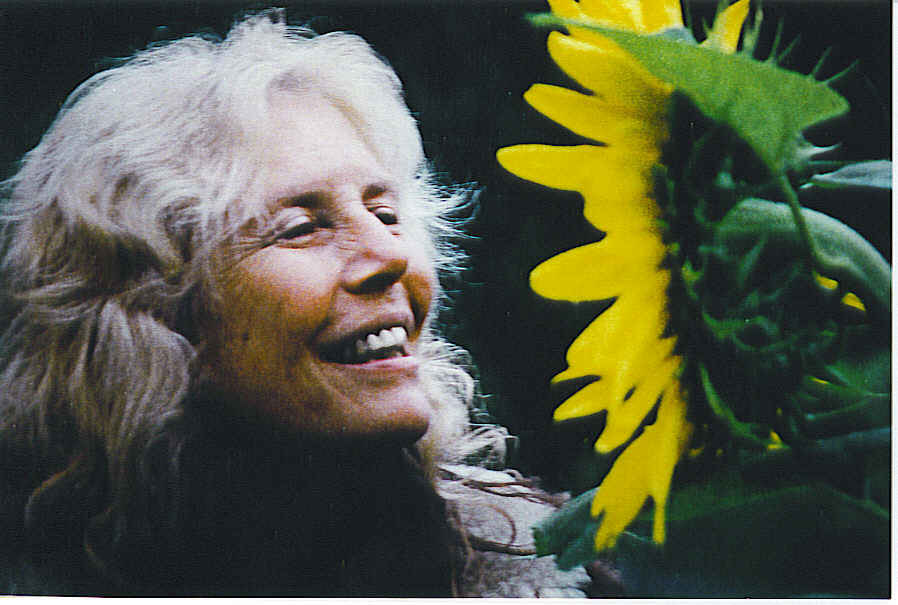
Tasha and Sunflower, best

Photo by Marcia Ruth Text by Tasha Halpert

In An Orderly Fashion

Column VistaIn An Orderly Fashion

Remember fire drills? There are even some of my readers who might remember such a thing as a bomb drill. When the bell clanged we were always told to “proceed in an orderly fashion.” I suppose that meant lining up and staying in line so the teachers or whoever was shepherding us could keep track. In an orderly manner usually meant no talking, and certainly no fooling around.

I think about this phrase sometimes when I am dithering about my apartment working to get things done. Being a writer I spend most of my time at home and can make my own schedule. This has its positive and its negative points, because I do not have the same parameters necessitating order as someone working outside the home, however I do need to make my own order.

There is priority, there is the immediate demand, and then there is what I hope to get done. Each day presents its challenges. I can only do my best. For instance, take the insistent telephone. say I am about to begin a task when it rings. Stephen would tell me to ignore it, and my experience is that if I do it will only create another difficulty I haven’t anticipated. I answer the phone, conduct whatever necessary conversation and go back to what I was doing. Meanwhile, I may have lost the thread of the process and need to begin again.

It may be that I am called away while I am cooking. I ought to know better than to leave the stove unattended. However having had years of training as a mother to answer the immediate need of the moment, I have a tendency to rush over to do what seems to need doing. In the meantime, something boils over on the stove and that necessitates a huge cleanup.

When I plan ahead it seems to help. When I set out on a series of errands it works better if I think about the best arrangement for doing them. This works fine unless I forget my grocery list and either have to go back for it or try to remember what was on it. Stephen suggested I put the list in my purse and keep it there. I explained why I don’t: when I wish to add to it, I have to find it and write down the new item– if I don’t forget what it was in the meantime. It’s far easier to keep it on the counter.

I am all too easily distracted from my orderly progress. Sometimes this is simply my own fault. In the midst of doing what I intend to do I remember what I meant to do and didn’t, go do that, and meanwhile think of something else that needs doing. When I finally return to my original task it may have become more difficult or more complicated. The other day I realized that there is no such thing as an orderly fashion in my life, there is only keeping track as best I can and being content with that.

Text and Photo by Tasha Halpert

Unexpected Consequences: the New Tablecloth

Unexpected Consequences:

Driftwood Dragon

Driftwood Dragon

With the new year comes a desire for a new look. To that end we’ve been talking about changing some of the art on our walls for some that is presently in storage. Although the furniture in our apartment needs to stay as it is, we figured we could freshen up its appearance in other ways. Toward that end we were walking through one of our favorite home goods stores checking out the merchandise when we came upon a sale table. On it were several dark blue tablecloths.

“One of these could be a nice for our dining table,” Stephen said. “How about one of these for our home for the new year?” Searching through the pile he found a round one. Checking it out I read on the packaging that material would not allow liquids to penetrate and would easily wipe up with a damp cloth. Deciding that this was a win/win situation, we brought it home and put it on the table. It looked splendid. I was curious to see if it would live up to its promises.

It did. The first time a few drops spilled on the cloth they beaded up and were easily blotted away. I was duly impressed. Several days later I tried sponging off the occasional spots that had occurred since, and they too came away relatively easily, leaving the cloth looking as pristine as ever. However I discovered one drawback: Being dark blue it also revealed the presence of all crumbs, bits of herbs and other mealtime sprinkles. If it is not cleaned off after a meal that produces any sort of small debris, the table looks messy.

Thinking about this I realized that life can be like that. Promises are often fulfilled as they are spoken and things work out as indicated, yet other factors I haven’t planned for or thought of may complicate matters. I’m not complaining, I often find it humorous when I have to cope with the unexpected results of what appears to be an improvement or an upgrade. Fortunately, the small dust buster vacuum I had purchased along with its big sister does a fine job on the crumbs. So that situation is not a big deal, just something I didn’t anticipate.

The lesson I took from this experience is that it is important to be flexible, and to not be concerned when the unplanned for experience arises. What often happens for people is that they focus on lamenting the difficulty rather than seek a solution. This attitude can be a result of what is termed the “victim mentality” or the “Oh poor me” syndrome.

What needs to be realized is that complaining only postpones the discovery of a solution because the focus is not on the resolution of the difficulty but on the difficulty itself. This attitude is a blind alley that leads nowhere. When my focus is correctly directed, most often I find a solution without much trouble. In this case the crumbs are nicely swept up with little effort and quickly disposed of. As my dear son Robin used to say, flexibility is the answer to so many problems, and I would add: correct focus.

Words and Image by Tasha Halpert

The Blessings of Simple Pleasures

Queen Ann's Lace with BindweedThe Blessing of Simple Pleasures,

by Tasha Halpert

I was fortunate in that I learned fairly early in life to practice my attitude of gratitude. There were two experiences in my life that prompted me to do this. One came in the form of a telephone call from a friend and teacher telling me to be grateful and to say this prayer of gratitude daily: Beloved Lord I do greatly thank Thee for the abundance that is mine.” When I protested she said sternly, “You have much to be grateful for–a roof over your head, food to eat, people who love you, now do as I say and repeat that prayer at least three times daily.” Because I respected her, I did as she suggested.

That was the beginning. Then I encountered mysterious woman at a spiritual gathering who told me a little about myself and then said, “Never take anything for granted.” Her words gave me pause and have resonated in my life ever since. At the time I did not know that my entire life would change radically within weeks. And while it changed for the better, almost everything in my life as I knew it then disappeared to be replaced by new and different circumstances. Nothing could have prepared me for that, however I was blessed to move through it to a new life for which ever since I have been grateful.

That was a great many years ago; and much time has passed with many experiences lived through. As I have moved through them I have grown in the expression of my gratitude. Nowadays when I turn on the shower on a cold winter evening and climb into its warmth, I give thanks. Although they may not live close to me, there are many who do not have the luxury of hot water from a faucet. When I cuddle my clean cotton sheets and the warm covers on my bed around me, I think of, and send a prayer for those who are homeless and have little to comfort them in the cold.

An attitude of gratitude as we are often reminded by teachers from Oprah to Eckert Tolle is one of the pillars for the foundation of a happy life. My own personal experience has proved this to be true. I have also learned to realize how important it is to be grateful for that which at first seems less than fortuitous. However in general I prefer to focus on those things that bring me joy rather than those that do not, even while being grateful for those as well.

Small and simple pleasures–a phone call from one’s child or grandchild, the wagging tail of a treasured animal companion, the smile of a neighbor encountered unexpectedly in the supermarket, or the friendly help of a stranger in locating a hard to find item–these lovely, serendipitous experiences provide a splendid symphony of joy. As I live my life, it plays in the background as an accompaniment to my everyday doings. Listening to it I am reminded again and again to be grateful.

Indulgence Versus Overindulgence by Tasha Halpert

  Stephen plopped another load of catalogs from the postman on the table. “The poor mailman must be tired having to lug all this stuff around,” he said as we prepared to recycle most of them. “I agree,” I said, “And it’s amazing how fast they found us at this address. We’ve only been here a few months and already we’re getting all kinds of stuff from our former address and other places too.” As I glanced at the shiny covers before dropping them into the wastebasket I thought about the catalogs from my childhood.

I remember when the number of catalogs my parents received were few and far between, not the quantities that arrive annually in the mail from October through most of December. For me as a child they were fun to look through and very helpful. My opportunity to shop in actual stores was rare. Young people growing up today have no idea what it might be like to have one car in the family, limits on gasoline, and no malls–only local stores.

Today’s plethora of opportunities for shopping indulgence can easily make for overindulgence. Tempting ads in catalogs, shiny online images of pretty items plus the ease of online shopping–not to mention the heaps of catalogs the postman delivers present would be Santas with a banquet of goods. Credit cards–buy now pay later, make it even easier to spend more than might be wise given one’s resources.

I remember how good I felt a number of years ago when I got my first credit card. Now I didn’t have to wait to buy something; I could have it right away. Prior to this I had to put things I couldn’t afford to pay for immediately on layaway, which meant waiting until the item was paid off to take it home. The opportunities to spend as well as the ease of access to goods makes for a potential for unexpected debt. It is amazing to me how even small purchases add up to a grand total that always seems more than I anticipate.

In addition, while the items in a catalog or online might seem quite wonderful by description, the reality may be quite different. I have all too often been disappointed in the actuality of the gift once it arrived and was opened. This is also true of food from catalogs which often is not nearly as tasty as it appears in the pretty pictures. It is not only easy but also more tempting to be less choosy when one is not putting limits on one’s indulgences.

However, as well as a downside, there is also a good side to this situation. The opportunity to indulge with limits rather than overindulge without them, can present a chance to practice restraint as well as detachment. Life, that marvelous daily Buddha, offers us many opportunities for important spiritual lessons. Reining in the appetite for spending as well as choosing wisely the absolutely perfect single gift can be a marvelous chance for spiritual practice as well as a way to save.

Deb's party food 2

It Tolls For Thee

Image

As Above, So Below Photo by Tasha Halpert

Heartwings says, “Love is the goal and love is the way to achieve it.”

When a huge tragedy occurs we are all affected. As John Donne, the 17th century metaphysical poet said, Never send to know for whom the bell tolls; it tolls for thee. On April 15, Whether we were on the scene or safely watching it on TV, we were there. Even if we hadn’t yet heard about it, we were there. It is my feeling that in some mysterious way, we are all connected, interwoven with one another like the cells of a finger or an eye. Yet each functions as we are created to do by our unique makeup.

As we are all connected, when we harm one another, we are harming ourselves. It makes more sense to be peaceful, yet human beings seem to continue to pursue conflict as they always have. Animals that live by cooperation live longer, healthier lives than those who do not. Why is it that part of us attacks another part of us? There may be many reasons given, as many as there are speakers. Not one of them is either right or wrong. It is what it is.

Regardless, the healthier each one of can become, the healthier we all will. Much progress has been made in the last century in so many ways. Most recently is the trend toward men spending quality time with their infants and toddlers, changing their diapers and bathing them. How wonderful for a child to have the care of both mothers and fathers at such a young age. Cigarette smoking was once prevalent throughout our society. Now it is frowned upon by many. Recycling is common, conservation is growing.

Progress is made slowly. Yet sometimes that is best. The slow plow turns a deep furrow. The loving responses of the many as the Marathon tragedy unfolded is heartening to see. Little tales of compassion continue to surface. We might take some small consolation that the tragedy has brought out our best selves, teaching us what  we can do to change the world to a more compassionate, loving place to live. Little by little with each act of kindness and compassion we add to the sum until little else is left but love.

May you find joy in sharing and caring. Blessings and Best Regards, Tasha Halpert