Watching the Pot by Tasha Halpert

I have always been exceedingly curious. This is one of my chief characteristics and while it has occasionally gotten me in hot water, most of the time it has only added spice to my life. Why people do things and what makes them tick has from my childhood been a vital interest of mine. I also enjoy observing people as they go about their business, especially in public. When I commuted on the train between my high school in Boston and my home on weekends I used to sketch my fellow passengers.

I was fortunate that my mother encouraged my curiosity. Children’s curiosity is precious and while it can also be annoying, it is important to encourage this trait. My brother did all sorts of experiments that unbeknownst to my parents could have either set the house on fire or blown it sky high. Fortunately, that never did happen. He grew up to be a wonderful scientist and together with his wife has written many helpful books.

Most all of the world’s great discoveries began with someone saying, “What if…” and then following up with an investigation or an experiment. I find it fascinating to read about some of these people, like Edison, for instance, who when something didn’t work, never felt he had failed but only that he had discovered another way not to do something. One person who inspired me was Mr. O’Connor, my 6th grade teacher. “Okie” used to demonstrate scientific principles with wonderful and seemingly magical experiments.

Seaside Perspective   I hope never to lose my desire to investigate. For instance, just for fun the other day I decided to see if a watched pot really would boil. I put some water in a pot, turned on the stove, and then observed the tiny bubbles as they gathered on the bottom. I wondered if they would change into large ones. They didn’t. As I watched and waited, I looked for it to boil, keeping my eyes glued to the water. After a time it actually did, so I proved to myself that the adage truly was inaccurate.

To be sure, most of the time when I put water on to boil I don’t bother to watch it. When I prepare a meal, I do several things at once–chop vegetables, stir up ingredients, and so on. Who has time to watch a pot boil? Still as I told my daughter when she laughed at me, I wanted to do this as a scientific experiment. I was intrigued by the thought of observing the pot to see if it would boil while being watched. Since it did, I also wondered why that saying has persisted.

I had to conclude that perhaps the saying had something to do with the nature of anxiety it represents and the tendency to keep lifting the lid to see whether or not the contents have come to a boil. Since I didn’t have a lid on the pot I was watching, I didn’t interfere with its ability to boil either. Nor was I anxious. I was simply observing. Perhaps that is the secret: to observe without interfering might not hinder the boiling process.

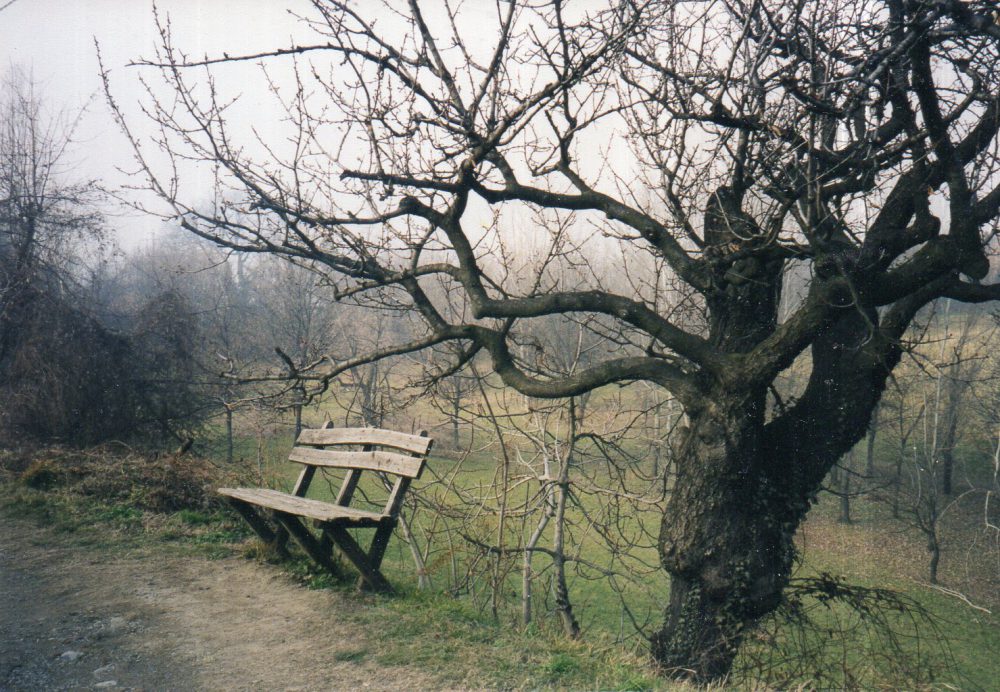
The Importance of Mental Focus

Crystals5When I began to meditate I noticed that I was much more aware of the contents of my mind. The longer I practiced meditation, the better I became at following my thoughts. This ability has grown for me over the years, and I am very grateful to be able to be aware most of the time of what I am thinking. The reason this is so important is that it enables me to monitor my mental focus.

The importance of mental focus cannot be overstated. Certain habit patterns are built into the human psyche. They are intrinsic, an inborn aspect of our consciousness. They are intended to function as a kind of safety mechanism for keeping us alive. One of these is the “fight or flight” response. As you may know, the human body is programmed to react to any perceived threat with the appropriate input for what it believes is required.

I have read statistics to the effect that much of our modern high blood pressure as well as other stressful conditions of the physical body have come about as a result of this built in response to perceived danger. This particular response was useful in the days when death in the form of an enemy or feral beast lurked behind any bush or tree. It was important when the crocodiles in the river were patrolling for breakfast. It was helpful when the early settlers of any new homeland encountered its dangers.

Now for the most part it is not only unnecessary to modern life but actually harmful. Yet in times of perceived stress our bodies continue that response. The perceived stress could be a need to get somewhere on time or to dodge someone’s criticism as a result of inadequate preparation. It is seldom a response to a true threat of death or physical harm.

One of the main ingredients of this response is that our minds have a built in tendency to notice what is wrong. This can be very helpful if, for instance, you wake up in the night and hear sounds you know are not normal, or you suddenly notice that your child is very quiet and might therefore be up to some mischief. However, as a general rule, consistently noticing what is wrong can lead to a focus upon it that prevents us from seeing what is right and good.

When I practice actively looking for all for which I am grateful, I am much less apt to be focused on what may be wrong. If there is real danger or a need to notice that something is amiss, I know I can and will. However for the most part when I focus on that for which I am grateful, I am much less focused on the negative thinking that can lead to any number of difficulties. The key to success is being mindful of the direction of my thoughts. That way I can reinforce my positive focus or change the direction of my thoughts if I need to.

Photo and Text by Tasha Halpert

Love Begins With Me

Love Begins With Me

While little children learn to love by observing the behavior of those around them, they also, as any parent of a toddler knows come with a built in ability to love. The human heart has an inborn tendency to emotional cherishing. From what I have seen both on television and in the movies, this is true of other mammals as well. Perhaps it is chemistry, or maybe it is a gift from the Creator, however it is certainly evident, especially in small children.

Furthermore, the emotional heart that dwells within us is infinitely expandable. However, in order to keep expanding it needs to stay elastic. This elasticity requires a certain amount of maintenance. When individuals harden their hearts–even if they do it because they feel they must in order to survive, they reduce the heart’s elasticity, and possibly begin a process that will eventually result in the heart’s inability to expand at all. The way the heart becomes hard is through the resistance to and denial of pain.

That is not say it is easy to admit pain into the heart. There is so much of it around. The media confronts us with pain at every turn. Each day when I open my computer I am confronted with samples of disaster or tragedy, sometimes many of them. In our personal lives there is much opportunity for pain of all sorts even in the best of lives. Major trauma can strike at any time, and on any given day there are many small deaths or sadnesses to be dealt with.

When I am willing to allow my emotional pain into my heart, I also take an important step toward compassion for myself and for others as well. Compassion is a natural response to pain. Even very small children will try to comfort you if you are sad or hurt. It seems to be a built in reaction. There are animals that will do the same. I remember a day long ago when I was feeling sad and began to cry. At the time we had three cats and all three came over and tried to climb into my lap.

It can be difficult for me to open my heart to emotional pain. I was brought up not to cry, to be tough and to ignore hurt. Yet that meant ignoring rather than acknowledging it. I had to learn to open my heart enough to take in the pain in order for compassion to find its way in as well. I had to be taught to love myself enough to admit that I felt pain, and that I needed to address that pain. In this I had the help of a fine therapist. I will always be grateful to her.

By loving myself enough to be honest with myself and others, I keep my heart flexible and elastic. By comforting myself with that love, I acknowledge what I feel, and then I can do what is necessary to address that pain. Being emotionally honest is being loving to myself. When I am loving to myself in this way I expand my heart. This makes it possible for me to love others even more. The more I love myself, the more I am able to love others, and that makes me happy in my heart.

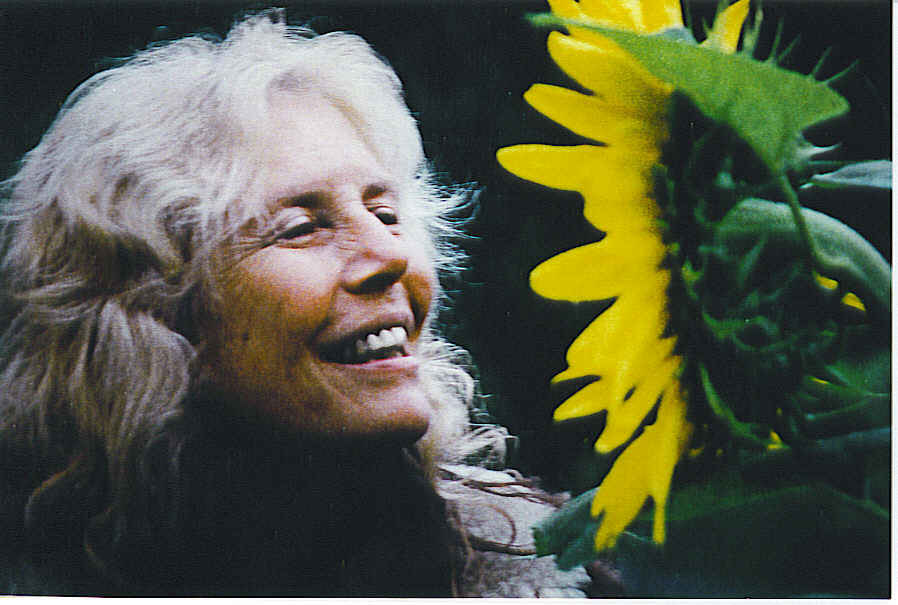
Tasha and Sunflower, best

Photo by Marcia Ruth Text by Tasha Halpert

I am Thankful

Stephen and Tasha Hug          I make a practice of being thankful. I have often shared the little prayer I say a dozen or more times a day for various and sundry blessings. However it is not necessary to pray one’s thanks. It enough to simply acknowledge that one is grateful. My gratitude for what I have is enormous. I am also very grateful for much that I do not have, or may have had and no longer do.

What we have and what we do not have may both are something to be thankful for. Did you ever think back to when you were little and wanted something–a pony, perhaps? Most likely you didn’t get it, and most likely if you had you would soon have tired of taking care of it. Ponies require daily brushing, cleaning up after, feeding, petting, riding, and more: taking care of the saddle, bridle and all the required tack. They are a lot of work, and the child who wants the pony doesn’t think about that.

We seldom think about the consequences of receiving what we wish for. There is an old adage that goes: be careful what you wish for, you may get it. I remember admiring big houses, and oh how I wished for a swimming pool. One day I acquired both. That pool was more work than it was worth, although many people enjoyed it. However they weren’t tasked with the care of it as I was.

I used to think I wanted more space, and now having had two large houses–though one was smaller than the other, I have learned that every bit of space I may have requires care and looking after. I have learned to be content with a lot less space that I ever thought I would be.

As well I am thankful for those difficulties I have left behind. It is lovely not to have to clean three bathrooms each week, tend a huge garden, prune lots of bushes. When I hear a child yelling in the supermarket I am delighted it’s not my job to care for a howling toddler. I am also glad not to have be cooking a big Thanksgiving dinner and hosting a large group of people. I enjoyed and was thankful at the time I did all these things, now I am glad that time has passed.

There is much else I am just as glad not to wish for any longer. I used to think I would like to go up in a balloon, I don’t feel the need to do that any more. I don’t want to jump out of an airplane with a parachute either. I am thankful that I don’t need to do these things to be happy or feel fulfilled.

Thinking about thankfulness as I do each and every day but most especially at Thanksgiving I am struck by the way I have learned what I truly want and how fulfilled I feel. Once I yearned to be more popular. Now I am thankful for the friends I do have. I have learned that what is important to me are the small daily pleasures of contact with people and our communications. Most of all I am grateful for my beloved partner and best friend Stephen. Having a special friend with whom to share my life is my greatest blessing.

Living a No Fault Life

Image

Automobile insurance from Massachusetts companies is based on the principle of no fault. What this means is that if you are involved with other vehicles in a car accident, regardless who is at fault, each insurance company pays for damages experienced by their insured. There is no need to go to court, no tangle over who is right and who is wrong, or any other difficulties associated with the distribution of funds to those who need them.

What happens if this principle is applied to life? What if instead of spending time assigning blame or fault with all the resentment and anger that that can produce, no fault were placed upon anyone? If that were to be the case it could mean that any resentment or anger I might feel from a perceived injury, whether physical, emotional or psychological could be seen in a different light.

Think about it. If a cat scratches me, is it the cat’s fault, or is it simply the nature of a cat to scratch? If a small child breaks my precious piece of china or even pulls the dog’s tail, whom can I blame? Children are often careless and break things. Especially when they are very young, they may not recognize that dogs don’t like to have their tails pulled. Is the child at fault for how he or she acts, or is the child simply acting the way children do?

In my life there have been many people who metaphorically speaking stepped on my toes because of who they were. They didn’t do it on purpose. They were just being themselves. Can I blame them for being themselves? Do I resent them for their actions, or do I simply recognize that it’s not their fault that they are inclined to be forgetful, careless, ill informed or whatever else caused the problem?

I may do a disservice if I place blame on another instead of recognizing that he or she only acts as she or he is capable of acting at the time. The same is true of myself. I can take responsibility for my action; I can try to do better next time; yet I do not need to fault myself. It is my firm belief that at any given time people do only what they are capable of doing and that there is no need to assign fault. Blaming causes resentment and anger as well as tends to prolong the original difficulty.

I might gently call attention or discuss what was said or done, yet only if it seems important. It’s not my job to judge the actions of another. Perhaps this is why statues and other images of Justice are usually blindfolded. She holds scales symbolizing fairness. Perhaps she sees with the eyes of the heart rather than her physical ones. To be fair I need to take into consideration all the factors in a situation and not only my perceptions. When I can accept that there really is no fault, that it simply is the way it is, then compassion and forgiveness will guide my response.

Summer Solstice

From high in the sky
sun sinks slowly,
lengthening afternoons and evenings.
Time seems suspended.
Children’s days are long
and full of freedom.
For me, the dwindling has begun.
In ripening fruit
in scent of sun warmed grasses
in insect choruses
the beginning of the end sings

Tasha HalpertImage

It Tolls For Thee

Image

As Above, So Below Photo by Tasha Halpert

Heartwings says, “Love is the goal and love is the way to achieve it.”

When a huge tragedy occurs we are all affected. As John Donne, the 17th century metaphysical poet said, Never send to know for whom the bell tolls; it tolls for thee. On April 15, Whether we were on the scene or safely watching it on TV, we were there. Even if we hadn’t yet heard about it, we were there. It is my feeling that in some mysterious way, we are all connected, interwoven with one another like the cells of a finger or an eye. Yet each functions as we are created to do by our unique makeup.

As we are all connected, when we harm one another, we are harming ourselves. It makes more sense to be peaceful, yet human beings seem to continue to pursue conflict as they always have. Animals that live by cooperation live longer, healthier lives than those who do not. Why is it that part of us attacks another part of us? There may be many reasons given, as many as there are speakers. Not one of them is either right or wrong. It is what it is.

Regardless, the healthier each one of can become, the healthier we all will. Much progress has been made in the last century in so many ways. Most recently is the trend toward men spending quality time with their infants and toddlers, changing their diapers and bathing them. How wonderful for a child to have the care of both mothers and fathers at such a young age. Cigarette smoking was once prevalent throughout our society. Now it is frowned upon by many. Recycling is common, conservation is growing.

Progress is made slowly. Yet sometimes that is best. The slow plow turns a deep furrow. The loving responses of the many as the Marathon tragedy unfolded is heartening to see. Little tales of compassion continue to surface. We might take some small consolation that the tragedy has brought out our best selves, teaching us what  we can do to change the world to a more compassionate, loving place to live. Little by little with each act of kindness and compassion we add to the sum until little else is left but love.

May you find joy in sharing and caring. Blessings and Best Regards, Tasha Halpert