I Remember Mama


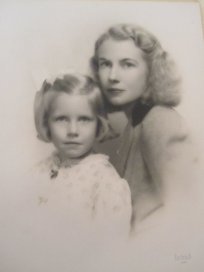
Mama and Me Maine 2005          On the TV Screen pages turned in a photograph album as the weekly TV show called I remember Mama opened. Each week the daughter told a story from her growing up years, about her mother and her family. Although the show was set in 1910, the themes were timeless and had much to do with family interactions and behaviors. Though I do not remember any particular episodes, I do remember watching it with pleasure. The mother in the story was resourceful and clever, much like mine.

With the approach of Mother’s Day I find myself thinking about my late mother and remembering little tidbits about our life together. She worked hard to put good, healthy meals on the table–my dad came home every day for lunch, shop economically and keep up with the laundry. I remember her hanging out the clothes almost all year round. She grew vegetables in the garden and canned them for winter consumption. We kept chickens, and while it was my job to take care of them, it was hers to prepare and cook them. Plucking a chicken isn’t much fun, yet she did it without complaining.

She made fairly simple meals. We usually had meat and potatoes for lunch and some kind of a casserole or simpler meal at supper. My kitchen memories are more about being chased out and sent either upstairs or out of doors to play, depending on the season. I remember staying up for radio shows with Mom and Dad. It was a wonderful treat to sit on one of their beds and hear a grownup show. Starting when I was about twelve they took me to the movies with them, although they usually skipped the first of the double features.

My mother was a brave woman who came to this country from Germany knowing almost no one except my dad. Though she spoke excellent English, at the time to be German national was to be suspected of being a spy. I believe she told me that at one point she was even under surveillance. She soon became an American citizen, however, and during the second world war she joined a women’s civilian motor corp. I can see her now in her brown uniform, wearing a smart cap with a brim. Along with some of her friends she did various things to be of help at home.

She left me a wonderful legacy of courage and curiosity along with a desire to do things right as well as get the details correct. She played card games and Chinese checkers with me. Though she was never one to help me win, she played fairly and enjoyed the competitive aspect of the games. Later on, while she did not believe in interfering in my life, she always did her best to advise me when I asked her to. I miss her presence in my life, yet I know that she is far happier and more comfortable now. With gratitude for all she did for me, in my heart I wish her a happy Mother’s Day.

Tasha Halpert

Dandelion Days

dandilionforwishingThe first flowers I remember picking were dandelions. Proudly I brought them to my mother, who lovingly thanked me. I have memories of making dandelion flower crowns with her. We’d slit the stems, slide a flower through, and repeat until the crown or wreath was large enough to wear. Dandelions are the first flowers many children are allowed to pick. They are such pretty little bright spots, and unbeknownst to many, such good medicine It seems a pity that people feel they have to eliminate them.

Those who want pristine green lawns eradicate dandelions, never realizing that instead of poisoning these cheerful yellow suns, they could pick them and make a wine that tastes of summer, a bread, or other baked goods, or use the leaves in a salad, a stir fry or combined with other greens in a juicer. Dandelion leaves have excellent food value, and are a healthy, desirable spring vegetable. The roasted, ground roots make a coffee like drink.

Children love the yellow flowers; parents faced with eliminating stains from the milky juice, not so much. Homeowners might like to know the long roots actually benefit the lawn: they aerate the soil, keeping it from becoming compacted and unable to absorb nutrients. Susun Weed says there is enough vitamin A in a dandelion leaf to rival store supplements. As well there is vitamin C and many helpful minerals. It is also a mild, effective natural diuretic. If your lawn is away from the road, you can safely use your dandelions many ways.

Here is my recipe for Dandelion Deluxe: Ingredients: ½ cup chopped onion, 4 cloves of garlic minced or chopped fine, 1 small summer squash chopped small, 4 cups dandelion greens, olive oil. Method: Prepare greens while you sauté onion, garlic and summer squash in a olive oil. Remove roots and tough bottom stems. Wash very well. Cut up with scissors. Steam in a small amount of water until they wilt down. Strain water and set aside. Add chopped greens to sautéed vegetables and cook until stems are tender. You serve as is or you can mingle into your food processor for a different taste. Drink the healthy cooking water, your body will thank you.

Dandelion Wine: Age for at least 6 months. It will continue to mellow. Ingredients: 1 Qt Dandelions, yellow part only. 4 Qts. boiling water, 3 Lemons, 3 oranges, 4 Lbs sugar, 1 Pkg. yeast. Method: Pour boiling water over blossoms, set for 24 hours in a warm place. Slice fruit and remove seeds. Cover with sugar; set for 24 hrs also. Then strain blossoms and pour liquid over oranges and lemons. Add 1 package any yeast. Pour into ceramic or stainless steel. Let stand 4 or 5 days. Strain, let stand one more day. Bottle, then cap with small balloons. Leave until the wine stops “working” and balloons collapse. Cork and store 6 months or more. Then sip. It tastes like summer. Recipe makes 5 bottles.

Tasha Halpert

Into the Next Room

Maple Flowers          The first person whose death I remember hearing about was a relative named Cousin Ellen Parker. My memory of her is of someone roundish, gray haired, and somewhat wrinkled. I have no real memory of her other than of her appearance. She must have died when I was around four. My great grandmother died in her eighties when I was five. I don’t remember hearing much about that. I do have a vivid memory of picking dandelions in our yard and seeing her walking along in her purple hat. When I told my mother she insisted Grandma Great was dead and I couldn’t have seen her. But I had.

In those days death wasn’t usually discussed in front of children. I knew nothing of people dying, only small animals and occasionally pets. The rest of my family was healthy and active, living vigorously for many more years. I grew up with the idea that death was something that happened to people who were old. Times have changed. I have outlived not only my parents but now some of my friends and acquaintances.

This past week Stephen and I heard about three people dear to us who have stepped into the next room–another way to say they have passed from this life. As I write this, it is the birthday of another friend whose death I found out about earlier this year. Stephen and I both find it difficult to believe that these and other friends are gone from our sight. I find myself regretting that I never sent that card I meant to send, or made that phone call.

How can we know when someone’s time will run out? When the card we mean to send or the call to make can no longer be sent or made? No matter how well meaning I try to be there will always be that last small gesture that won’t be made before they are gone. There’s no way to predict when someone will make that transition from life on earth to the wider realm from which no one returns.

As I grow older in years I notice that more and more of the people I have known depart this life for the next. How can this be? Children believe one must be old to die. I’m not old so how can they be old enough to leave this life? When I was growing up I thought of fifty as old. As I approached that time I thought of the succeeding years as indicating age. Now it seems to me that there is no time limit on “old,” nor any way to tell what age is appropriate for the end of life.

It seems no matter how many years I accumulate, I still somewhere within me, retain my youth. From the other side of fifty and more, although the years tell me a different story, I don’t feel very much older. Why have these dear ones left me? It seems only yesterday that we were all in the sunshine of our years. Now the shade encroaches. Still I trust that those I miss are freer now, and without pain. My sorrow at their passing is only for me, not for them. However, I have my memories of them, and these will remain with me for all my years to come.

Tasha Halpert

The Dailyness of Doing

Nature's Art 1. 2012-06- While I was growing up, when it came to household chores my mother did not consider me to be capable. This may have been because she expected more of me than I was able to do at a young age, or it may have been that she was so particular that my childish efforts were simply inadequate. She had very high standards. Regardless of the reason, she never encouraged me to do any cleaning or other household tasks even after I was in high school. What this meant was that I never really learned how to clean properly.

I remember the day I came home to the first apartment my young husband and I had and found my father sweeping the rug. I asked him what he was doing. He said he was cleaning the rug. But I don’t have a vacuum, I told him. You don’t need one, he said, and inquired of me where I kept my dustpan and brush. I had never realized you could clean a rug just by sweeping it.

I had to learn how to keep house the hard way, by trial and error and doing it. The other day as I cleaned the sink in the bathroom, I began thinking about household tasks in general. I realized that when I complete some tasks, I give a sigh of contentment and think to myself: good, now that’s accomplished. There are others I complete and with a sigh of resignation wonder how soon I’ll be doing it over again. Much depends on the task in question; some are more satisfying than others. Cooking, for example is my delight and I have no problem making three meals a day.

On the other hand, when I wash the kitchen floor, although it looks very nice, I don’t feel happy because it doesn’t last. Somehow it gets dirty practically immediately. Although small in surface, it is still a chore to keep clean. The stove presents the same issue. It seems that no sooner do I clean the pans under the burners than when I next turn them on, they’ll emit a bit of burning smoke from another stray crumb.

It is hard for me to take much satisfaction when I finish doing something I know I will have to do again practically immediately. Yet when I do not allow myself to take that satisfaction, I do not feel rewarded. If I do not feel rewarded it is much more difficult to do what needs doing again with any promptness. The good feeling I get from completing any task is an important part of what helps motivate me to repeat it, no matter how soon.

There is only one solution I can think of: to do the task as fully as possible in the present moment. What this means is that while I am doing it, rather than thinking of how soon I will have to do it again, or how onerous it is, I focus exclusively on the performance of it. It helps almost any situation to be mindful during it. As I direct my attention and my energy to the activity of the task, I am not only more efficient, but also more able to find pleasure in it.

Tasha Halpert


An Excellent Seafood Chowder by Tasha Halpert

CA Mural          As a child I loved to play with and rearrange the contents of my mother’s pantry, especially the bowls, utensils, and such. As an adult, I truly enjoy finding the perfect implements and utensils for my own food preparation and cooking. In the many years I have been doing it, I have accumulated a nice variety of cooking tools and containers. Because I truly enjoy working with food, I’m always looking for new items I can use. When someone left a cute little orange bowl here after a party, I fell in love with it. However, not wanting to be selfish, I set it aside in case the owner could be found. When after more than six months of inquiry had passed, I decided it was mine.
It sits cheerfully on my kitchen counter, washed and replaced immediately after use because once something fell on it in the dish drainer and took a chip out of the edge. It is a useful size, perfect to contain the ingredients for so many of the dishes I create. Recently, my orange bowl held the onions and celery I chopped up for a seafood chowder.

Since I have worked so hard to perfect this recipe I thought it might be fun to share it with my readers. One of my challenges was to create it without milk for my lactose intolerant husband and to thicken it without cream. Another was to cook it in such a way that the fish, clams or other seafood did not get tough. It shortens the time if you want to omit the thickening, however, it does wonders for the texture.

My basic seafood chowder with fish, clams, and/or other seafood begins with about 3/4 of a cup each of chopped onion and chopped celery, and 2 tablespoons each of butter and olive oil. Sauté until they are nice and tender. Add two medium potatoes, peeled and chopped into half inch pieces. I think large chunks of potato overtake the taste, and they do swell up in the broth. Add 4 cups of water, 1 teaspoon of black pepper, 1/2 teaspoon of salt and an optional teaspoon of thyme. Bring to a boil then simmer covered until potatoes are cooked through.

If all you want is a simple fish stew, add 3/4 of a pound of cod and whatever else you like (chopped clams, shrimp, scallops–bay or large, etc.) Cover pot and turn off the heat. Fish will cook in the cooling broth and not get tough when carefully reheated. However, if you take the trouble for the next step you will have a very special dish.

To make a chowder instead of a simple fish stew, you must have a thickening agent. In which case, before you put in the fish, melt 2 tablespoons butter in a small pot. Add 1/4 cup any flour–gluten free is fine. mix well, then slowly add 1 cup any kind of unflavored milk, whisking constantly to make a very thick blend. Add this to the vegetables and broth, stir well and bring to a boil. Now add whatever fish you are using, turn off the heat, cover and let sit until fish is cooked through. Reheat gently to serve or refrigerate. It tastes even better the next day and will serve 4 nicely.

Practicing Unconditional Love


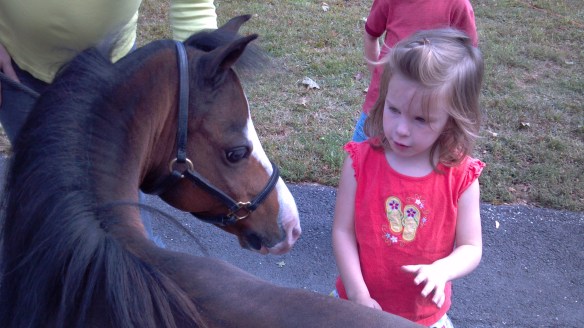
Sidney and pony 6


          Holy week celebrates the life story of Jesus, specifically its culmination. His life is a very special example of unconditional love. Whatever you may or may not believe concerning His life, you cannot argue the fact that here is someone for whom love was the supreme guiding light. In his life and in his words there are numerous examples of unconditional love: that love which is given without expectations or parameters. While Christians are supposed to practice this kind of love, they may or may not focus on it to the extent He did. Unfortunately, it is often not easy to do. It begins in families.

          We learn about love in childhood. If the love we are given does not feel to us like love, we grow disappointed and eventually believe we are not loved. To a child’s mind, if we are not loved it must mean we are unlovable. With the help of a therapist I learned to see my parents love as authentic, thus I was able to begin to love myself. The more I can love myself, the easier it is for me to be grateful for and accepting of the love of others.

          My parents did the best they could. They were two very different, very volatile individuals. Their attitude toward one another was so fierce and their fights and disagreements so frequent that even though now I know I was loved, I could not feel it then. In addition they had high standards for me, their oldest child, and were quite strict in what they expected of me. Too often they stressed my inadequacies rather than my successes. This attitude, with which they both had been raised, did little for my self esteem.

          As a result of learning to love myself, I started to practice unconditional love. I began with people I didn’t know well, went on to friends, and finally to family. It is most difficult to practice unconditional love with dear ones because I have expectations of them. Expectations and unconditional love do not mix. Still as I learn to love more deeply I can allow myself imperfection. After all if I do not spot my errors, how can I correct them. If I love myself enough, I can smile at my errors and congratulate myself on my efforts rather than criticize.

          Awareness is important; it is easy to justify criticism of others by thinking of them as in need of correction. However, when I encounter what seems to need correcting, I can ask myself if the fault I perceive in another is a reflection of something in my own being that needs work. If not, it may be that what I am uncomfortable with in the other person stems from a wound of which I am not aware. Then perhaps I need to relinquish judgment and practice compassion. The practice of unconditional love is ongoing. As I work at it I find that as well as deepening my love of others I am deepening my love of myself. In this way I find more and more harmony in the beautiful song of life.

Tasha Halpert

A Little at a Time


My Buddha by the sink

My mother was an artist. She went to art school and studied sculpture as a young woman. Later when my brothers were both in school she studied painting at the Boston Museum of Art. She had a studio over the garage where she occasionally worked. She also kept her art materials there along with lots of interesting women’s magazines. I loved to go up and read them. From them I learned many helpful household hints. I still remember one that told how to change a bed by walking around it only once. I used to do that. Now Stephen and I make ours together.

It may have been then or it could have been later on in my life that I came across the twenty minute system for accomplishing lengthy tasks. The article suggested allotting twenty minutes daily or whenever convenient, to a chore that was normally postponed because it might take too long or be otherwise tedious. When I tried the suggestion I was pleasantly surprised to see that it worked. One example was that instead of cleaning out all the bureau drawers, or every shelf in the pantry at once, take twenty minutes to clean and tidy one, stop and do another on another day.

At one time I practiced this technique quite frequently, however it slipped into the mists at the back of my mind. Recently I was reminded of it. What happened was this: For a very long time I had postponed cleaning out the refrigerator. Week after week each time I wrote out a new to do list, that particular task was at the top. Still I found reasons not to. Then I noticed how sticky one of the racks on the refrigerator door was. I decided to clean it off then and there. Because there were many small jars to be removed, washed off and replaced, it took me about twenty minutes or so to complete the task.

As I shut the refrigerator door I remembered the household hint from so long ago and laughed. The next day I cleaned off the second shelf of the door. Several days later I washed off the whole bottom shelf of the refrigerator. Today I cleaned the oven, and so it goes. Each task that takes around twenty minutes to complete adds up eventually to a thorough cleaning and tidying. I will probably go through my bureau drawers next, and perhaps after that a couple of other tasks I can think of that need attention.

I remember hearing someone say once that when he thought about what he had to do, it always seemed far more daunting than it turned out to be once he actually began to do it. The same holds true for me about the time spent doing something. Dividing a task into smaller segments works much better for me these days than trying to get it all done at once. As well, it spreads out over all the different times spent, the feeling of satisfaction I get from my small yet necessary accomplishment.

Tasha Halpert


The Peddler Woman, Childhood Days A Childhood Reminiscence

Me and mama by Bachrach I was a young child during World War II. As I look back I realize this was a time of great change in American society. Not only were we fighting a large scale war in far away countries, but we were also changing the way things were done at home, especially if one lived in the country as opposed to the city. By living in the country I mean living where if you wanted to purchase anything that was not delivered to the door, you needed a car. Of course there were various catalogs, however for everyday shopping most of what we bought we purchased from the local stores. The internet did not of course exist.

Because like most people we had only one car my mother could not get out to shop all that often. My father worked as a salesman and he usually needed the car to get around. In addition, gas was rationed so no one used it thoughtlessly or took trips just for the fun of it. On Sundays, all the stores were closed. That pretty much left Saturdays and the occasional afternoon when my dad would work at home catching up on paperwork, for my mother to shop anywhere we could not walk to. Living where we did, that would mean a couple of miles trek, and with my short little legs that would have been unrealistic.

Milk was delivered, and ice for the icebox with the pan that accumulated water underneath that had to be emptied regularly. Eventually the milkman added bread to his supplies. In addition there was a woman who walked from town to town lugging a large suitcase with all sorts of small items for sale. She sold what might be termed “dry goods.” The dictionary definition for dry goods is “textiles, ready made clothing, and sundries.” She always stopped at our house. It was exciting for me when she did.

I can still see her coming into our living room and opening her big suitcase. In it were needles and thread, buttons, handkerchiefs and occasionally something rare in those days: nylons. They had seams, and were shear unlike the cotton stockings that were available. My mother would buy thread, pretty hair ribbons for me, and sometimes cotton socks. In the winter the peddler woman sold woolen gloves and hats. In the summer she might have carried the sun bonnets my mother insisted I wear to protect my fair skin.

How different the world is today. The end of WWII brought in a new era in so many ways. How little understanding children growing up today must have of what it is like to buy from a peddler woman, a strap over her shoulder, clutching the handle of her suitcase as she walked from town to town with her notions and dry goods. I don’t remember when she stopped coming and we went instead to the big stores in Beverly to shop. It could have been around the time we got an electric refrigerator to replace the zinc lined icebox by the kitchen door. When one is small, time dissolves into timelessness, and memory delivers images not dates.


Growing Up By Myself

Bed Friends 1

When I was growing up I lived a couple of miles from a small seaside town on a large property that belonged to my Great Aunt Alice. I didn’t have any siblings until I was almost nine. Virtually an only child, I was surrounded by busy adults and often told to stop bothering them and find something to do. A voracious reader, when I wasn’t nose deep in a book, I played games of pretend, making believe I was someone other than a lonely child in an isolated neighborhood with only herself to rely on for amusement.

I had quite a collection of teddy bears, dolls and other stuffed animals. When I was small I was sure they came alive at night. This belief was influenced by Johnny Gruelle’s Raggedy Ann and Andy books. These innocent stories about a group of toys that had adventures were written in the early 1900s and became even more popular in the 30’s and 40’s. In these stories, ice cream cones grew on trees, cupcakes and hot dogs could be plucked from bushes and lemonade and sodas were available in puddles and brooks.

Raggedy Ann’s magical woods full of “fairies and elves and everything” held all sorts of fun inventions that I yearned to experience for myself. I loved the stories and used to watch my toys to see whether they too might have adventures while I was sleeping. Sometimes I thought I spotted them in different positions than I had left them, though I could never be sure.

Later I moved on to books by Robert Louis Stevenson, Alexander Dumas, and Edgar Rice Burroughs. Then I wanted to be a pirate or have exciting adventures when I became a grown up. I made bows and arrows out of handy branches and tied string to my father’s hoe and rake to make a hobby horse. If my father needed his rake he knew where to look–in my lilac bush “stable.”

My family believed in fresh air and I spent a lot of time all year round out of doors in nature. Where we lived I was fortunate in having a large open area to play in There were all kinds of trees to climb and large fields of tall grass that I made into my private jungle. My pretend life was much more interesting than my actual one. The world I lived in as a young child was without TV or any form of electronic toy or game. I had to use my imagination to conjure up my entertainment.

I wonder if my childhood led me to grow up looking at the world from a different perspective than most. Steeped in nature and in the creativity of my mind, its sights and sounds enhanced my imaginary life. Today I perceive links and patterns everywhere. I find significance in synchronicity and receive messages from the nature around me. The world was and is alive for me in a way today’s youth may not discover. With the current focus on electronics, most children will not have my opportunities. I learned to listen to and observe nature and found there a sense of companionship and of comfort that is with me still.

Peace At Christmas, by Tasha Halpert

Johnnys tree2Even as a small child I was aware of the chaos of war. During the second World War my mother’s parents were still in Germany. My mother had not heard from them for almost ten years. Finally when the American forces broke through, her parents were able to communicate. I watched her wrap packages with food, clothing, and other necessities. Although there was still chaos and difficulty in Germany, at least my mother’s heart was at peace.

My cousin who lived in Cuba in the forties endured strife growing up. She wrote me of how shots might ring out and everyone took cover. I grew up without any direct experience of this kind, and I was fortunate. Now it seems that no one in the USA is safe from warlike behavior. What can we do to combat the fear that has begun to pervade our once peaceful atmosphere? I believe that on one hand we can raise up our courage and refuse to be intimidated, and on the other that we can work for peace within our own lives, most especially now.

The words “Peace on Earth” resonate throughout our Christmas carols and scriptural messages, and even our Christmas cards. Yet to think about peace amidst the hectic shopping, baking, wrapping, mailing hustle bustle of the holidays seems difficult. However I can promote peace in small ways.

I can invite a friend to Christmas dinner, bake cookies for the kind man who takes care of my car, listen sympathetically to someone who needs an ear. I can hold the door for someone or the elevator, volunteer to be of help where help is needed. Equally important, I can nurture peace in myself through meditation, eat well for a peaceful stomach, and of course, get enough sleep.

Taking time for myself is vital to my sense of peace. Remembering to breathe deeply, especially during a nature walk helps me feel peaceful. So does hugging a tree. When I am on my feet a lot I take fifteen minutes to lie on my bed with my legs straight up against the wall. This feels wonderful and it pacifies my body. When I feel more peaceful within myself, I influence the atmosphere around me to harmonize with my peacefulness.

I can talk all I want about the need for peace and the lack of it in the world, and that will change nothing. Alternatively I can set about making peace myself, promoting peace in my own way. I can be of service in the cause of peace. While I cannot influence nations or even large groups of people, I can be of help in small ways and thus help make peace.

There is a story about monkeys on an island learning to wash their food. When enough monkeys did that, those on neighboring islands began doing the same. There was no communication between them yet they were influenced. When we are peaceful within ourselves we help others to become more peaceful. When I work for peace in my own life, I am also working to bring peace in the world around me, and perhaps, who knows it may even spread out from there.