Once upon a time I wrote a poem about the eyes of love. It began: “consider with the eyes of love.” Though at that time I hadn’t yet learned about the difference that the qualifyi…
Source: The Eyes of Unconditional Love
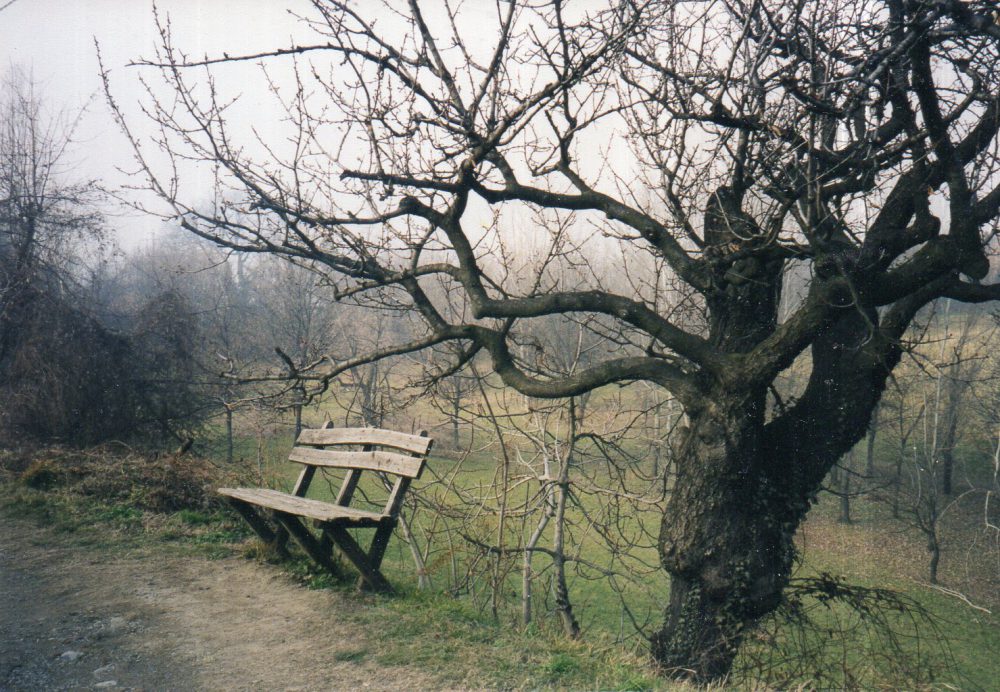
Once upon a time I wrote a poem about the eyes of love. It began: “consider with the eyes of love.” Though at that time I hadn’t yet learned about the difference that the qualifyi…
Source: The Eyes of Unconditional Love
 Once upon a time I wrote a poem about the eyes of love. It began: “consider with the eyes of love.” Though at that time I hadn’t yet learned about the difference that the qualifying word unconditional makes, what I meant by love in the poem actually was unconditional love. My parents and grandmother loved me very much. They were also quite critical of me, as well as of others they loved and otherwise thought well of. Unconditional love means just that—no criticism, no conditions on the love. It also to me means looking at others as well as at myself without a disapproving attitude.
My dear mother had most probably inherited her critical outlook on life from her highly critical mother who made frequent remarks concerning how she well as others looked. In her eyes one’s stomach was not supposed to be anything but flat as a pancake, one’s waist slender, etc. I at one time wondered why, when she was quite thin my mother wore a girdle. Then I learned it was because she believed bulges were not to be tolerated. She used to try with little success to get me to wear one. They were so uncomfortable, I wouldn’t. Eventually she too stopped wearing one.
My father too had his viewpoint. Once I acquired them my eyeglasses became an issue for him, especially when I was dressed up. I can hear him now as he aimed his camera, saying, “Take off your glasses and look pretty.” Thus whenever I was in my party clothes the glasses I wore from the third grade on became an issue for me, making me think I ought to take them off in order to look properly attractive. He was also particular about my hair, which was supposed to look smooth and symmetrical–properly arranged in a tidy manner.
My grandmother had very strong ideas about what it was to act like or to be a “lady.” When I was twelve, inspired by my first experience of being paid for it, I decided to earn money giving the puppet shows I wrote and performed for birthday parties. My grandmother quickly put an end to this. She told me sternly that ladies didn’t work. Then she gave me a twenty-dollar bill and said, “Now you don’t have to earn money.” She had grown up in a household where as she informed me, if a log rolled off the fire she rang for a maid to come in and put it back. While she did volunteer work, she had never earned money.
The critical eye that I inherited from my family persisted for a long time. It took me years to be aware of it. Then I had to learn to stop the little voice in my head that called attention to whatever deviation from the “norm” of beauty I perceived. To begin with I applied this to my view of others. Gradually I learned to do this for myself as well. The eyes of unconditional love do not see critically but with an understanding that for good reasons, we are all perfect just the way we are. These days the eyes I see through are my own, and I look out upon the world with love. As well, when I look in the mirror now, I smile.
Tasha Halpert
While it is sometimes painful to observe myself behaving in ways other than how I want to see myself, it is also worth doing. I’ve learned that if I catch myself in the act often enough, I will stop whatever negative behavior I observe.
Source: How to Grow Your Heart Bigger
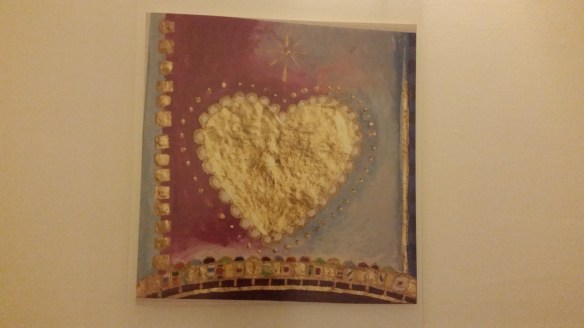 Very young children share quite naturally. Who hasn’t been the recipient of a toddler’s offering of a cookie or a treasured toy? Later, children become more self-centered, and parents have to teach them to share. Then we outgrow our parents’ teaching and begin to form our own ways of behavior. At this point we may often emulate peers who may or may not be good examples of heartfelt behavior. Some, like me, inherit critical attitudes from parents or teachers, and so unwittingly continue them. This can shrink the heart.
Most of us are familiar with a character of Dr. Seuss’s called the Grinch. His heart was shrunken–too small by far. This resulted in his acting meanly toward others and because it annoyed him, trying to take away their joy. When he couldn’t, his heart grew. Most of us believe we would never try to steal another’s joy, however perhaps we could be ignoring opportunities to grow our hearts bigger. This is something I’ve had to learn and I worked hard to learn it. It’s not easy to do so; the first step in he process is to observe one’s very own smallness of heart.
For example, when I look at someone or even myself with a critical eye, observe with distaste mine or another’s extra pounds or unkempt clothing, or think negatively of my or another’s behavior and don’t catch myself doing it, I am missing an opportunity to grow my heart. I could change my thinking and reflect that they could be on medication, indigent, ill or feeling uncomfortable and instead feel compassion for them or myself. I’m aware that when I am tired or someone annoys or irritates me, it takes restraint not to snap back. Yet when I can manage to see them in a different light, it will grow my heart.
Another way to grow my heart is to not act selfishly and take the biggest, the best or the most for myself. Being generous to others is a simple way for me to grow my heart. As children we have often been taught this by well meaning parents, yet depending on how I might be feeling, it is easy to do the opposite. Then too, if I do it grudgingly or without a genuine desire to give, it may not be as effective for heart enlargement, however it can still work to my benefit. The most effective attitude is to put others ahead of oneself with joyful willingness as opposed to grudging obligation.
While it is sometimes painful to observe myself behaving in ways other than how I want to see myself, it is also worth doing. I’ve learned that if I catch myself in the act often enough, I will stop whatever negative behavior I observe. Selfish behavior, a judgmental attitude, an outlook automatically critical of others can lead to shrinkage of the heart. Generosity, compassion, and loving giving can lead to the growth of the heart. Plus there is often a return on one’s investment. What goes around really does come around. Those who practice these virtues may well reap good fortune in some way in return. While this is not a reason to be doing it, it is a nice side benefit.
Tasha Halpert
The difficulty with anticipation, especially when one is an adult, is that it can suck the juice out of the actual event…
Source: A Sip of Spring in January

The school I attended as a child had no weeks of vacation between Christmas and March. I had little to look forward to except an occasional snow day or being home sick with a cold. Not that I liked being home sick—my mother was not one to allow me to “enjoy poor health” as she put it. This meant I was confined to bed without much to do and no pampering. The best I could expect was an opportunity to listen to the radio. Television didn’t arrive in our household until I was twelve. The winter days were dreary with school and homework. I didn’t like skiing and skating was no fun so I spent my free time indoors reading. The advent of spring at least meant I could spend more time outside.
There is a deceptively warm period in the first month of the year called the January thaw. It usually comes at the end of the month, but sometimes earlier. It is the opening note of a long prelude to spring. Sadly, it raises hopes too soon dashed. February sets in, the snow falls, the cold descends, and winter reminds us that we have a long way to go. The upside is that at least the days are longer and brighter as the sun grows stronger and shines from higher in the sky. The burgeoning light keeps us apprised of spring’s actual advent.
Expectations often create disappointment. However it is difficult to avoid having them. The anticipation that is the creator of my expectations is what happens when I yearn toward something that is just out or reach or even beyond my control, like spring. This habit begins in childhood. Once we outgrow the present moment mindset of our early years, we are vulnerable to it. For instance, when the circus was coming to town it was a big event in my young life. My grandmother always took me and every year I loved it.
The difficulty with anticipation, especially when one is an adult, is that it can suck the juice out of the actual event. A few years ago Stephen and I took a friend’s two children to a local circus in a town nearby. Based on my memories of Barnum and Bailey, I had unrealistic expectations of the little circus and did not enjoy it nearly as much as I would have otherwise. On the other hand the two children we took had a wonderful time. Unexpectedly, my enjoyment ended up being about that rather than about the performances.
Today in the news I saw that the circus of my childhood—Barnum and Bailey, will be no more. This may have started I suppose when they released the elephants and now they are disbanding completely. I wonder if those who like me once anticipated the arrival of the circus will be disappointed. I haven’t been to a Barnum and Bailey performance in many years myself, however I have my memories. Thankfully I can sip those memories whenever I wish. That’s the blessing of memories, like food in the pantry or the refrigerator they are available when I wish to reach for them. Memories of spring, however, cannot compare to its actual advent, and that I eagerly await.
Tasha Halpert
Over the years I have enjoyed experimenting with different recipes and learning what works and what does not. For instance, it might be just fine not to use a recipe for a vegetable casserole but under no circumstances try to make cookies without one.

As I have said before, I did not learn to cook from my mother. She did not think me responsible enough to deal appropriately with food, something that to her was a precious substance and not to be wasted. After I got married I learned how to cook from a cookbook. I made some funny mistakes and we ate them anyway because we were on a rather limited budget. Back in the 50’s you could actually live on $30.00 a month for food. To be sure, we ate a lot of hot dogs.
Over the years I have enjoyed experimenting with different recipes and learning what works and what does not. For instance, it might be just fine not to use a recipe for a vegetable casserole but under no circumstances try to make cookies without one. Of all the many recipe collections I possess, my old Fanny Farmers cookbook is my got-to for recipes. I look there first when doing research. There is something tried and true about a book that has been around so many years.
In addition, I am what you might call an old fashioned cook. I do not use nor do I possess a microwave oven and I hope never to have to have one. I know many people love them and find them convenient. No doubt they are. However, I feel no need to hurry my food along that way. By definition comfort food need not be cooked quickly. Sometimes the very best food is some that takes its time and lets he flavors develop.
Here are two of my favorite comfort food recipes: Onion soup and Bread pudding. The onion soup recipe is one I devised from trying different ways to make it. The Bread pudding has evolved from several recipes, my favorite being from The Cat Who Cookbook by Julie Murphy and Sally Abney Stempinski created from dishes in the “Cat Who” series by Lillian Jackson Braun.
Onion Soup Tasha: To serve 4 to 6, thinly slice two medium to large onions to make 1½ to 2 cups. In a heavy bottomed pot melt 2 Tbs butter and 2 Tbs olive oil. Add and sauté the onion, stirring frequently over medium heat. When onion is transparent, reduce heat and continue to cook uncovered over relatively low heat for an hour, stirring occasionally. Add 4 to 6 cups beef broth. Low sodium is best. Cook 15 more minutes and serve with garlic bread, or melt some cheese on toasted bread and float it on top for the French version.
Pleasing Bread Pudding: Depending on appetites, serves 4 to 8. Butter a 1½ quart casserole. Remove the crusts from 4 slices of firm, not soft bread. Cut or tear into smaller pieces. Place in casserole. Measure 1 cup any kind of milk, beat in two eggs, pour over bread. Sprinkle on 1 cup dried fruit—black and/or white raisins, dried cranberries, cherries etc. Sprinkle on 1 teaspoon cinnamon and ½ cup sugar. Add 1 teaspoon vanilla. Stir well. Add another cup of milk to make 2 cups. Stir again. Place casserole in a shallow pan filled with water. Bake at 350 for 45 minutes or until nicely browned on top. Tasha Halpert
My grandmother lived alone in Boston. A widow for many years she had an unusual way of celebrating New Year’s Eve. As my father told it, she would pick a movie theater that was showing a film…
Source: A New Year, A New Beginning
 My grandmother lived alone in Boston. A widow for many years she had an unusual way of celebrating New Year’s Eve. As my father told it, she would pick a movie theater that was showing a film she wanted to see and go to the last show. In those days on New Years Eve the theaters would pass out noisemakers and at midnight everyone would sound off with them.
I don’t know if any movie theaters do this today; certainly when they did it then it was a wonderful way for her to celebrate. Seeing the old year out is a in whatever way chosen is a ritual that has been practiced by peoples of all times and places for centuries if not millennia. I enjoy my personal rituals, which include ringing all the bells in the house not to mention kissing my husband a midnight. Then there are the ones I also practice for New Year’s Day.
The old year now past holds both failures and successes. I need to take these into account as I do my rituals to begin the New Year. What are my expectations? My resolutions, my hopes and dreams for the next twelve months to come. Realistically I must base them partly on what has been as well as what I hope will be. The trick is not to limit myself by any failures nor be overly egotistical about any successes.
When I look out of my window in the morning after a fresh snowfall, the gleaming white expanse seems like a new beginning. The crusty, trampled, slightly soiled snow beneath is hidden from sight. Everything looks fresh, ready to be inscribed with the present. A new beginning is a blank sheet of paper, a bed newly made with clean sheets, the first breath of air I take when I walk out of my door. A new beginning is a wonderful opportunity.
However, I must remember that beneath the newly fallen snow are the remnants of the snows that fell days before. They lurk there like the mistakes, the mishaps, the opportunities not taken and the regrets I may have for all that remains undone. A new beginning must also take into account what has gone before. Mistakes and misses can be useful if I am willing to learn from them. If I am not, they remain like the old mounds of snow banks–freshly covered but still obvious in any parking lot.
I have always enjoyed my New Year’s Day rituals. I try to do a little of whatever I hope to be doing for the next year: corresponding with friends, calling family, writing a poem, cooking, and other activities that I enjoy. In addition I make two resolutions. Like most I haven’t always kept them. Still I keep hoping. My favorite activity on New Year’s Day is to look back, to see how far I have come, and to plan for the future. Each year brings its share of joys and sorrows, regrets and triumphs; I welcome them all.
 Pujakins