And God Bless the Caterpillars by Tasha Halpert

And God Bless the Caterpillars
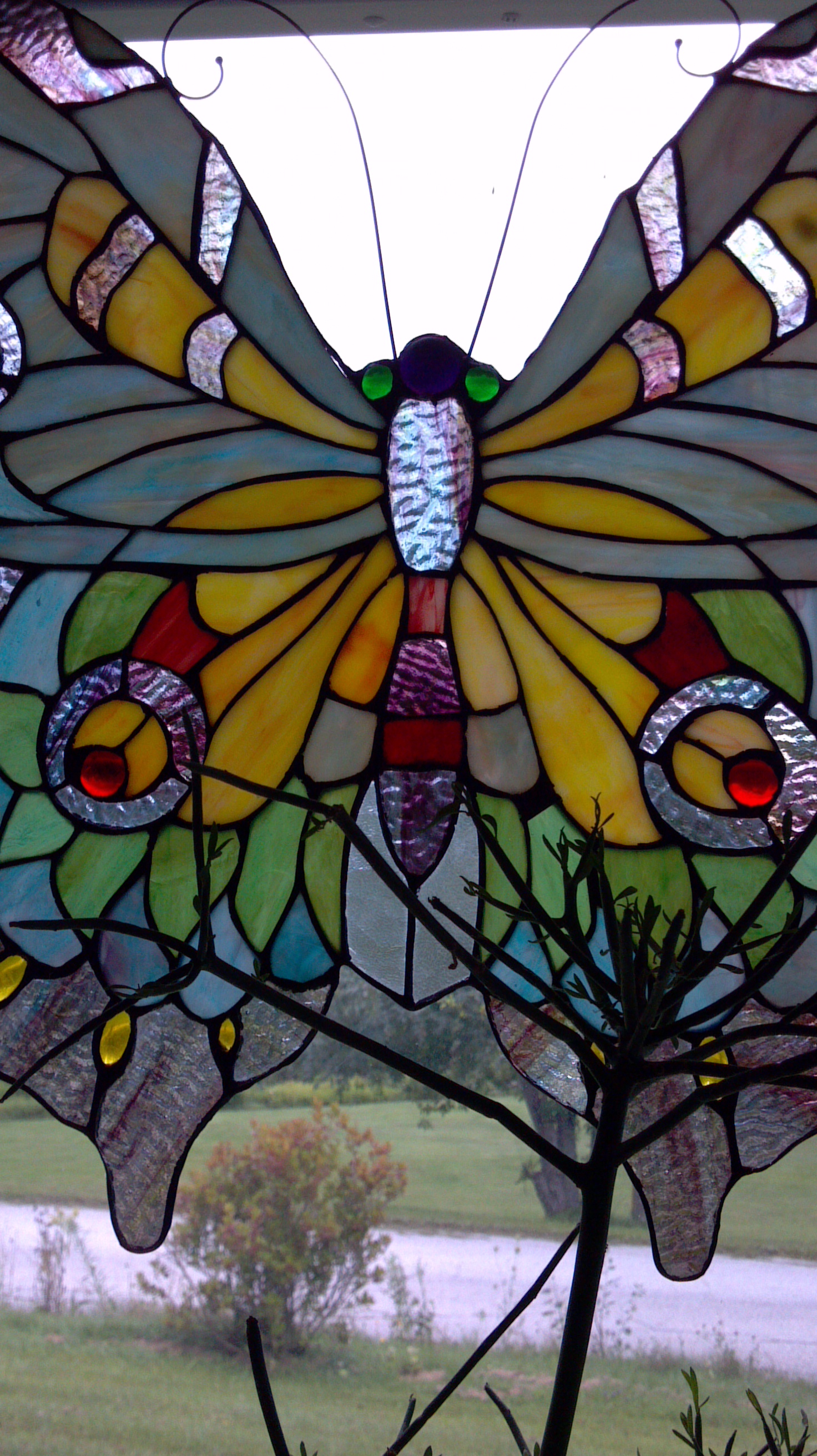
LLisa's butterfly My dandelion headed five-year-old is saying his prayers. He includes the caterpillars in their jars on the window sill. We had filled the jar with what we hoped was the appropriate leaves for food and twigs to climb, and each night we prayed for them. The time was 1968, and my son was one of five, active bright friendly loving children.

The caterpillars munched, spun cocoons on the twigs, and were quiet. We waited in vain for butterflies to emerge. Together we concluded that caterpillars did not do well in captivity and perhaps it was better for them to go free. Lessons on many levels were learned from the experience. I don’t know whether my son remembers the caterpillars, but he is now a grown man with a strong sense of curiosity, a fine capacity for observation and a desire to do some good in the world. The eager child lives on in the man.

One day the family visited someone who had guinea pigs. Naturally the children were fascinated and the pet shop that sold us our first pair agreed to buy back progeny. I was delighted at the opportunity to give the children a first hand lesson in biology, and all went well until we elected to do a breeding experiment. Unfortunately our breeding program coincided with a glut of guinea pigs at the pet shop. My living room filled up with boxes holding a total of fifteen furry squeakers and any time the refrigerator door opened, a chorus of squeals filled the house.

In the process my oldest daughters found out first hand that one cannot always rely on original solutions but must plan for contingencies, and of course they had graphic experience in where babies come from! Now that they have had their own children, they have fostered the same sense of adventure in their offspring and have carried on the same love affair with nature.

Nature is a great teacher of many things, and the care with which it is arranged has a significant message for us. We are part of the cycles of emergence, growth, and return to the whole. We circulate life energy the way a tree does. Once we believed we were in charge but this conviction is eroding with our recognition of the results of that belief. Our attunement to the part we play in the natural order of life seems to me to be more important than ever to our growth as healthy, positive human beings.

Parenting seems best learned by experience. Children are resilient. With goodwill, grace and good luck most of us will succeed in raising well adjusted children. Doing what we most enjoyed with our youngsters often results in happiness for all, but observing and participating in the processes of nature can easily and quickly return us to the joys of childhood as well as bring us pleasure in the present.

Looking together at snowflake crystals, searching for seashells, tenderly weeding small gardens—the days of my companionship with my children are cherished memories. I learned as much from them as they did from me. Nature is a great teacher and I am grateful to her for the lessons I learned as well as the beauty I have received. I am proud, too, of my children for their positive attitudes and approach to life, much of which was learned at Mother Nature’s knee. And I say with my son, God bless the caterpillars, God bless them all.
Gifts of the Moment by Tasha Halpert

Drops caught 2 If I hadn’t been paying attention to my surroundings, I wouldn’t have noticed it. I was standing at the supermarket counter choosing some fish for the chowder I was planning to make for later in the week when I saw the lobster on the low shelf in front of me. It had already been cooked, packaged and priced. Stephen loves lobster and this week it was on sale. Since I had nothing special planned for supper I immediately thought how the lobster would make a fine treat for him. Happy to be able to provide him with this nice surprise I picked it up and put it in my wagon.

I had other groceries pick up and so I continued on my way, collecting them and checking off the items on my list. When I finally finished, I made my way to the checkout to pay for my groceries. How glad I was that just at that moment I had been aware of the lobster and seen it waiting there for me. If my mind had been wandering and my thoughts elsewhere I might easily have missed that opportunity to provide us with an extra helping of joy. Bringing someone you love a special treat constitutes a treat for the giver as well as the person receiving it, a win/win situation.

I have noticed that when I focus on where I am and what I am doing I often see things that represent a kind of gift for me. An interesting cloud formation, flowers growing by the wayside on my morning walk, the first touches of color in the trees as I drive on the highway, a snatch of song that I enjoy playing in a store as I walk in, all these and more are little presents I receive when I am aware in the moment.

However, the gifts that lie within any given point in time are only available to me when my eyes are looking around to see and notice them. If my mind is occupied with thoughts or speculations, with worries or apprehensions there is no way I can pay attention to what is around me. At that point my eyes are figuratively turned inward, paying attention to whatever I am thinking of, not looking outward at what is there. I remember once when I spoke to someone about the lovely colors of that year’s fall, she looked at me sadly and confessed that she had been so lost in her thoughts and concerns she had never noticed.

Meditating regularly has certainly helped me stay mentally focused. Observing my thoughts as I learned to do in meditation gives me the option of letting them flow as they will or of refocusing my attention on where I am and what I am doing. Sometimes it is perfectly all right to let my mind wander about. As long as I am not driving or doing something else requiring my full attention my mind can do what it pleases. Even so, I find that keeping at least some of my attention on the present moment can often pay off in gifts.

Soaking by Tasha Halpert

Tree, Leaf and Puddle    When I was small if I got a cut my mother often put iodine on it. I hated that because it stung like anything, and it turned my finger orange. Sometimes she used alcohol, which was equally bad. As a somewhat clumsy and heedless child I often fell down, banged myself, cut myself or otherwise got scraped up, so I was well acquainted with these disinfectants and the white Band-Aids that always hurt when they were pulled off.

As an adult I prefer something easier and more pleasant: soaking. I thought about this recently as I soaked my sore finger. I had stuck with a knife and the small wound was bothersome. As I did so it I thought of how well the application of hot water works to heal small cuts and infections as well as reduce swellings. Over time it speeds up the healing process and prevents infections from spreading. Heat is a remarkable healer. However I would probably have been too impatient as a child for soaking.

Heat also can work wonders in other ways. Last month I pulled a muscle in my thigh. Nothing seemed to help or make it better until my acupuncturist suggested applying a heating pad to it three times a day for twenty to thirty minutes. The pain soon diminished and it took only about a week or so to go away completely. Soaking the sore muscle in heat did the trick. Combined with a bit of patience, soaking is good medicine.

Soaking has a number of virtues. An important aspect of the soaking process, however, is time. For instance, the best way to clean a sticky, gummy pot, pan or dish is to soak it for a while. Often hot water is all that is needed to resolve whatever has adhered itself to the utensil. Occasionally the addition of soap or a scrubbing sponge helps. Once again, soaking plus time equals situation resolved. It is remarkable how much hot water helps to resolve a difficult or even a painful problem.

Stains on clothing also respond to soaking, though sometimes it is cold water that is wanted rather than hot, depending on the stain. Soaking also works as well for physical aches and pains. When the body is achy, one of the great luxuries in life is a hot bath in which to soak. Epsom salts, an inexpensive remedy added to the hot water in the tub increases its efficacy.

In today’s fast paced world impatient people often seek speedy resolutions. Medicine must work overnight if not immediately. With the correct chemicals clothes, pots and pans must sparkle right away. This attitude doesn’t allow for the gentle, safe application of time and soaking. An old fashioned way of doing things can often be more effective, less expensive and in many ways perhaps easier over all.

Dealing With Anger

There seems to be a great deal of anger circulating these days, whether in the form of “road rage,” destructive actions involving armed individuals, bullying that makes the news, and more. The majority of video games and even the comics and illustrated books for young people are very violent in nature. Furthermore, this country has been at war with some nation, group or another for a very long time. Anger is all around us, yet it is also a band aid over grief.

I am reminded of the fifties, a time for bleak news, back yard bomb shelters, and dark tales on TV and in the movies. The climate then was one of fear and to some extent, existential responses to dire circumstances. “Die young and make a good looking corpse,” was a popular saying. Although people were more polite on the surface, anger and fighting were also a common reaction. Bullying was almost acceptable–considered normal, many thought it would toughen someone up for the “real world.”

When I was in grade school I was often the object of bullying. One of the reasons may have been because I was slow to anger, yet when I did finally respond, I would explode into a fit of rage. Toward this end my classmates would taunt me, snatch my hat or my eyeglasses and do whatever they could to get me to that breaking point. Most likely they enjoyed the show. When my parents complained they were always told I had started it.

My father and mother were both rather fiery and temperamental, which might be why I disliked getting angry. I was uncomfortable with their arguments, which frightened me. Although they loved each other dearly, they disagreed about a lot of things. Being as young as I was I didn’t really understand much about this, I only knew I felt uneasy and afraid when their voices rose. This in turn made me want to avoid that kind of behavior.

Often it has been my job to try to get people who disagree to come to some kind of understanding. Yet each person has a point of view based on his or her experience and perhaps his or her beliefs. It is almost impossible to argue with someone’s beliefs. By their nature these are not based on logic but have an emotional base. What we feel generates and supports our beliefs. Perhaps the best that can be done may be to agree to disagree.

However, anger is a conditioned response that can be controlled and then changed to a different one. With practice, a compassionate response can be substituted. To me anger seems a waste of energy. When I encounter senseless violence or cruelty, I have taught myself to feel my sadness, and then to say a prayer for the afflicted. For my part, to counter the disturbing news items I read in the papers or see on TV I make an effort to be kind when and where I am given the opportunity. It might be only a drop in the ocean, however, it’s something I can do.

Photo and Text by Tasha Halpert

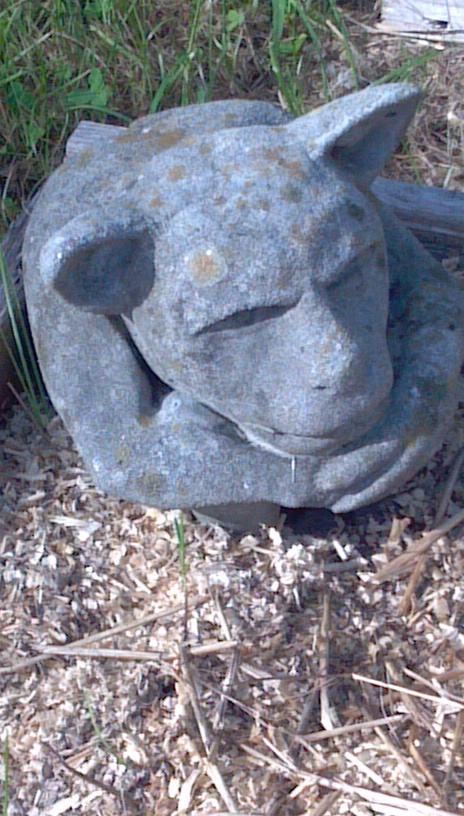
.Gargoyle

Spring Mood Swings

It as been my experience that many, if not most people would like to believe that spring consists entirely of balmy breezes and blossoming trees, along with pleasant showers that bring May flowers. Perhaps this is only their wishful thinking, yet it seems to prevail among people with whom I have casual conversations. A few days of delightfully warm weather and they are sure that spring has arrived. Then when the weather turns cold, as it may for at least six or more of the weeks of Spring, they say that winter has returned. Yet nature knows best. The cycle of gradual warming and cooling allows for trees, plants and animals to partake in their awakening process at their natural speed.

What people may not realize is that were it to become summery all at once, the natural world of plants, animals and even people would not be equipped to deal with that enormous influx of energy. Try plunging your hands into hot water when they are severely chilled. It’s painful. Victims of frostbite must be warmed up gradually. Our bodies need to get used to the change of the seasons also. Spring foods like asparagus and rhubarb are good for that.

It would be nice to think of the season of spring as entirely warm and pleasant. Yet it actually begins on the Equinox with equal hours of light and darkness. The gradual lengthening of light awakens the life energy in plants and animals. The hours of daylight have been increasing perceptibly since the beginning of February. Now we have reached the actual balance between the hours of dark and light. From now on, light is in the ascendance.

Living as we do in a world where electricity can turn night into day, we may not be as aware of the nurturing quality of darkness. I find I enjoy the dark hours as much as I do the light. While I love the light and appreciate the lengthening days of spring, I also remember with pleasure the snugness of the long winter’s nights and the coziness of the covers when it is dark outside. Balance is good. The ups and downs of spring weather remind us of that. I am glad I live where the seasons bring an obvious change. As I drive I smile at the swelling, pinkish buds of the as yet bare trees as they reach toward the sun and its warmth.

The relief we feel when the sun warms us is surely increased by our natural reaction to the bitter cold. The grief we feel as skies cloud and chilly breezes blow reminds us of what we seem to have lost. Yet as a wise person has said, spring brings hope. Even during the days it seems to retreat we can maintain that hope by acknowledging how we much cherish the longer hours of daylight as well as the slow but steady increase in the pleasing warmth that swells the buds of the trees and urges the spring flowers open.

Spring flowers 2 for copy

Smelling the Lilies

Star Lilies 4       Of all the flowers with delightful scents, there are three that are favorites of mine: Lilies, Roses, and Hyacinths. So it was that when I was shopping in Trader Joe’s last week and saw the Star Gazer Lilies for sale I could not resist buying a small bunch and bringing them home. As I had hoped they would they have filled our small apartment with their wonderful scent.

As I sit here writing my column I am breathing it in. As I do, these colorful lilies with their glorious perfume remind me over and over again how important it is to give to myself as well as to others. It has taken me more than a few years to recognize the importance of doing that. My dear mother called such thinking selfish. She was raised in a home where children came last, after guests, parents and other adults. To think of oneself first, if at all, was not encouraged.

There was no intentional cruelty involved in this attitude. It sprang from a different way of seeing the world and of acting on that viewpoint. There is a strong behavioral edict that sprang from traditional thinking that it is better to give than to receive. While it is good to give, there are psychological reasons that were not taken into account by this edict that need to be addressed. In addition there is the question of balance versus imbalance to be considered.

I was raised in much the same way. I remember once being surprised when a friend said that we must be home by four o’clock for her children’s TV program. That the wishes of children were something to consider was a new thought for me. As a young mother it never occurred to me that children’s choices were anything to be considered.

In the years since then I have done a lot of learning. A most important lesson of my lifetime has been that if I do not give to myself I will not have much to give others. My cup must have something in it before I can give from it freely. My giving must be in balance with my receiving. What I have discovered, sometimes the hard way is that if I give only to others and not to myself I develop unconscious resentment that can lead me to act unkindly, or be overly critical without meaning to. This can creep up on me and I need to make sure I notice it when it happens.

From the time I was small being kind has always been very important to me. Thus it has become vital that from time to time I assess my behavior to make sure I have been giving to myself enough to balance my graciousness to others. It is not always easy to remember to give to oneself. It often initially feels so good to give to others that it is easy to forget to include oneself. As I inhale the perfume of the wonderful lilies I am reminded again of how grateful I am for this gift I gave to myself, and of how glad I am that I bought them.

Text and Photo by Tasha Halpert

The Importance of Mental Focus

Crystals5When I began to meditate I noticed that I was much more aware of the contents of my mind. The longer I practiced meditation, the better I became at following my thoughts. This ability has grown for me over the years, and I am very grateful to be able to be aware most of the time of what I am thinking. The reason this is so important is that it enables me to monitor my mental focus.

The importance of mental focus cannot be overstated. Certain habit patterns are built into the human psyche. They are intrinsic, an inborn aspect of our consciousness. They are intended to function as a kind of safety mechanism for keeping us alive. One of these is the “fight or flight” response. As you may know, the human body is programmed to react to any perceived threat with the appropriate input for what it believes is required.

I have read statistics to the effect that much of our modern high blood pressure as well as other stressful conditions of the physical body have come about as a result of this built in response to perceived danger. This particular response was useful in the days when death in the form of an enemy or feral beast lurked behind any bush or tree. It was important when the crocodiles in the river were patrolling for breakfast. It was helpful when the early settlers of any new homeland encountered its dangers.

Now for the most part it is not only unnecessary to modern life but actually harmful. Yet in times of perceived stress our bodies continue that response. The perceived stress could be a need to get somewhere on time or to dodge someone’s criticism as a result of inadequate preparation. It is seldom a response to a true threat of death or physical harm.

One of the main ingredients of this response is that our minds have a built in tendency to notice what is wrong. This can be very helpful if, for instance, you wake up in the night and hear sounds you know are not normal, or you suddenly notice that your child is very quiet and might therefore be up to some mischief. However, as a general rule, consistently noticing what is wrong can lead to a focus upon it that prevents us from seeing what is right and good.

When I practice actively looking for all for which I am grateful, I am much less apt to be focused on what may be wrong. If there is real danger or a need to notice that something is amiss, I know I can and will. However for the most part when I focus on that for which I am grateful, I am much less focused on the negative thinking that can lead to any number of difficulties. The key to success is being mindful of the direction of my thoughts. That way I can reinforce my positive focus or change the direction of my thoughts if I need to.

Photo and Text by Tasha Halpert

Love Begins With Me

Love Begins With Me

While little children learn to love by observing the behavior of those around them, they also, as any parent of a toddler knows come with a built in ability to love. The human heart has an inborn tendency to emotional cherishing. From what I have seen both on television and in the movies, this is true of other mammals as well. Perhaps it is chemistry, or maybe it is a gift from the Creator, however it is certainly evident, especially in small children.

Furthermore, the emotional heart that dwells within us is infinitely expandable. However, in order to keep expanding it needs to stay elastic. This elasticity requires a certain amount of maintenance. When individuals harden their hearts–even if they do it because they feel they must in order to survive, they reduce the heart’s elasticity, and possibly begin a process that will eventually result in the heart’s inability to expand at all. The way the heart becomes hard is through the resistance to and denial of pain.

That is not say it is easy to admit pain into the heart. There is so much of it around. The media confronts us with pain at every turn. Each day when I open my computer I am confronted with samples of disaster or tragedy, sometimes many of them. In our personal lives there is much opportunity for pain of all sorts even in the best of lives. Major trauma can strike at any time, and on any given day there are many small deaths or sadnesses to be dealt with.

When I am willing to allow my emotional pain into my heart, I also take an important step toward compassion for myself and for others as well. Compassion is a natural response to pain. Even very small children will try to comfort you if you are sad or hurt. It seems to be a built in reaction. There are animals that will do the same. I remember a day long ago when I was feeling sad and began to cry. At the time we had three cats and all three came over and tried to climb into my lap.

It can be difficult for me to open my heart to emotional pain. I was brought up not to cry, to be tough and to ignore hurt. Yet that meant ignoring rather than acknowledging it. I had to learn to open my heart enough to take in the pain in order for compassion to find its way in as well. I had to be taught to love myself enough to admit that I felt pain, and that I needed to address that pain. In this I had the help of a fine therapist. I will always be grateful to her.

By loving myself enough to be honest with myself and others, I keep my heart flexible and elastic. By comforting myself with that love, I acknowledge what I feel, and then I can do what is necessary to address that pain. Being emotionally honest is being loving to myself. When I am loving to myself in this way I expand my heart. This makes it possible for me to love others even more. The more I love myself, the more I am able to love others, and that makes me happy in my heart.

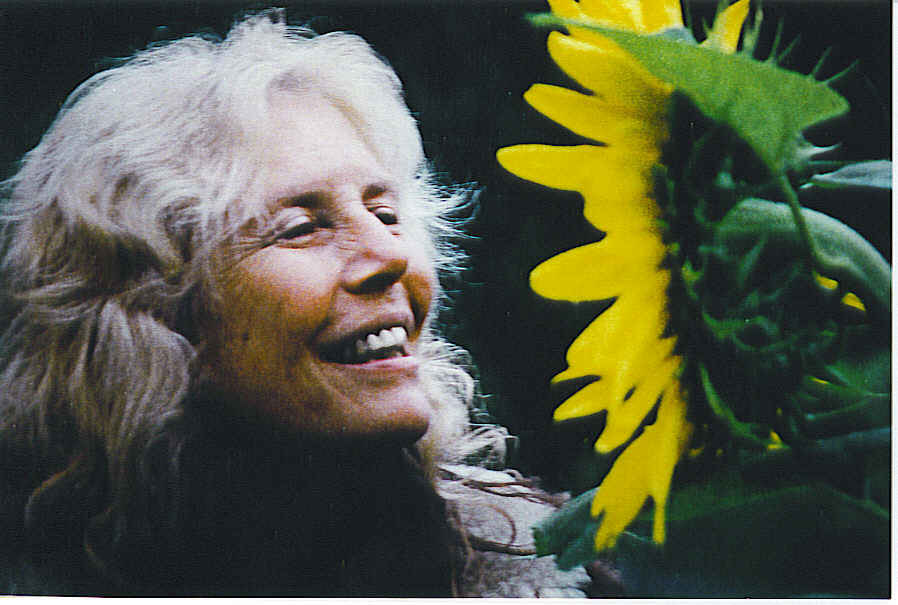
Tasha and Sunflower, best

Photo by Marcia Ruth Text by Tasha Halpert

Conveying Love

Selfi with art 4The stores are filled with red and white decorations, candy and gifts labeled for Valentines’ Day. The newspapers overflow with ads for various ways to express one’s fond affection on this day dedicated to lovers and those who love–whether romantically or otherwise. There are cards galore for any and everyone on your “fond of” list, and the internet also has plenty of humorous to mushy cards to be sent out to anyone with the ability to receive them.

Once it was difficult to convey one’s love on Valentine’s or any day except in person. Several centuries ago, when a loved one set out on a journey, most especially across an ocean, months, possibly years might elapse before they would be reunited. Letters took weeks, even months, if at all to arrive. The postal service was not organized until the 1840s when stamps were first issued.

We take the telephone call for granted. However, universal telephone service only began in the 1880s, and coast to coast long distance was not available until 1915. Not until 1927 could telephone calls be made overseas, though telegraph service was available. Twenty five years ago my daughter living in Africa and I found it necessary correspond for the most part by mail. Phone calls were expensive and unless she was home, pointless as a result of language barriers with those working for her.

Children born in the last decade have absolutely no concept of a time when communication was not instantaneous. Once the Dick Tracy two way wrist radio was a cartoon fantasy. Now there is a wrist radio that acts with your cell phone for two way communication. Until fairly recently, face to face communication on the computer, known as Skype did not exist.

The ubiquitous cell phone, first available 1983, was still fairly rare even in the early nineties. I know I didn’t have one back then, and people who did were considered quite trendy. Camera phones came into use in the last decade. Does it seem that short a time ago? It seems no time at all to me. Once something is present in our lives it is not easy to remember when we didn’t have it.

While Valentines’ day was celebrated in Europe from the 14th century on in a variety of ways, the actual Valentine card began in England at the very end of the 18th century. If you wanted to convey your affection with a card, according to Wikepedia, the first Valentines were generally available in Europe just prior to 1800, and in the USA in 1847.

Today Internet cards are often sent instead of paper ones. However, it really doesn’t matter how our love is conveyed or what method is used to share it. To paraphrase the words of a dear friend of mine, “Miles may separate us, but in our hearts we are no further away than a thought.” There is no postage or fee of any kind for this Valentine expression.

Words and Photo by Tasha Halpert

In An Orderly Fashion

Column VistaIn An Orderly Fashion

Remember fire drills? There are even some of my readers who might remember such a thing as a bomb drill. When the bell clanged we were always told to “proceed in an orderly fashion.” I suppose that meant lining up and staying in line so the teachers or whoever was shepherding us could keep track. In an orderly manner usually meant no talking, and certainly no fooling around.

I think about this phrase sometimes when I am dithering about my apartment working to get things done. Being a writer I spend most of my time at home and can make my own schedule. This has its positive and its negative points, because I do not have the same parameters necessitating order as someone working outside the home, however I do need to make my own order.

There is priority, there is the immediate demand, and then there is what I hope to get done. Each day presents its challenges. I can only do my best. For instance, take the insistent telephone. say I am about to begin a task when it rings. Stephen would tell me to ignore it, and my experience is that if I do it will only create another difficulty I haven’t anticipated. I answer the phone, conduct whatever necessary conversation and go back to what I was doing. Meanwhile, I may have lost the thread of the process and need to begin again.

It may be that I am called away while I am cooking. I ought to know better than to leave the stove unattended. However having had years of training as a mother to answer the immediate need of the moment, I have a tendency to rush over to do what seems to need doing. In the meantime, something boils over on the stove and that necessitates a huge cleanup.

When I plan ahead it seems to help. When I set out on a series of errands it works better if I think about the best arrangement for doing them. This works fine unless I forget my grocery list and either have to go back for it or try to remember what was on it. Stephen suggested I put the list in my purse and keep it there. I explained why I don’t: when I wish to add to it, I have to find it and write down the new item– if I don’t forget what it was in the meantime. It’s far easier to keep it on the counter.

I am all too easily distracted from my orderly progress. Sometimes this is simply my own fault. In the midst of doing what I intend to do I remember what I meant to do and didn’t, go do that, and meanwhile think of something else that needs doing. When I finally return to my original task it may have become more difficult or more complicated. The other day I realized that there is no such thing as an orderly fashion in my life, there is only keeping track as best I can and being content with that.

Text and Photo by Tasha Halpert