 When I was small I had a small cemetery. It was beside the church I had set up in a corner formed by a chimney and the wall of a small greenhouse. My family lived in the country. We had chickens and at one time some ducks. Baby chicks died and I buried them there as well as the other assorted creatures whose deaths went unmourned except by me. My acquaintance with death came early and in a natural way. This was of help to me later.
Laurens Van der Post, a South African author whose writing I respect, once wrote, “There are some things we never quite get over, however once in a while we go back, pat them on the head and say, ‘How are you doing old fellow?'” In this instance he was speaking about his time in a Japanese prison camp, where he was very cruelly treated. I have remembered this quote for many years. It has been very useful in reminding me not to dwell on past grief, yet not to suppress it. The recent unnecessary death of a poet friend helped me to recall this.
When anyone special o us dies, it reminds us of others of whom we are fond who have left us. Yet it is well to remember them with joy rather than regret. I will treasure in my heart my friend’s funny emails and his amazing adventures. He was a unique character with a huge, loving heart and a mission to try to help every woebegone that crossed his path whether or not they deserved to be helped. He also had a way of getting into trouble. As well he had several bad habits, one of which resulted in his premature death. Rather than blame him for his foolishness I will bless him for his courage in pursuing his life the way he wanted to—whether I thought it was a good way or not.
When you live a long life as I have, you do “lose” people that you have, for one reason or another, outlived. Whether these were members of your family or your friends, along with the current grief the sadness of their passing may easily come to mind. In addition, in our lives there are other instances of departure or absence: the job we didn’t take or did, the home we bought or didn’t, the gift we meant to give, even the words that went unsaid or the ones we wish we had not spoken. The grief engendered by regrets small and large can consume us if we let it.
It is important for us to grieve and let go. It is vital not to carry these burdens any longer than necessary. There is a Zen story of two monks who came to a stream where they found a woman who was afraid to cross it. One monk picked her up, carried her over the stream and set her down. As they continued, his brother monk began to berate him for touching a woman’s body. Finally the first monk turned to his friend and said, “I set the woman down a while ago. You are still carrying her.” There is no need to carry our grief endlessly. We can let it be on a shelf in our memories and then once in a while, go back and pat it, and say, “How are you doing, old friend?” And then go on to find a happy memory to continue on with.
 My father always made sure to put fresh flowers on the graves of two special friends on Memorial Day. Buried under two pink granite stones, they were an English couple far from home and family. My four year old self remembers them as two elderly people who smiled at me and gave me two porcelain statues of birds. Honoring someone once a year at the site of their grave is a fine act and the traditional way many choose. However, creating an ongoing memorial tribute could be an even better way.
 Most children have no concept of time and little to no understanding of loss, not to mention the concept of “goodbye.” Ironically however, one of the first things a mother teaches her baby is to wave “bye bye.” When we put them to bed for the night we are teaching them about leaving and being left. The first skill a child learns in the high chair is to drop things over the edge. At one level the life of any human being from birth onward is one long saying of goodbye.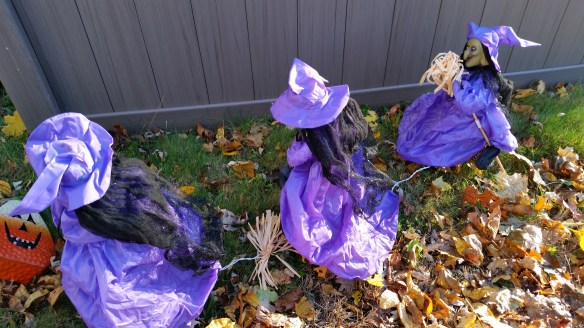
 The first person whose death I remember hearing about was a relative named Cousin Ellen Parker. My memory of her is of someone roundish, gray haired, and somewhat wrinkled. I have no real memory of her other than of her appearance. She must have died when I was around four. My great grandmother died in her eighties when I was five. I don’t remember hearing much about that. I do have a vivid memory of picking dandelions in our yard and seeing her walking along in her purple hat. When I told my mother she insisted Grandma Great was dead and I couldn’t have seen her. But I had.


 Pujakins