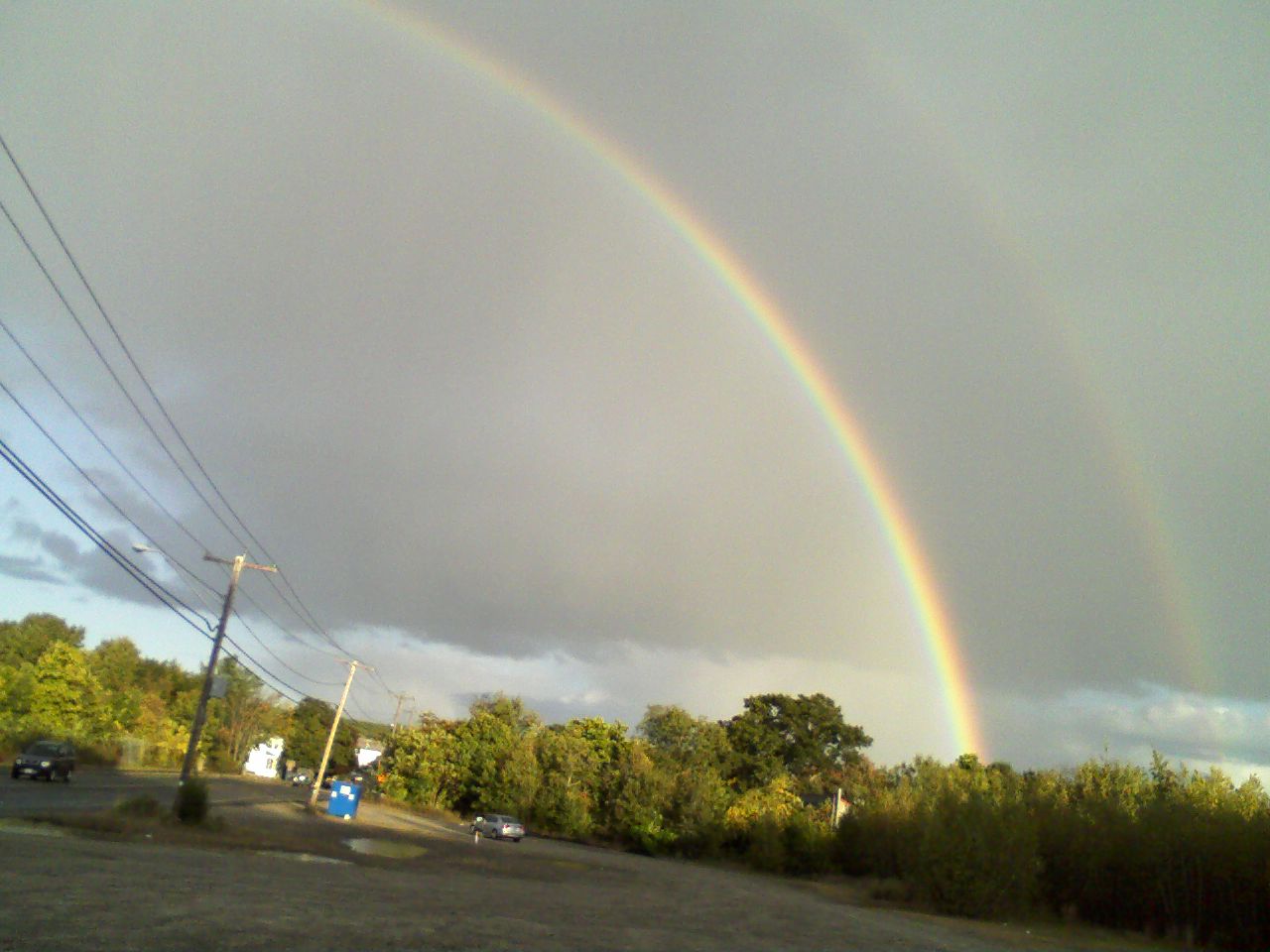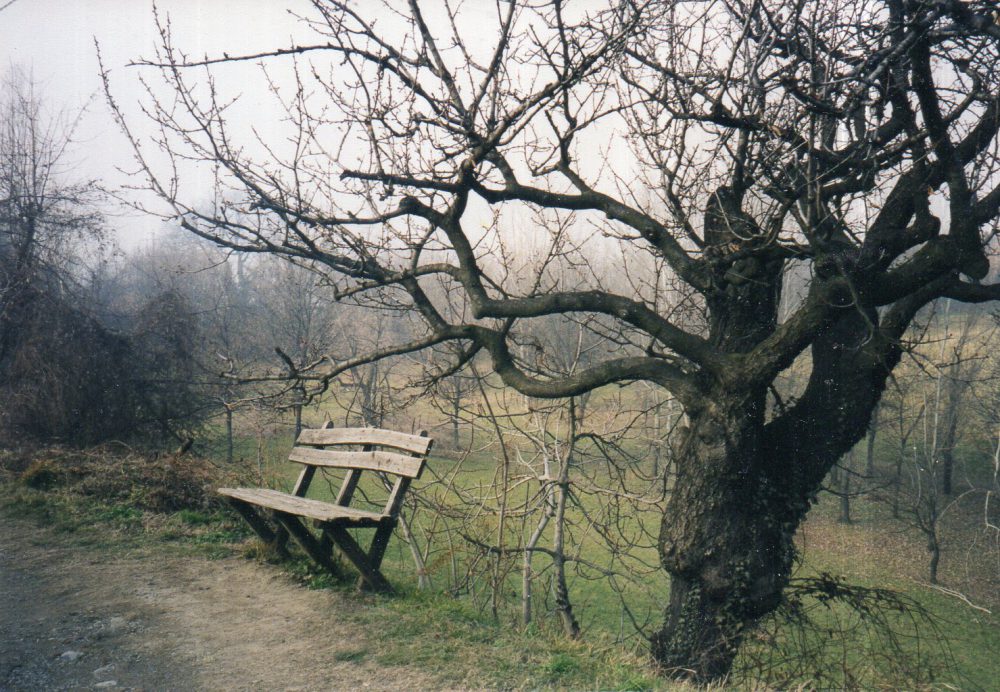
The Permanence of Impermanence

Stones and leaves, fallThe Permanence of Impermanence by Tasha Halpert


Stephen and I were strolling along on Thayer Street in Providence on our way to meet my granddaughter who is a freshman at Brown. My daughter and her fiancé were with us, and Stephen was pointing out various landmarks from his years living in that city. We were almost to the place we were to meet my granddaughter. Stephen turned to point out a building of special significance to him, stopped still and gasped.

“It’s gone!” he exclaimed. He stood looking across the street to where the house turned shop that he had known from his childhood had been. In its place was the gaping infrastructure of a soon to be Brown University dormitory. Stephen had grown up in Providence, and his family had once owned the now totally vanished building for all of his young years. In his childhood it had housed a shop that his mother and father had managed and in which he had spent many hours as a boy.

“It was such a lovely little house,” he said. There was another house on either side. My mother ran the Scotch Shop in it, and I think she was happy there. My grandmother used to say that one day the building would be mine, but they sold it after I got married. I suppose they thought I wouldn’t be interested. Why did they have to tear it down?”

He turned to me and the expression on his face was sad. I felt for him. When something special you have known from your childhood is gone it is as though you have lost an old friend. The experience brings to mind other losses as well. I know I was reminded of other vanished childhood places as well even as people who have disappeared from my life. As a wise person who had been one of my teachers was fond of saying, “The only constant is change.”

It seems important to be able to take this kind of experience in stride. While it is appropriate to mourn a passing of significance, it is also vital to move on from it and to accept the inevitability of change. Growth cannot take place without it. Brown University had outgrown its current ability to house students and needed to expand. To make way for that, buildings or houses of lesser importance to them had to be razed. In life, what we have left behind must be removed to make room for what is to come.

As a mystic, I see a potential for symbolic meaning in this experience. Perhaps something from Stephen’s past has been eliminated to make room for something new that is being built for him. I am always curious to see what develops when a major change has taken place. Our lives are subject to the currents of energy that take us where we need to go for our next adventure. Meanwhile, as another wise person has said, there is always the laundry and the grocery shopping.


Elegy for a Friend

Into the All

Into the All

Memory serves to preserve

the likeness, the beingness of you:

not bound by boundaries

nor circumscribed by circles,

tethered only by thought


you have entered

the timelessness of ever after

you have filled

your allotted space

in our time.


Deeds, gifts, words,

these remain’

to remind us of dear ones

no longer within

the warm circle of our arms.


They are now part of us

part of the heart of us

ever present

in the moment of memory,

of loving thought.


Expanded to the timelessness

that is part of the All,

you have joined

all that is infinite,

that is unlimited by flesh.


Mortal remains dissolve with time.

Memory thins, fades, shrinks.

Our dear ones live on in our hearts

until we too join them

and all our hearts are one.


What Does It Mean To Be How Old?

Young children are very definite about age. Once they know how to tell you they will often say proudly, “I’m four and a half,” or “I’m almost eleven.” They are eager to be as old as they can for however old they are. As we age we tend not to think in terms of fractions of years, and as we get older still we may even begin to fudge about the accumulation. One reason for this might be our expectations of what it is to be how old.

At an open mic I attended recently a man recited a humorous poem about turning sixty. It got me to thinking about age, and how at different times in my life I have had such different opinions about it. How old I am seems to have an influence on what I think about the number of years a person has lived. Then I recalled a conversation I had with a friend when we were both in our late twenties and had to laugh.

“I hope I look as good as she does when I’m that old,” I said. The person in question was in her very early fifties and at that time in my life she seemed to me to be positively ancient. My friend laughed and said, “You may feel differently one day.” Of course she was correct. I didn’t think much about age at the time except that to me anyone over forty must be getting on in years.

Time went by and the years I was accumulating took on more significance. I also discovered the various prejudices associated with any particular age. When I was in my fifties I thought people in their seventies or eighties were well–old. Now the more years I add on the more find myself revising my opinion of how old is old. It seems to me that judgments concerning one’s years are definitely a relative proposition.

When I was a seventeen year old high school graduate going off to college I thought and felt myself to be “all grown up.” When I married and had two children before I was twenty I felt very mature indeed. Today the idea of my eighteen year old granddaughter getting married and having children seems positively laughable. Yet no one at that time no one thought too much about it. Recently I was watching a movie made in the thirties; a white haired, obviously elderly woman with a cane proudly proclaimed herself in a shaky voice to be, “Eighty three years old.” Today eighty anything often looks nothing like that.

The world has greatly changed in this respect. People live far longer and in much better health than they did eighty years ago. When my grandmother died at what seemed the ripe old age of eighty that seemed quite appropriate. Now I have a friend older than she was and she seems far younger. When people ask me how old I am, I tell them I am ageless. I no longer have expectations concerning age. They interfere both with my own and with others’ observations about me. How old is old? I have no idea.


Mama and her birthday cake

Perspective Makes the Difference

It is always interesting to see how different things appear as well as feel when one’s perspective has changed. The way I saw things when I was younger in years and experience has altered a good deal in the intervening years. Once in a while I am reminded of this, as I was recently in a conversation I had with a friend of mine. She was lamenting the fact that while she was happy, her children wanted things to be different.

I thought how years ago I visited my late mom and dad in the new home they had bought in Florida. Compared with other places they had lived, it seemed small and somewhat dingy. They loved it. My mother raved about her grapefruit tree, my father proudly pointed out their small swimming pool, about two and a half to three feet deep and maybe eight or ten feet square. It was inside a screened in room with a roof. Of course I said “How nice, I’m so happy for you.”

It’s true that I was happy for them, yet I felt sad too. It seemed to me that they would be happier if they were in something bigger and more grand. Previously for a few years Daddy had owned a large home in Bermuda. It had lovely gardens, many rooms and a resident ghost. The house they had lived in while I was growing up, while not grand, was quite a bit bigger and more spacious than where they were now. Even their summer home in Maine was larger than this one. How could they be content in this smaller space?

That was many years ago. I now fully understand why my parents liked their simpler, more manageable home. I’ve reached an age that is some years older than they were then and I relish the simplicity of my life in an apartment as opposed to what it was like in our two previous houses. It is a joy not to have to clean two or three bathrooms every week. I adore my little kitchen and function much more efficiently in it than in the roomier ones I cooked in, in the homes we owned in the past.

To be sure there are downsides to smaller, simpler living quarters, there is less room for possessions and that means eliminating certain items I might prefer to keep. There are limitations on what I can acquire and how much. However, the downsides and limitations are more than compensated for by the blessings.

My friend, who recently moved into a nursing home tells me she is really happy in her little space. “I wish my children could feel as glad as I do for my being here,” she told me. “I have no worries, the staff take wonderful care of me here, and I am so very comfortable.” Perhaps her children feel guilty and believe they are supposed to be caring for her themselves. That is a truism in our society, yet it is not always true. From my friend’s perspective, everything is just wonderful. I know exactly what she means.


Photo by Tasha

Photo by Tasha

Living a No Fault Life

Image

Automobile insurance from Massachusetts companies is based on the principle of no fault. What this means is that if you are involved with other vehicles in a car accident, regardless who is at fault, each insurance company pays for damages experienced by their insured. There is no need to go to court, no tangle over who is right and who is wrong, or any other difficulties associated with the distribution of funds to those who need them.

What happens if this principle is applied to life? What if instead of spending time assigning blame or fault with all the resentment and anger that that can produce, no fault were placed upon anyone? If that were to be the case it could mean that any resentment or anger I might feel from a perceived injury, whether physical, emotional or psychological could be seen in a different light.

Think about it. If a cat scratches me, is it the cat’s fault, or is it simply the nature of a cat to scratch? If a small child breaks my precious piece of china or even pulls the dog’s tail, whom can I blame? Children are often careless and break things. Especially when they are very young, they may not recognize that dogs don’t like to have their tails pulled. Is the child at fault for how he or she acts, or is the child simply acting the way children do?

In my life there have been many people who metaphorically speaking stepped on my toes because of who they were. They didn’t do it on purpose. They were just being themselves. Can I blame them for being themselves? Do I resent them for their actions, or do I simply recognize that it’s not their fault that they are inclined to be forgetful, careless, ill informed or whatever else caused the problem?

I may do a disservice if I place blame on another instead of recognizing that he or she only acts as she or he is capable of acting at the time. The same is true of myself. I can take responsibility for my action; I can try to do better next time; yet I do not need to fault myself. It is my firm belief that at any given time people do only what they are capable of doing and that there is no need to assign fault. Blaming causes resentment and anger as well as tends to prolong the original difficulty.

I might gently call attention or discuss what was said or done, yet only if it seems important. It’s not my job to judge the actions of another. Perhaps this is why statues and other images of Justice are usually blindfolded. She holds scales symbolizing fairness. Perhaps she sees with the eyes of the heart rather than her physical ones. To be fair I need to take into consideration all the factors in a situation and not only my perceptions. When I can accept that there really is no fault, that it simply is the way it is, then compassion and forgiveness will guide my response.

Homely Beauty

There is beauty to be found where least expected:
in dried blossoms clinging to bare bushes,
in the twisted intricacy of a naked tree
against an autumn sky slowly dimming.
Beauty smiles from wrinkled faces remembering
as old eyes gaze at small children and listen to their laughter.
I applaud the homely for its quiet elegance
its small soft voice bespeaking a unique and special loveliness
like a cracked pitcher that belonged to a great-aunt
or a rusted iron fence gleaming in the sunset glow.
These warm my heart and draw my eye.
I cherish beauty that goes unnoticed
amidst the flash and filigree that draws the crowd.
I want to embrace and caress the tattered and torn
that form patterns of valor against the starkness of harsh reality,
precious beauty, quiet, shy, and velvet rich to the stroking hand.

Photo and Poem Copyright Tasha Halpert 2013

Image

Love, Grief, and Joy

There is a Hebrew saying that goes, if there were no grief to hollow out our hearts, where would there be room for joy? I would add, or compassion.


We learn about pain by feeling it ourselves.  We learn about grief and bereavement by losing loved ones. The lessons life has to teach may be harsh or gentle but those that teach compassion invariably revolve around a sense of loss.  Perhaps this is what is meant by the hollowing of the heart by grief. 


The sense of loss makes an emptiness where there has been fullness, aloneness where there was companionship.  When we feel these feelings we can cry for them, letting our tears soothe the pain and wash it away, or we can cry out against them and they will harden to rock within us and weigh us down.  What fills that hollow place is love.  But we must pour it out to our own selves


As we grow older, if we absorb and process our life experiences, we develop that part of us able to look with love and forgiveness at whatever life presents. Those who die and leave us behind help hollow our hearts.  As we let go the ache of missing the physical presence, it becomes easier to accept the loss.  Time is the best healer, and patience with ourselves. 


As I grow on in years, my losses

Leave larger holes behind;

in my life’s landscape, grief has been useful,

reminding me that all we have is now;

we had best enjoy it because it is a gift.


My grief is not a weight, nor a cloud,

it is not a blindfold hiding joy,

rather it is an ever giving spring

reminding me to look, to breathe, to know

that all life blooms and fades and love grows on.

 Image

Photo and text by Tasha Halpert

Passing

Walking to town of a morning
bright on a lawn I pass
I saw dandelions and violets
shining from the grass.

Then on my way returning
the mower had come by;
their yellow and purple beauty
severed and strewn did lie.

Like violets we bloom in the moment
until our moment has past,
and we fall to the blades of time’s mower
like dandelions and grass.

The blossoming of the moment
is ours to enjoy while we may
then like dandelions and violets
we bow to the end of the day.

poem by Tasha Halpert


It Tolls For Thee

Image

As Above, So Below Photo by Tasha Halpert

Heartwings says, “Love is the goal and love is the way to achieve it.”

When a huge tragedy occurs we are all affected. As John Donne, the 17th century metaphysical poet said, Never send to know for whom the bell tolls; it tolls for thee. On April 15, Whether we were on the scene or safely watching it on TV, we were there. Even if we hadn’t yet heard about it, we were there. It is my feeling that in some mysterious way, we are all connected, interwoven with one another like the cells of a finger or an eye. Yet each functions as we are created to do by our unique makeup.

As we are all connected, when we harm one another, we are harming ourselves. It makes more sense to be peaceful, yet human beings seem to continue to pursue conflict as they always have. Animals that live by cooperation live longer, healthier lives than those who do not. Why is it that part of us attacks another part of us? There may be many reasons given, as many as there are speakers. Not one of them is either right or wrong. It is what it is.

Regardless, the healthier each one of can become, the healthier we all will. Much progress has been made in the last century in so many ways. Most recently is the trend toward men spending quality time with their infants and toddlers, changing their diapers and bathing them. How wonderful for a child to have the care of both mothers and fathers at such a young age. Cigarette smoking was once prevalent throughout our society. Now it is frowned upon by many. Recycling is common, conservation is growing.

Progress is made slowly. Yet sometimes that is best. The slow plow turns a deep furrow. The loving responses of the many as the Marathon tragedy unfolded is heartening to see. Little tales of compassion continue to surface. We might take some small consolation that the tragedy has brought out our best selves, teaching us what  we can do to change the world to a more compassionate, loving place to live. Little by little with each act of kindness and compassion we add to the sum until little else is left but love.

May you find joy in sharing and caring. Blessings and Best Regards, Tasha Halpert

Elegy for a Tree

This tree that sickens
by the side of a main thoroughfare
Is not permitted death with dignity.

By order of the tree warden
It is cut down, cut up,
ground into bits and disposed of.

When a tree falls in a forest
it absorbs into the earth and becomes
first home, then food, then soil.

This Fall I will miss its familiar horse chestnuts
next Spring, the white blossoms.
A friend is gone.

By the side of the busy street
where I walk nearly every day
there is a raw stump.

Tasha Halpert