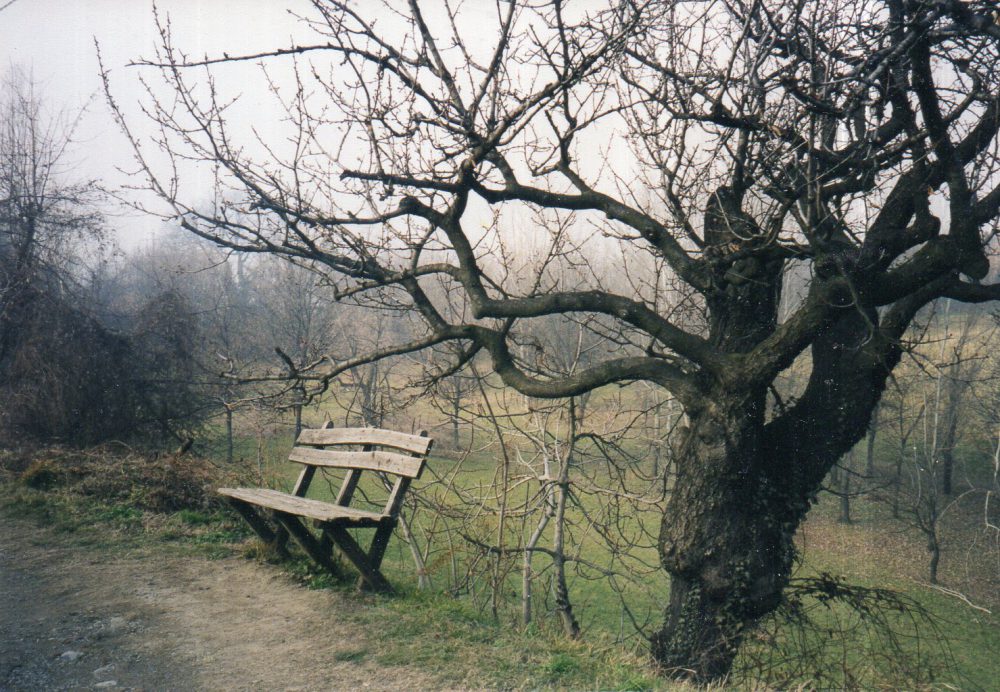
 When I was growing up it was my responsibility to care for the chickens. In the winter what that meant was carrying a heavy bucket of water from our house the thirty or more yards to their coop. The spring I was twelve the wetlands near the coop flooded and there was plenty of water right there. I took advantage of it. However, something then happened to the chickens. They began dying. Apparently, they had somehow caught a disease.
My parents called me into the living room. They were sitting on the sofa looking stern. They asked me if I had been doing anything different for the chickens. “No,” I lied. Then they faced me with the evidence. My great aunt’s gardener had seen me getting the water from the swamp. Uh oh! I don’t remember my punishment—probably a suspension of my allowance. Sadly, I didn’t really learn my lesson then, though eventually I did. I was often too fearful of the consequences to tell the truth.
Many if not most of us are. The vase is broken, the favorite toy ruined, the car dented and we hear: “He/she made me…” or “I couldn’t help it.” Heard that before? This familiar copout is often every child’s first response—except perhaps for, “I didn’t do it.” How do we teach children to take responsibility for their actions? It isn’t easy and every parent has his or her idea how best to accomplish this. Sometimes they manage to make that happen, and the child grows up to be a responsible adult.
However all too often even as adults we are reluctant to take the responsibility we need to for our own actions. We may be afraid of the results when someone finds out. I know often I was, or we may not want someone to think ill of us, as in “how could I be so stupid as to make that mistake?” There are as many reasons as there are situations. The bottom line is that we do not like to admit to being ill advised, ignorant, or just plain absent of mind.
Blaming is something many do when they want to get out of a situation where they feel trapped or one that will lower their value in another’s eyes and mind. The problem with playing the blame game is that not only is it dishonest, it is also unkind to the person or persons we may be blaming for our mistake.
I learned to own up to my responsibility only as an adult. My husband Stephen was actually the one to help me to do this. He would not allow me to get away with evading it, and he would make sure I was ultimately honest. I’ve learned that honesty really is the best policy when it comes to admitting to wrongdoing. Feelings of guilt are thereby avoided as well as other consequences that may arise when and if the truth emerges—and all too often it will.
 Though I am fonder of some than of others, for me every season has its unique blessings. Autumn has always been a favorite of mine because I like the crispness of the air and the vivid colors that paint the scenery. However, the cycle of the seasons produces different feelings in everyone and we all have our favorites. It may be that as a poet I am more sensitive to or pay more attention to the change of the seasons because I feel it so keenly. Winter for me is a time for rest and often for extra sleep. The dark hours encourage it. During the winter, like the bare branched trees and the hibernating creatures, I am less active and more inclined to quieter occupations.
 One day years ago as a relatively new bride I returned to the apartment I shared with my then husband and our baby to find my father sweeping the rug.


 Pujakins