Heartwings Love Notes 2039 The Joy of Friends

Heartwings says, ” In so many ways in our lives,  friends are important.”

My childhood years were lived in a rural setting, without close neighbors or other nearby children. For all intents and purposes, I was an only child for more than eight years, until the first of my three siblings were born. It was as if we were two families in one, for I was too old to connect with them as playmates or companions, nor was I encouraged to do so. My mother was happy for me to entertain myself, and I did.

She played games with me sometimes, however, I spent most of my time alone. I read books avidly, sometimes going through one a day. My father would bring me a stack from the library each week, and my parents also had a good selection of the classics like the Count of Monte Cristo and Treasure Island. My favorite book was The Swiss Family Robinson, which I read over and over, imagining myself as part of their adventures as they lived ingeniously on a deserted island after a shipwreck.

Besides reading books, I played imaginary games and fixed up my doll house, creating furniture out of match boxes and other small items. Sometime around age nine, when I was in the third grade, I acquired a friend, and she and I often played together on weekends. She wasn’t around in the summer because she went to camp, while I was left alone again to wander the fields and climb trees. She was my first real friend.

Over time, I had others although they were often few and far between. Even the first half of my life as an adult followed the same pattern: One or two special friends that came and went as time and circumstance unfolded. One very dear woman was also a mother. We often combined our children and went to the beach or a movie together. It was a special time in my life. Then my life changed radically and I began to meet and interact with a great many people, and in the process, I began to make many friends.

After a first half of life with so few friends, it seems a wonderful thing to have an abundance. Some are and some are not still present in my life, and there are friends I have not laid eyes on for years. Yet that makes no difference; my affection for them has not diminished with time. I still wonder how they are long after they are no longer in contact with me. The lesson I have had to learn and surely have had many opportunities to do so, is that people do grow away into different interests, or even lifestyles. Yet although we have parted, and even if we are no longer close, these friends are still in my heart.

There is much truth in the saying, “People come into your life for a reason, for a season, or for a lifetime.” I have learned to find joy in all my friendships, whether long or short.

May your friendships be a source of joy in your life.

Blessings and best regards, Tasha Halpert

PS I welcome correspondence and encourage you to share your thoughts, feelings and suggestions. Do write to me at tashahal@gmail.com  and make my day.

A poet and writer, I publish a free weekly blog, Heartwings Love Notes for a Joyous Life. My Books: Up to my Neck in Lemons, and Heartwings, Love Notes for a Joyous Life are available on Amazon. My latest publication available there is my first chapbook, Poems and Prayers, and I have two more in preparation. You can sign up for my blog at http://tashasperspective. Com.

Heartwings Love Notes 2035 The Medicine Growing in Your Lawn

Heartwings says, “Eating your weeds is a health benefit of gardening.”

Whether you know it or not, you are most probably mowing and removing the medicinal herbs usually found in your lawn. Readers who are familiar with my columns in previous springs will be aware of my love for dandelions, however both the herbs known as purslane and plantain are probably unfamiliar. You think of these as weeds. The people selling weed killers will assure you they are. Those weed killers are as bad for you as they are for the weeds; they poison not just weeds, but pets, children and even people.

Dandelion greens are good in salad, and the bitter taste reminds us they are good for cleansing the liver and provide good vitamins—A, B6, K, as well as minerals. They can be eaten raw or cooked, which is usually how I use them, and mix well with other green leafy vegetables like kale, spinach, and chard. I often use my food processor to combine them after I have steamed them in very little water. I add olive oil and sometimes a chopped garlic clove for added healing qualities. I often do this ahead of the meal and reheat in more olive oil. This cooks the garlic, which can be too strong for many, otherwise.

Purslane is a tasty herb used mainly in salads, though it too can be steamed. It is a low growing plant, spreading out, with thick, reddish brown stems and flat fleshy leaves. It has a bit of a tang, especially when eaten raw. To quote from a recent article a friend sent me, from the internet, “Widely regarded as a weed in many parts of the world, purslane is in fact a nutritional powerhouse, packed with essential vitamins, minerals, and other valuable compounds.” I have often found it growing on the edges rather than in the main part of the lawn.

Plantain, pronounced with the accent on the first syllable, is a broad leaved, low growing plant. The veins branch out from the center stem, not each other. It has numerous health benefits whether eaten cooked or raw.  I discovered its healing properties when I used it to staunch a shallow wound—it stopped the bleeding right away and helped it heal up quicky. A friend of mine told me that he had been in the woods and hurt himself. He found plantain, used it, and was greatly helped. I once recommended it to a young woman who had a long-term diabetic ulcer on her leg. Her parents called to tell me it had healed up soon after.

I recommend exploring these herbs for yourself and learning more. They have no side effects, nor do they cost you any money. Incidentally, dandelion roots help aerate the lawn, loosening the soil. I no longer have a lawn, so I do not have access to these herbs myself and I miss them. I can however buy dandelion greens at my supermarket, for which I am grateful.

May you discover good health whether or not you garden.

Blessings and best regards, Tasha Halpert

P.S. Do you have a garden? I have in the past for most of my life, though not any more. I do have a few plants in pots, however. How about you? Write and tell me your garden tales, it’s such fun to share. Write me at tashahal@gmail.com. You can sign up on my  blog to receive my Love Notes weekly as well as see past ones: https://tashasperspective.com/pujakins.

Heartwings Love Notes 2034: And God Bless the Caterpillars

Heartwings says, “Nature is a wonderful teacher.”

My dandelion headed five-year-old was saying his prayers. He included the caterpillars in their jars on the window sill. We had filled the jar with what we hoped was the appropriate leaves for food and twigs to climb, and each night we prayed for them. The time was 1968, and my son was one of five, active, bright, friendly, loving children.

The caterpillars munched, spun cocoons on the twigs, and were quiet. We waited in vain for butterflies to emerge. Together we concluded that caterpillars did not do well in captivity and perhaps it was better for them to go free. Lessons on many levels were learned from the experience. I don’t know whether my son remembers the caterpillars, but he is now a grown man with a strong sense of curiosity, a fine capacity for observation and a desire to do some good in the world. The eager child lives on in the man.

One day the family visited someone who had guinea pigs. Naturally the children were fascinated and the pet shop that sold us our first pair agreed to buy back progeny. I was delighted at the opportunity to give the children a first hand lesson in biology, and all went well until we elected to do a breeding experiment. Unfortunately our breeding program coincided with a glut of guinea pigs at the pet shop. My living room filled up with boxes holding a total of fifteen furry squeakers and any time the refrigerator door opened, a chorus of squeals filled the house.

In the process my oldest daughters found out first hand that one cannot always rely on original solutions but must plan for contingencies, and of course they had graphic experience in where babies come from! Now that they have their own children, they have fostered the same sense of adventure in their offspring and have carried on the same love affair with nature.

Nature is a great teacher of many things, and the care with which it is arranged has a significant message for us. We are part of the cycles of emergence, growth, and return to the whole. We circulate life energy the way a tree does. Once we believed we were in charge but this conviction is eroding with our recognition of the results of that belief. Our attunement to the part we play in the natural order of life seems to me to be more important than ever to our growth as healthy, positive human beings.

Parenting seems best learned by experience. Children are resilient, and with goodwill and good luck most of us will succeed in raising well-adjusted children. Doing what we most enjoy with our youngsters often results in happiness for all, but observing and participating in the processes of nature can easily and quickly return us to the joys of childhood as well as bring us pleasure in the present.

Looking together at snowflake crystals, searching for seashells, tenderly weeding small gardens—the days of my companionship with my children are cherished memories. I learned as much from them as they did from me. Too, nature is a great teacher and I am grateful to her for the lessons I learned as well as the beauty I have seen and enjoyed. I am proud, too, of my children for their positive attitudes and approaches to life, often learned at Mother Nature’s knee. And I say with my son, God bless the caterpillars, God bless them all.

May you find your pleasure in nature’s bounty.

Blessings and best regards, Tasha Halpert

PS Thanks for reading this.  Please write to me and share your experiences of joy and happiness. I so do like hearing from readers. Email me by hitting reply or by writing me at tashahal@gmail.com. My blog on WordPress to sign up for my weekly writing is https://tashasperspective.com/Pujakins.

Heartwings Love Notes 2028 A Beacon of Hope and Healing

Heartwings says, “When all that can be done is listen, we can also envision light and healing for our suffering friends.”

In just this past week we have had news of tragic circumstances in the lives of several dear friends. It is important to know what is happening to our dear ones, and it also inspires the desire to express concern in some way. However, despite our well-meaning intentions, all too often much of what we might say or offer by way of response is either not helpful or worse, inappropriate. This may spring from our own personal reactions and we may seldom stop and think ahead about what we offer by way of comforting words.

When I was a child, most people I knew did not speak of their illnesses. Death and dying were pretty much taboo. I remember going to my first funeral when I was twelve. I wore stockings, or hose, with a garter belt, and patent leather mary janes. I remember I felt quite grown up. What I don’t remember is whose funeral it was. Certainly, it wasn’t a member of my immediate family.

I am blessed with strong ancestors, especially the females. I grew up with vital elders. I wonder what they would think of today’s attitudes. Our feelings around fatal illnesses are often tested, these days, by people who freely share their personal health situations. When we hear of the sad and inevitable diagnoses, the result is we fear for our friends. we feel his or her pain and at the same time, imagine what it would be like to be in their shoes and shudder. It is difficult and maybe even impossible to take ourselves out of the situation and into a state of detached compassion.

That phrase sounds like an oxymoron. Isn’t compassion a state of caring? And the act of caring sounds as if it emanates from a personal place. It can, and often does. However, it can also be done from a place of detachment. This requires real attention to what is going on within us, what has been triggered by the circumstance.

When I am able to take myself out of the situation, I let go of all my opinions and suppositions, and instead project love and light around that person. In this way, I am not focused on how I feel about their situation, instead I am focused on unconditional love. Thus, I have a clear path to genuine compassion, clean of shoulds and oughts. I can put all my effort into the projection of healing energy. I am not expressing my ideas or saying what I would do if I were they.

Another aspect of sending healing energy is to make sure to put it in a positive, affirmative way. I remember the words of one of my teachers. “Be mindful who it is you want to have praying for you,” she told me. She said we must phrase our prayers to affirm healing and avoid negative phrasing. Words can be completely avoided. My usual prayer invokes and envisions bright, warm light surrounding the individual for whom I am praying.

May you be of comfort when called upon to be.

Blessings and best regards, Tasha Halpert

PS If you have any suggestions for columns or issues to address, I’d love to hear them. Your responses are important to me, thanks for whatever you bring me.

Write me at tashahal@gmail.com or hit reply. You can sign up for my blog here

Heartwings Love Notes 2026: Remember to Respect Yourself

Heartwings says, “Self-respect is as important as respecting others.”

Self-respect is important. While it might be better known now, I wasn’t taught that when I was young. Then, I was taught to stand up when adults entered the room. I was told to listen when spoken to and not to interrupt. I was instructed to write thank you notes when I received a gift and to say” thank you,” or “you’re welcome,”, as opposed to “no problem.”  This was what I was told was good manners and a sign of respect for one’s elders. No one thought to teach me to respect myself. Perhaps I was supposed to figure that out. In those days, it might even be have been considered being selfish.

How do you teach self-respect? Do you learn to respect yourself by the virtue of being respected by others. When I was growing up, no one thought much about respecting children. The axiom, “Children are to be seen and not heard” was in full force when I was in my single digits. I was told to respect others, and it never occurred to me or to any adult that perhaps I too deserved respect, or that respect was a two-way street. In those days, I was considered to be “only a child.” I grew up with this, and for many years I had that same attitude.

My mother and her two sisters had it worse.  Their father was in the diplomatic service and the guests to their home for formal or even informal occasions often brought candy or other treats as a kind gesture for their host’s children. Their mother thanked the giver politely and whisked the candy away, saying quietly to the little girls, “This is for the guests.” One of my mother’s friends co-opted the hard-earned savings of her three sons to purchase a car. She said, “They get to ride in it, so they can help pay for it. I remember feeling shocked at the time. It seemed unfair. However, when my neighbor spoke of her children’s TV programs as important, I was surprised. That was a new thought, and I remember that it influenced my attitude toward respect for children from then on.

Since then, I have learned more about respect, what it is and what it means. I confess to being a people pleaser. This has hindered the learning process. Parkinson’s, that relentless and demanding condition, is finally teaching me self-respect. I realize I must respect my limits. It is too easy to over-tax myself in an effort to be kind and nice. I have had to deal with real limits to my mobility and to my strength. I try to expand those limits, yet I realize I must often bow to them. Lessons come to us in ways we need to learn. As I grow in my ability to respect my own limits, I also learn to do better at respecting those of others, and for this I am grateful.

May you appreciate your opportunities to learn and grow.

Blessings and Best regards, Tasha Halpert

PS Learned any good lessons lately? I so enjoy it when readers share their experiences. Your emails make my day. Write me at tashahal@gmail.com, and check out my website at www.heartwingsandfriends.com for more love notes.

Heartwings Love Notes 2024: The Beauty of Winter

Heartwings says, “As you seek out its loveliness, you will appreciate each season.”

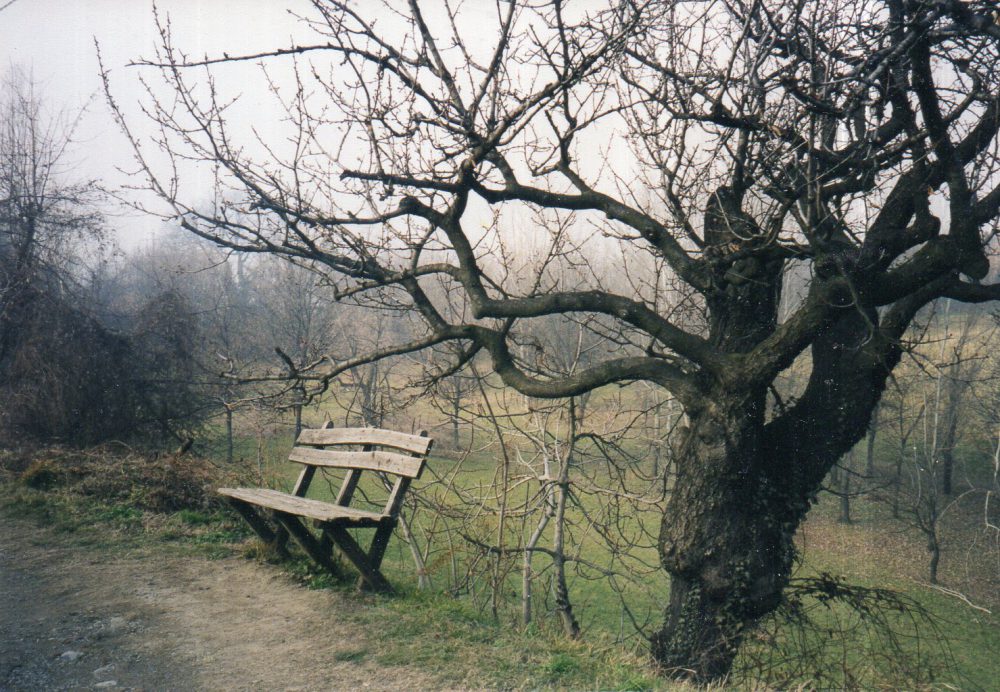
As spring begins her slow back-and-forth progress across the landscape, the beauty of winter will soon be behind us. I will miss the bouquets of bare branches, springing from their tree trunk stems where they grow by the side of the road.

To be sure, I will be happy for the brighter days, and as well for the warmer temperatures—until it gets too hot. Which is why I am such a fan of winter. Summer is my least favorite season, though of course that was not always true for me. As I grow older, I grow fonder of the cooler temperatures, and I tolerate the heat less and less.

I sleep better when there are more of the darker hours as well. Even though I do enjoy the late evenings of summer there is something so cozy about drawing the curtains in the late afternoons of winter, and of feeling the warmth of the quilt when I climb into my bed at night. For me this is another of the many forms of beauty. My definition of beauty is broader than most.

Beauty takes many forms, many of them not traditional. There is beauty in an elderly wrinkled face when the wrinkles are from that person’s many smiles over the years. Every season has its own special beauty, and so does each season of life. There is beauty in the memories and stories of a long life, and the wisdom of age has a beauty all its own.

In the winter of my life, it is enjoyable to me to see the grown grandchildren as they become their adult selves. I recently became a great grandmother again, and as I looked at the face of the proud father holding his first, a son, my heart warmed in my chest. I probably will not see the young boy into manhood, and that’s all right, I can see him growing and that’s enough.

In winter, for me, each day becomes more precious. To my dismay, my moments seem to speed by; my hours vanish into the days. I cannot slow down time; however, I can take note of it. I can be present in my hours and in my days. I can make note of whatever beauty is to be found wherever it is present. This is true in every season, of course yet in winter it might be more difficult.

The stark landscape may not appear beautiful to some or even many people. To me, its simplicity is beautiful. The dry grasses and weeds, brown against the snow or swaying in the wind are quite lovely. Of course, flowers are glorious when they appear, and the daffodils are welcome, yet the muted landscape enhances the brilliance of the cardinals and the other birds. When the sun shines, it makes more of an impact then, than during the other seasons.

It is wonderful to see beauty and to appreciate it, wherever it is found. Being present to enjoy it is a kind of beauty as well.

May you take the time to enrich yourself with beauty.

Blessings and best regards, Tasha Halpert

PS What do you enjoy about winter? What season do you appreciate most? I love it when readers share with me, please write to me at tashahal@gmail.com and make my day.

Heartwings Love Notes 2022 Love is in the Air

Heartwings says, “Love has many forms and faces, all of them true.”

Have you noticed the avian activity? The birds know that winter is on the way out and spring is on the way in. It will take its time getting here, yet its eventual arrival is assured. The birds’ songs are an indication that soon, or perhaps sooner still, mating will begin to take place.

Mating is preceded by courting, of course. This is the males’ opportunity to strut their stuff, show off their finery and often to compete with other males for the attention of their chosen lady love. Much of the birds’ design is intended to facilitate this process.

Other species, too, begin to shake off winter and think about the oncoming season. This includes humans, of course. The stores have already set up their Valentine’s Day displays. That happens soon after Christmas. Hearts and flowers predominate. Don’t look now but is there a shamrock or two mixed in? That’s just a hint of how the seasons are advertised, commercially at least, to remind us to celebrate.

However, love is the January/February feature—romantic love, that is.

While it’s too early by far for spring fever, the fever of love is clearly an aspect of February. Books, as well as the Internet tell us its name is derived from that of a goddess whose Latin or Roman name translates to fever: Februata. I enjoy reading up on the myths and tales surrounding the times for celebration. The ancient peoples used stories to convey information, the symbols that are part of the facts illustrate it as much as or even more than the words.

Love is expressed in many ways, some of them obvious, some not. There is a saying, “Handsome is as handsome does.” Good looks may attract the eye, but it takes more than that to go past attraction to the full bloom of romantic love. It can begin that way, for sure.

Most of us can probably remember our first real love as teenagers. I know I do. I had a felt hat that was given as a favor at parties that my first real boyfriend gave me. As I recall, it had several pins on it. My poor mother disliked it intensely. He and I wrote each other every day while he was away–I’m not exactly sure where, and spoke on the phone a lot when he returned. This annoyed my father, who did a lot of his business over the telephone, and did not want me tying it up.

The Greeks as well as other peoples of other nationalities have words for all the kinds of love, as well as symbols. However it is expressed, the call to embrace and then perhaps to reproduce is definitely in the air in February. Valentine’s day is the center around which the celebration is built, but which came first, I wonder? Nature’s influence, or the push to celebrate the beginning of spring? My money’s on Mother Nature.

May you find love where you seek it, and cherish it when you do.

Blessings and Best Regards, Tasha Halpert

PS How do you think love is given best? Please share your ideas. Do you have some thoughts for me? I love hearing from you, and hope you do. Please write to me at Tashahal@gmail.com, and you can sign up to receive my blog weekly at http://tashasperspective.com, click on Pujakins/ from the poet’s heart.

Heartwings Love Notes 2021: Zen Bones to Chew

Heartwings says, “Learning and growing can be life long.”

Throughout my life certain lessons, or learning experiences have been repeated, even after I believed I had already learned them. I had a teacher who called these Zen bones to chew. They are life lessons, opportunities to learn and grow recurring over again on a spiral or development.

What the name refers to is the practice of Zen, a Buddhist way of thinking that suggests total focus on the present moment. Simply put, practitioners of Zen live their lives acting spontaneously, rather than by a schedule, or a routine, or more importantly by previous rules or even experience.

The Zen bone lesson is usually so simple it is easy to miss: a habit, such as reacting in a certain way might be an example. It’s often difficult to notice habitual action, reaction, or even especially thinking. We are so used to it.

The Zen part, the ability to observe that habit as it is lived, is where the opportunity to learn, or the lesson comes in. The idea of chewing is of course the repetition of the lesson until we get it, at least until the next time it is handed to us. When it is a life lesson or learning experience, it is always repeated.

I recently had an encounter with one of mine. My mother was extremely self-conscious. She worried a lot what people would think of her or her behavior. This can have an inhibiting effect. Over time I have struggled with my tendency to follow her example, catching myself in the act, so to speak. I thought I was doing pretty well. But I had an interesting dream that showed me I wasn’t. 

The dream came after Stephen was talking about taking a cruise. He was enthusiastically proposing to explore options, maybe find an affordable excursion to celebrate a special occasion. I observed myself thinking of all sorts or reasons not to go. No need to list them, they were all speculative. And, as I finally figured out, an excuse to avoid situations involving exposing myself to discomfort.

In the dream I saw a pair of eyeglasses. They looked old and out of date. Then I was told I had to make a sculpture for a contest, but I was given only a tiny amount of material to use. I saw the previous entry and it was large. I felt daunted. When I woke up, I understood the dream’s meaning. My mother was a sculptor first, before she began painting. This and the eyeglasses set the dream as involving her.

 I realized I was feeling inadequate around the idea of a cruise. I worried a little about making my way around a cruise ship, but more, and more importantly, about what people would think. These days, a combination of age and Parkinson’s means I have difficulty standing up straight, and I walk very slowly. I feared being judged by my appearance. Struggling with my inherited self-consciousness, I was being given another opportunity to chew on that same old Zen bone.

May you find opportunities to learn always.

Blessings and Best Regards, Tasha Halpert

Dear Readers, please let me know what you think, I so enjoy hearing from you. You can write to me using reply, if there, or my email at tashahal@gmail.com. Hoping to hear, thanks, Tasha

Heartwings Love Notes: The Season of Light

Heartwings says, “The light is always there, even if it is not visible just then.”

When I was little my mother put real candles on our tree. She had brought the holders with her from Germany, where she had grown up. My great aunt Alice, who was our landlady was somewhat nervous about having live flames on the tree, so we always had a bucket of water and a mop—the old-fashioned string kind, waiting by the tree, just in case something went awry. Nothing ever did.

On Christmas eve day, my mother and I would decorate each bough of the live tree with the silvery metallic strands of tinsel she saved from year to year. Decorative glass balls were at the bottom, smaller ones up higher. As I grew older, I was proud to graduate from hanging decorations in the back; I was finally told I could help hang the strands and ornaments in the front. My mother was an artist and she was very particular about how the tree looked.

The silvery strands we hung one by one along each branch shimmered in the light of the candles and made an awesome sight. Later when my first husband, then a college student, and I celebrated our first Christmas, we couldn’t afford to buy lights but I hung the tinsel on the branches of our table tree and set it by the window. When the sunlight struck the silvery strands, it was almost as beautiful as the trees of my childhood.

Christmas, while traditionally being about the birth of a child, is just as much about light. In the midst of the darkest days of the year in the Northern hemisphere, the first lengthening of the daylight hours begins. All over the world this time is celebrated with all kinds of celebrations featuring gifts and light.

The celebration of the Jewish Hanukah season is about a miracle involving light, as are other light celebrations of December. These include the shepherds who followed the star to the holy stable, the visit of the three kings who did the same, a day sacred to Santa Lucia replete with candles, a Buddhist celebration of the enlightenment of the Buddha, a day sacred to Zoroaster when worshipers visit a fire temple, and others.

Light as a theme is featured throughout the holidays, including the burning of the Yule log, always to include a piece of the year’s previous one, showing the continuation of the cycle of life. To celebrate at the darkest time of the year seems appropriate. What better way to bring light into the world than to celebrate it with music, gifts and feasting? We honor the return of the sun in these ways, affirming in out hearts that no matter how dark and cold it may be, we know the light burns steadily on. At Christmas I remember always my childhood tree, shimmering, its candles burning on Christmas eve, as my mother played Silent Night on her violin.

May your Christmas memories shimmer brightly and your heart feel happy in their light.

Blessings, Best Regards, and Merry be, Tasha Halpert

PS If you have any Christmas memories to share, I would love to hear them. Thank you, Dear Readers, for your comments, and Happy Christmas to all.

Heartwings Love Notes 2012: When Listening is Enough

Heartwings says, “Listening is an art you can practice any time, with anyone.”

Remember when you were little and you tried to get someone—any grown-up to listen to you? They would either be alone and focused on a task, or talking to another grown-up. You’d speak louder and louder until they listened, only to dismiss what you were trying to tell them and go back to their grown-up doings. It was no fun being ignored, and often it was frustrating.

 Although today things are usually different for most children, it can still be hard, sometimes for a child to get someone’s attention. Getting a person to hear you means getting them to listen. Shouting seldom gets the kind of attention you may actually want. In my long life I have come to discover that in order to get people to hear you, you must first listen to them.

Listening is an art, and it is not often taught to children or to adults either. In most conversations, participants listening are actually thinking about how or with what ideas they will respond. Many of us do not really listen to what others are saying. Not only might the other person be speaking with a hidden agenda, he or she might simply be expressing feelings and not need more than compassionate sympathy.

Most   people hope to be helpful. They want others to feel happy, comfortable, or at least feel or be better. Toward that end they will make suggestions, give advice, or generally try to smooth things over. Many times this is not really what is needed. The person expressing the complaint may actually only be seeking sympathy and/or compassion. Often there is not much that can be done to “fix” things. To try to do so can even make situations worse. We all have our own ideas what might be done, and sadly can’t be, for whatever reason. Many of these begin with “If only…”.

All too often the phrase “if only” infers there is a situation which involves a change in a person, the attitude of another, or of circumstances which are fixed and immovable. The desired change may not be practical or even possible. Furthermore, what is actually vitally important is to acknowledge the complainer’s feelings. Whether the listener feels the complaint is justified or not, it is important for the that person to comprehend that to the complainer, it is.

There is an important rule or guide to behavior that is also part of the ancient wisdom: Do unto others as you would have them do unto you.  However, it is important to add: If you were they. If you complained, how would you like to be told what you did wrong? Or how you could fix something, if you hadn’t asked for help? When someone speaks of his or her trouble, what is often most relevant and definitely kinder is, “I am so sorry; I sympathize;” or just, “how hard that must be for you.” Simply listening is often enough.

May you find helpful ways to support those who are troubled or grieving.

Blessings and best regards, Tasha Halpert

PS Do you have stories to share or comments? I’d love to hear from you. Please write to me at tashahal@mail.com, and do check my blog to sign up so you won’t miss a Love Note at http://tashasperspective.com and click on Pujakins to get connected if you need to.