 The phrase “waste not want not,” sounds as though it might have come from the Bible, however it did not. It also sounds like old fashioned New England thrift. My mother being German, definitely learned the concept from her experience. I have found it useful in trying to utilize whatever food I might have left over from any meal. In my book, wasting food is not to be done.
It helps to be prepared. I usually cook enough rice to have plenty for extra meals. This saves me cooking time later. I am always happy to see some leftovers in my refrigerator. One reason is that they help me to fix meals quickly, another is that they help make it less work to do so. I love to cook, and I also love to write poetry and do many other things. Cooking is fun, but not if I have to neglect the rest of my various duties and activities. I usually make enough food for a meal to create another or part of one from what is left over.
It is also true that by utilizing my leftovers, I save not only time but money. My mother, who grew up in war torn Germany, felt food was very precious. I was made aware of this very early on and it stuck. I often use small amounts of vegetables, for instance, or cheese, bread, rice or pasta and so on to incorporate into what I call a “Never Again,” because I will most likely never have just that combination of ingredients to use.
It is important to make sure to blend flavors appropriately. For instance, I’d never combine a curry with an Italian flavored dish. I would blend anything plain into something spicy or tangy. I don’t generally combine a cheese and pasta dish with something involving a strong fish, however you might. One of my favorite tricks is to add shrimp I’ve baked at 425 for 10 minutes to any leftover rice or pasta, then put in herbs to taste, some sautéed onions and any leftover vegetables I might have.
Try spreading leftover chicken or seafood salad on bread, cover it with cheese, and bake in a toaster or regular oven at 425 degrees for 10 minutes. Add a salad to make a fast, tasty supper meal. There are several rules I follow in my thrifty ways with leftovers: I never combine pasta and rice leftovers; I usually incorporate some chopped, sautéed onions to freshen the flavor; I try to use most leftovers within a week. Have fun, Leftovers present great opportunities to be creative.
 Those of us who come from New England are familiar with Yankee thrift: use it up, make do, or do without. I am of a conserving nature, having in addition to a Yankee father, a German mother born at the outset of WWI. Nothing was ever wasted in the house I grew up in. I thrived on hand-me-downs and thrift shop finds. Over the years I have accumulated clothing items I am happy to see again when their season rolls around. I often develop a fondness for clothing that has served me well.
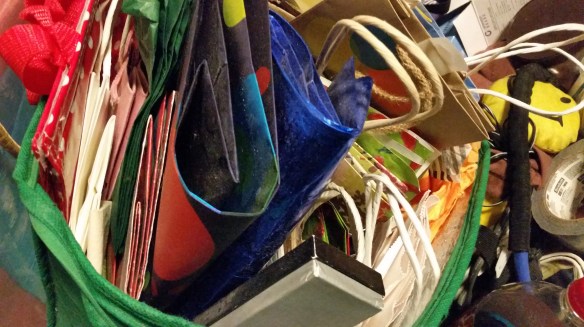 When my mother and I went to Russia in 1991 among the places we visited was the Hermitage Museum in St. Petersburg. It was very impressive. My favorite part was the room with six Rembrandts. Sitting among them was an extraordinary experience. As we left we bought some postcards and other souvenirs and when none seemed to be forthcoming, asked for a bag to put them in. The cashier gave us a sour look then finally dug out a used plastic bag– an obvious treasure from her hoard and placed our items in it. Recycled bags were more common there than new ones were then.
 My mother felt strongly that food was precious and not to be wasted. She had been a young child during World War I in Germany, and the experience of scarcity had shaped her attitude. To her way of thinking, all food was to be used up one way or another. Then came World War II and rationing. I too was very young, yet this also gave me lessons in thrifty use of food. Fortunately I have been able to put my early lessons to good use in learning how to create meals from whatever I have left over even if I hadn’t already planned ahead.
 Pujakins