Gifts of the Moment by Tasha Halpert

Drops caught 2 If I hadn’t been paying attention to my surroundings, I wouldn’t have noticed it. I was standing at the supermarket counter choosing some fish for the chowder I was planning to make for later in the week when I saw the lobster on the low shelf in front of me. It had already been cooked, packaged and priced. Stephen loves lobster and this week it was on sale. Since I had nothing special planned for supper I immediately thought how the lobster would make a fine treat for him. Happy to be able to provide him with this nice surprise I picked it up and put it in my wagon.

I had other groceries pick up and so I continued on my way, collecting them and checking off the items on my list. When I finally finished, I made my way to the checkout to pay for my groceries. How glad I was that just at that moment I had been aware of the lobster and seen it waiting there for me. If my mind had been wandering and my thoughts elsewhere I might easily have missed that opportunity to provide us with an extra helping of joy. Bringing someone you love a special treat constitutes a treat for the giver as well as the person receiving it, a win/win situation.

I have noticed that when I focus on where I am and what I am doing I often see things that represent a kind of gift for me. An interesting cloud formation, flowers growing by the wayside on my morning walk, the first touches of color in the trees as I drive on the highway, a snatch of song that I enjoy playing in a store as I walk in, all these and more are little presents I receive when I am aware in the moment.

However, the gifts that lie within any given point in time are only available to me when my eyes are looking around to see and notice them. If my mind is occupied with thoughts or speculations, with worries or apprehensions there is no way I can pay attention to what is around me. At that point my eyes are figuratively turned inward, paying attention to whatever I am thinking of, not looking outward at what is there. I remember once when I spoke to someone about the lovely colors of that year’s fall, she looked at me sadly and confessed that she had been so lost in her thoughts and concerns she had never noticed.

Meditating regularly has certainly helped me stay mentally focused. Observing my thoughts as I learned to do in meditation gives me the option of letting them flow as they will or of refocusing my attention on where I am and what I am doing. Sometimes it is perfectly all right to let my mind wander about. As long as I am not driving or doing something else requiring my full attention my mind can do what it pleases. Even so, I find that keeping at least some of my attention on the present moment can often pay off in gifts.

Death is a Part of Life by Tasha Halpert

DSCF0192 The recent announcement of President Carter’s cancer follows on the heels of my hearing about many others whose illness of one sort or another has proclaimed their relatively immanent mortality. In other words, a multitude of serious sicknesses–cancer, heart problems and other conditions of ill health have invaded the lives of people I know and in many cases, love. Perhaps this has to do with getting older. I do not remember hearing as much about such things only a few years ago.

I may have been fortunate in this respect: The death of people I knew and loved wasn’t part of my childhood experience–I went to my first funeral, an aged cousin when I was twelve. Yet death as a part of life was no stranger to me. Growing up with pets and small farm animals I had an intimate acquaintance with it. Ducklings, rabbits, dogs, cats, and the chickens we ate for dinner all lived and died as I watched. I buried my pets myself with due ceremony. I watched as the chicken for dinner was beheaded with an ax.

When I was in my twenties I thought little about death. Then my children’s father nearly perished in an automobile accident. The thought of those I loved dying now forced itself on my attention and I began more to appreciate the specialness of life and of my relationships. Still, I was occupied with life and death wasn’t something I thought much about. Time went by and my grandmother died. She seemed to me an appropriate age to pass on. While I mourned her absence, I was busy with life and my little ones, we were no longer living close to one another and I did not miss her presence.

Years later death grew more familiar. I lost my father to illness, then my own precious son. Some years later several young friends died untimely deaths. Moe and more I was brought to an understanding of the place of death in life. As much as I mourned, I began to recognize that death was indeed a part of life; that dying was merely the blowing out of the candle that was lit at birth. Life is a gift for which I am grateful and the lives of those I love and have loved are very dear to me. Yet like flowers we grow, bud, blossom an finally wilt away.

Untimely death is harder to bear than what seems a natural process. My rabbits were killed when a dog got into their pen. My dog was run over in front of me. Later on my son died far sooner than he might have. Yet even untimely, this is still death as a part of life. Although I miss him still, my sorrow is not so much for his death as it is for the life he was not able to live. We are all most fortunate for whatever time we have on this earth. In my nightly prayers I make sure to express my gratitude for my dear ones, those whose candles still burn brightly. May they continue.

Tidiness by Tasha Halpert

New Home 1          Once upon a time it was quite usual for a household to have someone who was paid to help out. this person might live in or come in to work there during the day. There were not as many conveniences as we have today, and my mother was happy to have someone to help with the household tasks as well as my care and do what she couldn’t always manage to get done.

I don’t remember how old I was when Emily came to live with us. I believe I was around two or three to help my mother around the house and also look after me. She also taught me a great deal about being tidy. I loved her dearly and she loved me as well. I still have many pictures she took of me when I was small. We did many things together and had lots of fun. When I was eight she left to get married. I missed her very much. I remember thinking if I was very good and kept my room the way she liked, maybe she would come back.

I believe Emily’s encouragement inspired my fondness for the tidiness I still practice today. I can remember her encouraging me to put my toys in a row, lining them up neatly. Later, when I was older I enjoyed putting my doll house in order, arranging and rearranging the furniture and putting the dolls that lived there where they belonged. As an only child until I was eight and a half, I had to make use of my imagination to entertain myself. Both Emily and my mother encouraged me to be creative. I made the stories and plays I wrote into small books, carefully sewed together. Rebuses–stories with pictures for some of the words were favorites to make.

Today I also prefer order because it helps me find things. If I know where I put something I can easily find what I need when I need it. Toward that end I try to put whatever I use often back in its designated space as soon as I am finished with it. Because I feel it is such a waste of time to have to hunt for things, I have special places to put important items like car keys, eye glasses, pocketbooks, shoes, and so on. I also make lists of what I need to do, another form of making and keeping order. Being organized is an aspect of tidiness. A difficulty with this is that not everyone is equally tidy.

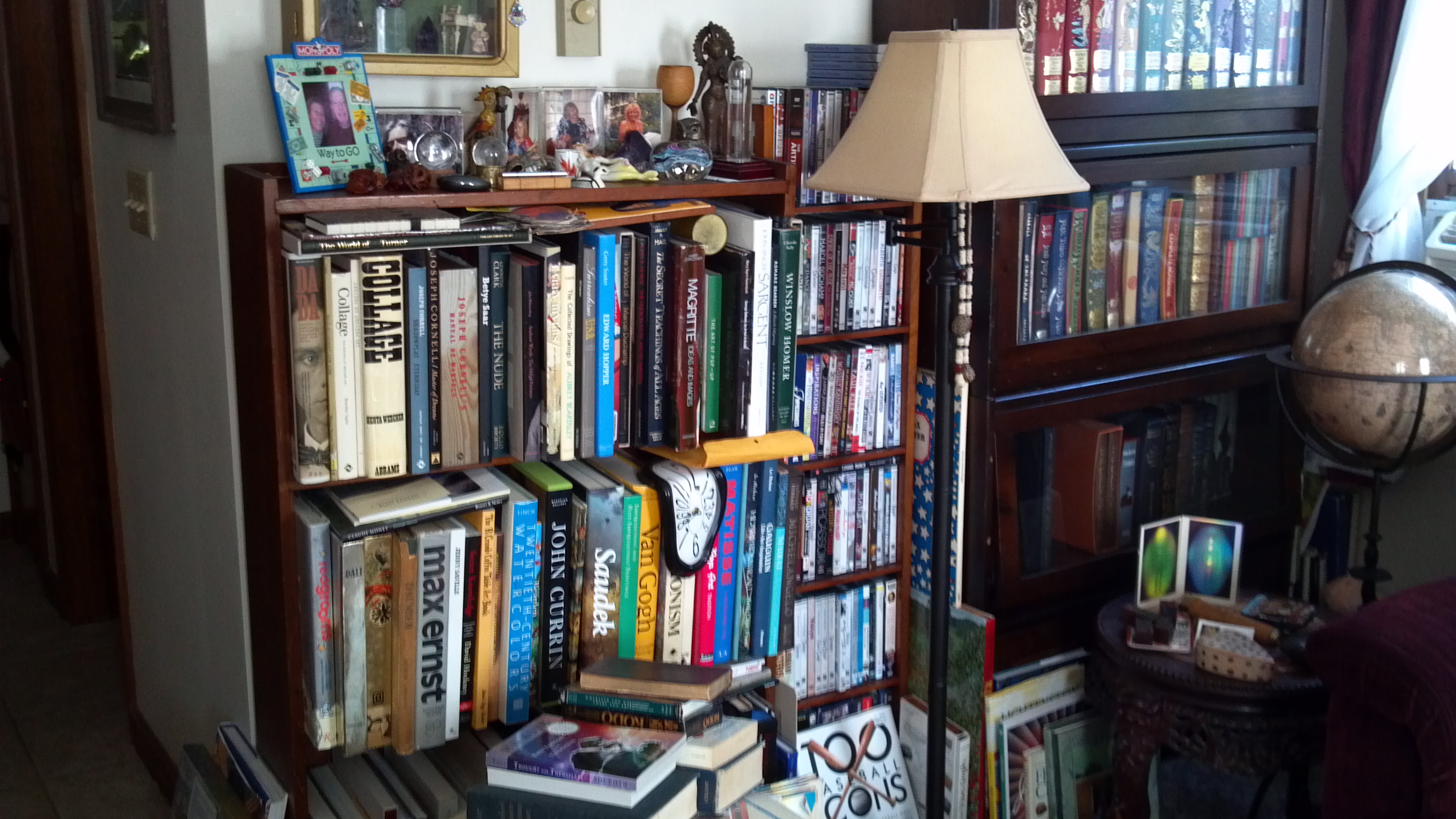
Stephen, unlike me needs to have things where he can see them or put his hand on them easily. This leads to piles and untidy heaps of items that to me are all higgly piggly with no sense of order. It also makes it difficult for Stephen to see what he needs when he needs it, so that I often have to help him to locate items that get buried. He does not deliberately bury items, it just happens that there are too many things of immediate interest in one place. Still, after 38 years of being together I have learned to relax and allow for his way of keeping things available. At the same time, I rejoice that I can usually find what I want relatively quickly.

A Joy To Behold, by Tasha Halpert

Wedding 5 A&K and little girlsGrowing up I don’t remember going to any weddings. My mother’s relatives did not live in the USA and my father’s immediate family was small. I didn’t even go to a funeral until I was twelve, when I wore my first pair of nylons to the obsequies of an elderly cousin. The first wedding I attended was my own, a small affair because the children’s father and I eloped.

Weddings are always special, and the one Stephen and I recently attended in San Diego was no exception. Recently we flew there to join with family for the beach side wedding of our nephew. We were also fortunate enough to travel with my daughter and her fiancé, giving us an opportunity to be together with them at the same time. It was a joyful occasion and one I will long remember. Glimpses of the experience remain in my mind like photographs in a memory album I can now share with readers.

One special remembrance is of jumping in the waves of the Pacific with Stephen and my daughter. This was a great treat for me. It brought back a cherished happy memory of how as a child I used to jump the waves with my father. Staying at my aunt’s beach camp, we would venture out on a day when the ocean was excited from a recent storm, and holding on tight we would jump up as the waves engulfed us, surging against our tightly clasped hands.

The waves of the blue Pacific provided a musical background for the blue and white themed wedding. The bridesmaids wore blue dresses of their own choosing, the groomsmen blue ties and dark suits. The blue and white hydrangeas they carried were echoed in the carnation boutonnieres of the groom and his groomsmen. Blue table covers joined the various places to sit, as well as covered the serving tables of the delicious buffet we enjoyed after the ceremony.

My brother and sister are empowered by the State of California to perform weddings; they conducted the touching ceremony that linked their son with his lovely Korean bride. Her mother, father and relatives including her twin sister, her husband and their adorable four year old son the ring bearer, had come from Korea to witness the marriage. The groom’s sister, her husband and daughters one of whom was a flower girl, family members of my sister-in-law, and her 94 year old father were also involved.

As I stood with those watching the ceremony I felt a surge of love in my heart at this beautiful beginning to the married life of my nephew and my new niece. The participants gathered for the ceremony and for the various celebrations before and after it were equally excited and happy. There were many opportunities to mingle and get to know these new family members. The pictures I took and posted on Facebook are available for all to see. The images that I could not capture on film remain in my mind, a precious joy to behold.

The Persistence of Nature, by Tasha Halpert

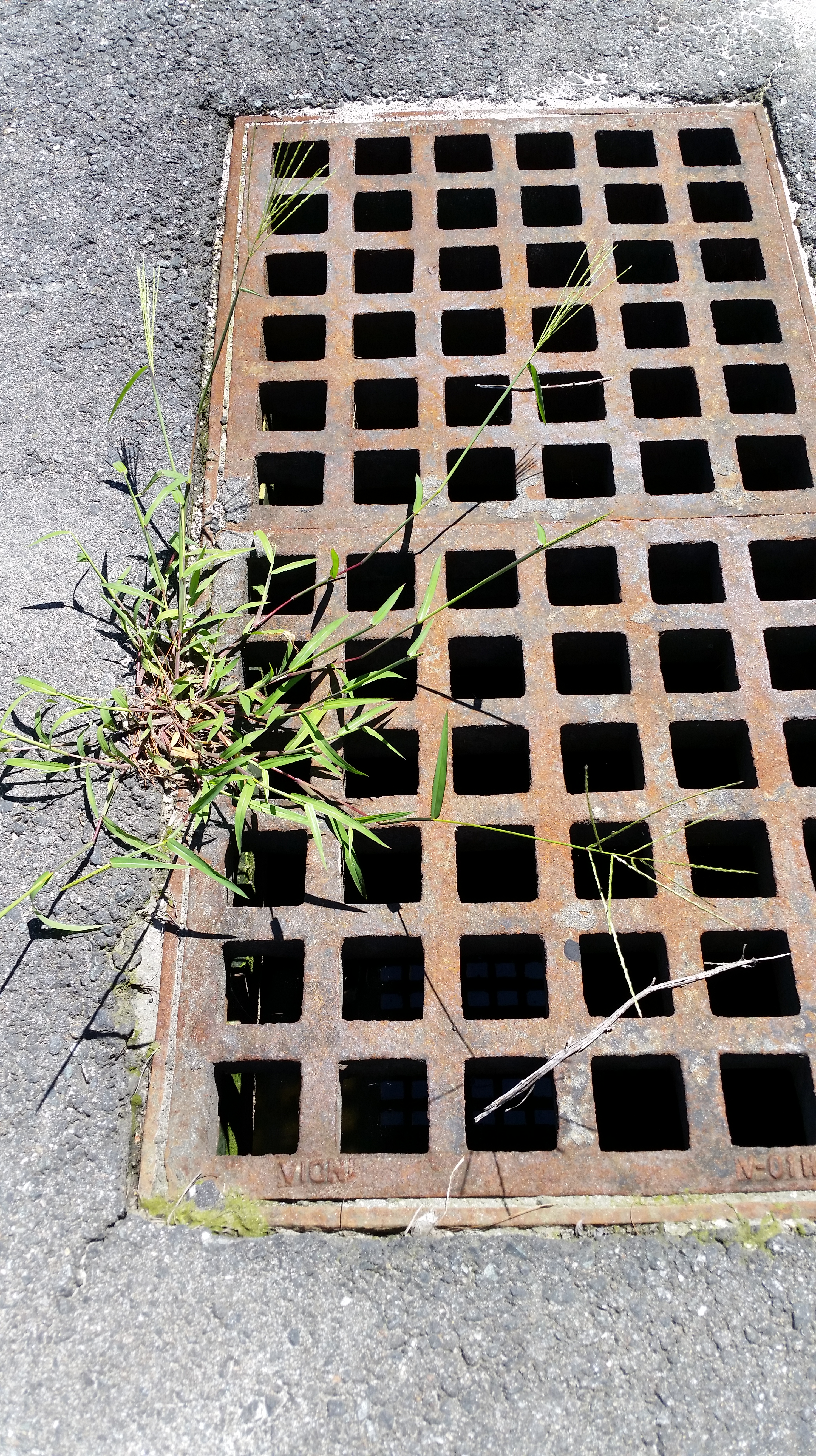
Weeds and GridWhen I was growing up my father was an active member of our local Horticultural society. At the age of twelve I used to go to the meetings with him and learn about growing trees, shrubs and plants. In addition every year there was a Horticultural show late in the summer. There was a children’s division with cash prizes. This was exciting to me. One in particular that interested me was a prize given for gathering and identifying wildflowers.

Although I had a garden, it held nothing prizewinning. However the wildflower competition was an easy one because we lived amidst a great variety of them. Each year I scoured the surrounding fields and woods for the 25 flowers to be gathered and identified. Most other young people who entered the show were content to do something easier, so I had no competition and usually won first prize. As a result I gained a lifelong interest in wild flowers and to this day remember a lot of their names and even their properties, for my interest grew into a study of herbs as well.

My eye is often drawn to flowers growing in the wild. Recently I was traveling down 495 when a lone Brown Eyed Susan waved at me from the concrete divider. As I drove by the dark center surrounded with bright yellow petals seemed to wink. I wanted to stop and take its picture however the traffic on 495 is pretty steady and to pull over to the center srip in the midst of a busy stream of cars is to court an accident.

A seed had taken advantage of whatever soil had collected in a crack along the edge and sprouted this brave, solitary flower. Nature is opportunistic. Wherever enough grains of soil fill a crack in a manmade surface, Nature plants any available seeds. Openings within the pavement host all kinds of new life. Abandoned buildings and properties are soon festooned with green decorations eagerly seeking a place to grow.

There is a saying, “Nature abhors a vacuum.” Certainly if the gardener is not vigilant, weeds fill up any empty space in a garden. Yet this also works to keep soil from blowing away. Poison ivy may be the bane of New England beaches, however it is one of the reasons the sand above the high water mark does not blow away. When the early settlers plowed up the prairies they lost the important topsoil that the grasses had kept in place.

I love the way Nature fills up empty spaces with greenery and flowers. Recently I noticed an evergreen hedge that had acquired a host of little white flowers courtesy of the bindweed that had decided to take root there. The small morning glory look-a-likes decorated the bland green hedge in a most complementary fashion. I rejoice that weeds are flowers too. As I pass by them, I enjoy the summer’s wayside offerings, and I thank Nature for its persistence.

Blueberries Wild and Tame

Diana's Pond Reflections Beginning when I was around six or seven, every summer on a hot, sticky day in early August my mother and her friends would take me and go to a nearby hill where low bush wild blueberries grew. The grass was prickly. The sun beat down. My container seemed enormous and the berries were small. Quickly tiring, I would dawdle and eat berries while my mother and her friends picked on and on, eventually returning home with overflowing containers.

I don’t remember if she made pies or simply served them to us to eat. She might have made jam. The experience of the heat, the boredom and the tediousness of picking have overwritten any other memories I might have had. I haven’t picked any blueberries for a long time, and the little wild ones are pretty hard to find if you don’t. I have brought some home from visits to Maine.

Fortunately wild blueberries can be found frozen because they work best in the following recipe from a cookbook called When the Cook’s Away, by Peg Harvey. (If you can find this book in a second hand store, buy it for your collection. It is a wonderful source for simple, interesting easy recipes.) The pie in question, Roman Blueberry Pie, is made primarily with uncooked blueberries, “fastened together” with a cooked thickened blueberry sauce.

The first time I made it I was unsure how long to cook the sauce and ended up with an amazingly hard dark blue lump in the pot. Fortunately, by adding water and stirring vigorously, I was able to resolve the lump and finish the pie. When you make it, try not to let the sauce get too thick, yet if you do, don’t despair, with an effort you can thin it out again.

The recipe begins with a baked pastry pie shell–home made or purchased. Measure 4 cups of blueberries. Take out 3/4 cup and cook them in 1/4 cup water until soft. Push through a sieve. Add 2/3 cups sugar and 2 tablespoons cornstarch. Cook until somewhat thickened–it will grow thicker as it cools, and chill in the refrigerator. When the puree is very cold, mix it gently with the rest of the berries, being very careful that each berry is coated. Reserve the mixture until shortly before dinner, then put it in the pie shell and garnish with whipped cream if desired.

Researching on the Internet, I found that Elizabeth Colman White is responsible for cultivated blueberries. 1893 she began working on her father’s cranberry plantation. She wanted to utilize the land between the cranberry bogs for another berry harvest. In 1911, she read about Dr. Frederick Coville’s efforts in blueberry cultivation and contacted him with her ideas. By 1916, their combined efforts produced a blueberry that could be sold. Dr. Coville’s expertise in scientific cultivation and Elizabeth White’s good business sense helped create the blueberry cultivation business that enables us to enjoy this delicious fruit with all of its health benefits all year round.

The Wish I Coulds by Tasha Halpert

Kathy's Kitchen Baskets I’m not sure why I was so uncoordinated as a child. Perhaps it was because I was tall for my age and my physical development had run ahead of my ability to manage it. I was fine riding a tricycle. Then came a two wheeled bike. Over and over again I fell off. It didn’t help that my bicycle seat was loose and kept wobbling, and that the sidewalks where I had to ride were bumpy. Once on the way to a friend’s I fell off and hurt my knee. A kind person stopped his car and brought me home. My parents thanked him, then after he left they scolded me for accepting a ride from a stranger. Perhaps they were right to do so, however I thought the man seemed nice, and I was scraped up and bloody and my knee was painful.

Even as an adult I had problems riding a bike. I’ve never known why it was so difficult for me when most people seem to have no problem doing that. I rode it to keep my children company until I finally twisted my front wheel, making my bike inoperable. I was secretly relieved. Skating too was difficult. I wanted to be able to glide over the ice, yet I had to be content with a few simple turns around the rink before my ankles became to painful to continue.

There are other things I always wanted to be able to do and never could, like run fast, or hit a tennis ball with accuracy. I had tennis lessons to no avail. The sailing lessons I took one year were a disaster. No one wanted me to crew with them because I kept getting my directions mixed up. School sports were a torment because I was so uncoordinated. It was difficult always being chosen last for any team regardless of the game being played. The people who were good at sports were always the popular one. In some respects my childhood was one long “wish I could.”

My hand-eye coordination seems lacking. Drawing presents another obstacle. I can draw what I might be looking at, and I enjoy sketching, but drawing from my imagination presents a problem. No matter how hard I try I can’t seem to transfer what I might envision to paper just the way I see it. And then when I manage to come up with something I like, try as I may I cannot reproduce what I have drawn so that it looks even remotely the same.

Do I sound like I am complaining? Perhaps I am. However, it is also true that there has been compensation for what I have I lacked. In my solitary childhood I read avidly and thus developed a large vocabulary. My vivid imagination helped me to write stories and poems and still does. Spending time outdoors by myself I learned to love nature and nature comforted me. Perhaps most important of all I developed compassion for those who are limited or unable to do as they wish. There are still things I wish I could do, however I recognize that they are not nearly as important as the things I can do, and for these I am grateful.

The Outdoors Is My Garden

        Butter and eggs in yellow vase 2 I grew up with gardening parents. My dad, a horticulturalist grew lovely flowers. My mother, far more practical grew vegetables. I have grown both along with herbs and at one time I had a large lovely spiral garden that was a delight to show visitors and quite arduous to take care of. However, in those days I didn’t have a computer and I didn’t spend as much time writing, either.

          One of the good things about gardening is the exercise you get from doing it; another benefit is the fresh air from the time out of doors. However, where Stephen and I live now there are nice places to walk and people have lovely gardens we can look at. It is also possible to find wild flowers growing by the side of the road. This delights me because I have always loved the flowers that nature provides for free.

          Stephen and I were out for a walk recently when I spotted the little orange and yellow wildflowers I’ve known from my childhood as Butter and Eggs. Joyfully I gathered a small bunch to take home and put into a vase. Then I looked them up both on the Internet and in my own reference books: their Latin name is Linaria vulgaris. They were originally brought over from Europe centuries ago.

          I’ve often wondered whether snapdragons might not have been developed from these similar looking flowers the way carrots were developed from what we know as Queen Anne’s Lace. However there seem to be no connection beyond the resemblance. Bumblebees are one of their chief pollinators because of the tight construction of the flower.

          Another name for it is Toadflax. At one time it was thought these flowers would attract toads to the garden. Gardening and herbal lore tell us that what resembles a thing might be connected with it in some way. In the light of this information, it made sense when I read that the flower was called Toadflax because the blossoms resembled tiny toads.

          In addition to eating many harmful insects toads delight in dining on slugs. Not only are they far cheaper than noxious chemicals, they are much better for the garden as well as for the gardener than any poisonous insecticides. Also the flowers and other parts of the plant have been used as an herbal insecticide. Taken together with the insect killing properties of toads the name Toadflax seems even more appropriate.

          Although I have been a gardener for most of my adult life I am currently without a garden. People often ask if I miss it. To some extent I do, however, the many hours I once spent weeding and pruning can now be used for my writing and my rather large email correspondence. I can also console myself with this thought: The wildflowers that grow by the side of the road are available to the eye as well as for picking. Whether I gather them or just leave them there to grow I am glad, because all they require of me is my admiration.

Wrinkles by Tasha Halpert

As I went out to bring in my laundry, I reflected on how much I love hanging out my clothes. I have a number of racks I use to do this. Not only does it same money on the electricity for the dryer, it makes them smell good. I feel sad when the days get so cold I can’t dry my clothes out of doors. Even then I’ve been known to use the racks inside in the hallway. Dryers are probably the biggest energy hogs in any household, and I like to save the environment as well as my pocketbook from that burden.

The clothes I had hung outside were ready to come in. I’d been delayed hanging them up. My denim skirt crunched up in the washing machine since the night before had dried with its wrinkles intact. My first thought was, oh, now I’ll have to iron it. My second thought was no, nowadays wrinkles don’t seem to matter much. I laughed and hung up the skirt. By the time I was ready to wear it, some of the wrinkles would probably straighten out by themselves.

I grew up in an era when wrinkles were considered unacceptable. Making sure that my clothes were wrinkle free was an important part of my growing up years. Laundry was much more complicated than simply throwing the clothes in the washing machine and dryer. Though I never used it myself, I have memories of something called “bluing” that was used to make clothing whiter. I also remember starch used for shirts and other clothing as well.

Once an iron was an important household tool. From colonial times through Victorian ones, most homes, unless they sent out their laundry, had several flatirons. These would be heated on the ever burning cook stove or hearth. It was important to iron carefully because it was easy to scorch the white aprons, shawls or petticoats most women wore. Now heavy black iron flatirons are common in antique stores where they are sold for door stops.

I doubt many twenty-somethings own or have ever used an iron. Either they don’t need to eliminate wrinkles or they have clothes that don’t accumulate them. Permanent press probably eliminated many commercial laundries. In the past wrinkles were unacceptable, considered the sign of a careless or sloppy person. What I don’t remember is at what point clothing wrinkles ceased to be important to eliminate.

Wrinkles in the skin, most especially facial wrinkles seem to be another matter. Try to find a woman’s magazine without ads for wrinkle removing cosmetics or cover-ups. Judging from the ads, women and even some men also spend lavishly on plastic surgery. This seems sad. To me frown, smile and other lines present a record of a person’s lifelong expressions as well as of their attitude toward what life has had to offer. Perhaps one day these wrinkles too will become more generally acceptable.DSCF0175

Happy Anniversary To Us by Tasha Halpert

S7T bt BrendaStephen and I met in 1977 while we were both working for a small theater group called Theater Workshop Boston. I was an occasional personal assistant to the director, Stephen did a freelance publicity and public relations and the director had hired him to help out. We were both called to the office on the same day, being together there for several hours while we helped the director. We agreed to meet again soon afterward to spend more time together.

That second meeting quickly grew into a friendship as we discovered much in common and found a great deal to communicate about. Soon because I needed to move from my small apartment, Stephen invited me to become his roommate. Fortuitously, the current one had just moved out. W

As we proved to be so compatible, we soon moved in together and got another roommate to help make ends met. We threw in our lot together and began working as a team soon after that. Stephen taught me about publicity and public relations; I taught him about meditation and intuitive skills. We began teaching classes together. He encouraged me to write, and I began what ended by being a series of books we self published later on.

After nearly three years because we wanted to show the world it was possible to do that and still be lovers we made the decision to marry. On July 5,1980 beneath a beautiful Copper Beech, we were married by a minister friend of mine. After 35 years we are still both married and lovers. As well, we are best friends. To some extent this is due to a decision we made at my insistence very soon after we met: we agreed always to be honest with one another about our feelings.

I felt then and feel even more strongly now that a good, long lasting relationship must be built on honesty in general but especially when it comes to feelings. There are times when it is painful to be honest about how one feels. However, if one does not share the feelings they can grow into resentment and then anger. If instead the feeling is shared, this does not happen.

Change can be optional. What matters is that the feelings are expressed. Sometimes it is impossible to alter behavior, especially if it is an ingrained part of his or her nature. For instance, I will probably always have a tendency to wait to leave for an appointment until the last minute, thus frustrating Stephen. He will doubtless always collect things, resulting in piles and crowded living space.

Generous measures of patience, tolerance and kindness toward one another have been vital to the longevity of our relationship. Also important is that we do not compete with one another. Each rejoices over the triumphs of the other, nor is there any jealousy or envy between us. When you truly love someone it is their happiness that matters. As well, so does yours. In our years together we have tried always to give each other room to grow. Our love for one another is the fertile soil that makes that happen.