Heartwings Love Notes: Eggs and Easter Memories

Heartwings says, “Like Easter, Eggs are symbols of beginnings and renewal, the essence of spring.”

My father was attuned to all things that concerned or had to do with nature. His grandfather was an amateur horticulturist, who may have been his first teacher.  Though he never studied horticulture or took classes as far as I know, he had a broad interest in plants and trees. He also kept chickens, and we always had plenty of fresh eggs, as well as chicken to eat. I can still see my mother, standing by the sink, plucking the feathers from the younger chicken she was roasting for dinner, or from the elderly fowl, no longer laying eggs, that was headed for soup.

 During World War II many things were scarce, eggs among them.  We had plenty to share, so daddy would often sell a dozen eggs to people he knew, receiving whatever he charged for them to defray the cost of the grain and mash he fed the layers. I can remember him once, laughing over a rather rude response he got from one customer, an acquaintance, who told him to go around to the back with his delivery. He didn’t take it to heart, because he had a good sense of humor. I was often called upon to feed and water the hens, and I received a small allowance—fifty cents a week, for doing so.

What brought all this to mind was the fact that this weekend it’s Easter, and eggs are an important symbol of the holiday, as well as a prominent feature. One year, as I recall we had so many eggs, my mother and father decided to hold an Easter egg hunt. I helped color the eggs, but was not allowed to participate in the hunt. I remember looking wistfully out the window from the second floor of our home as the invited children of friends scurried around, discovering the hiding places of the eggs. The adults were probably enjoying cocktails and snacks, as they often did at gatherings my dad hosted.

Besides eggs, Easter in my household meant flowers, both corsages for my mother and for me, and flowers in vases and plants in pots for the house. It also meant wearing hats in church. I recall a straw hat with a broad, turned up brim. It had a wide blue grosgrain ribbon that went around the crown and hung down in the back, descending from a bow. We attended two services, first my mother’s Catholic one, then my father’s Episcopalian one, which I loved. There was singing of familiar hymns—we sang one or two of them each morning at my school’s morning meetings, plus the service’s words were in English. Even better, there were cushions to kneel on instead of the hard wooden benches of my mother’s church. Happily, there was a geranium for me and every other child there, to take home after the service was over. Such spring symbols bring the assurance that the old is passing away and the new is here.

 May you find your heart renewed by spring’s symbols.

Blessings and best regards, Tasha Halpert

PS If you have any Easter stories, please send them along, I love hearing from you. You can write me at tashahal@gmail.com. Sign up for more Love Notes at my blog, found at https://tashasperspective.com/Pujakins

Heartwings Love Notes 2024: The Beauty of Winter

Heartwings says, “As you seek out its loveliness, you will appreciate each season.”

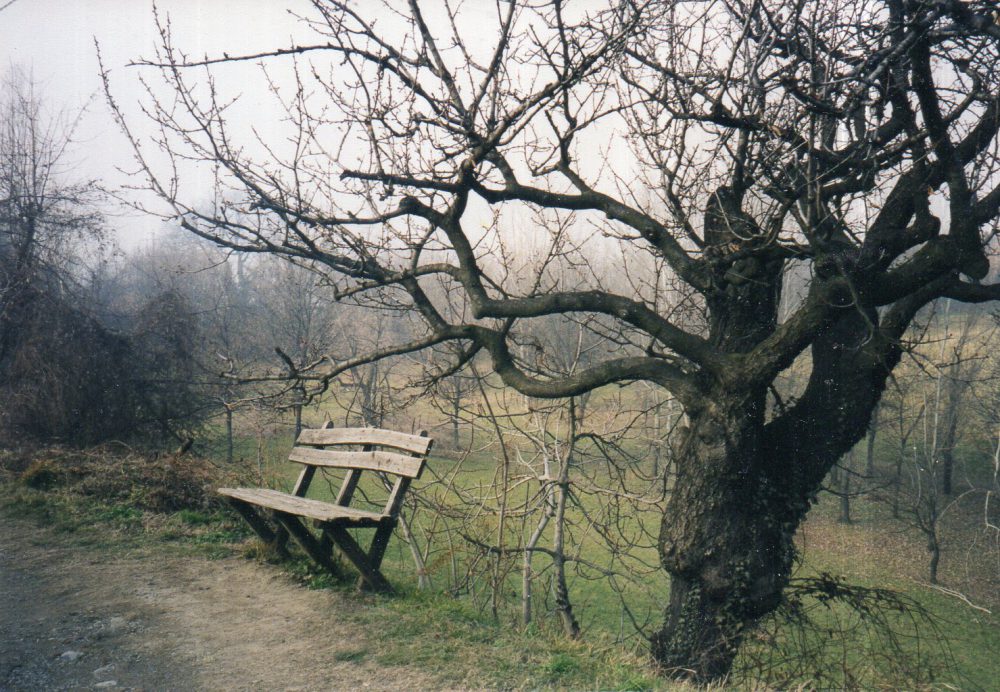
As spring begins her slow back-and-forth progress across the landscape, the beauty of winter will soon be behind us. I will miss the bouquets of bare branches, springing from their tree trunk stems where they grow by the side of the road.

To be sure, I will be happy for the brighter days, and as well for the warmer temperatures—until it gets too hot. Which is why I am such a fan of winter. Summer is my least favorite season, though of course that was not always true for me. As I grow older, I grow fonder of the cooler temperatures, and I tolerate the heat less and less.

I sleep better when there are more of the darker hours as well. Even though I do enjoy the late evenings of summer there is something so cozy about drawing the curtains in the late afternoons of winter, and of feeling the warmth of the quilt when I climb into my bed at night. For me this is another of the many forms of beauty. My definition of beauty is broader than most.

Beauty takes many forms, many of them not traditional. There is beauty in an elderly wrinkled face when the wrinkles are from that person’s many smiles over the years. Every season has its own special beauty, and so does each season of life. There is beauty in the memories and stories of a long life, and the wisdom of age has a beauty all its own.

In the winter of my life, it is enjoyable to me to see the grown grandchildren as they become their adult selves. I recently became a great grandmother again, and as I looked at the face of the proud father holding his first, a son, my heart warmed in my chest. I probably will not see the young boy into manhood, and that’s all right, I can see him growing and that’s enough.

In winter, for me, each day becomes more precious. To my dismay, my moments seem to speed by; my hours vanish into the days. I cannot slow down time; however, I can take note of it. I can be present in my hours and in my days. I can make note of whatever beauty is to be found wherever it is present. This is true in every season, of course yet in winter it might be more difficult.

The stark landscape may not appear beautiful to some or even many people. To me, its simplicity is beautiful. The dry grasses and weeds, brown against the snow or swaying in the wind are quite lovely. Of course, flowers are glorious when they appear, and the daffodils are welcome, yet the muted landscape enhances the brilliance of the cardinals and the other birds. When the sun shines, it makes more of an impact then, than during the other seasons.

It is wonderful to see beauty and to appreciate it, wherever it is found. Being present to enjoy it is a kind of beauty as well.

May you take the time to enrich yourself with beauty.

Blessings and best regards, Tasha Halpert

PS What do you enjoy about winter? What season do you appreciate most? I love it when readers share with me, please write to me at tashahal@gmail.com and make my day.

Heartwings Love Notes 2018 Four Seasons of Beaut

Heartwings says, “Take the time to look around you, especially when you are in nature.”

From the age of seven or eight onward, I often accompanied my father, a horticulturist as well as an arborist, when he visited clients. To this day my eye is drawn to the needs of trees as I pass them or visit with their owners. I have a great regard for the beauty of trees in every season.

Trees have always been special to me. I spent many days climbing and perched in them, reading or drawing. One of my greatest delights as a child was to sit in the big Beech tree toward the middle of my great aunt’s estate where I grew up, to read. I was a voracious reader and devoured books, especially tales of adventure. One of my very favorites was The Swiss Family Robinson, about a shipwrecked family that built and lived in a tree house.

I was fortunate in growing up surrounded by nature. The property where we lived was first developed by my great grandfather, an amateur horticulturist with a great interest in flowers and trees. In his large garden he grew a variety of vegetables, in other, smaller ones, flowers.

My father and mother gardened as well. My practical mother grew vegetables, my romantic father grew roses and many other kinds of flowering bulbs and annuals. My love of nature grew as I did. I wrote poetry about it at an early age. Sometimes I created little booklets for my mother. Happily for me, she saved them and gave them back some thirty years later.

Because I was an only child until I was eight and a half, and we had no close neighbors with children near my age, I spent much of my time alone. I didn’t really mind this; I made my own fun by playing out imaginary scenarios based on my reading. The property we lived on was large, and I could wander it safely. Now, some eighty years later, though still in the same state, I live far from where I grew up. Yet the nature of my childhood still takes my eye and inspires me.

Driving the roads where I live, I am delighted in every season by the trees and the gardens I pass. The loveliness of the spring, summer and fall in New England is equaled by the graceful bare branches of trees in winter, stretched across the sky.

 Beauty is where we find it, and if we are of a mind to seek it, it is everywhere. The wildflowers in their season that spring up by the side of the road are wonderful to see, as are the bright dandelions that grow in various cracks and crevices as well as on lawns where they are allowed. Drops of dew or raindrops that linger in spiderwebs or stretches of weed patches catch the light and glisten where that marvelous artist, nature, puts them. When I take the time to look, in every season there is always something to be seen, and I am ever grateful.

May you find beauty each day, and be grateful for what you find.

 Blessings and best regards, Tasha Halpert

PS If you have stories or experiences to share, or comments or questions for me, I’d be so happy to read them. It is a joy to hear from readers. Thank you for reading and know that  I appreciate you.

Beauty Is Where You Find It

Heartwings says, “Open your eyes to see without judgement, and find beauty.”

Surrounded by the beauty of fall, it is easy to get jaded, to feel anything else is hardly worth noticing. However, all too soon the branches will be bare. There will be a few dry brown leaves clinging to the Oak tree branches and lots more of the once colorful foliage beginning to mat on the ground under foot. Shivery weather makes us hurry along then, and it takes an effort to look around us as we go from one place to the next. Our minds can be preoccupied with what we ought to be doing next, along with many other things.

But wait, there’s more that we may be missing. If we see color as the sole beautiful aspect of the trees, we need to look again. Check out the graceful loveliness of the tree branches now seen for themselves against the sky. Gaze upon the shapes of the branches revealed now, naked and proud, for all to see. The true individuality of the bare branches presents a beauty that is very special, and only if we look for it will we be able to appreciate it.

I try to see beauty wherever I look. It’s a kind of game I play with myself, and when I spot that special, perhaps unusual beauty, I take a mental photograph for my little interior album. Weeds, for instance often make wonderful subjects. Dried stalks make interesting shadows on the snow. Random green sprouts, and even occasional flowers that brave the cracks between the curb and the street can present a wonderful example of fortitude with a loveliness all its own.

It is a joy to notice such things. If our minds are preoccupied with thoughts, worries, dismay from the past, or concerns for the future, we won’t see much of anything except where our steps or wheels are taking us. We need to focus on the world around us, focus to look out of our eyes at what is there to see. I recognize that for my part, my years of meditation practice have helped me to be able to do that. I was once far too inundated with thoughts that revolved around unnecessary mental stress to allow me to see clearly whatever beauty was there to be seen.

I remember years ago remarking about the beauty of spring to someone I was speaking with at a party. She replied with a sigh that she hadn’t noticed. She went on to say she’d been preoccupied with some recent stress or other and hadn’t been paying attention. I felt sorry for her. Yes, there is much happening in the world that is tragic, yet there is nothing we can do about it. However, I believe we can at least add our appreciation and gratitude for what is lovely and good. It might help in some small way. Beauty is there to be seen, if only we have the eyes to see it.

May you be able to open your eyes and see clearly whatever beauty shines.

Blessings and best regards, Tasha Halpert

PS If you have visions or ideas to share, please write to me at tashahal@gmail.com, or simply reply where you read me. I enjoy hearing from readers so much.

Heartwings Love Notes 2005 The Time Between

Heartwings says, “The time between is an opportunity to be present with change.”

Driving the streets of the local countryside, I am struck by the green foliage that is not as yet committed to its autumn display. Here and there I see a tinge of red, a flash of yellow, with more of that than red. Fall is late this year. What is now called Indigenous People’s Day comes up this weekend, and the leaf peeping traffic will surely be diminished.

The green leaves are much darker green than they were, yet the nights have not been cool enough for the complete demise of their green. However, the warm sun of days in the seventies does feel welcome. Its nice to get out for a walk or to do errands in the sunshine. Happily, with the cooler weather my appetite begins to return and I have more energy to cook.

I seem to remember that in years gone by, frost had visited my garden by now. It seems only a short time ago that my kitchen windowsill was lined with green tomatoes hopefully intended to ripen. Usually, the garden was in need of weeding before the ground hardened, and sometimes I just let the cold frost them and wait until the spring to pull them up. The danger is that the seeds would get into the ground and grow more weeds.

My gardening days are over. With the exception of a few pots of succulents that spend the warm months on the porch, and the occasional basil plant to be used for cooking, I no longer nurture a garden of plants. Do I miss my spiral garden, from Sartell Road, or the smaller oblong one of our Warren Street home? Not really. I wouldn’t be able to manage the weeds and lean on my cane for balance at the same time. I haven’t tended a normal garden for close to ten years. My porch garden is enough for me, and when it leaves to stay with a kind friend for the winter, I will still have several houseplants to tend. They will do to satisfy my need for greenery. It is all right to follow the seasons of life and live appropriately by them.

On any given day now, I hover between getting up and lingering under the covers. I stay in when it rains and have the luxury of grocery delivery that saves me from shopping when I want to stay home. I’m not ready for the proverbial rocking chair on the porch as yet, but I do feel justified in taking things easier.

The seasons of life and the seasons of the year carry appropriate themes. My great grandchildren are in their own spring, my grandchildren enjoy their summer. Time suggests the appropriate tasks. The days between each season lead us to prepare for the next. I’m almost ready to get out my winter sweaters and warm coats. The trees are nearly ready to clothe themselves in their lovely fall garments. The seasons unfold.

May you be present with change as it occurs,

Blessings and best regards, Tasha Halpert

PS Please feel free to comment or make suggestions for topics, or just to share. I do love to hear from readers, and I do thank you for reading.

Heartwings Love Notes 2001: Eating Humble Pie

Heartwings says, “Humble pie is an acquired taste.”

As a child, I was clumsy and uncoordinated. Being tall for my age may have had something to do with it, however I also have poor proprioception. That means I lack awareness of the space around me. For instance, it’s easy for me to bump into things or kick them, or worse, stumble over them. Lacking in coordination, I did badly in most athletic situations. I played goalie in field hockey because I didn’t have to run. The problem with that was I felt guilty whenever the opposing team scored a goal. Sports really was my least favorite physical occupation.
Then I studied yoga. I began with a book which a friend gave me when I told him I was having trouble sleeping. I studied the pictures, followed the text, and found I was indeed sleeping sooner and more soundly. Next someone I knew announced she was teaching a series of eight yoga classes, which I eagerly took. Fortuitously, I discovered another teacher, signed up for her classes, took her teacher training, and became one of her teachers. How proud I was of my abilities and how good I felt about my new career.
Then I had an accident to my neck. Because many of the important postures put pressure on my neck, I had to give up both teaching yoga and doing it for myself. I was very disappointed. However, there was nothing I could do about it. By this time anyway, with five children, motherhood had become a fulltime occupation. I still meditated regularly and used some of the relaxation exercises I had learned to help me through my busy days.
I prided myself on all that I could get done. My days were full, yet my ability to cope and remain calm was something I cherished. Things went on like this for many years. The children grew up, my life changed, I was now married to a man who, unlike my former spouse, loved to entertain. We started an inner peace center, teaching meditation and classes. I never knew how many people we might host at any given meal. I was proud to be able to feed them at a moment’s notice. Spending hours in the kitchen was no problem; I loved cooking for people.
Many years passed. I found myself slowing down. I found I had acquired Parkinson’s disease. I got tired faster; I could no longer spend long hours preparing and cooking food. Slowed steps made trips to the grocery store tiring. I had to rely more on frozen foods and mixes. Again, I found myself having to cope with no longer being able to do what I used to do. This included mending and other activities requiring dexterity. Once proud of my ability to surmount obstacles, I have to ask for help with them. These days, I’ve had to get used to eating large helpings of humble pie. However, somehow I’m getting used to the taste.

May you enjoy whatever you need to deal with as you learn and grow.

Blessings and best regards, Tasha Halpert

PS Please share any recipes you have for Humble Pie, I so enjoy hearing from my precious readers. Please email me at tashahal@gmail.com. Enjoy past Love Notes at my blog: httpl://tashasperspective.com.

Reaching and Grasping

Heartwings says, “It is very helpful for one’s reach not to exceed one’s grasp.”

Reaching for things is somewhat more challenging for me than it used to be. I am often faced with the need to ask for help. Fortunately, Stephen is usually available, and though he has also shrunk, at least he is much taller than I am.  Sadly, I have diminished from five feet four inches to five feet one and a half or maybe two. In addition, I have lost flexibility. Asking for help is getting more necessary, and I am getting more used to doing that. It seems there is always more to be learned.

In a yoga class and lecture that I attended many years ago now—yet somehow it seems just a year or two have past, the visiting sage told us this. “My mantra is I know nothing; I want to learn.” I balked at first at the seemingly negative affirmation. Affirming I know nothing? That didn’t sound right. But affirming I wanted to learn, did. So, I gave the whole sentence some thought.

Eventually, light descended upon my brain, and I finally understood. This sentence describes what is called Beginners Mind. What that means is that at the beginning I expect to learn, so it is important not to cloud the mind with what I think I might know. When I think I know something, my mind does not generally seek more information.

If I think I have grasped whatever it is I need to learn, I most probably will no longer reach out further with my mind. It is more important than you might think for your grasp to exceed your reach. Because there is always more to be learned, whether it is the how-to of a project, the pitfalls, or else the simple understanding or a further interpretation of what something might mean. We cannot always know how much more there is to know. 

When I look at each day with a beginner’s mind attitude, there are wonderful conundrums that arise. They give me something to think about other than the dismayingly negative tales of misbehavior that often comprise the daily doings of the world at large. The arguments and disagreements people have that stoke violence could so often be resolved by a better understanding or even a simple agreement to disagree.

For me the world I live in is filled with interesting experiences to be explored with discoveries to be made along the way. Perhaps because I am a poet, I especially delight in finding beauty that has simply created itself. The lovely weeds right now along the roads, waving in the breezes from passing cars, are a delight to be seen. The delicate Queen Ann’s lace, mingled with the tall, graceful Artemesia are probably destined eventually to be cut down, yet each day they remain, they fill the eye that gazes upon them with their beauty. I am grateful to be able to see them and to find something so special within my grasp.

May you be able to look upon life with a beginner’s mind.

Blessings and best regards, Tasha

PS Do you have comments, questions, or stories to share? I would love to hear from you, and I find great joy in your correspondence.

Heartwings Love Note 1093 The Kindness of Strangers

Heartwings says, “When you look with kind eyes, it helps you to be kinder.”

Recently, I sat in a movie theater for nearly three hours. When the film ended, I stood up to find the restroom. While there were some railings near my seat, as I headed for the exit corridor, there was only a wall to help me steady my steps. My balance was challenged even as I used my cane. “Let me help you,” came a voice next to me. “Take my arm.” A short, kindly woman extended her arm to me.

She walked down the long corridor with me, at the rate of my slow steps very patiently, until we reached a ladies’ room. Only it was not the usual one but a special locked family room. Again, she waited with me as an attendant fetched a key and let me in. I kept thanking her. Every time I said how grateful I was, she shook her head and dismissed my words. When I came out, she was gone. My husband told me she had waited to tell him where I was. Sadly, I never learned her name.

The Dalai Lama tells us his religion is kindness. Focused in this way, kindness becomes a way to practice one’s spirituality. Of course, this is not confined to Buddhism. Christianity’s Jesus tells us to “Do unto others,” and other religious and spiritual paths have their versions of this kind of behavior as well. For most of my life, I have tried to practice kindness as often as possible.

The other day I was exiting a parking lot when a huge truck stopped in front of me, attempting to make a turn into the plaza across the street. After waiting for the cars to finish passing, it turned. There was a huge line of cars behind it, and I resigned myself to a long wait. But no, the person behind the truck waited for me to pull out and go. I gave her a big smile and a wave. What a blessing I received from that stranger on the road.

It’d one thing to be kind to those we love and cherish. It is to be hoped that we will give freely to dear friends and family. On the other hand, I was brought up to avoid strangers, to fear interaction with them, or at the least to be cautious around them. No one suggested being kind to them. I have never been inclined to follow this approach.

To be sure, being kind to strangers may or may not bring an immediate or any reward, yet that is not the reason to be doing it. Being kind is a good way to expand the heart and to build compassion. I have met with much kindness in my life and I have done my best to return it whenever I could as well as to initiate it. It costs little to nothing to be kind, and it adds to the sum of compassion in the world.

May you be as kind as you can be, always.

Blessings and best Regards, Tasha Halpert

Would you share a kindness from a stranger story with me? I so enjoy it when you share your stories. Comments and suggestions are welcome too.

Heartwings Love Notes 1092: Adjusting Expectations

Heartwings says, “Dealing with our expectations takes lots of work.”

Expectations are tricky. They can make you think you’re falling behind, or create unrealistic goals that are impossible to fulfill. On the other hand, they can be guidelines or parameters that help us. How they function is up to us. While it is actually best to live without expectations, AKA: beginner’s mind—it is also almost  impossible to do so.

Our expectations of ourselves begin in infancy, when we struggle to our feet and take our first steps. However, at that time they are not conscious. They are also based on other people’s actions toward us. As we become aware of others and begin to interact, we expect the ball we throw or roll to be thrown or rolled back, and a world of actions and reactions begins to emerge for us.

Expectations are our attempts to learn for better or worse. They are built by experience. As young children we often learn how to make adults laugh or smile and thus treat us nicely. We also learn the reverse is true when we misbehave and make them angry. How well I remember wishing to read the newspaper during the day, yet refraining, knowing that my father wanted it pristine for his readership in the evening after work. No matter how carefully I refolded it, he would know, as I found out to my sorrow. But that was then.

Fast forward some eighty plus years into the future. I’ve had a whole lifetime of experience and of dealing with the expectations around which my life has revolved. Now, thanks to age and Parkinson’s, I am dealing with a whole new set of them, both positive and negative. Unexpectedly, all my previous experience has been superseded and I must deal with a whole lot of new parameters and limitations.

For instance, I’ve always been an independent, I’ll do it myself kind of person. Now I need help practically every time I turn around. I have difficulty opening jars or beating up eggs. It takes me a much longer time than it used to, to fix even the simplest meal. However, this is not said to complain or seek pity. The issue is one of having realistic expectations. Were I to do it the Zen way, I would have none at all. I would simply get out the ingredients for a meal and go to work on it.

Or I can learn to adjust my expectations to be content to proceed as skillfully as I can without being concerned. It’s true that I try to live without expectations, yet those niggly statements I grew up hearing—”You can do better” was a frequent one—tend to nip at me and must also be dealt with. I must talk back to them, assuring them I am doing my best, and that they can take it easy on me. Best of all, I must take it easy on me and remember not to have unrealistic expectations.

May you be able to fulfill most of your happy expectations.

Blessings and best Regards, Tasha Halpert

PS Do you wrestle with expectations? Do you have a few or lots? I so enjoy hearing from readers.

Heartwings Love Notes 1090: A Vegetable We Treat as a Fruit

Heartwings says, ‘Spring rhubarb cooked with honey added is an amazing treat.”

By definition, a fruit is a plant’s seeds born within a fleshy enclosure. It must have seeds to be called a fruit. Conversely, a vegetable, by definition, does not bear seeds like that. Tomatoes and peas are technically fruits, though peas belong to another botanical branch. Rhubarb, which we treat like a fruit, is in fact a vegetable. However, it is not usually eaten with other vegetables, nor for most people, is it used to accompany meat, poultry, or fish.

Most people may not know how versatile rhubarb is. In addition to the many recipes to be found for desserts made with it, it can be made into a relish or a jam and eaten with anything from chicken or meat loaf to hot dogs. For that use it is prepared to be somewhat tart rather than sweet. My daughter in Vermont gives me wonderful jars of her rhubarb concoctions of this nature that we lovingly cherish every year.

My precious, ancient Fanny Farmer’s cook book has an interesting recipe for rhubarb fig marmalade, using rhubarb and dried figs, sugar and lemon, and another for rhubarb conserve. Here’s that recipe, which contains rhubarb, raisins, oranges, a lemon, and sugar. Cut up 4 pounds rhubarb, put in a large kettle with 4 or 5, your choice, pounds of sugar ((8 or 10 cups). Add a pound of raisins, the grated rind and juice of 2 oranges, and the grated rind and juice of a lemon. Mix well, cover, and let stand for half an hour. Bring to a boil and simmer for 45 minutes, stirring frequently. Cool and fill glass jars. Seal and store or freeze in small batches or as you please.

When we lived on Warren St. I had a neighbor who used to let me cut as much rhubarb as I wanted from his plants every spring and summer. I usually cooked it very simply in a double boiler without any added water, for about 40 minutes.

It needs no water—you might notice there is none in the compote. It has plenty of fluid contained in its stalks.  I would add honey to taste and keep it in the refrigerator to eat either for breakfast or as a dessert. It has the virtue of being an excellent mover of bowels.

I have also made it into a crisp or even an upside down cake. It combines wonderfully with strawberries as well, making a sauce or a pie, or a crisp. For the later combine 4 cups of all rhubarb or some strawberries and rhubarb, maybe half and half if you like, in an 8 inch square baking dish. Sprinkle the top with ½ cup butter, sugar, flour, and rolled oats each, combined into an even mixture.  (I use a food processor) Blend butter, sugar and flour first, add oats and blend briefly. Bake at 350 for 45 minutes, serve warm, cold or room temperature to 6 or 8 people.

May you enjoy rhubarb any way you like, and find it helpful to your health.

Blessings and Best Regards, Tasha Halpert

PS How do you like rhubarb? Have you prepared it yourself? Write and tell me, I so enjoy your emails. Tashahal@gmail.com is a good way to reach me. Check my blog on WordPress at http://tashasperspective.com.