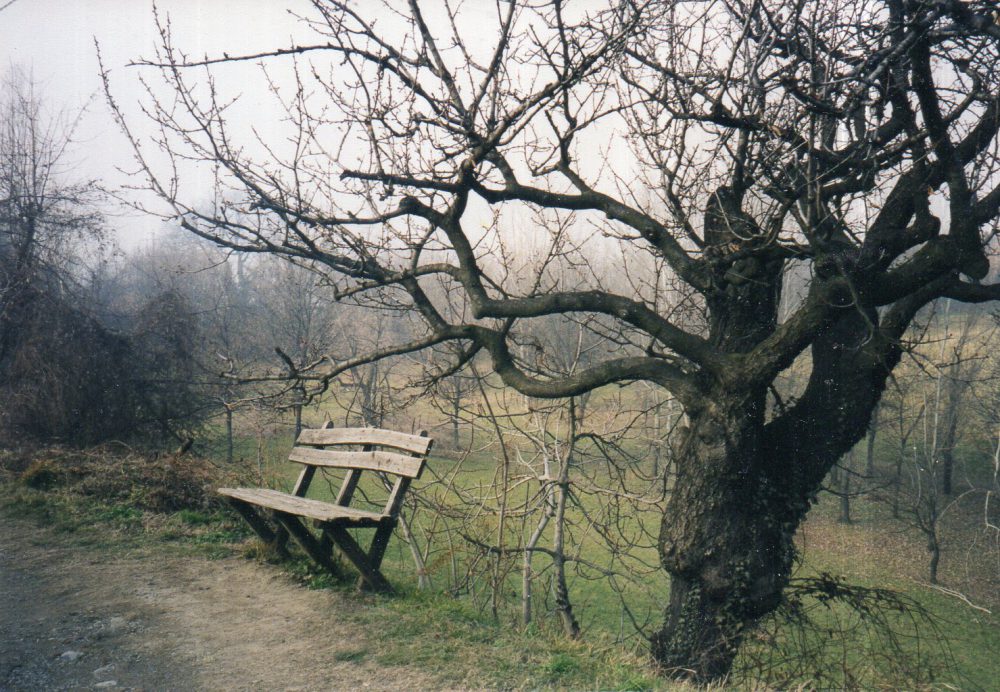
Heartwings Love Notes 2048: A Worthwhile Treasure Part Two

Heartwings says, “When something is outgrown, it must be left behind.”

I continued to go to church with both my mother and my father, until I went to college. At that point I went only when I was home and the rest of the time, I didn’t think much about religion or spirituality. I was busy growing in other ways, and then I met and married my first husband. We started a family, and soon with two little girls to care for, I forgot about my pursuit of spiritual matters.

Then my husband fell asleep at the wheel as he was driving home one night and nearly was killed in an accident. All of a sudden, I felt an urge to return to church. Yet I did not feel good about attending my mother’s church or practicing her religion. It simply did not suit me any longer. Like the clothing handed down from my mother’s friends’ children that I had worn as a child, it no longer fit. I looked for one but didn’t and then we moved back from Rhode Island and the army base where my husband was stationed. I found myself able to attend my father’s Episcopal church and did so, singing in the choir and eventually teaching Sunday School. I felt as though I had come home.

Beginning with The Hero with a Thousand Faces, I read Joseph Campbell’s wonderful books on mythology. They broadened my view of spirituality and I continued to search for books that would help me learn and grow. Someone gave me Brother Lawrence’s Practice of the presence of God. I was quite taken with the idea and decided to incorporate his practice of the Presence of God into my own life. I began by imagining that God was present for me where ever I was.

Brother Lawrence also introduced me to the idea that any kind of work could be a form of prayer. Until then I had associated prayer primarily with church, bedtime,  and emergencies.

Over many years I have come to understand more about the practice of work as a form of worship as well as of spiritual growth. Here is a tale that says more about that. This Hindu legend tells of an advanced student of spiritual wisdom who was sent by his master to visit a renowned teacher on the other side of a forest. He grew weary, sat under a tree and fell asleep. The twittering of birds woke him. Angrily he raised his hands and sent a bolt of energy at them. They fell senseless to the ground. He continued to the hut of the teacher and knocked on the door. No one answered. He tried again. Someone was moving about inside. “Anyone there?” he called out impatiently and knocked a third time.

“Young man,” came a voice from within, “I am only an old woman who has lived all my life here in the forest. You have studied great books, and you are even strong enough to knock the birds from the tree, but you will have to be patient with me. I am getting to the door as fast as I can.” The young man caught his breath. How could she possibly know what he had done in the forest? Realizing how much he still had to learn, he bowed his head and sighed.

Over many years, my understanding of this practice changed. Now I feel it is always possible to be in the presence of God.  If, as Brother Lawrence teaches, God is present everywhere in all people and things. How ever could I not be in that presence. Most think of prayer as a statement, in the form of a petition or perhaps a combination of praise and gratitude. For me prayer has become an underlying theme so that I frequently express my gratitude. Also, when a friend comes to mind, I bless him or her and send light to whatever situation he or she might be in.

May you find help on your path to light when and where you need it.

Blessings and best regards, Tasha Halpert

To be Continued

A poet and writer, I publish a free weekly blog, Heartwings Love Notes for a Joyous Life. My Books: Up to my Neck in Lemons, and Heartwings, Love Notes for a Joyous Life are available on Amazon. My latest publication available there is my first chapbook, Poems and Prayers, and I have two more in preparation. You can sign up for my blog at http://tashasperspective.com.

Heartwings Love Notes 2043 Gaining Independence

Heartwings says, “Independence is a goal to be sought after.”

My son Robin insisted on his independence almost from the time he was born. Some children are like that. He resisted attempts to keep him confined in any way, and it was challenging to try. As they say, the apple did not fall far from the tree.  I fear I was much the same as a child, though maybe not as emphatically. I know that to this day, I have a vital streak of independence.

From the beginning of my memory, I was raised to be strong, to not cry unless hard pressed, not to complain and to be as brave as I could. This may have been because I was the oldest and only child for the first eight years of my life. I well recall holding my father’s hands while jumping in the big waves at the beach where we stayed in my great aunt’s beach cottage. They were big waves, and we would stand in them, jumping up as they broke over us. It was exhilarating.

I wasn’t granted independence to leave the large property where we lived, but I could wander all over it, climbing trees and playing my games of pretend on the long summer days of my childhood. I remember one summer I would pretend I was the goose girl of the fairy tale by that name and let the six or seven geese had raised that year, out of their pen, herding them down to the little wetlands and back. I was always safe on the property, and my parents had confidence in me. No doubt that contributed to my sense of independence.

Sometimes this strong sense works to my advantage, and at other times it does not. It has taken me time to recognize that sometimes I really do need help, whether it is getting out of a car or up from a deep armchair or sofa. I appreciate it enormously when a dinner guest washes our dishes or helps with food preparation. I am learning my limits, something I am often loath to acknowledge and also learning to accept help graciously.

Sometimes it is entertaining to have a new way of doing something. When my daughter suggested I try it, I recently had fun riding the shopping cart at the supermarket. Maybe I’ll do that again, perhaps even next time and avoid getting so tired from shopping. Sometimes independence can mean freedom from discomfort and disability.

Independence can certainly mean many things. In some countries the independence of free speech, let alone freedom of behavior, does not exist. When this is threatened, it is important to take notice. As the saying goes, freedom is not free, it must be maintained. I still try to be independent, even as I also try to remember to ask for help. In addition, I try to remember to be grateful for the independence I still do have.  

May you find your way to whatever independence you wish to enjoy,

Blessings and best regards, Tasha Halpert

PS If you have comments or tales to tell, please share them. It is my joy to be in touch with my readers.   

A poet and writer, I publish a free weekly blog, Heartwings Love Notes for a Joyous Life. My Books: Up to my Neck in Lemons, and Heartwings, Love Notes for a Joyous Life are available on Amazon. My latest publication available there is my first chapbook, Poems and Prayers, and I have two more in preparation. You can sign up for my blog at http://tashasperspective.com.

Heartwings Love Notes 2031: The Virtue of Small Tasks

Heartwings says, “Where you put your focus is vital to your success.”

 My mother used to tell me she enjoyed hanging out the laundry because when she finished doing so, she felt as though she had accomplished something. It gave her a feeling of satisfaction. At the time I was buried in tasks built around mothering my five very active, very creative children and was happy to have an electric dryer to do the work for me.

These days after many years of hanging the laundry out on the various clotheslines or racks in the different places I’ve lived, I again rely on a dryer, though for different reasons. Due to my Parkinson’s’, the time it takes me to accomplish anything has quadrupled, or nearly so, depending on the task.

I can’t do much about this. There is truth in that half humorous Pennsylvania Dutch saying, “The faster I go, the behinder I get.” In other words, when I try to hurry what I am doing, I make foolish errors or mess up in some way that delays me even more. Sometimes I feel like the adolescent with poor proprioception that I once was, who used to drop things, bump into them, or stumble over whatever got in my way. Nowadays there is a word for that condition, back then I was said to be clumsy.

Instead, I try to bring my attention to whatever I am attempting. It helps me when instead of allowing myself to be distracted, I focus on that and that alone. However, what I find to be the most useful are the small, daily chores I once hurried through in order to “get things done.”

I have made peace with tomorrow, recognizing that unless there is a hard and fast deadline, most things can be delayed without problems or harm. In addition, I get training in letting go of the ego satisfaction I used to derive from being efficient. The difficulty with ego satisfaction is that it’s distracting and not necessarily helpful.When I seek satisfaction as a goal, instead of a focus on accomplishing the task, it really does take away from my ability to function efficiently.

In trying to satisfy my ego, I’m not as able to pursue the best way to get something done. It’s easy to miss what works best when you are looking for what feels good to you. I’ve also noticed that these days, for many, faster seems to equate to better. No craftsperson worth her or his salt feels that way. I am reminded of the film The Karate Kid about the martial arts student whose teacher instructed him, “Wax on, wax off” as he worked on a car.

There is also the saying, “Chop wood, carry water,” a Buddhist perspective in reference to every day accomplishments. It’s all really about doing what is there to be done, the best way you can. Small tasks done with loving attention are as worthwhile as great accomplishments, however they are done.

May you find joy in whatever task you are pursuing.

Blessings and best regards, Tasha Halpert

P.S. Do you have any hints or helps along these lines? I can always use good ones, and I so enjoy hearing from readers. Reach out to me at Tashahal@gmail.com, and sign up for more Love Notes at https://tashasperspective.com/Pujakins.  

Self Care Matters

Heartwings Love Notes 2020 Self Care Matters

Heartwings says, “Caring for yourself is as important as caring for others.”

When I was very young, because I was taught by my needs to eat and sleep, I learned a way to care for myself. Then I learned to care for a pet, and even my stuffed toys and dolls by putting them to bed or picking them up. My caring became increasingly focused outward. There were relatives, friends, people who worked for me, and others to whom I, as their relationships to me evolved in my life, brought various degrees of caring. In a lesser way I also learned to care for a home and a garden.

I moved from single to married and became a parent. Eventually I had five children to care for and spent my time caring for them and for their father. The period of being a parent has no real end, but it changes as time goes on and the children became independent. I continued to care for friends and relations, and my satisfaction with my life and what I did grew to become a chief source of my pleasure and happiness. It feels good to do for others, and like many if not most I was taught to do this from the time I was young.

What I have recently realized is that in all the situations I have mentioned, my caring was directed to someone or even something outside myself. I was taught to put others first, take the smallest piece of cake, show others I cared about them by caring for them. However, as a result of my current physical condition, I have had to devote more and more time to caring for myself. I even frequently have to ask for help from others—usually my kind husband, for help with things I can no longer do myself.

I’ve also learned I need to be much more patient with my inabilities. When I was growing up, I was taught to be strong, not to complain, and to be almost fiercely independent. None of these attitudes serves me now. Quite the contrary. If I don’t ask, or even complain, no one will know what I need. When I need help, I must speak up. This means admitting to an inadequacy, something I never used to like doing, and still at times find it difficult to do.

I have learned one way to care for myself is to ask for help when I need it. Another is to do my exercises each morning, try to get out for a walk, eat nutritiously and avoid sugar and rich food. Getting enough sleep is important too. I am learning to be patient with what I cannot accomplish, put up with piles as yet unattended—mine and Stephen’s, and allow more time to get things done. All this and more is a part of caring, with me instead of another as the recipient. Now it is my time to be happy and to feel good caring for myself.

Enjoy your caring as you offer it, but remember to give it to yourself.

Blessings and Best regards, Tasha Halpert

PS Your comments and questions are precious to me. Please chime in.

Reaching and Grasping

Heartwings says, “It is very helpful for one’s reach not to exceed one’s grasp.”

Reaching for things is somewhat more challenging for me than it used to be. I am often faced with the need to ask for help. Fortunately, Stephen is usually available, and though he has also shrunk, at least he is much taller than I am.  Sadly, I have diminished from five feet four inches to five feet one and a half or maybe two. In addition, I have lost flexibility. Asking for help is getting more necessary, and I am getting more used to doing that. It seems there is always more to be learned.

In a yoga class and lecture that I attended many years ago now—yet somehow it seems just a year or two have past, the visiting sage told us this. “My mantra is I know nothing; I want to learn.” I balked at first at the seemingly negative affirmation. Affirming I know nothing? That didn’t sound right. But affirming I wanted to learn, did. So, I gave the whole sentence some thought.

Eventually, light descended upon my brain, and I finally understood. This sentence describes what is called Beginners Mind. What that means is that at the beginning I expect to learn, so it is important not to cloud the mind with what I think I might know. When I think I know something, my mind does not generally seek more information.

If I think I have grasped whatever it is I need to learn, I most probably will no longer reach out further with my mind. It is more important than you might think for your grasp to exceed your reach. Because there is always more to be learned, whether it is the how-to of a project, the pitfalls, or else the simple understanding or a further interpretation of what something might mean. We cannot always know how much more there is to know. 

When I look at each day with a beginner’s mind attitude, there are wonderful conundrums that arise. They give me something to think about other than the dismayingly negative tales of misbehavior that often comprise the daily doings of the world at large. The arguments and disagreements people have that stoke violence could so often be resolved by a better understanding or even a simple agreement to disagree.

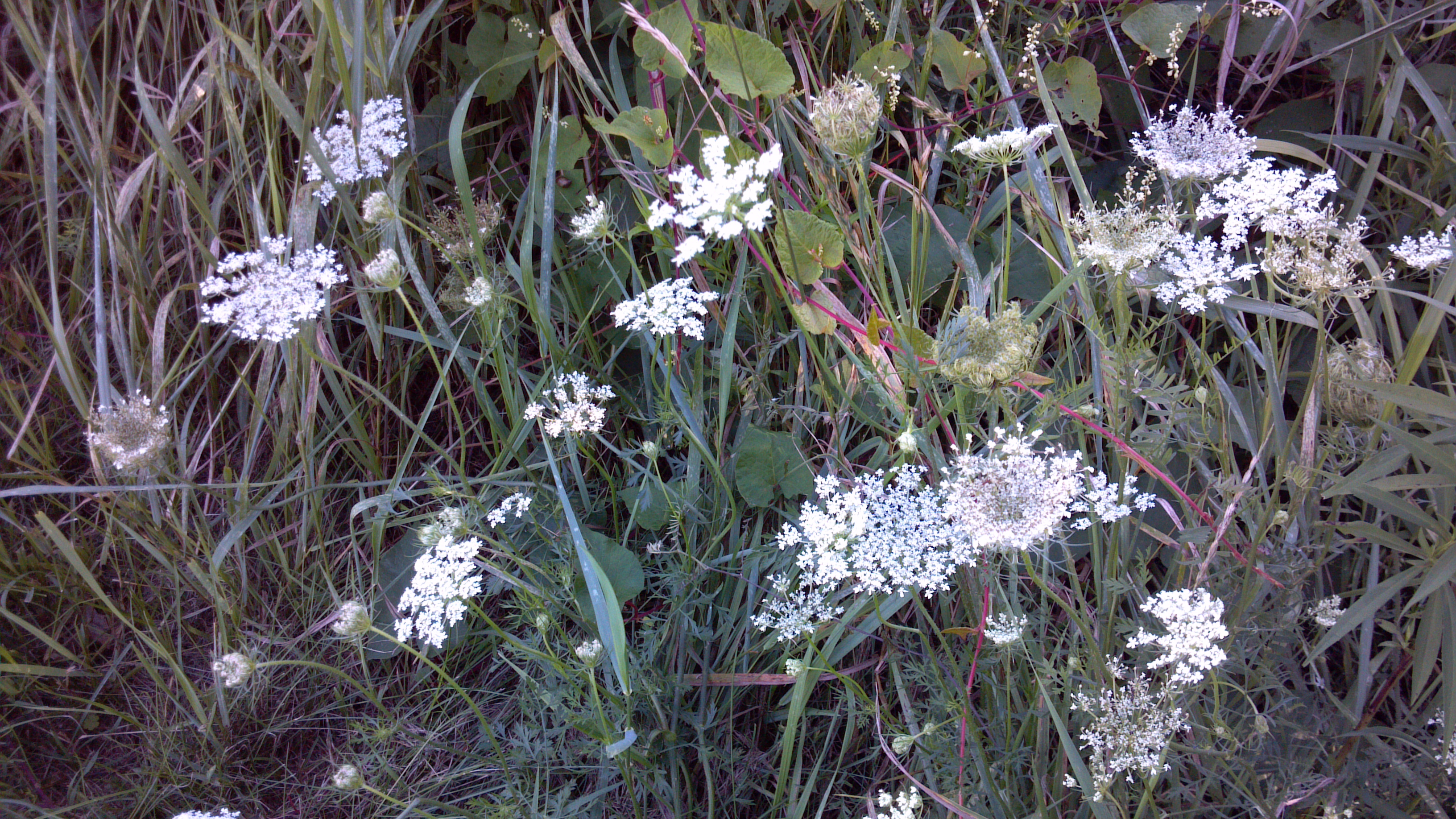
For me the world I live in is filled with interesting experiences to be explored with discoveries to be made along the way. Perhaps because I am a poet, I especially delight in finding beauty that has simply created itself. The lovely weeds right now along the roads, waving in the breezes from passing cars, are a delight to be seen. The delicate Queen Ann’s lace, mingled with the tall, graceful Artemesia are probably destined eventually to be cut down, yet each day they remain, they fill the eye that gazes upon them with their beauty. I am grateful to be able to see them and to find something so special within my grasp.

May you be able to look upon life with a beginner’s mind.

Blessings and best regards, Tasha

PS Do you have comments, questions, or stories to share? I would love to hear from you, and I find great joy in your correspondence.

Heartwings Love Notes 1088: A Rare Day in June

Heartwings says, “To enjoy the moment is the best gift one can give oneself.”

As I drove around doing errands my eyes kept being drawn to the beautiful blossoming trees and bushes on local lawns and roadsides. The town I live in is filled with beautifully kept homes and gardens. People take pride in the appearance of their homes and everywhere you drive in Grafton there is beauty to be seen. As I drove, I thought how eloquently the green grass, the freshness of the leaves, and the tidy gardens spoke of the loveliness of the beginning of summer. It is nearly time for the solstice. June 21 will bring the onset of the long hot bright days of June, July, and part of August.

When I was a child, I could hardly wait for the wonderful summer days: free time, swimming, sitting in my favorite tree reading, all these activities and more awaited me. As a young adult with my children in tow, on any sunny day I headed for the beach, meeting friends and chatting over iced tea as we watched over our little ones. However, as an elder, I confess that I cringe at the prospect of the long, hot days. The heat of summer robs me of my ability to think and makes it harder for me to sleep at night. I have to lurk indoors with the air conditioner going, hurrying out of the house for an exercise walk either first thing in the morning or later on toward sunset.

Too, the sun is not as benign as it used to be. The thinning of the atmosphere due to global warming has increased the potency of the sun’s rays, necessitating cover-ups and hats, not to mention sunscreen and sun glasses. Remember how we all used to rush out to get a tan at the beginning of summer? The “healthy tan” we all used to crave is less desirable now. It’s almost as though we need to go back to Victorian times when pale skin was a sign of beauty. Now it could be a sign of care for one’s health. I remember when I was in college skipping a class I disliked to sit out on the porch roof with my friends so we could “work on our tans,” as we used to say. The idea was to increase the effect of the sun with tanning lotion rather than block it with sunscreen.

I regret that the onset of the summer heat and more especially the humidity takes more out of me than it used to do. I’d love it if I had a personal air conditioner, I could wear around my neck that would provide me with a cooling breeze when I need to be refreshed from the heat. Even so, there are some delights that nothing can spoil. Yesterday, as I walked past a wild rose bramble my nose caught the sweet scent of the tiny white blossoms snuggled into some trees by the side of the road. I stopped and inhaled, taking time to smell these very special June treats. The present moment joy is what matters, not the prospect of discomfort. At least I have the benefit of the air conditioner in our apartment. Indeed, what is can possibly be so rare as a day in June when it brings me gifts like the wafting glory of these tiny June treats.

May you enjoy all your good moments and ignore your less than good ones.

Blessings and best regards, Tasha

What is your favorite aspect or experience of June? I’d love it if you’d like to share it with me. Your emails make my days special. Thanks in advance. For more Love Notes, check out From the Poet’s Heart at https://tashasperspective.com.

Little Pleasures Gone Missing

Queen Ann's Lace with BindweedThe daily and weekly routines Stephen and I once had have been lost to the Covid 19 virus. Things we took for granted–trips to the library, going to the movies, eating in restaurants, and more have all been sacrificed to our safety. We must avoid exposing ourselves to a virus that can take a life with one simple breath. Although I have been alive for many years, this is like nothing I have ever experienced. I find it remarkable how my life has changed from what it was a mere few months ago. If you had told me last fall what my life would be like today, I might not have believed you. I certainly could not have imagined it.

I did have peripheral experience with a polio epidemic when I was growing up. I remember summers of rampant polio cases in the 40’s. Prior to the vaccine that eradicated poliomyelitis, many children succumbed to it. There are still adults today with legs crippled from polio as children. One of my sixth-grade classmates caught it. As I recall he was paralyzed and placed in an iron lung. I have a memory of seeing him in it, only his head visible. One parent I knew wouldn’t let her children drink any water that wasn’t bottled. She even made them brush their teeth with bottled water. Children, who were especially vulnerable, were supposed to avoid the beach also, though I am not sure why. Perhaps it was for the same reason we avoid crowds today for fear of Covid 19.

Losing our small pleasures is an insignificant price to pay for staying safe. Wearing a mask in public is a courtesy Stephen and I are glad to practice. It is like saying, “I care about you, stranger, and I want us both to stay safe. How long will it be before Stephen and I go to a movie theater again? I have no idea and I won’t even try to guess. The Spanish flu of 1918 took many lives and lingered even into i920. My own grandfather died from it. My grandmother, as was the custom, wore black for seven years. My mother told me that was the reason my father never wanted her ever to wear black.

It is strange to me that the tenor of our days has so altered. Before the onset of Covid 19, My life held few surprises. I never thought twice about going to the library or to a movie—and suddenly, I no longer could. It was just not there to do. Fortunately for us, Stephen has collected a quantity of videos o all kinds, and we could even make our own popcorn if we wanted. Yet I have come to understand that it’s not the film but the experience: going to the theater, sitting with others laughing or weeping, that I miss. I can get takeout from a restaurant, but I don’t get to hear the other diner’s murmur of conversation or get to chat with the waiter. When the day comes that we can mingle freely, without face coverings or fear, I will rejoice. Until then, while I may mourn my missing enjoyments, I’ll not risk my life for them.

The Blame Game

Roots and light When I was growing up it was my responsibility to care for the chickens. In the winter what that meant was carrying a heavy bucket of water from our house the thirty or more yards to their coop. The spring I was twelve the wetlands near the coop flooded and there was plenty of water right there. I took advantage of it. However, something then happened to the chickens. They began dying. Apparently, they had somehow caught a disease.

My parents called me into the living room. They were sitting on the sofa looking stern. They asked me if I had been doing anything different for the chickens. “No,” I lied. Then they faced me with the evidence. My great aunt’s gardener had seen me getting the water from the swamp. Uh oh! I don’t remember my punishment—probably a suspension of my allowance. Sadly, I didn’t really learn my lesson then, though eventually I did. I was often too fearful of the consequences to tell the truth.

Many if not most of us are. The vase is broken, the favorite toy ruined, the car dented and we hear: “He/she made me…”  or “I couldn’t help it.” Heard that before? This familiar copout is often every child’s first response—except perhaps for, “I didn’t do it.” How do we teach children to take responsibility for their actions? It isn’t easy and every parent has his or her idea how best to accomplish this. Sometimes they manage to make that happen, and the child grows up to be a responsible adult.

However all too often even as adults we are reluctant to take the responsibility we need to for our own actions. We may be afraid of the results when someone finds out. I know often I was, or we may not want someone to think ill of us, as in “how could I be so stupid as to make that mistake?”  There are as many reasons as there are situations. The bottom line is that we do not like to admit to being ill advised, ignorant, or just plain absent of mind.

Blaming is something many do when they want to get out of a situation where they feel trapped or one that will lower their value in another’s eyes and mind. The problem with playing the blame game is that not only is it dishonest, it is also unkind to the person or persons we may be blaming for our mistake.

I learned to own up to my responsibility only as an adult. My husband Stephen was actually the one to help me to do this. He would not allow me to get away with evading it, and he would make sure I was ultimately honest. I’ve learned that honesty really is the best policy when it comes to admitting to wrongdoing. Feelings of guilt are thereby avoided as well as other consequences that may arise when and if the truth emerges—and all too often it will.


Competition Versus Cooperation

chickens.jpgI’ve never been a competitive person. Usually a sense of competition kicks in around the age of four, when a child gains a clear understanding of “me” and “mine.” Even then there is often a desire to share unless the child is surrounded by competitors. When I was growing up competition was the rule and the idea of a game that required cooperation instead was unknown. I did not enjoy the competitive world I grew up in.

Even as a child I disliked competition in sports. One reason was that I wasn’t very agile or well-coordinated and thus most often chosen last for any team. Another was that it made me sad that someone had to lose in order for someone to win. I played board games yet not with a keen desire to win. For instance, Parcheesi which was a popular game when I was young was best won by blocking opponents and rendering them helpless. I never enjoyed doing that. For me, that was like punishing someone or hurting them.

My mother was a fierce competitor. She loved games and was good at them. She played Bridge and Mahjong with her friends. With me she played card games and Chinese checkers, which she played without mercy, making no allowances for youth or inexperience. She played to win, regardless. As a result, I did learn to play a good game of Chinese checkers. Fast forward to my adulthood. I still resisted competition when I could. Unfortunately, my children invariably made me enter the tired Mothers Race at the fourth of July games. in the town where they grew up. I came in last no matter how hard I tried.

My children’s father was very competitive. He encouraged the children while they were still quite young to play on teams and to compete. He even started a girls’ softball league in the town where we lived.  My daughters and then my sons all strove to do well in order to make him happy. He cherished their ribbons and trophies and often coached their various teams to victory. As a loyal mom I used to attend their tennis matches and their and baseball and ice hockey games, cheering along with the other parents and trembling for fear they would lose and be sad.

Regardless whether or not they won, I was glad whenever the games or matches were over. Certainly, my children learned much from their years playing tennis, hockey, and baseball. They had fun and met other children they would not have met otherwise. I am not regretful for them, though I do feel there are other ways to have fun that they might have enjoyed as well. I was too busy keeping up with household and child caring duties to do much about that.

Competition is said to be a good learning experience for children. Today even little ones barely out of toddler years are put on teams to play at various sports. For competitive people that’s good. For those like me, not so much. On the other hand, it is possible to play games in the spirit of cooperation. Team efforts in sports are only one way. There is also a cooperative way to play many games, and that is to play to see how high the score can rise. Scrabble can be played that way, and I know that’s how I would prefer to play it.

Agreeing to Disagree

2014-09-16 15.36.53My parents frequently discussed decisions, disagreed often and usually did so at the tops of their voices. They were a fiery couple and yelled their feelings vociferously. We did not have any neighbors nearby and no one could hear them but me. Though there was never any physical violence between them, I do remember the day my mother hurled a plate of scrambled eggs at my father. He ducked and it sailed into the closed window behind him, breaking through it, to land and shatter on the stone terrace beneath, breaking through the wood.

Their fights were scary for me. As a young child I found their loud discussions difficult to bear. I vowed I would never do that to my family. When I married my late first husband it was with that thought in mind. I worked extra hard to keep the peace. I made sure we did not fight or even disagree  in front of or within hearing of our children.  Also, he was not one to express his feelings anyway. Actually, he did not like to discuss them at all. He made the rules. Our marriage did not survive the rough waters of silent dismay and disagreement.

When Stephen and I first got together I told him that if our relationship were to last it must be based on honesty. As I explained it, what that meant was that when one of us had negative feelings to express or was uncomfortable about something, that person must be able to talk about it freely. He agreed to this and our relationship just passed its forty second year.

Very rarely have we had what could be termed a fight. We do bicker, and we do discuss, and sometimes we need to just say, “I hear you,” and let it go.  No matter how much you may love them it is impossible to agree on everything with one’s loved one. For instance, Stephen finds it easy to ignore his piles of various possessions, clothes, papers, etc.. He doesn’t care how much they accumulate and though he may try to be neat, it’s just not one of his priorities.

We differ radically on this. To my way of thinking , insofar as I am able, to arrange it there’s a place for everything and everything goes into its place. This often creates opportunities for discussion between us. However, because frequent communication is the bedrock of a good relationship, this is good. Talking about how we feel keeps the feelings from piling up and becoming negative behavior. Mutual respect keeps conversation civil, and when we agree to disagree, love prevails and so does harmony.

Though you may not agree with everything a loved one says or does, when you love him or her wholeheartedly you can respect his or her opinions enough to allow him or her to keep them. That does not mean there is nothing to discuss. That discussion is the glue that keeps rhe relationship together. It is important to express your own feelings as well as to allow those of your loved one to be heard. Most importantly, it is vital to speak with tact and gentleness rather than sarcasm and bitterness. The eyes and ears of love are kind.