The Wonderful Jacket

Tasha in hood 2Those of us who come from New England are familiar with Yankee thrift: use it up, make do, or do without. I am of a conserving nature, having in addition to a Yankee father, a German mother born at the outset of WWI. Nothing was ever wasted in the house I grew up in. I thrived on hand-me-downs and thrift shop finds. Over the years I have accumulated clothing items I am happy to see again when their season rolls around. I often develop a fondness for clothing that has served me well.

Recently as I pushed my wagon through the aisles of a grocery store, I saw a woman standing by the meat counter in a unique and lovely white furry jacket. “I can’t resist telling you I think your jacket is magnificent,” I told her. She laughed and said it was from the 70’s, yet she could never bear to part with it. “Nor should you,” I replied. We each continued on our way, pushing our shopping carts in opposite directions.

I smiled to myself. I was wearing a jacket I have had for close to thirty years. It is a fairly ordinary, black, nylon one, with some very useful pockets. Black fur edges the hood. It is warm and comfortable, and probably unremarkable as jackets go. However the story of how I acquired it and what has been done to it since makes it special.

On a trip to the Cape many years ago, Stephen and I were in a consignment shop, poking around. I saw the jacket hanging on a rack, and figured I might be able to use it. I took it down, intending to try it on. “If you can zip it up you can have it,” said the woman behind the counter. I looked down at the zipper and saw that it was slightly frayed on the bottom and could be a bit challenging. When I tried it on I liked the feel of the jacket and resolved to see if indeed I could zip it.

Very carefully I inserted the frayed end into the metal slot and continued to be careful as I zipped it all the way up. The saleswoman was good at her word and gave me the jacket without charge. In the ensuing years I went on zipping it up carefully until finally one year I invested in a new zipper. Along the way parts of the jacket lining began to wear out. I was fortunate in having friends who at different times were able to repair the worn places in the lining so that it looked almost new.

Now when I put on my wonderful warm winter jacket I remember my friends and their generous work on my behalf. I also think how fortunate I was to have found it, been able to zip it up and to have it still after all these many years. What keeps me warm in it is more than the lining or the material, it is the memories and the love of friends that has been sewn into it. How could I ever part with this jacket? I believe I never could, nor do I ever wish to.
 

Giving Thanks is not just for Thanksgiving.

Deb's party food 2When I was growing up we usually said grace only at Thanksgiving, Christmas or on other very special occasions. I don’t remember any special discussion of gratitude in my family. God was often presented as a punitive figure, rather like my dad—as in or God will punish you for that, see if He doesn’t, and “Just wait until I tell your father what you did…” The church I grew up with emphasized being sorry for one’s sins and saying prayers for the protection and preservation of my family and myself. All that changed when I was in my mid thirties and I learned about the virtue of gratitude and its importance for a happy life.
I began giving thanks on a daily basis after a phone conversation with a wise older friend. She told me that rather than complain about what I thought I was lacking, I needed to be grateful for what I did have: good food to eat, a roof over my head, a comfortable bed to sleep in, warm clothes to wear, and so on. She reminded me how important it was to give thanks for the simple yet necessary blessings most take for granted. I believed her. Now these many years later, I am very grateful to her. An attitude of gratitude leads to true happiness.

When we focus on whatever there is in our lives that brings happiness, healing, kindness or friendship we are emphasizing that aspect in our lives. When we complain about our difficulties we are focusing on our lacks and our problems, most of which we can do little to nothing about. There is no happiness in dwelling on our misfortunes. When we do emphasize what is good in our lives it seems magically to increase. Giving thanks for that which we have as well as that which we do not have is an important key to a good life.

Gratitude for the bounty in our lives has been the theme of harvest celebrations throughout the ages. The Pilgrims did not host the first Thanksgiving ever, just their first one here in this country. Giving thanks to a higher power is common to nearly every religious or spiritual path. Most have some kind of ceremony to honor the powers that be that provide them with support and sustenance. After all, if the rains do not fall or the sun does not shine our food will not grow. Not a gardener myself, I know how grateful I am to the market and the farmstand that provide me with good, fresh food.

More than anything else I am grateful for the love that has come to me over the years. I have been extremely fortunate in the people I have met and with whom I have had the opportunity to interact. My friends, past, present and even future are important to me. I am thankful for each and every one. While some of those for one reason or another have vanished from my life, the experience of their past love remains to bless me with its warmth and the joyful memories of our happy times together. I am grateful for that good and for the dear ones still in my life.

Lenten Discipline, Spiritual Discipline

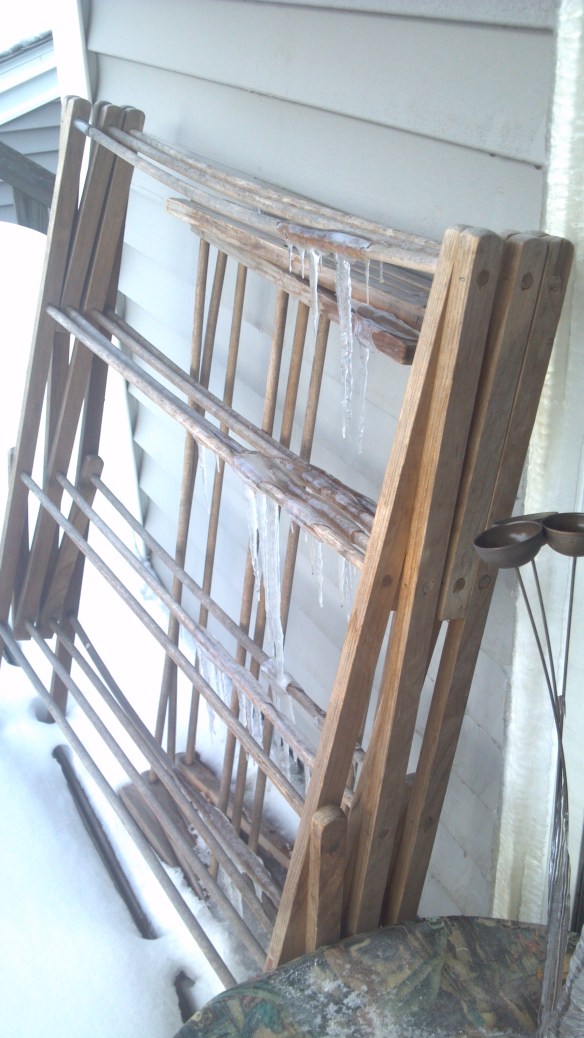
icicles-2Regardless of one’s spiritual orientation, self-discipline can be helpful to one’s personal growth. In the days before supermarkets or even grocery stores, for people in spiritual or religious communities or congregations to find enough to eat in the latter months of winter could be difficult especially in the six weeks before Easter. The Christian religious institutions of the day dedicated this time, known to Christians as Lent to the spiritual practice of fasting. From a practical standpoint, this extended what supplies remained. It also provided a spiritual bonus to do so. Making a virtue of necessity, the Lenten observances of the past centuries helped individuals get through the scarcity of food.

When I was growing up of course food was abundant. Fasting certainly was not a necessity. I was taught that the way to fulfill my Christian Lenten obligations was to give up something I might enjoy eating. I was told that fasting wasn’t just about going without a meal or not eating meat; it could mean giving up chocolate, or ice cream or sweets in general during Lent as a discipline instead of not eating meat on certain days or whatever else might be considered appropriate.

My great aunt Alice was a woman of character and community mindedness. She was a great believer in doing good and volunteered in a number of organizations as well as gave generously to charities. She had a different approach. She believed in taking on rather than giving up something during Lent. She would assume extra volunteer work or make a special effort at that time to visit elderly or invalid family members or friends.

I have come to believe that my Great Aunt’s idea of a good Lenten discipline is more meaningful as a spiritual practice than giving up desserts or candy. However, I am not one to visit the sick, nor am I usually involved in any community activities of a volunteer nature. Instead I believe that for me to fulfill the spirit of this period I can take on a practice of deliberate focus: to enhance my awareness of gratitude and of opportunities for me to give. I can become more mindful of my blessings, spend more time acknowledging the kindness of friends and family, and be more aware of whatever opportunities may present themselves for me to be kind and thoughtful to others.

Self-discipline can consist of an act of rigorous denial or of observing and then acting as might be appropriate. One can lead a spiritual life whether or not one has taken vows or lives within a specific religious or spiritual setting. If my Lenten practice becomes a habit or enhances my ability to be more mindful, that will do me more good than giving up candy. In the process it may also help me to be more aware of when I can do someone a kindness. By prioritizing these attitudes in my everyday life, I can enact a Lenten discipline that will do more good in general than simply fasting from anything I might enjoy eating.

After the Gifts Are Unwrapped

gifts-4  In days gone by when my children were small and Christmas was something of a big production, by the evening of the 25th everyone was satisfied to play with his or her toys, eat the festival leftovers and chill out. It was then that I would take my guitar in hand and drive with it to the Beverly hospital to play for the patients. I was a regular volunteer there so I would don my pink volunteer jacket and go around to the wards and private rooms to play Christmas music together with my usual folk tunes.
During my time in Manchester-by-the-Sea I used to play my guitar several times a month and sometimes even more often for the patients who were well enough to be listening. However I did have to be mindful of my lyrics. This being in the days of Pete Seeger and the Weavers, my repertoire consisted mainly of traditional folk songs, some of which had lyrics that might not sound cheerful such as: “Go tell Aunt Rhody the old gray goose is dead,” or one that began “When I’m dead and buried, don’t you weep after me,” a rousing spiritual that was great fun to sing as long as I omitted the first verse and went right into the body of the song.

On Christmas night I felt as though with all the visitors having gone home by then, the patients could use a bit of cheering up. After all, the visitors were returning to their families and friends while the patients were still in their rooms or wards and perhaps more aware of being there than usual. It was heartening to see the welcoming smiles on their faces and to receive their enthusiastic approval. More than once someone who had been relatively comatose would actually clap their hands and manage a smile.

Today my children are grown and gone and my family is for the most part scattered far and wide. Holidays are quieter. Nor do I play my guitar any longer, though next year I hope to have learned some carols on my new harp. However, I don’t expect to be singing them in a hospital. Life brings changes, some welcome, some not so. The happy memories of Holidays past become gifts to cherish with joy, more so perhaps than any other gift beneath the tree.

Now that the presents have been opened and our holiday meal consumed, I find myself reminiscing to myself over past holiday celebrations. I note familiar faces that have moved on from my life. Some still walk this earth others do not. I am reminded of the places where I have lived in the past and see again the rooms as well as the homes that hold the memories of holiday times. Each year holds its blessings. I am grateful for each and every one, and most of all I am grateful to be able to celebrate with joy the love that flows to me from those who each year remember me.


Full of Thanks and Grateful to Be So

family-dinner-2

A Family Gathering several Years Ago

Thanksgiving is a nonsectarian holiday that most of us can celebrate. I remember in school it centered on the Pilgrims. In first grade we made pilgrim hats and talked about how they lived. Today as a result of our treatment of the indigenous peoples since the first US Thanksgiving, the stories I grew up with have changed somewhat. However since time began harvest festivals similar to our Thanksgiving have been universally celebrated. Throughout the history the expression of gratitude for whatever constitutes our abundance endures.

I wasn’t always aware how important it was to be grateful. To be sure, I was brought up to say thank you when given a gift and often to write a letter of acknowledgment to the giver. However, having an actual attitude of gratitude, as the saying goes, was foreign to my thinking. I can remember my mother saying things like: “Finish your liver, there are children starving in China who would be happy to have it.” Of course, the thought that goes with that is, well send it to them then, however that would have been considered a rude remark and would have merited disciplinary action.

As a child, like most I took my safety, my freedom from hunger and cold, and my warm surroundings for granted. I was sheltered from the knowledge of others’ circumstances; then, the only source of outside information besides the newspapers was the radio. I knew much less about the world than children with access to TV and the Internet do today. Whether that makes one more or less apt to be grateful is moot. It might make an interesting study. However most probably even today gratitude is something we become aware of only as adults. It is very easy for children to take their blessings for granted.

My change of heart began with a simple prayer given me by someone I met only briefly yet who had a profound effect on my life. I was complaining about my circumstances when she corrected me. “Rather than bemoan what you don’t have, rejoice over what you do.” She suggested I repeat three times a day, “Beloved Lord I do greatly thank Thee for the abundance that is mine.” The phrasing can be changed to suit those who have a different belief system to honor whatever higher power they may acknowledge–Divine Providence, the Goddess, Mother Earth and so on.

Oddly once I began to do that, my abundance began to grow and has continued to do so. On another occasion I briefly met a wise woman who among other things, told me to take nothing for granted. I took her advice to heart. As I have continued to be grateful even for simple gifts and to acknowledge my little blessings, they have continued to expand. Eventually I even learned to be grateful for difficulties and disappointments because of the opportunities to learn and grow they provided. At this Thanksgiving as always I will sit down at the table with a heart full of gratitude, and for this I am exceedingly grateful.

Tasha Halpert

Cherish Every Moment with Loved Ones

tashas-birthday-party-at-dianasI remember going to church with my mother on Sundays, and how uncomfortable the kneeling benches were. She was a devout Catholic and thought God would punish her if she didn’t go faithfully. As a result we went to my father’s church, an Episcopalian one on special holidays only after we went to early mass at my mother’s church. My fondest memories of her are centered on Christmas eve when she played her violin and we sang carols in front of our tree.

While I do have many memories from my childhood I wish I had more. I can remember my late mother telling me stories about things that happened or that I did that I had no memory of, but that she had cherished herself. Children do not realize that things will change, that what is will not be there forever and must be noted or it will be lost.

The other day Stephen and I were out with my daughter and her fiancé for dinner and a movie. As we sat over pizza afterward, I thought to myself how wonderful this all was, and how much I was enjoying it. I reminded myself to cherish the moment. We never know when something will end, or at least change so that it is no longer available. I did not always feel this way; it is something I have learned from experience.

When my children were little I was a busy mother with five young ones and a husband who traveled on sales calls. When I look back on our lives together I realize my mind was too filled with thoughts of all that I needed to do to be present with them and what they were doing. I know I missed much of what I would cherish now if I could remember it. This is a lesson that can only be learned from experience.

I realize how much I may have missed in my life by not being present. A friend once said to me, “I always take special care to enjoy myself at your home because then when things change I will have no regrets.” We moved away and she went back to South America; we have lost touch. Most likely I will not see her ever again, yet because of what she said she has a presence still in my heart. When I see again someone that came to our home years ago for gatherings or classes and remembers us, and it makes me glad.

Recently I have lost a sister and a sister in law to death as well as a number of friends and acquaintances. At no time did I know when last I was with that person that I would not set eyes on her or him ever again. I am aware more than ever that when I am with someone I know, and especially someone I love that it is vital to be mindfully present, or I will miss out and regret that I did not take advantage of the time I had with him or her. Change is the law of life; nothing stays the same. Every moment is precious, most especially when we are with those we love.


An Attitude of Gratitude

Fall Maple Gold 2            When we first moved to Grafton I knew nothing about the surrounding area. We were back in New England because we had moved up from Virginia where we had lived for the past seven years, to be closer to family. A friend who lived in the area and liked it, had invited us to check it out. She helped us find a real estate agent, and we fell in love with a house in Grafton. Soon we met and became friends with an artist who lived in Worcester.

She offered to show me some of her favorite spots in and around the city. She and I spent the next months tramping around in the woods with her dog as we picked raspberries, blackberries, swam, and simply traipsed through in her favorite little wildernesses. It was a wonderful experience for which I am very grateful. Although I don’t see much of my friend these days, my memories of our adventures in the nature spots she showed me still warm my heart.

In my life there is much that has vanished away. As I have grown older I have lost friends and family members. I live differently now than I did twenty or even ten years ago. Of course all of this is appropriate. However when I was growing up and even in my early adult years I had no concept of the amount of change that I would live though. Were I to be regretful of these changes I might be filled with bitterness and sorrow for what no longer is part of my life. However, I do not choose to do that. I have too much to be grateful for.

When I was growing up Thanksgiving meant gathering with family at the home of either my Great Aunt of my Grandmother. I don’t remember anyone suggesting we speak about what we were grateful for, though of course someone always said Grace, a prayer of gratefulness. In those days I didn’t think much about gratitude. I was too busy caring for my home and family.

When I was in my early thirties I was invited by a friend to go to a conference where I met a remarkable teacher. She introduced me to the concept of expressing gratitude for those things in my life that I needed to be grateful for. I began then to practice my attitude of gratitude, and for many years I have said a short prayer of thanks whenever I am grateful. Some years later I had a houseguest who expressed gratitude toward his various and tools. I found this intriguing and as time went on have done this also, thanking my car for a safe journey, or my computer for helpful performance.

In a grateful heart there is no room for regret or resentment. My attitude of gratitude changed my life for the better and continues to enrich it today. The more I remember and express how grateful I am for the richness of my life and the joys that fill it, the less I miss what has passed from it. This year, on Thanksgiving as always I have much for which to be grateful, yet during the rest of the year there is no day on which I do not give thanks over and over again.


The Wish I Coulds by Tasha Halpert

Kathy's Kitchen Baskets I’m not sure why I was so uncoordinated as a child. Perhaps it was because I was tall for my age and my physical development had run ahead of my ability to manage it. I was fine riding a tricycle. Then came a two wheeled bike. Over and over again I fell off. It didn’t help that my bicycle seat was loose and kept wobbling, and that the sidewalks where I had to ride were bumpy. Once on the way to a friend’s I fell off and hurt my knee. A kind person stopped his car and brought me home. My parents thanked him, then after he left they scolded me for accepting a ride from a stranger. Perhaps they were right to do so, however I thought the man seemed nice, and I was scraped up and bloody and my knee was painful.

Even as an adult I had problems riding a bike. I’ve never known why it was so difficult for me when most people seem to have no problem doing that. I rode it to keep my children company until I finally twisted my front wheel, making my bike inoperable. I was secretly relieved. Skating too was difficult. I wanted to be able to glide over the ice, yet I had to be content with a few simple turns around the rink before my ankles became to painful to continue.

There are other things I always wanted to be able to do and never could, like run fast, or hit a tennis ball with accuracy. I had tennis lessons to no avail. The sailing lessons I took one year were a disaster. No one wanted me to crew with them because I kept getting my directions mixed up. School sports were a torment because I was so uncoordinated. It was difficult always being chosen last for any team regardless of the game being played. The people who were good at sports were always the popular one. In some respects my childhood was one long “wish I could.”

My hand-eye coordination seems lacking. Drawing presents another obstacle. I can draw what I might be looking at, and I enjoy sketching, but drawing from my imagination presents a problem. No matter how hard I try I can’t seem to transfer what I might envision to paper just the way I see it. And then when I manage to come up with something I like, try as I may I cannot reproduce what I have drawn so that it looks even remotely the same.

Do I sound like I am complaining? Perhaps I am. However, it is also true that there has been compensation for what I have I lacked. In my solitary childhood I read avidly and thus developed a large vocabulary. My vivid imagination helped me to write stories and poems and still does. Spending time outdoors by myself I learned to love nature and nature comforted me. Perhaps most important of all I developed compassion for those who are limited or unable to do as they wish. There are still things I wish I could do, however I recognize that they are not nearly as important as the things I can do, and for these I am grateful.

Smelling the Lilies

Star Lilies 4       Of all the flowers with delightful scents, there are three that are favorites of mine: Lilies, Roses, and Hyacinths. So it was that when I was shopping in Trader Joe’s last week and saw the Star Gazer Lilies for sale I could not resist buying a small bunch and bringing them home. As I had hoped they would they have filled our small apartment with their wonderful scent.

As I sit here writing my column I am breathing it in. As I do, these colorful lilies with their glorious perfume remind me over and over again how important it is to give to myself as well as to others. It has taken me more than a few years to recognize the importance of doing that. My dear mother called such thinking selfish. She was raised in a home where children came last, after guests, parents and other adults. To think of oneself first, if at all, was not encouraged.

There was no intentional cruelty involved in this attitude. It sprang from a different way of seeing the world and of acting on that viewpoint. There is a strong behavioral edict that sprang from traditional thinking that it is better to give than to receive. While it is good to give, there are psychological reasons that were not taken into account by this edict that need to be addressed. In addition there is the question of balance versus imbalance to be considered.

I was raised in much the same way. I remember once being surprised when a friend said that we must be home by four o’clock for her children’s TV program. That the wishes of children were something to consider was a new thought for me. As a young mother it never occurred to me that children’s choices were anything to be considered.

In the years since then I have done a lot of learning. A most important lesson of my lifetime has been that if I do not give to myself I will not have much to give others. My cup must have something in it before I can give from it freely. My giving must be in balance with my receiving. What I have discovered, sometimes the hard way is that if I give only to others and not to myself I develop unconscious resentment that can lead me to act unkindly, or be overly critical without meaning to. This can creep up on me and I need to make sure I notice it when it happens.

From the time I was small being kind has always been very important to me. Thus it has become vital that from time to time I assess my behavior to make sure I have been giving to myself enough to balance my graciousness to others. It is not always easy to remember to give to oneself. It often initially feels so good to give to others that it is easy to forget to include oneself. As I inhale the perfume of the wonderful lilies I am reminded again of how grateful I am for this gift I gave to myself, and of how glad I am that I bought them.

Text and Photo by Tasha Halpert

The Importance of Mental Focus

Crystals5When I began to meditate I noticed that I was much more aware of the contents of my mind. The longer I practiced meditation, the better I became at following my thoughts. This ability has grown for me over the years, and I am very grateful to be able to be aware most of the time of what I am thinking. The reason this is so important is that it enables me to monitor my mental focus.

The importance of mental focus cannot be overstated. Certain habit patterns are built into the human psyche. They are intrinsic, an inborn aspect of our consciousness. They are intended to function as a kind of safety mechanism for keeping us alive. One of these is the “fight or flight” response. As you may know, the human body is programmed to react to any perceived threat with the appropriate input for what it believes is required.

I have read statistics to the effect that much of our modern high blood pressure as well as other stressful conditions of the physical body have come about as a result of this built in response to perceived danger. This particular response was useful in the days when death in the form of an enemy or feral beast lurked behind any bush or tree. It was important when the crocodiles in the river were patrolling for breakfast. It was helpful when the early settlers of any new homeland encountered its dangers.

Now for the most part it is not only unnecessary to modern life but actually harmful. Yet in times of perceived stress our bodies continue that response. The perceived stress could be a need to get somewhere on time or to dodge someone’s criticism as a result of inadequate preparation. It is seldom a response to a true threat of death or physical harm.

One of the main ingredients of this response is that our minds have a built in tendency to notice what is wrong. This can be very helpful if, for instance, you wake up in the night and hear sounds you know are not normal, or you suddenly notice that your child is very quiet and might therefore be up to some mischief. However, as a general rule, consistently noticing what is wrong can lead to a focus upon it that prevents us from seeing what is right and good.

When I practice actively looking for all for which I am grateful, I am much less apt to be focused on what may be wrong. If there is real danger or a need to notice that something is amiss, I know I can and will. However for the most part when I focus on that for which I am grateful, I am much less focused on the negative thinking that can lead to any number of difficulties. The key to success is being mindful of the direction of my thoughts. That way I can reinforce my positive focus or change the direction of my thoughts if I need to.

Photo and Text by Tasha Halpert