 Days and nights are equal now that it’s the Equinox, and it’s time to think balance. Green vegetables bring cleansing to the body and help eliminate the winter accumulation we inherit from the cold months. The following recipes can help. It’s good to connect with each season by serving the seasonal fruits and vegetables. This recipe uses dandelion greens, available in markets in the spring and later in your yard all later spring and summer,(though not tasty while they blossom) and either Asparagus or any leafy green such as kale, collards, curly endive, Swiss chard or spinach.
Dandelion greens are rich in vitamins and minerals, and this recipe is a good way to get loved ones to eat them. Many markets carry the cultivated sort, which are less time consuming to prepare than the ones from your yard. While dandelion greens can be eaten any time of year, they are especially good in the Spring or the Fall. They are extraordinarily nutritious and deserve an honored place at any table. On the other hand, unless your younger children are most unusual, they might not eat them—but you never know. A food processor makes this best, though chopping by hand is an alternative.
Green Blessings for Spring
Ingredients:
2 to 3 cups of Dandelion greens, well washed, tough lower stems removed
2 to 3 cups Asparagus spears chopped, tough ends removed
or Leafy Greens (kale, collards, curly endive, swiss chard or spinach)
2 to 3 Tablespoons olive Oil to taste
2 to 3 Garlic cloves to taste
Salt and Pepper to taste
Method: Lightly steam each vegetable separately until still a bit crisp. Drain well. Save cooking water to use in a soup or to drink. Add olive oil and garlic to taste to greens, and blend well in food processor. If you don’t have one, rough-chop or scissor greens by hand. Slice or chop desired number of garlic cloves into pan and sauté lightly. Add both chopped greens and mingle them gently in the pan. Or add food processed greens, oil and garlic mixture. Stir and sauté to let garlic cook, over moderate heat, then serve to 2 to 4.
Asparagus brings its own spring power to our bodies, being a good cleanser for the kidneys as well as full of vitamins and minerals. No leeks? Add more onion.
Asparagus Soup
1 bunch (around a pound) asparagus
1 leek, cleaned, washed and cut
1 medium onion
2 tablespoons olive oil
1 teaspoon tarragon
2 cups chicken broth
2 cups coconut, soy or other nondairy milk
Optional ½ pound or 8 oz. soft or silken tofu
Salt and pepper to taste
Method: Trim tough ends from asparagus. Cook and drain. Sautee leek, onion, tarragon in olive oil until translucent. Add cooked asparagus, onion, leek and tarragon to blender. Process. Start by adding 1 cup each non dairy milk and chicken broth to blender. Continue adding equal parts until you reach a desired consistency. Reheat in a pot and serve or store. To add more protein add in ½ pound silken or soft tofu and reduce other liquid by a total of 1 cup.
If you haven’t discovered my new book: Up to my Neck in Lemons, check it out on Amazon. It includes articles, poems and lemon recipes too. You can purchase an autographed copy from me at P.O. Box 171, North Grafton MA for $15. Postage and handling included.
 I love the berries, peaches and plums of summer. I eagerly await and devour local strawberries as they appear at our farmstand. My ‘fridge fills with blueberries and raspberries, then with luscious cherries, peaches and plums as they ripen. Of course I enjoy our special local corn, which reaches it peak as summer wanes. The foods of the local farms are my favorite aspect of summer. What I don’t like about summer is the heat. It discourages my consumption of food and causes me to do as little cooking as possible.
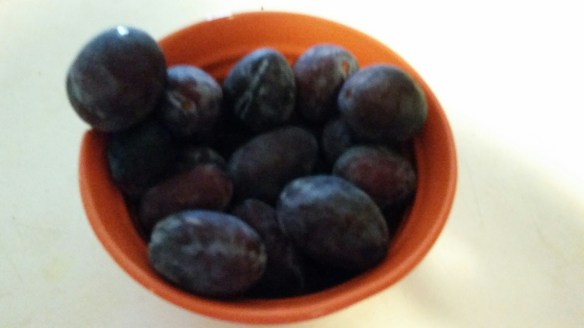 My mother grew vegetables and fruit and canned them for use during the winter and spring. I remember her on the hot days in August and September, lifting the glass jars out of their steaming water bath in the large canning pot in our small kitchen. Once cooled, the jars went to line shelves in the basement. During winter and spring she had all kinds of vegetables and fruit to choose from. Eating locally was common in those days because food that grew in faraway places was not available. Canning diminished with the advent of freezer chests. Consuming food in New England that was grown in Mexico, China or other distant countries was unheard of.
 Pujakins