 I know others do this too: whenever I see a penny on the ground I pick it up, and depending on whether the penny is heads of tails I keep it or give it away. I was told tails meant it was to be given away, heads to be kept. When we lived near a brook I used to throw in the pennies to make wishes. This is a common superstition. When I just looked it up on the Internet I discovered it comes from the ancient idea that to do so was to make an offering to the spirit of the water and thus to receive help to achieve what was wished for.
Feathers are something else that I always pick up. Not only are they pretty they are said to be messages from those have passed on that all is well, and that perhaps the individual is thinking of the finder. After my son Robin passed on I kept finding feathers everywhere. It is also true that certain Native American tribes consider feathers from particular birds to be sacred objects. The best place to find them is a beach; there gull and other bird feathers are usually to be found in plenty. I once quite a collection; when we moved, I gave them to a friend to use in her various craft projects.
In days gone by the flight of birds was used to predict good or ill fortune. In Ancient Rome this was called augury, and the augur took the auspices, which meant watched the birds for signs of good or ill fortune. Stephen’s grandmother thought birds were an omen of death. Perhaps this belief stemmed from the ancient idea of prediction by the bird flight. Ominous has come to mean scary instead of as reflecting the implication of an omen. In some cultures the whole idea of prediction has negative implications. According to the Internet this practice is more than several thousand years old. Superstitions can endure.
The subject of superstitions has fascinated me since I was very young. I wrote a paper on it for an assignment in the eight grade. Yet even though I pick up feathers and pennies and make wishes by throwing pennies into water, I firmly believe that we make our own luck–not by practicing superstitions in order try to make it happen but by doing what seems right and good when the occasion arises. The choices we make at certain moments can make a great deal of difference in the outcome..
The saying that what goes around comes around seems to me to resonate as truth. It could be that my belief is influencing my opinion yet even if that were to be true it seems to me that one can only benefit by doing unto others as you would have them do unto you. There is one codicil I would add: Do unto others as you would have them do unto you if you were they. In other words, think about what the other person might really prefer rather than what you believe they might when you are doing unto. When you do this you are fulfilling the true intent of the good result that you can earn by remembering to do unto others.
Tasha Halpert
 The forsythia is blooming. Its golden flowers brighten the landscape and provide a kind of sunshine even during April showers. Gardening is present in the thoughts of those who do and in the stores as well. Pansies and other colorful flowers decorate the entrances of supermarkets and other stores that sell them. Gardening supplies are piled up ready to purchase. Even though it’s not yet time to be planting, these and other signs of spring hearten those of us who are weary of winter’s drab browns and blacks, bare limbs and withered weeds.
 While I am quite fond of them now, as a child I disliked eggs intensely. I vividly remember sitting in front of an eggcup containing a boiled egg and staring at the hateful thing as it grew cold. The rule was that I couldn’t get up from the table until I had finished whatever meal I was supposed to be eating. Sadly, I hated to sit still and perhaps would have been termed hyperactive if such a term had existed then. However, sooner or later I suppose I must have swallowed the contents of the eggcup and been released from my chair. The eating of it is not recorded in my memory.
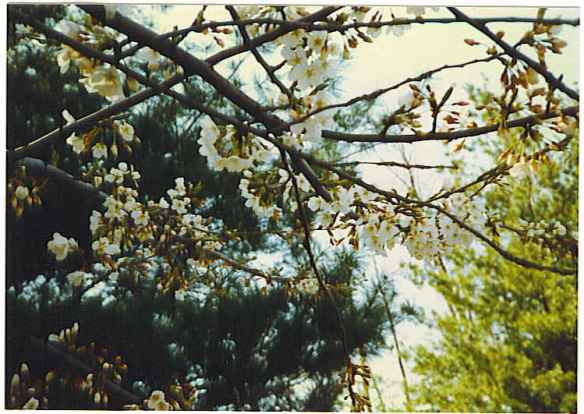 It makes me laugh when it gets cold after a warm day and someone says, “What’s happened to spring? It’s winter again!” That’s what spring is: a back and forth time of year. One day it’s lovely out, the next it snows. It’s difficult to make plans. Once many years ago my father decided to give an Easter egg hunt in the house he had inherited from my great aunt Alice. He invited all the members of an extended family of 12 children grown and married with children of their own, and told them all to come at one o’clock on Easter for the party. Then he went to Maine, intending to return that morning.
 When spring comes, like the creatures in the woods and fields, I feel as though I am beginning to wake up after a time of hibernation. I want to get out doors and spend more time in the light. I welcome the brightness that comes in through the windows even though it also shows the accumulation of dust that is so easy to miss in the dimmer light of winter. I get out of bed more eagerly, most likely because the sky is brighter when I do. Spring also brings me memories of what it was like for me when I was a child and the seasons were more defined by what we ate as well as what we did.
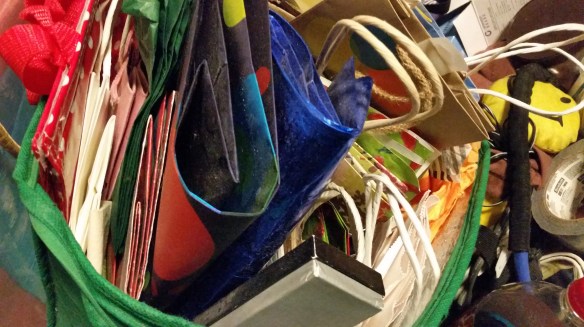 When my mother and I went to Russia in 1991 among the places we visited was the Hermitage Museum in St. Petersburg. It was very impressive. My favorite part was the room with six Rembrandts. Sitting among them was an extraordinary experience. As we left we bought some postcards and other souvenirs and when none seemed to be forthcoming, asked for a bag to put them in. The cashier gave us a sour look then finally dug out a used plastic bag– an obvious treasure from her hoard and placed our items in it. Recycled bags were more common there than new ones were then.
 My mother felt strongly that food was precious and not to be wasted. She had been a young child during World War I in Germany, and the experience of scarcity had shaped her attitude. To her way of thinking, all food was to be used up one way or another. Then came World War II and rationing. I too was very young, yet this also gave me lessons in thrifty use of food. Fortunately I have been able to put my early lessons to good use in learning how to create meals from whatever I have left over even if I hadn’t already planned ahead.
 When I was a child a friend of my mother’s gave me the dresses that that her twins had outgrown. Because they were dressed alike, I had to wear two of whatever came my way. In the days when I was growing up, thrift meant making do with what was available. Aside from the fact that while my family had enough, they weren’t exactly wealthy, there was a war on and many things, including clothing and shoes were rationed.
 Pujakins