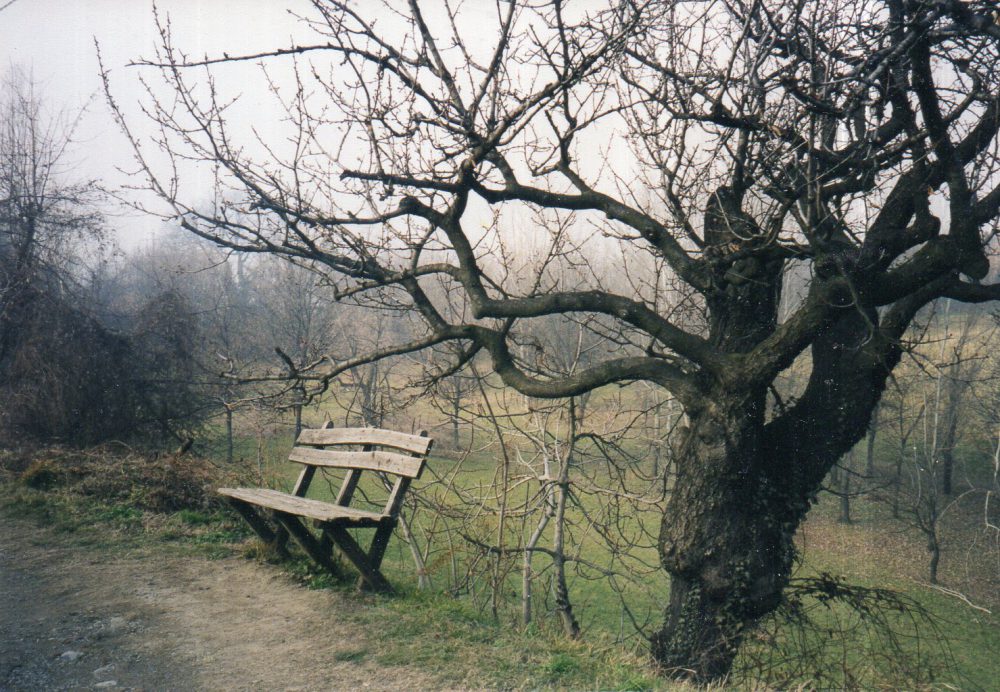
My parents did not believe in getting too excited about Christmas until much closer to the date than most do now. They didn’t do a lot of shopping either, until closer to the time. …
Category Archives: Perspective
Holiday Customs Make the Time Special
 My parents did not believe in getting too excited about Christmas until much closer to the date than most do now. They didn’t do a lot of shopping either, until closer to the time. I have heard some say they have all their presents bought and wrapped before December first! I remember ordering special things from the catalogue that came to the house some time around Thanksgiving, and feeling excited when my simple gifts arrived. As a child I only gave to my parents and later to siblings. Once I got to play Santa too, shopping in the dime store or Grants in Beverly for stocking presents was a great treat.
Despite the fact that these days Christmas catalogues come in the mail long before Thanksgiving, giving gifts is only one of the many rituals and traditions associated with the holidays. We had a few very simple ones, and my parents didn’t make a big deal out of decorating. These days most of us have much to do as the holidays approach. There are the cookies and other special foods to think about. The entertaining of friends and family is another ritual. Many businesses have staff parties and a lot of people entertain in their homes. These gatherings are not confined to the holidays themselves but take place throughout the time from Thanksgiving to the New Year.
The traditions and customs of the holidays have been accumulated over the centuries from a variety of different countries. In America now more than ever we have a melting pot of nations. While many of us grew up with primarily European customs derived from a combination of pagan, Christian, and Hebrew stories, myths and historical remembrances, the addition of African American, Spanish, Indian, Asian, Middle Eastern and related peoples from other parts of the world has enhanced our holiday observations.
Like Christmas tree ornaments taken each year from attic or basement, today’s families pick and choose what to keep, which to use, and what to discard. The little paper cutoouts children made in kindergarten, the funny ornament Aunt Bessie gave us, the fragile glass bird carefully passed down from generation to generation are all part of the decorating rituals. Fashions may change and what looked cute once may look rather dated in the light of a new generation. The same is true of observances and rituals.
Regardless what we choose to do or not to do as the holidays come around, what really matters is the meaning of the act, the memories associated with it, and the good feeling it brings to the heart. For some it’s midnight mass and singing carols that warms and enlivens, for others it’s the Chanukah, or the Yule or Solstice feast that brings gladness and renews the spirit. At the darkest time of the year, as we participate in them, the bright memories that surround our holiday customs bring a sense of light and joy to the heart.
Tasha Halpert
Christmas Expectations
I remember one Christmas my parents gave me four or five board games. The difficulty was, I had no one to play them with. My parents didn’t play children’s games; we lived in the countr…
Source: Christmas Expectations
Christmas Expectations
 I remember one Christmas my parents gave me four or five board games. The difficulty was, I had no one to play them with. My parents didn’t play children’s games; we lived in the country and there were no kids in the neighborhood; and my schoolmates lived in other towns. Gas being dear—this was during WW II–people did not drive their children around for play dates. My usual Christmas presents were clothing or things I needed. Great Aunt Alice gave strange presents—one year she gave me a wood burning kit that was difficult for me to figure out how to use. I looked forward to stocking presents; they were more fun. Best of all was when I got old enough to play Santa along with my parents and participate in filling their stockings.
I had a small book of the poem by Clement Moore that I always enjoyed rereading at Christmas. Eventually I knew most of the poem by heart. “The stockings were hung by the chimney with care, in hopes that St. Nicholas soon would be there.” These verses have given us all an image of Santa and how he does things that has remained with us through many generations. We expect that he will wear a red suit, come down the chimney, arrive on a sleigh with reindeer, and so on. Cookies and carrots for the reindeer are part of our expectations for his Christmas Eve visit. Presents under the tree on Christmas morning are another. Does Santa always wear a red suit? Or can Santa dress in ordinary clothes?
“Santa Claus is coming to town,” as the song goes, and, some warn you’d better be good or else. “He’s making a list,” as the song goes. There used to be talk of Santa leaving a lump of coal or something else that is undesirable in the stocking of children who were not good enough to deserve toys. One of the original Santas—St. Nicholas, provided dowries for young ladies who otherwise would not have been able to get married. Some cultures used to include a kind of negative Santa called Black Pete, who tagged along to punish or otherwise be unkind to those whose bad behavior merited it. Must gifts be a reward or can they simply be a sign or love from the giver?
The advertisements on television create enormous expectations. The shining allure of the latest toy or newest communication device creates desires that may lead to major dismay if they are not forthcoming. What may be lost in the light of all these expectations is the unexpected, unadvertised gifts that this time can bring: the peace of loving hearts gathered together and the good will that comes from sharing. The opportunity to participate in the love and merriment that is part of the holidays is the real blessing, the actual present to be gained at this time. Those who are too focused on their expectations may well miss out on this, the real gift of this season.
Tasha Halpert
Full of Thanks and Grateful to Be So
Thanksgiving is a nonsectarian holiday that most of us can celebrate. I remember in school it centered on the Pilgrims. In first grade we made pilgrim hats and talked about how they lived. Today as…
Full of Thanks and Grateful to Be So
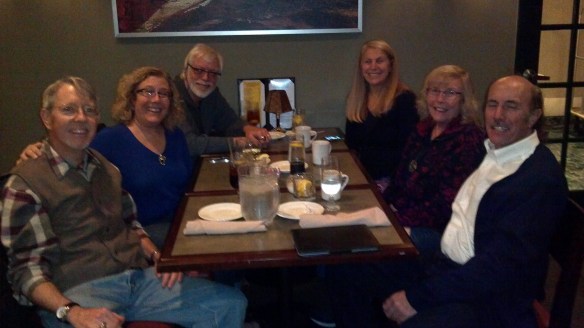
A Family Gathering several Years Ago
Thanksgiving is a nonsectarian holiday that most of us can celebrate. I remember in school it centered on the Pilgrims. In first grade we made pilgrim hats and talked about how they lived. Today as a result of our treatment of the indigenous peoples since the first US Thanksgiving, the stories I grew up with have changed somewhat. However since time began harvest festivals similar to our Thanksgiving have been universally celebrated. Throughout the history the expression of gratitude for whatever constitutes our abundance endures.
I wasn’t always aware how important it was to be grateful. To be sure, I was brought up to say thank you when given a gift and often to write a letter of acknowledgment to the giver. However, having an actual attitude of gratitude, as the saying goes, was foreign to my thinking. I can remember my mother saying things like: “Finish your liver, there are children starving in China who would be happy to have it.” Of course, the thought that goes with that is, well send it to them then, however that would have been considered a rude remark and would have merited disciplinary action.
As a child, like most I took my safety, my freedom from hunger and cold, and my warm surroundings for granted. I was sheltered from the knowledge of others’ circumstances; then, the only source of outside information besides the newspapers was the radio. I knew much less about the world than children with access to TV and the Internet do today. Whether that makes one more or less apt to be grateful is moot. It might make an interesting study. However most probably even today gratitude is something we become aware of only as adults. It is very easy for children to take their blessings for granted.
My change of heart began with a simple prayer given me by someone I met only briefly yet who had a profound effect on my life. I was complaining about my circumstances when she corrected me. “Rather than bemoan what you don’t have, rejoice over what you do.” She suggested I repeat three times a day, “Beloved Lord I do greatly thank Thee for the abundance that is mine.” The phrasing can be changed to suit those who have a different belief system to honor whatever higher power they may acknowledge–Divine Providence, the Goddess, Mother Earth and so on.
Oddly once I began to do that, my abundance began to grow and has continued to do so. On another occasion I briefly met a wise woman who among other things, told me to take nothing for granted. I took her advice to heart. As I have continued to be grateful even for simple gifts and to acknowledge my little blessings, they have continued to expand. Eventually I even learned to be grateful for difficulties and disappointments because of the opportunities to learn and grow they provided. At this Thanksgiving as always I will sit down at the table with a heart full of gratitude, and for this I am exceedingly grateful.
Tasha Halpert
Taking Account of the Gifts of the Moment
The maple tree outside my window has been late in turning. I worried the leaves might fall off before they changed color. Then one morning as I pulled the curtain aside I saw they had ind…
Taking Account of the Gifts of the Moment
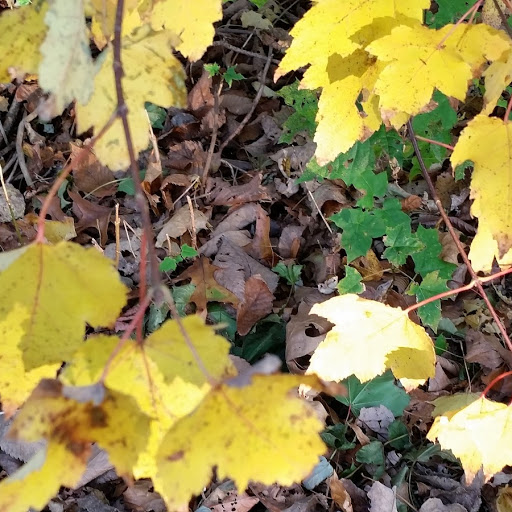
The maple tree outside my window has been late in turning. I worried the leaves might fall off before they changed color. Then one morning as I pulled the curtain aside I saw they had indeed made their transition to gold. Later in the day the sun shone through them and the brilliance of the leaves was a sight to behold. I stood gazing at them, grateful for the beauty of that moment and of the very special loveliness that is fall in New England.
I feel fortunate to have grown up in this beautiful part of the country. Fall has always been special to me. I remember as a child collecting bright leaves and ironing them between pieces of waxed paper to preserve their colors. I did the same with my children when they were small, and we would hang the leaves up in a window to let the light shine through them. When I went thorough my mother’s correspondence amongst the letters was one from me with some colorful leaves. Being in Florida she said she missed them, so I sent her some.
Lately driving on the country roads near where we live I find it difficult to keep my eyes on the road. The scenery is breathtaking. The foliage of the trees makes billowing waves of color; the rounded mounds of the distant leaves heaped one upon the other simply take my breath away. How easy it might be to get lost in my inner dialogue and miss this.
My mind, like most has a way of getting busy with thoughts concerning what is or is not to be done, or has or hasn’t been finished. Lately I’ve improved. I used to find myself making lists in my head and missing out on a lot of what I might have appreciated had my eyes had been focused outward rather than inward. Once I got into the habit of noticing what my mind was doing it became easier to tame its tendency to run away with my attention and keep me from seeing what was happening around me.
When I take the time to look there is always something interesting to see. Naturally when I am driving I must keep some of my attention focused on what I am doing. Providentially, while looking to the road itself I see what is in front of me. Too, when I am with someone if I pay attention to what he or she is saying or how they are feeling instead of thinking about what I am going to say next, it is much easier to be fully present and aware of my companion.
I’m coming up on a birthday this month, and what I realize about getting older is that it gets easier each year to be patient, to be aware, and to be present insofar as I am able. For this I am thankful. I may never know what I have missed in the past when my mind wandered off and took my attention with it, yet I can make it a practice to keep myself in the here and now. That way I can appreciate whatever there is to be enjoyed in any given moment.
Take care for each breath and love each heartbeat, Tasha
Cherish Every Moment with Loved Ones
 I remember going to church with my mother on Sundays, and how uncomfortable the kneeling benches were. She was a devout Catholic and thought God would punish her if she didn’t go faithfully. As a result we went to my father’s church, an Episcopalian one on special holidays only after we went to early mass at my mother’s church. My fondest memories of her are centered on Christmas eve when she played her violin and we sang carols in front of our tree.
While I do have many memories from my childhood I wish I had more. I can remember my late mother telling me stories about things that happened or that I did that I had no memory of, but that she had cherished herself. Children do not realize that things will change, that what is will not be there forever and must be noted or it will be lost.
The other day Stephen and I were out with my daughter and her fiancé for dinner and a movie. As we sat over pizza afterward, I thought to myself how wonderful this all was, and how much I was enjoying it. I reminded myself to cherish the moment. We never know when something will end, or at least change so that it is no longer available. I did not always feel this way; it is something I have learned from experience.
When my children were little I was a busy mother with five young ones and a husband who traveled on sales calls. When I look back on our lives together I realize my mind was too filled with thoughts of all that I needed to do to be present with them and what they were doing. I know I missed much of what I would cherish now if I could remember it. This is a lesson that can only be learned from experience.
I realize how much I may have missed in my life by not being present. A friend once said to me, “I always take special care to enjoy myself at your home because then when things change I will have no regrets.” We moved away and she went back to South America; we have lost touch. Most likely I will not see her ever again, yet because of what she said she has a presence still in my heart. When I see again someone that came to our home years ago for gatherings or classes and remembers us, and it makes me glad.
Recently I have lost a sister and a sister in law to death as well as a number of friends and acquaintances. At no time did I know when last I was with that person that I would not set eyes on her or him ever again. I am aware more than ever that when I am with someone I know, and especially someone I love that it is vital to be mindfully present, or I will miss out and regret that I did not take advantage of the time I had with him or her. Change is the law of life; nothing stays the same. Every moment is precious, most especially when we are with those we love.
An Appropriate Costume
As a young child growing up in the country I was accustomed to seeing death. Baby chicks perished; Ducklings drowned; something attacked my rabbits and the ones that hadn’t died were t…
Source: An Appropriate Costume
 Pujakins