How to Grow Your Heart Bigger

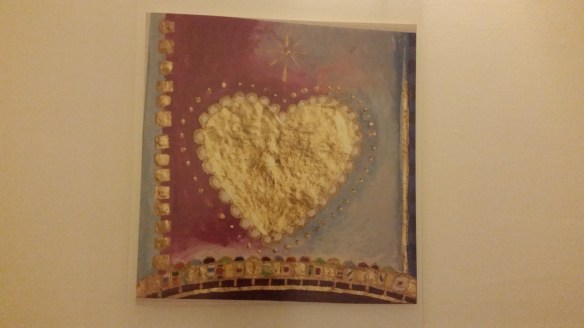
Peace Village 3 Heart.jpgVery young children share quite naturally. Who hasn’t been the recipient of a toddler’s offering of a cookie or a treasured toy? Later, children become more self-centered, and parents have to teach them to share. Then we outgrow our parents’ teaching and begin to form our own ways of behavior. At this point we may often emulate peers who may or may not be good examples of heartfelt behavior. Some, like me, inherit critical attitudes from parents or teachers, and so unwittingly continue them. This can shrink the heart.

Most of us are familiar with a character of Dr. Seuss’s called the Grinch. His heart was shrunken–too small by far. This resulted in his acting meanly toward others and because it annoyed him, trying to take away their joy. When he couldn’t, his heart grew. Most of us believe we would never try to steal another’s joy, however perhaps we could be ignoring opportunities to grow our hearts bigger. This is something I’ve had to learn and I worked hard to learn it. It’s not easy to do so; the first step in he process is to observe one’s very own smallness of heart.

For example, when I look at someone or even myself with a critical eye, observe with distaste mine or another’s extra pounds or unkempt clothing, or think negatively of my or another’s behavior and don’t catch myself doing it, I am missing an opportunity to grow my heart. I could change my thinking and reflect that they could be on medication, indigent, ill or feeling uncomfortable and instead feel compassion for them or myself. I’m aware that when I am tired or someone annoys or irritates me, it takes restraint not to snap back. Yet when I can manage to see them in a different light, it will grow my heart.

Another way to grow my heart is to not act selfishly and take the biggest, the best or the most for myself. Being generous to others is a simple way for me to grow my heart. As children we have often been taught this by well meaning parents, yet depending on how I might be feeling, it is easy to do the opposite. Then too, if I do it grudgingly or without a genuine desire to give, it may not be as effective for heart enlargement, however it can still work to my benefit. The most effective attitude is to put others ahead of oneself with joyful willingness as opposed to grudging obligation.

While it is sometimes painful to observe myself behaving in ways other than how I want to see myself, it is also worth doing. I’ve learned that if I catch myself in the act often enough, I will stop whatever negative behavior I observe. Selfish behavior, a judgmental attitude, an outlook automatically critical of others can lead to shrinkage of the heart. Generosity, compassion, and loving giving can lead to the growth of the heart. Plus there is often a return on one’s investment. What goes around really does come around. Those who practice these virtues may well reap good fortune in some way in return. While this is not a reason to be doing it, it is a nice side benefit.

Tasha Halpert
 

Muffins for Fall Munching

Down to her frillies 3


I once attended a weekend Renaissance Fair with some friends. Wearing a costume of a mobcap, a full skirt, blouse and a vest, with my similarly garbed friends I was having breakfast in the restaurant of the motel where we were staying. As I perused the buffet table a man came up to me. “There are no more muffins,” he said. I shook my head and assured him I wasn’t a waitress. “We need more muffins,” he said loudly. My similarity to the waitress’ colonial garb was too convincing. My friends were helpless with laughter. I giggled and joined them. To this day Stephen kids me about the incident.

While I like making muffins now, I didn’t learn to make them in my mother’s kitchen. She didn’t bake from scratch or even at all, and I was not encouraged to do so. Once married I tried to make them but my muffins were invariably heavy, flat and dense in texture. Though edible, they were not how I thought muffins ought to be. When I sought inspiration from more experienced cooks, I found out what I was doing wrong. Voila, my muffins rose nicely.

I discovered that muffins, unlike cakes, cookies and other baked goods did not need to be well beaten. Once I learned to fold the wet ingredients lightly into the dry ingredients my troubles were over. The source of my information was a column in the Boston Globe called the Confidential Chat. It ran several times weekly and was a wonderful source of recipes, advice and help as well as an opportunity to share for those of us who wished to do so. At the peak of my participation I wrote around fifteen or so letters a week, many of which were published, and in the process I learned to write succinctly.

Writers to the column used pen names, so publication was anonymous. However, letters answering you that were not published were forwarded bundled in an envelope you provided, and you could choose to answer any of them if you wished. In certain ways the Confidential Chat was part of the foundation for this column because it helped me learn to write precisely and convey information clearly. Long-winded or unclear letters simply were not published. Since I enjoyed seeing mine in the paper, I worked hard to write well. I also loved the recipes and shared many.

Here is a recipe I use a lot for Banana Chunk Muffins. You may substitute melted butter for the oil. If you do, be very sure to mix lightly. Ingredients: 2 eggs, 1/3 cup oil, ¾ cup any milk, 1 tsp vanilla, ½ cup sugar, 1½ cups flour, 1 tsp baking soda, ½ tsp salt, 1 tsp cinnamon, 2 or 3 bananas cut into ½ to 1 inch squares, ½ to 1 cup optional chopped walnuts, ½ to 1 cup optional chopped dates. Method: Preheat oven to 350 degrees, Mix fruit, nuts with dry ingredients, beat wet ingredients together well and lightly mix into dry. Use liners or grease 1½ dozen muffin cups or 1 8″ square pan. Fill ¾ full and bake for 30 minutes for muffins, 35 to 40 for pan. Enjoy!

Tasha Halpert

Pennies from Heaven

Grammy and Emilia 04My grandmother grew up in a time when a penny, not mention a dollar was worth considerably more than it is today. She also grew up in an era when there were few occupations of any status open to women besides marriage. If you were single and not a member of the “working class,” not much was open to you in he way of employment. You could be a school teacher or a companion to a wealthy older woman otherwise, you most likely lived with your parents and or a sibling, or helped care for those in your family.

I used to enjoy the stories she told me about her growing up years in the big house she shared with one sister and one brother. I remember having tea with my great grandmother in that house when I was very young. Like her, even many years later my grandmother had tea every day at four o’clock. When I was with her I was given ginger ale in a very thin glasses etched with a delicate design. I remember how it tickled my nose as I drank it.

While I was growing up, my grandmother and I were very close. She loved me dearly, and one way she showed it was to save all her pennies for me. When she came to visit, she would hold them clasped in her large wrinkled hands. I would place my small hands together just under hers. Then she would glide her closed hands over mine and say aloud, “Hold fast all I give you, hold fast all I give you, hold fast all I give you.” On the third repetition she would open her hands to let the pennies fall out, and I would open mine. The pennies would pour in, filling my small hands to overflowing.

Even today I love it when I find pennies lying about on the ground or even on the floor in stores. To me this is a sign of good luck. The other day I brought some items to a consignment store. One was a purse and I put a penny inside. I have always put a penny into every purse I have ever given away. When I told the person at the counter what I had done, she smiled and told me that when she found pennies it felt to her as though they were a sign from her late husband that he was still with her. “He loved finding them,” she told me, “though they had to be face up. On our wedding anniversary, and on his birthday both I found a lot of pennies all face up the way he liked them.” Pennies are special to her also.

Though they have lost much of their value monetarily today, a penny is more than just a penny to me. However, back a long way in time, a penny was a significant amount of money. There were even coins in common use smaller than a penny. But then life was cheap and for most people times were hard. Now periodically there are movements to get rid of them entirely because it is said they cost more to manufacture than they are worth and they slow down the process of making change. A number of countries have discontinued them, substituting five and ten cents as their lowest denomination.

For me a shiny penny is more than a coin. It is a symbol of my childhood and a way to access memories from that time. Seeing my grandmother in my mind’s eye, hearing her voice as she chanted the magical words, “Hold fast all I give you,” brings up even more memories of my days with her, of the stories she would tell me about her girlhood and what it was like for her growing up. I am older now than she was then, yet the memories have not faded. Like shiny pennies lying on the ground for me to find, they bring me a happy feeling in my heart.

Tasha Halpert

A New World to Hear

Image

DSCF0168

I remember my great grandmother’s ear trumpet. It was a long instrument, flared at one end. She held the small end to her ear. I also remember a black box the size and shape of a thick brick that had a cord running from sitting on a table that must have been an early hearing instrument. My grandmother wore a case the sizes of a slim cigarette pack clipped to the front of her dress with a cord connected between it and a button in her ear. There was a dial on the box she could turn on and off.

My dad used to say she turned it off when she didn’t want to hear what was being said. I remember as a child thinking how handy that must be. Aids to hearing have come a very long way since then. As people age, much like the normal need for eyeglasses to address a lessening of vision, so too there is a need for aids to hearing. Unfortunately these are extremely expensive compared to eyeglasses. Hopefully one day this will change.

Because of the deafness that seemed to run in my family, I was not surprised when my own hearing began to diminish. I found I needed to have the TV on louder. It was helpful to watch movies on DVD with subtitles, especially when the actors had British accents. If Stephen spoke to me and I was in the other room I had to get closer to him to hear what he was telling me.

Ambient noise interfered with my understanding of words; parties were less fun. My children noticed and suggested I get hearing aids. Still, I wasn’t sure I really needed them, or so I thought. Then as luck would have it I was gifted with a set. My daughter offered me her late mother-in-law’s hearing aids. I am very glad I said yes. It has been an adventure for me to use them. I find myself marveling at sounds I have not really heard before, or not for a long time.

I remember my mother telling me that when my grandmother put on her new hearing aid and went outdoors she said, “What’s all that noise?” It was the birds chirping. She had not heard birds for many years. My ears have not been that bad. I have been able to hear more or less, just not clearly. I notice the difference with the aids: without them, it’s like I have water in my ears. With them when I turn on the sink faucet, I hear splashes and ripples. When I unwrap paper it crackles. The stove timer sounds shrill. I hear sounds I didn’t before.

In the past when I thought about getting hearing aids I felt somewhat uncomfortable. I expected them to be clumsy, perhaps difficult to manage. None of this has proved true. Today’s aids are quite different from those of my grandmother’s or even of recent times. They are virtually invisible. I am very grateful to my daughter for her thoughtfulness, and I look forward to learning more about the new world I am hearing. As I have come to appreciate the clarity I get from wearing eyeglasses, now I enjoy the adventure of listening to a new and different world.


Dandelion Days

dandilionforwishingThe first flowers I remember picking were dandelions. Proudly I brought them to my mother, who lovingly thanked me. I have memories of making dandelion flower crowns with her. We’d slit the stems, slide a flower through, and repeat until the crown or wreath was large enough to wear. Dandelions are the first flowers many children are allowed to pick. They are such pretty little bright spots, and unbeknownst to many, such good medicine It seems a pity that people feel they have to eliminate them.

Those who want pristine green lawns eradicate dandelions, never realizing that instead of poisoning these cheerful yellow suns, they could pick them and make a wine that tastes of summer, a bread, or other baked goods, or use the leaves in a salad, a stir fry or combined with other greens in a juicer. Dandelion leaves have excellent food value, and are a healthy, desirable spring vegetable. The roasted, ground roots make a coffee like drink.

Children love the yellow flowers; parents faced with eliminating stains from the milky juice, not so much. Homeowners might like to know the long roots actually benefit the lawn: they aerate the soil, keeping it from becoming compacted and unable to absorb nutrients. Susun Weed says there is enough vitamin A in a dandelion leaf to rival store supplements. As well there is vitamin C and many helpful minerals. It is also a mild, effective natural diuretic. If your lawn is away from the road, you can safely use your dandelions many ways.

Here is my recipe for Dandelion Deluxe: Ingredients: ½ cup chopped onion, 4 cloves of garlic minced or chopped fine, 1 small summer squash chopped small, 4 cups dandelion greens, olive oil. Method: Prepare greens while you sauté onion, garlic and summer squash in a olive oil. Remove roots and tough bottom stems. Wash very well. Cut up with scissors. Steam in a small amount of water until they wilt down. Strain water and set aside. Add chopped greens to sautéed vegetables and cook until stems are tender. You serve as is or you can mingle into your food processor for a different taste. Drink the healthy cooking water, your body will thank you.

Dandelion Wine: Age for at least 6 months. It will continue to mellow. Ingredients: 1 Qt Dandelions, yellow part only. 4 Qts. boiling water, 3 Lemons, 3 oranges, 4 Lbs sugar, 1 Pkg. yeast. Method: Pour boiling water over blossoms, set for 24 hours in a warm place. Slice fruit and remove seeds. Cover with sugar; set for 24 hrs also. Then strain blossoms and pour liquid over oranges and lemons. Add 1 package any yeast. Pour into ceramic or stainless steel. Let stand 4 or 5 days. Strain, let stand one more day. Bottle, then cap with small balloons. Leave until the wine stops “working” and balloons collapse. Cork and store 6 months or more. Then sip. It tastes like summer. Recipe makes 5 bottles.

Tasha Halpert

The Dailyness of Doing

Nature's Art 1. 2012-06- While I was growing up, when it came to household chores my mother did not consider me to be capable. This may have been because she expected more of me than I was able to do at a young age, or it may have been that she was so particular that my childish efforts were simply inadequate. She had very high standards. Regardless of the reason, she never encouraged me to do any cleaning or other household tasks even after I was in high school. What this meant was that I never really learned how to clean properly.

I remember the day I came home to the first apartment my young husband and I had and found my father sweeping the rug. I asked him what he was doing. He said he was cleaning the rug. But I don’t have a vacuum, I told him. You don’t need one, he said, and inquired of me where I kept my dustpan and brush. I had never realized you could clean a rug just by sweeping it.

I had to learn how to keep house the hard way, by trial and error and doing it. The other day as I cleaned the sink in the bathroom, I began thinking about household tasks in general. I realized that when I complete some tasks, I give a sigh of contentment and think to myself: good, now that’s accomplished. There are others I complete and with a sigh of resignation wonder how soon I’ll be doing it over again. Much depends on the task in question; some are more satisfying than others. Cooking, for example is my delight and I have no problem making three meals a day.

On the other hand, when I wash the kitchen floor, although it looks very nice, I don’t feel happy because it doesn’t last. Somehow it gets dirty practically immediately. Although small in surface, it is still a chore to keep clean. The stove presents the same issue. It seems that no sooner do I clean the pans under the burners than when I next turn them on, they’ll emit a bit of burning smoke from another stray crumb.

It is hard for me to take much satisfaction when I finish doing something I know I will have to do again practically immediately. Yet when I do not allow myself to take that satisfaction, I do not feel rewarded. If I do not feel rewarded it is much more difficult to do what needs doing again with any promptness. The good feeling I get from completing any task is an important part of what helps motivate me to repeat it, no matter how soon.

There is only one solution I can think of: to do the task as fully as possible in the present moment. What this means is that while I am doing it, rather than thinking of how soon I will have to do it again, or how onerous it is, I focus exclusively on the performance of it. It helps almost any situation to be mindful during it. As I direct my attention and my energy to the activity of the task, I am not only more efficient, but also more able to find pleasure in it.

Tasha Halpert


A Little at a Time


My Buddha by the sink

My mother was an artist. She went to art school and studied sculpture as a young woman. Later when my brothers were both in school she studied painting at the Boston Museum of Art. She had a studio over the garage where she occasionally worked. She also kept her art materials there along with lots of interesting women’s magazines. I loved to go up and read them. From them I learned many helpful household hints. I still remember one that told how to change a bed by walking around it only once. I used to do that. Now Stephen and I make ours together.

It may have been then or it could have been later on in my life that I came across the twenty minute system for accomplishing lengthy tasks. The article suggested allotting twenty minutes daily or whenever convenient, to a chore that was normally postponed because it might take too long or be otherwise tedious. When I tried the suggestion I was pleasantly surprised to see that it worked. One example was that instead of cleaning out all the bureau drawers, or every shelf in the pantry at once, take twenty minutes to clean and tidy one, stop and do another on another day.

At one time I practiced this technique quite frequently, however it slipped into the mists at the back of my mind. Recently I was reminded of it. What happened was this: For a very long time I had postponed cleaning out the refrigerator. Week after week each time I wrote out a new to do list, that particular task was at the top. Still I found reasons not to. Then I noticed how sticky one of the racks on the refrigerator door was. I decided to clean it off then and there. Because there were many small jars to be removed, washed off and replaced, it took me about twenty minutes or so to complete the task.

As I shut the refrigerator door I remembered the household hint from so long ago and laughed. The next day I cleaned off the second shelf of the door. Several days later I washed off the whole bottom shelf of the refrigerator. Today I cleaned the oven, and so it goes. Each task that takes around twenty minutes to complete adds up eventually to a thorough cleaning and tidying. I will probably go through my bureau drawers next, and perhaps after that a couple of other tasks I can think of that need attention.

I remember hearing someone say once that when he thought about what he had to do, it always seemed far more daunting than it turned out to be once he actually began to do it. The same holds true for me about the time spent doing something. Dividing a task into smaller segments works much better for me these days than trying to get it all done at once. As well, it spreads out over all the different times spent, the feeling of satisfaction I get from my small yet necessary accomplishment.

Tasha Halpert


My Always Valentine, by Tasha Halpert

Stephen and Flowers People who do not know us sometimes ask Stephen and I how long we have been together. I think this might be because we don’t act like an old married couple. We are often openly affectionate in public and might seem more like young lovers. Yet we have been together for many years now, so many that I am always a bit taken aback when I think of the total. To me there is something odd about how past years seem to accordion. It is as if they compress in some way so that they don’t seem to be nearly as much time as when I contemplate them stretching into the future.
Stephen is my always Valentine and I am his. What that means is that we treat one another with respect. We do not compete nor have we ever done so. We don’t need to. Instead, we cheer one another on, each wanting the best for the other. Neither do we put one another down or make fun of one another. While gentle teasing may be appropriate between couples, mean behavior is absolutely unkind. It is also true that no matter how long we may be together, in order for our relationship to stay strong it has to grow at the same rate we do.

I believe it is vital for individuals to keep growing; whatever does not grow normally begins to decay. For our love to grow along with us we must work to make it do so. In my experience, love grows with appreciation, with honesty, and with the expression of gratitude. We do our best never to take one another for granted. When he washes the dishes, I thank him. When I cook a meal or drive us somewhere, he thanks me. When he sees a book I might like at the library, he points it out. When I see something he might want to eat at the market, I purchase it.

These many small gestures add up. Along with the days of our lives they form a fragrant bouquet that surrounds us with loving kindness. Being kind to one another is an important ingredient in our marriage. Another is sharing feelings with honesty. If something is troubling one of us, we share it, even if it may feel painful to do so. This is something I insisted on when we began our relationship, and over the years it has helped us avoid many problems.

Our years together have gone by so quickly that it is difficult to understand how they could have accumulated the way they have. Yet like leaves piled under a tree in the forest, they have melded into a kind of fertilizer that feeds the ongoing growth of our relationship. I am enormously grateful to have Stephen in my life. He feels the same. We both feel blessed. It is most wonderful to have an always Valentine, and each of us does our best to make sure that as long as we both live, we always will.


Me and My To Do Lists

Poinsetta and water drops036My friend and I sat over breakfast at a restaurant near where I live. “I find myself getting very forgetful,” she told me. We commiserated a bit. I assured her that if it were not for my lists I would never remember what I had to do. I’ve been making them for as long as I can remember. I know that my grandmother made lots of lists. My mother told me that when she stayed at my grandmother’s home one year, she often found herself almost tripping over them. Nonny, as I called her, used to leave them on the floor so she would be more apt to see them.

I don’t need to write many as she did, nor to drop them on the floor. I get along very nicely with my two main lists. I keep one in the kitchen where I write down whatever food I plan to prepare, the next necessary errands, and the various household tasks it is time to do. I keep the other on my desk. That one reminds me of what I need to do on my compute–whether emails I need to write or assignments I must complete. It tells me when my deadlines are due, and what bills it is time to pay or what cards I need to send and to whom. Actually, these are not my only lists, just the permanent ones. As I cross things off I rewrite them and throw away the old pages.

I also keep grocery lists, health food store lists, and lists of other items i need to purchase. These are vital! When it was time to send out invitations to my birthday party I made a list of the people I wanted to invite. I also now have a list of the Christmas gifts Stephen and I received, and the people who gave them to us. I need that to write my thank you notes. My short term memory is not what it used to be, however it hasn’t been that good for some time. I am told this is nothing to worry about and is part of normal aging.

I also use my lists to practice recycling. Whatever comes my way that is a one sided piece of paper gets folded in three, torn into strips, and clipped together to form a pad to make my lists on. It is only a small gesture, yet every effort to conserve counts, no matter how insignificant. I also believe that any attempt to be mindful of the environment carries an impetus to help increase the totality of what will I hope and trust one day lead to greater participation for all in the conservation of planetary energy and resources.

I admire those who say they do not need lists in order to remember things. I prefer to use what mental energy I have to be observant, to remain in the present moment, and to notice when I need to participate in some way in the ongoing scene. If I have to waste time and energy remembering what I need to buy at the grocery store I may not have the mental focus to notice the hawk circling the highway above me or the interesting shapes of the trees’ bare branches thrusting their patterns against the blue of the winter sky.


Gazing Back, Looking Forward

Waters Farm View 3  Having lived in the town of Grafton for more than twenty five years, I can both remember how things were and see how they have changed. Often as I drive the streets of this town I am aware of places that were once bare of buildings and are now well populated. It is an interesting feeling: In my minds eye I see trees that once shaded sidewalks now vanished, succumbed to blight or old age; I note houses once one color that are now another. I have memories of roads where I used to walk that were near where I once lived. The past and the present mingle in my mind as I pass through the familiar places.

Janus, the Roman god for whom January was named was honored as the guardian of doorways. He is pictured with two faces, one looking forward, one back. It is interesting to note that they are joined. The past, the present and the future are not separate. Looking back on the year now past gives me perspective as well as a sense of continuity, as does looking forward. As I get older the past, the present and the future blend even more into one. I occasionally need to sort things out and the New year is a good time for this.

There is much that I have accomplished over the past year: columns written, manuscript readied for publication, countless meals prepared, recipes tried, new friends made. Some projects I planned did not turn out as I had anticipated; others turned out to be even better than I thought they would. There have also been significant losses for me this year: friends I treasured that have moved on either in this life or to the next. I still feel connected to them, yet they are receding into the past. I am also pleased to have made progress in changing certain negative habits and building others that are more positive.

It is my hope to keep learning and growing for all of the years I have to live in this lifetime. Because I believe this is important to my quality of life, I work at constantly recreating myself. Toward that end I like to try different things I haven’t done. It is also important to me to review and to renew those I have done in the past. If something doesn’t work for me, I’ll set it aside and move on, yet I may return to try it again. Among other planned projects I want to get back into drawing, illustrating one of my earlier tales. I also have a bunch of sorting to do, and a book of poems to put together.

Perhaps this is the year I will finally go through those notebooks I have been keeping from many years past and mine them for gems I have forgotten or left behind. Certainly I know I will write new stories and new columns, and surely publish at least one new book as well. As I look back and forward, for that which is helpful that remains from the past I say thank you, and for that which was stressful and is now over, I say the same. Having looked back with gratitude, I now look forward with optimism and the knowledge that a new year awaits.