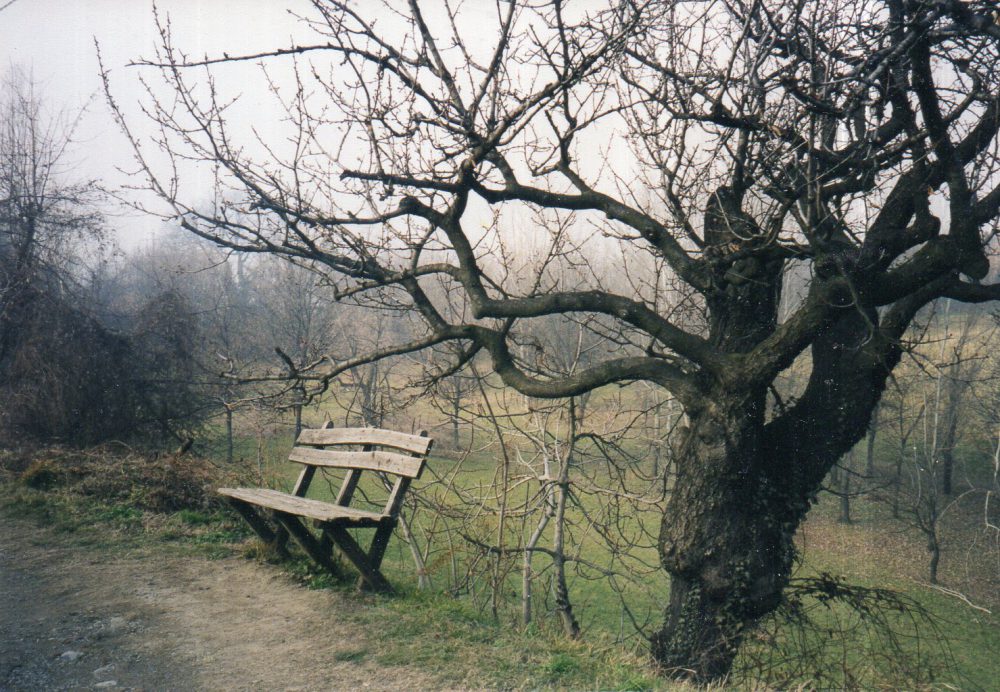
Heartwings Love Notes 1096: Memory and Forgettery

Heartwings says, “Remembrance of things past can be precious.”

Lately my forgettery works better than my memory, or so it seems to me. I shudder to think old age is creeping up on me, however that might be the case. At eighty-seven going on eighty-eight maybe it’s appropriate to have some memory issues. The thing is, I have said for years if I must Lose out either in mind or in body, I’d prefer to keep my mind.

My mother was physically strong even into her nineties. She once fell down a flight of stairs and got to her feet with nothing to show for the experience but a few bruises. She was physically active in her old age, and unlike me, she could go for long walks at a fast pace. Her mind, however began to leave her in her mid-seventies and by the time she was my age she had become more absent of mind than not.

My grandmother on my father’s side was strong and vital until age eighty, when she fell asleep the night of the lovely Christmas party she had for us, and never woke up. She was found the next morning, where she had dozed off sitting against her pillows. She was reading the book the children’s father and I had given her for Christmas and never woke up. What a lovely way to go. I would like to be that fortunate.

She had a youthful demeanor, and by sales people and other strangers, when I was with her, she was often thought of as my mother. I like to think I’ve inherited her good health and her mental resilience. She might have been somewhat forgetful. I remember my mother once saying that when she stayed with her, my mother was always stepping on the notes to herself that my grandmother left on the floor. I prefer to leave my notes on my desk or on the kitchen counter. I have two pads of recycled paper I keep in different places to help me remember to do things that I need to do in a timely manner.

In some way, it appears to me that I am more apt to neglect what I do not write down. So, lately I am taking care to write even more down than I used to. I also write down stray hints and phrases that are themes for columns. These float in and as quickly float away if I don’t make note of them. Today’s subject is an example of a quick inspiration based the word “forgettery.”

My long-term memory is excellent and goes back to my very early childhood. I have impressions from being in my blue highchair and even in my blue crib. I was so good at escaping from it that my parents moved my bureau up against it to prevent me. I hope my memory continues to hold up and that my forgettery will not increase, however, only time will tell, and time’s not saying right now.

May you remember whatever you need to, by the time you do.

Blessings and best regards, Tasha Halpert

PS How about you, dear Readers? Do you have memory tricks you use or other methods that are helpful? I love it when you share, and I treasure your responses. Thanks in advance.

Heartwings Love Notes 1095 Whatever Happened to Elbow Grease

Heartwings says: “There’s lots to be said for elbow grease.”

I was chatting with a friend of mine who is an energetic cleaner. “You don’t use any cleaning products with chlorine?” She asked me.  “How do you get things clean? No harsh chemicals? No oven cleaners?”

I know she can scrub endlessly away at something until it sparkles, and she thinks I’m a bit strange because of the products I use. I pointed out to her that vinegar, baking soda and salt can clean almost everything and result in no harm to the environment.

“Then you’ve got to scrub so hard to make them work,” she complained.

“Whatever happened to elbow grease?” I asked her with a laugh. “You go to a gym and pay money to exercise. When I do my housework, I get many of the same benefits.” She shook her head and changed the subject. I smiled to myself and thought about the money I save by not purchasing expensive, harsh, ill smelling, cleaning products. I use things I find right on my pantry shelves, plus a select few I buy at my market.

If you prefer commercial products, you can purchase environmentally sound cleaning products at your health food store and these days at some enlightened supermarkets. There are a few more that are available everywhere and legitimately good for the environment, like Murphy’s Oil Soap which smells wonderful and harms nothing, and good old Bon Ami—hasn’t scratched yet. I also discovered a little baking soda and a bit of scrubbing do away with tea stains in my mugs. Vinegar cleans the toilet and kills germs. It stays clean longer too. Pour vinegar and sprinkle with baking soda on your oven floor. Leave over night and wipe up for a clean oven in the morning.

I don’t mind a little extra scrubbing. I am beginning to see all housework as a form of benevolent exercise. Apparently, I am not alone in my thinking as I recently read something to the effect that those who analyze such things now include time spent cleaning and scrubbing as a valid form of exercise. This is good news for those of us who once thought housework was a necessary evil. Now it can serve two purposes and become a necessary good. Those who are pressed for time who have children at home might persuade them of the virtues of washing the floors as an alternative to tedious soccer practice. Although I’m pretty sure that to most children over the age of eight, almost anything is preferable to housework,

Along with Bon Ami, keep a shaker of baking soda on the edge of your sink and use them instead of an ill smelling scouring powder. Try sprinkling baking soda on your rugs overnight and vacuuming it up in the morning. You’ll be surprised how clean things will smell. And remember, elbow grease is not only free, it reduces calories and trims the arms and chest as well. Powerful stuff, elbow grease!

Hope you have a good supply!

Blessings and best regards, Tasha Halpert

PS Do you have any good cleaning tips or suggestions? It is such a treat to hear from readers. Thanks in advance for your thoughts.

Heartwings Love Note 1093 The Kindness of Strangers

Heartwings says, “When you look with kind eyes, it helps you to be kinder.”

Recently, I sat in a movie theater for nearly three hours. When the film ended, I stood up to find the restroom. While there were some railings near my seat, as I headed for the exit corridor, there was only a wall to help me steady my steps. My balance was challenged even as I used my cane. “Let me help you,” came a voice next to me. “Take my arm.” A short, kindly woman extended her arm to me.

She walked down the long corridor with me, at the rate of my slow steps very patiently, until we reached a ladies’ room. Only it was not the usual one but a special locked family room. Again, she waited with me as an attendant fetched a key and let me in. I kept thanking her. Every time I said how grateful I was, she shook her head and dismissed my words. When I came out, she was gone. My husband told me she had waited to tell him where I was. Sadly, I never learned her name.

The Dalai Lama tells us his religion is kindness. Focused in this way, kindness becomes a way to practice one’s spirituality. Of course, this is not confined to Buddhism. Christianity’s Jesus tells us to “Do unto others,” and other religious and spiritual paths have their versions of this kind of behavior as well. For most of my life, I have tried to practice kindness as often as possible.

The other day I was exiting a parking lot when a huge truck stopped in front of me, attempting to make a turn into the plaza across the street. After waiting for the cars to finish passing, it turned. There was a huge line of cars behind it, and I resigned myself to a long wait. But no, the person behind the truck waited for me to pull out and go. I gave her a big smile and a wave. What a blessing I received from that stranger on the road.

It’d one thing to be kind to those we love and cherish. It is to be hoped that we will give freely to dear friends and family. On the other hand, I was brought up to avoid strangers, to fear interaction with them, or at the least to be cautious around them. No one suggested being kind to them. I have never been inclined to follow this approach.

To be sure, being kind to strangers may or may not bring an immediate or any reward, yet that is not the reason to be doing it. Being kind is a good way to expand the heart and to build compassion. I have met with much kindness in my life and I have done my best to return it whenever I could as well as to initiate it. It costs little to nothing to be kind, and it adds to the sum of compassion in the world.

May you be as kind as you can be, always.

Blessings and best Regards, Tasha Halpert

Would you share a kindness from a stranger story with me? I so enjoy it when you share your stories. Comments and suggestions are welcome too.

Heartwings Love Notes 1092: Adjusting Expectations

Heartwings says, “Dealing with our expectations takes lots of work.”

Expectations are tricky. They can make you think you’re falling behind, or create unrealistic goals that are impossible to fulfill. On the other hand, they can be guidelines or parameters that help us. How they function is up to us. While it is actually best to live without expectations, AKA: beginner’s mind—it is also almost  impossible to do so.

Our expectations of ourselves begin in infancy, when we struggle to our feet and take our first steps. However, at that time they are not conscious. They are also based on other people’s actions toward us. As we become aware of others and begin to interact, we expect the ball we throw or roll to be thrown or rolled back, and a world of actions and reactions begins to emerge for us.

Expectations are our attempts to learn for better or worse. They are built by experience. As young children we often learn how to make adults laugh or smile and thus treat us nicely. We also learn the reverse is true when we misbehave and make them angry. How well I remember wishing to read the newspaper during the day, yet refraining, knowing that my father wanted it pristine for his readership in the evening after work. No matter how carefully I refolded it, he would know, as I found out to my sorrow. But that was then.

Fast forward some eighty plus years into the future. I’ve had a whole lifetime of experience and of dealing with the expectations around which my life has revolved. Now, thanks to age and Parkinson’s, I am dealing with a whole new set of them, both positive and negative. Unexpectedly, all my previous experience has been superseded and I must deal with a whole lot of new parameters and limitations.

For instance, I’ve always been an independent, I’ll do it myself kind of person. Now I need help practically every time I turn around. I have difficulty opening jars or beating up eggs. It takes me a much longer time than it used to, to fix even the simplest meal. However, this is not said to complain or seek pity. The issue is one of having realistic expectations. Were I to do it the Zen way, I would have none at all. I would simply get out the ingredients for a meal and go to work on it.

Or I can learn to adjust my expectations to be content to proceed as skillfully as I can without being concerned. It’s true that I try to live without expectations, yet those niggly statements I grew up hearing—”You can do better” was a frequent one—tend to nip at me and must also be dealt with. I must talk back to them, assuring them I am doing my best, and that they can take it easy on me. Best of all, I must take it easy on me and remember not to have unrealistic expectations.

May you be able to fulfill most of your happy expectations.

Blessings and best Regards, Tasha Halpert

PS Do you wrestle with expectations? Do you have a few or lots? I so enjoy hearing from readers.

Heartwings Love Notes 1091: Birthdays are Timely Occasions

Heartwings says, “Years can seem like weeks when memories cluster together.”

Our country has been celebrating its birthday on July fourth for quite a long time now. In three more years, it will be the two hundred and fiftieth birthday of the United States of America. While the first celebration was actually in 1777, it took time to catch on, and catch on it did. In the 1800s celebrations were widespread. Now, of course it is common and even commercialized.

The time passes so quickly now, it was only a few years ago that we celebrated the two hundredth, or so it seems to me.  For me, that holiday has always been filled with memories. I recall the wonderful parades that marched past our home in the town in Massachusetts where the children’s father and I raised our family. I have happy memories of the occasion as one for a gathering of townspeople later that day in the afternoon, with games and races for all ages.

My children participated in all the events and often won them, being well coordinated and athletic, unlike their mother. Unfortunately for me they always insisted I run in the tired mothers’ race—as it was called. Never having been much of a runner, I almost always came in last, but they were proud of me anyway. There was a children’s parade as well, and of course costumes to be cobbled together and happy faces as my family marched with the other children.

I remember as a youngster attending the fireworks held at the beach in her town, with my grandmother. We sat on the sand, watching the set pieces that had been attached to a wooden pier that jutted out into the water. It was a special and cherished experience. Nowadays I usually watch the fireworks on television listening to music. When I lived in Virginia, together with friends and a few thousand others, I got to see the fireworks over the Capitol—a most remarkable display.

Because Stephen’s birthday falls the day before on the third, we celebrate for several days, including the fifth, which is our wedding anniversary. We usually have a party with friends and when we had our inner peace center, we often had some who came from afar and tented in the back yard. July fourth has been a special day for me for as long as I can remember.

As we get older, the years seem to go by faster and faster. While this is surely an illusion, it is a very real experience. The celebrations of memory, with my children in costumes, parading along with others, seem just a few moments from my time with my grandmother and a few more from the parties we called Three Days of Peace and Love—July 3, 4, and 5, with tents on the lawn. Presently, our celebrations of these special days are quieter, and we will not be seeing live fireworks, however they will be just as special as they have always been, in their own way.

May you enjoy your celebration with those you love.

Blessings and Best Regards, Tasha Halpert

P.S. How do you celebrate the Fourth? Share with me if you like, I so enjoy the stories you do. Write me at tashahal@gmail.com.

Heartwings Love Notes 1088: A Rare Day in June

Heartwings says, “To enjoy the moment is the best gift one can give oneself.”

As I drove around doing errands my eyes kept being drawn to the beautiful blossoming trees and bushes on local lawns and roadsides. The town I live in is filled with beautifully kept homes and gardens. People take pride in the appearance of their homes and everywhere you drive in Grafton there is beauty to be seen. As I drove, I thought how eloquently the green grass, the freshness of the leaves, and the tidy gardens spoke of the loveliness of the beginning of summer. It is nearly time for the solstice. June 21 will bring the onset of the long hot bright days of June, July, and part of August.

When I was a child, I could hardly wait for the wonderful summer days: free time, swimming, sitting in my favorite tree reading, all these activities and more awaited me. As a young adult with my children in tow, on any sunny day I headed for the beach, meeting friends and chatting over iced tea as we watched over our little ones. However, as an elder, I confess that I cringe at the prospect of the long, hot days. The heat of summer robs me of my ability to think and makes it harder for me to sleep at night. I have to lurk indoors with the air conditioner going, hurrying out of the house for an exercise walk either first thing in the morning or later on toward sunset.

Too, the sun is not as benign as it used to be. The thinning of the atmosphere due to global warming has increased the potency of the sun’s rays, necessitating cover-ups and hats, not to mention sunscreen and sun glasses. Remember how we all used to rush out to get a tan at the beginning of summer? The “healthy tan” we all used to crave is less desirable now. It’s almost as though we need to go back to Victorian times when pale skin was a sign of beauty. Now it could be a sign of care for one’s health. I remember when I was in college skipping a class I disliked to sit out on the porch roof with my friends so we could “work on our tans,” as we used to say. The idea was to increase the effect of the sun with tanning lotion rather than block it with sunscreen.

I regret that the onset of the summer heat and more especially the humidity takes more out of me than it used to do. I’d love it if I had a personal air conditioner, I could wear around my neck that would provide me with a cooling breeze when I need to be refreshed from the heat. Even so, there are some delights that nothing can spoil. Yesterday, as I walked past a wild rose bramble my nose caught the sweet scent of the tiny white blossoms snuggled into some trees by the side of the road. I stopped and inhaled, taking time to smell these very special June treats. The present moment joy is what matters, not the prospect of discomfort. At least I have the benefit of the air conditioner in our apartment. Indeed, what is can possibly be so rare as a day in June when it brings me gifts like the wafting glory of these tiny June treats.

May you enjoy all your good moments and ignore your less than good ones.

Blessings and best regards, Tasha

What is your favorite aspect or experience of June? I’d love it if you’d like to share it with me. Your emails make my days special. Thanks in advance. For more Love Notes, check out From the Poet’s Heart at https://tashasperspective.com.

Heartwings Love Notes 1087: The Virtue of Doing

Heartwings says, “The virtue of doing may cause one dismay.”

Those of us Yankees raised in the traditional way of our ancestors, may well have inherited their ethic: To be busy, to be doing what is useful and good, to keep our hands occupied, is our watchword. There is even a saying that goes something like, “the devil finds work for idle hands.” This means, I expect, that if we don’t keep busy, we’ll get into mischief of some sort.

Perhaps because I had a mother raised in Germany, or perhaps because I had a Yankee father, I was always urged to be doing something, even if it was reading a book. My chief daily chore was taking care of our chickens. They lived in a hen house with a yard fenced in with chicken wire. I had to carry their mash from the barn and in the spring, summer, and fall, fill their water container from the faucet by the henhouse. For this I was paid the princely sum of fifty cents a week. In the winter I had to lug the water from the house, which was much more difficult.

Nowadays, fortunately I have no chickens to feed, only two human beings that need three meals a day, and our pitcher with the filtered water needs only to be carried from the sink to the table. Until fairly recently my life seemed relatively tranquil and most of what I needed to do could be done easily within my available time span. Then along came Parkinson’s Disease: a collection of symptoms clustered around the nerves and their connection to the brain.

My chief symptom is slowness. It takes me much longer to get things done than I am accustomed to, even though I have had two years or so to get used to it. This is made more difficult due to my childhood programming vis a vis the virtue of doing. For instance, I have to deal with my dismay at taking more than an hour to fix a meal when it used to take so much less time. My kind husband would say, “Don’t worry about it, take all the time you need.” That doesn’t silence the little voice that tells me I am too slow, or even that I am lazy.

Dealing with the frustration is a daily chore I wish I could eliminate, yet so far, I haven’t been able to. The voice of conscience seems to have no mercy on the hands that fumble when I work at cutting vegetables, or the feet that I must walk slowly and mindfully with lest I stumble. I know I do just fine, yet when the dinner isn’t ready in a timely manner, it says I ought to have begun sooner, and that’s no help.

I don’t mean to complain, only to share in case someone else who shares my dilemma might feel comforted to know she or he is not alone. 

May you make peace in your heart wish any disability you may have.

Blessings and Best Regards, Tasha Halpert

P If you have a story to share or some issue to discuss I’d love to hear from you. Your correspondence is precious to me. Please write me at tashahal@gmail.com

Heartwings Love Notes 1086 The Wisdom of a Blind Eye and a Deaf Ear

Heartwings says, “Gently ignoring a situation can help soothe troubled waters.”

In the interests of peace, it is often advisable to turn a deaf ear or a blind eye to some of the unimportant yet annoying sources of conflict in a relationship. For instance, my mother resented it that my father did not want her to ever wear black. His mother, after the fashion of her day, wore black for seven years after my grandfather died of the terrible flu that ravaged the American soldiers and many others who were overseas at the end of World War One. Young at the time, my father had grown to intensely dislike black attire. Perhaps it reminded him of the loss of his father; I do not know and never asked him.

My mother was patient about this, as well as many other things that were not agreeable to her in their life together. To turn a blind eye is to avoid seeing, a deaf ear to avoid hearing what might otherwise be a source of irritation. However, doing this may also build resentment toward the perpetrators. It is sometimes difficult to walk the line between giving too little attention and giving too much. One must ask, is this situation important enough to make a fuss about or is it something that can be overlooked?

Here it might be good to take note of one’s feelings and to pay attention to them. It must be decided whether the annoyance is strong enough to prompt a response or not. If not, one can let it slide. If so, one can speak up. Sometimes the unaddressed feelings can build up and cause a problem or an argument. Sometimes which is worse, they create a ‘blowback,’ causing resentment that turns into anger and even sabotage. When one is trying to be nice, it might be all too easy to ignore the very real feelings of dismay that will turn into something worse when treated with a blind eye or a deaf ear. It seems important to allow one’s feelings about something uncomfortable to be mentioned rather than ignored, when there is danger of a buildup to the point of explosion.

For instance, I remember many years ago when I was a teenager, chiding my parents about their prejudicial language. They had grown up with it and to them using the ‘N’ word, for instance was perfectly normal. They did not take kindly to my efforts to correct them. Still, it was important to me to do so because I felt strongly about it.

Honesty is indeed the best policy; however, you need not be blunt nor simply complaining about something insignificant. The secret to success in speaking up is to not play the blame game, but to be truthful about your feelings. When you feel strongly, when your feelings are authentic, and when you phrase them in such a way as to convey this, your rate of success will be much improved.

Heartwings Love Note 1083: Bigger May Not Be Better

Heartwings says, “Size is not really a good indication of value.”

Have you noticed how big commercial trucks have become? Within the last few years, it seems that most of the trucks that transport much of our nation’s goods have become a third to a half longer and appropriately wider and taller. I remember when I noticed one of my first ones a couple of years ago when they were rarer, and pointed it out to Stephen. He told me no, I was incorrect, it was the same size as always. Then a normal sized truck, the usual ones we saw on the Mass Pike went by and drew up next to the larger one I had pointed out. “I see what you mean,” he said.

Since that day it seems to me that the older, smaller trucks I was used to have greatly diminished and the newer larger sized ones seem to have greatly increased. To be honest, I find these monsters to be somewhat intimidating. They just about dwarf my Toyota sedan, and it’s not a small car. I often wonder what the truck drivers do when they need to navigate narrow, twisted streets in small towns like ours. Surely, the trucks can’t get any larger, yet who knows what the manufacturers will decide to do.

Fruit is another thing that has become larger. Blueberries have become much bigger in size. I don’t think the flavor has increased any, perhaps it has even diminished. Don’t get me talking about strawberries! They’ve been growing bigger for a long time, and it has not contributed to their taste. I wait for the real (to me) strawberries that arrive in farm stands in June and snatch up as many boxes as I can get during their brief season.

I don’t mean to complain, but bigger is not always better. At least the flavor of the peaches and plums that are all swelled up in size taste better if I cook them with a little sugar. I often do the same with the outsized strawberries when I can find organic ones. There are too many pesticides in the inorganic ones. These are said to be one of the highest of the top ten fruits and vegetables in pesticide content. Pesticides and other chemicals are being linked to cancer and other ills, and one is safer buying and eating as much organic food as possible. Besides, it tastes better.

Recently I took out a book by one of my favorite authors, and much to my dismay, I had to return I to the library the next day. It was too heavy to hold to read. One exception is our new library. It has increased in size yet has not diminished in any way, quite the contrary. Growth in size is not necessarily a bad thing, when it is necessary. Necessity seems to be the key. Growth for the sake of making something bigger may not work as well as keeping the size the same. It’s all a matter of what works best.

May you discover what seems to work best for you in terms of size.

Blessings and best regards, Tasha Halpert

P.S. Do you have any thoughts on this or any other subject? Please share the with me, I do so enjoy hearing from my readers. Write to me at tashahal@gmail.com and for more love, notes visit my website at www.heartwingsandfriends.com.

The Fear Factor

Heartwings says, “When our opinions influence us, we may act without thinking.”

What if? When you hear that as the beginning of a sentence, do you anticipate a negative or a positive to follow? It is good to know what passes through one’s mind, i.e. to listen to yourself. Doing so can be very enlightening. What do you focus on? Do you look for optimistic outcomes? These and other rhetorical questions can help you to understand how to be happier, even though circumstances might conspire to make you think otherwise.

There is a story from an anthropologist, as I recall being told, that on a certain island in the tropics the monkeys began to wash their food. They were the first to do so. As time went on, it was observed that other monkeys on other islands, without any contact with the first monkeys, began to do the same. How? Perhaps there is an influence working that is generated without effort but simply by a flow of energy.

Along those lines, I recently heard a remarkable Ted Talk that was entitled, “You are Contagious.” I highly recommend looking it up—probably Google will help. What this essentially boils down to, at least to me, is that if we work at it, and enough of us get going at it, we can begin to change the world for the better. This will take time, but if we start where we are and keep it up, it can spread.

Right now, all too many people are driven by fear. Statistically I am told there are four guns for every person in this country. Many of them are automatic, shooting many bullets quickly. We have a gun lobby so powerful that gun laws designed to help often do not get passed. Sadly too, the laws we do have get broken anyway. In this climate of violence, fear and paranoia flourish.

We hear of these tragedies, and it is more and more frustrating because there is nothing we can do, or so we feel. But wait, there’s more! There is something we can do. We can manifest some positive energy to spread an antidote to the fear factor. I’d suggest beginning with gratitude. When you hear of the next awful sadness, turn your thoughts in another direction. Think how grateful you are for or about something in your life.  Express thanks, either silently or aloud, with your next breath. It is not that we don’t sympathize or feel sad about it, it’s that we don’t need to dwell on that sadness. It does not help.

We are all contagious. It is as though each of us is an island in an ocean of being, all connected. Perhaps the water the monkeys used to wash their food somehow carried the message to the monkeys on other islands. No one can say. By living with as much optimism and gratitude as we can, who knows how much influence we can manifest? It would be wonderful to try. Nothing is ever accomplished with endless mourning, nor will peace be bought with a sword.

May you find much to be grateful for and stay optimistic.

Blessings and best regards, Tasha Halpert

PS If you have stories, questions, comments, or information for me. Please drop me a note at tashahal@gmail.com. I so like to hear from readers and am enormously grateful.