Heartwings Love Notes 2031: The Virtue of Small Tasks

Heartwings says, “Where you put your focus is vital to your success.”

 My mother used to tell me she enjoyed hanging out the laundry because when she finished doing so, she felt as though she had accomplished something. It gave her a feeling of satisfaction. At the time I was buried in tasks built around mothering my five very active, very creative children and was happy to have an electric dryer to do the work for me.

These days after many years of hanging the laundry out on the various clotheslines or racks in the different places I’ve lived, I again rely on a dryer, though for different reasons. Due to my Parkinson’s’, the time it takes me to accomplish anything has quadrupled, or nearly so, depending on the task.

I can’t do much about this. There is truth in that half humorous Pennsylvania Dutch saying, “The faster I go, the behinder I get.” In other words, when I try to hurry what I am doing, I make foolish errors or mess up in some way that delays me even more. Sometimes I feel like the adolescent with poor proprioception that I once was, who used to drop things, bump into them, or stumble over whatever got in my way. Nowadays there is a word for that condition, back then I was said to be clumsy.

Instead, I try to bring my attention to whatever I am attempting. It helps me when instead of allowing myself to be distracted, I focus on that and that alone. However, what I find to be the most useful are the small, daily chores I once hurried through in order to “get things done.”

I have made peace with tomorrow, recognizing that unless there is a hard and fast deadline, most things can be delayed without problems or harm. In addition, I get training in letting go of the ego satisfaction I used to derive from being efficient. The difficulty with ego satisfaction is that it’s distracting and not necessarily helpful.When I seek satisfaction as a goal, instead of a focus on accomplishing the task, it really does take away from my ability to function efficiently.

In trying to satisfy my ego, I’m not as able to pursue the best way to get something done. It’s easy to miss what works best when you are looking for what feels good to you. I’ve also noticed that these days, for many, faster seems to equate to better. No craftsperson worth her or his salt feels that way. I am reminded of the film The Karate Kid about the martial arts student whose teacher instructed him, “Wax on, wax off” as he worked on a car.

There is also the saying, “Chop wood, carry water,” a Buddhist perspective in reference to every day accomplishments. It’s all really about doing what is there to be done, the best way you can. Small tasks done with loving attention are as worthwhile as great accomplishments, however they are done.

May you find joy in whatever task you are pursuing.

Blessings and best regards, Tasha Halpert

P.S. Do you have any hints or helps along these lines? I can always use good ones, and I so enjoy hearing from readers. Reach out to me at Tashahal@gmail.com, and sign up for more Love Notes at https://tashasperspective.com/Pujakins.  

Heartwings Love Notes: Eggs and Easter Memories

Heartwings says, “Like Easter, Eggs are symbols of beginnings and renewal, the essence of spring.”

My father was attuned to all things that concerned or had to do with nature. His grandfather was an amateur horticulturist, who may have been his first teacher.  Though he never studied horticulture or took classes as far as I know, he had a broad interest in plants and trees. He also kept chickens, and we always had plenty of fresh eggs, as well as chicken to eat. I can still see my mother, standing by the sink, plucking the feathers from the younger chicken she was roasting for dinner, or from the elderly fowl, no longer laying eggs, that was headed for soup.

 During World War II many things were scarce, eggs among them.  We had plenty to share, so daddy would often sell a dozen eggs to people he knew, receiving whatever he charged for them to defray the cost of the grain and mash he fed the layers. I can remember him once, laughing over a rather rude response he got from one customer, an acquaintance, who told him to go around to the back with his delivery. He didn’t take it to heart, because he had a good sense of humor. I was often called upon to feed and water the hens, and I received a small allowance—fifty cents a week, for doing so.

What brought all this to mind was the fact that this weekend it’s Easter, and eggs are an important symbol of the holiday, as well as a prominent feature. One year, as I recall we had so many eggs, my mother and father decided to hold an Easter egg hunt. I helped color the eggs, but was not allowed to participate in the hunt. I remember looking wistfully out the window from the second floor of our home as the invited children of friends scurried around, discovering the hiding places of the eggs. The adults were probably enjoying cocktails and snacks, as they often did at gatherings my dad hosted.

Besides eggs, Easter in my household meant flowers, both corsages for my mother and for me, and flowers in vases and plants in pots for the house. It also meant wearing hats in church. I recall a straw hat with a broad, turned up brim. It had a wide blue grosgrain ribbon that went around the crown and hung down in the back, descending from a bow. We attended two services, first my mother’s Catholic one, then my father’s Episcopalian one, which I loved. There was singing of familiar hymns—we sang one or two of them each morning at my school’s morning meetings, plus the service’s words were in English. Even better, there were cushions to kneel on instead of the hard wooden benches of my mother’s church. Happily, there was a geranium for me and every other child there, to take home after the service was over. Such spring symbols bring the assurance that the old is passing away and the new is here.

 May you find your heart renewed by spring’s symbols.

Blessings and best regards, Tasha Halpert

PS If you have any Easter stories, please send them along, I love hearing from you. You can write me at tashahal@gmail.com. Sign up for more Love Notes at my blog, found at https://tashasperspective.com/Pujakins

Heartwings Love Notes 2028 A Beacon of Hope and Healing

Heartwings says, “When all that can be done is listen, we can also envision light and healing for our suffering friends.”

In just this past week we have had news of tragic circumstances in the lives of several dear friends. It is important to know what is happening to our dear ones, and it also inspires the desire to express concern in some way. However, despite our well-meaning intentions, all too often much of what we might say or offer by way of response is either not helpful or worse, inappropriate. This may spring from our own personal reactions and we may seldom stop and think ahead about what we offer by way of comforting words.

When I was a child, most people I knew did not speak of their illnesses. Death and dying were pretty much taboo. I remember going to my first funeral when I was twelve. I wore stockings, or hose, with a garter belt, and patent leather mary janes. I remember I felt quite grown up. What I don’t remember is whose funeral it was. Certainly, it wasn’t a member of my immediate family.

I am blessed with strong ancestors, especially the females. I grew up with vital elders. I wonder what they would think of today’s attitudes. Our feelings around fatal illnesses are often tested, these days, by people who freely share their personal health situations. When we hear of the sad and inevitable diagnoses, the result is we fear for our friends. we feel his or her pain and at the same time, imagine what it would be like to be in their shoes and shudder. It is difficult and maybe even impossible to take ourselves out of the situation and into a state of detached compassion.

That phrase sounds like an oxymoron. Isn’t compassion a state of caring? And the act of caring sounds as if it emanates from a personal place. It can, and often does. However, it can also be done from a place of detachment. This requires real attention to what is going on within us, what has been triggered by the circumstance.

When I am able to take myself out of the situation, I let go of all my opinions and suppositions, and instead project love and light around that person. In this way, I am not focused on how I feel about their situation, instead I am focused on unconditional love. Thus, I have a clear path to genuine compassion, clean of shoulds and oughts. I can put all my effort into the projection of healing energy. I am not expressing my ideas or saying what I would do if I were they.

Another aspect of sending healing energy is to make sure to put it in a positive, affirmative way. I remember the words of one of my teachers. “Be mindful who it is you want to have praying for you,” she told me. She said we must phrase our prayers to affirm healing and avoid negative phrasing. Words can be completely avoided. My usual prayer invokes and envisions bright, warm light surrounding the individual for whom I am praying.

May you be of comfort when called upon to be.

Blessings and best regards, Tasha Halpert

PS If you have any suggestions for columns or issues to address, I’d love to hear them. Your responses are important to me, thanks for whatever you bring me.

Write me at tashahal@gmail.com or hit reply. You can sign up for my blog here

Heartwings Love Notes 2026: Remember to Respect Yourself

Heartwings says, “Self-respect is as important as respecting others.”

Self-respect is important. While it might be better known now, I wasn’t taught that when I was young. Then, I was taught to stand up when adults entered the room. I was told to listen when spoken to and not to interrupt. I was instructed to write thank you notes when I received a gift and to say” thank you,” or “you’re welcome,”, as opposed to “no problem.”  This was what I was told was good manners and a sign of respect for one’s elders. No one thought to teach me to respect myself. Perhaps I was supposed to figure that out. In those days, it might even be have been considered being selfish.

How do you teach self-respect? Do you learn to respect yourself by the virtue of being respected by others. When I was growing up, no one thought much about respecting children. The axiom, “Children are to be seen and not heard” was in full force when I was in my single digits. I was told to respect others, and it never occurred to me or to any adult that perhaps I too deserved respect, or that respect was a two-way street. In those days, I was considered to be “only a child.” I grew up with this, and for many years I had that same attitude.

My mother and her two sisters had it worse.  Their father was in the diplomatic service and the guests to their home for formal or even informal occasions often brought candy or other treats as a kind gesture for their host’s children. Their mother thanked the giver politely and whisked the candy away, saying quietly to the little girls, “This is for the guests.” One of my mother’s friends co-opted the hard-earned savings of her three sons to purchase a car. She said, “They get to ride in it, so they can help pay for it. I remember feeling shocked at the time. It seemed unfair. However, when my neighbor spoke of her children’s TV programs as important, I was surprised. That was a new thought, and I remember that it influenced my attitude toward respect for children from then on.

Since then, I have learned more about respect, what it is and what it means. I confess to being a people pleaser. This has hindered the learning process. Parkinson’s, that relentless and demanding condition, is finally teaching me self-respect. I realize I must respect my limits. It is too easy to over-tax myself in an effort to be kind and nice. I have had to deal with real limits to my mobility and to my strength. I try to expand those limits, yet I realize I must often bow to them. Lessons come to us in ways we need to learn. As I grow in my ability to respect my own limits, I also learn to do better at respecting those of others, and for this I am grateful.

May you appreciate your opportunities to learn and grow.

Blessings and Best regards, Tasha Halpert

PS Learned any good lessons lately? I so enjoy it when readers share their experiences. Your emails make my day. Write me at tashahal@gmail.com, and check out my website at www.heartwingsandfriends.com for more love notes.

Heartwings Love Notes 2024: The Beauty of Winter

Heartwings says, “As you seek out its loveliness, you will appreciate each season.”

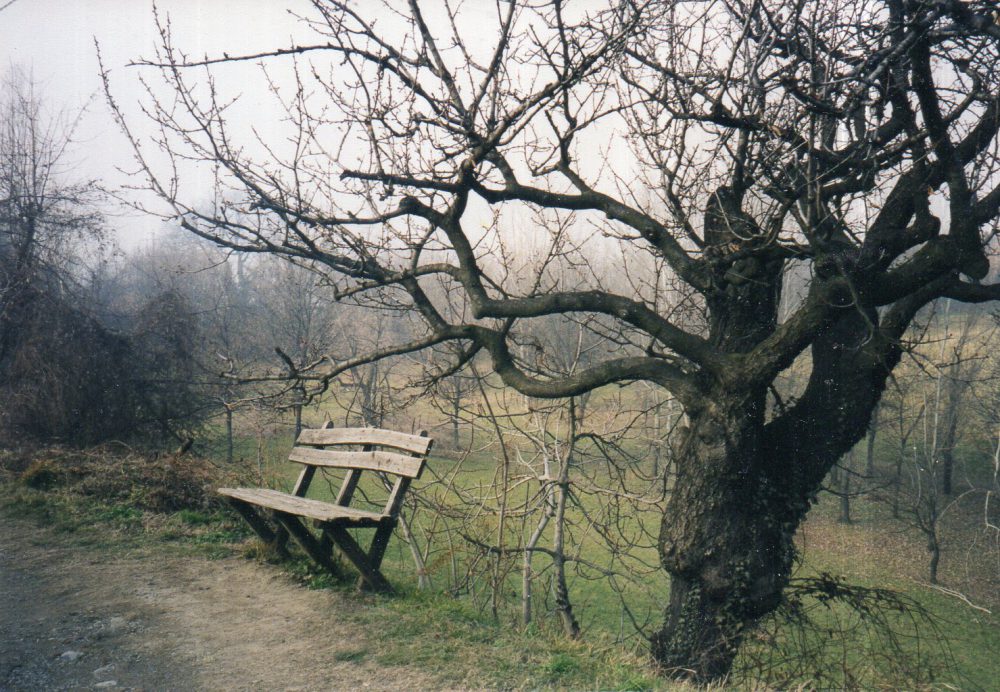
As spring begins her slow back-and-forth progress across the landscape, the beauty of winter will soon be behind us. I will miss the bouquets of bare branches, springing from their tree trunk stems where they grow by the side of the road.

To be sure, I will be happy for the brighter days, and as well for the warmer temperatures—until it gets too hot. Which is why I am such a fan of winter. Summer is my least favorite season, though of course that was not always true for me. As I grow older, I grow fonder of the cooler temperatures, and I tolerate the heat less and less.

I sleep better when there are more of the darker hours as well. Even though I do enjoy the late evenings of summer there is something so cozy about drawing the curtains in the late afternoons of winter, and of feeling the warmth of the quilt when I climb into my bed at night. For me this is another of the many forms of beauty. My definition of beauty is broader than most.

Beauty takes many forms, many of them not traditional. There is beauty in an elderly wrinkled face when the wrinkles are from that person’s many smiles over the years. Every season has its own special beauty, and so does each season of life. There is beauty in the memories and stories of a long life, and the wisdom of age has a beauty all its own.

In the winter of my life, it is enjoyable to me to see the grown grandchildren as they become their adult selves. I recently became a great grandmother again, and as I looked at the face of the proud father holding his first, a son, my heart warmed in my chest. I probably will not see the young boy into manhood, and that’s all right, I can see him growing and that’s enough.

In winter, for me, each day becomes more precious. To my dismay, my moments seem to speed by; my hours vanish into the days. I cannot slow down time; however, I can take note of it. I can be present in my hours and in my days. I can make note of whatever beauty is to be found wherever it is present. This is true in every season, of course yet in winter it might be more difficult.

The stark landscape may not appear beautiful to some or even many people. To me, its simplicity is beautiful. The dry grasses and weeds, brown against the snow or swaying in the wind are quite lovely. Of course, flowers are glorious when they appear, and the daffodils are welcome, yet the muted landscape enhances the brilliance of the cardinals and the other birds. When the sun shines, it makes more of an impact then, than during the other seasons.

It is wonderful to see beauty and to appreciate it, wherever it is found. Being present to enjoy it is a kind of beauty as well.

May you take the time to enrich yourself with beauty.

Blessings and best regards, Tasha Halpert

PS What do you enjoy about winter? What season do you appreciate most? I love it when readers share with me, please write to me at tashahal@gmail.com and make my day.

Heartwings Love Notes 2022 Love is in the Air

Heartwings says, “Love has many forms and faces, all of them true.”

Have you noticed the avian activity? The birds know that winter is on the way out and spring is on the way in. It will take its time getting here, yet its eventual arrival is assured. The birds’ songs are an indication that soon, or perhaps sooner still, mating will begin to take place.

Mating is preceded by courting, of course. This is the males’ opportunity to strut their stuff, show off their finery and often to compete with other males for the attention of their chosen lady love. Much of the birds’ design is intended to facilitate this process.

Other species, too, begin to shake off winter and think about the oncoming season. This includes humans, of course. The stores have already set up their Valentine’s Day displays. That happens soon after Christmas. Hearts and flowers predominate. Don’t look now but is there a shamrock or two mixed in? That’s just a hint of how the seasons are advertised, commercially at least, to remind us to celebrate.

However, love is the January/February feature—romantic love, that is.

While it’s too early by far for spring fever, the fever of love is clearly an aspect of February. Books, as well as the Internet tell us its name is derived from that of a goddess whose Latin or Roman name translates to fever: Februata. I enjoy reading up on the myths and tales surrounding the times for celebration. The ancient peoples used stories to convey information, the symbols that are part of the facts illustrate it as much as or even more than the words.

Love is expressed in many ways, some of them obvious, some not. There is a saying, “Handsome is as handsome does.” Good looks may attract the eye, but it takes more than that to go past attraction to the full bloom of romantic love. It can begin that way, for sure.

Most of us can probably remember our first real love as teenagers. I know I do. I had a felt hat that was given as a favor at parties that my first real boyfriend gave me. As I recall, it had several pins on it. My poor mother disliked it intensely. He and I wrote each other every day while he was away–I’m not exactly sure where, and spoke on the phone a lot when he returned. This annoyed my father, who did a lot of his business over the telephone, and did not want me tying it up.

The Greeks as well as other peoples of other nationalities have words for all the kinds of love, as well as symbols. However it is expressed, the call to embrace and then perhaps to reproduce is definitely in the air in February. Valentine’s day is the center around which the celebration is built, but which came first, I wonder? Nature’s influence, or the push to celebrate the beginning of spring? My money’s on Mother Nature.

May you find love where you seek it, and cherish it when you do.

Blessings and Best Regards, Tasha Halpert

PS How do you think love is given best? Please share your ideas. Do you have some thoughts for me? I love hearing from you, and hope you do. Please write to me at Tashahal@gmail.com, and you can sign up to receive my blog weekly at http://tashasperspective.com, click on Pujakins/ from the poet’s heart.

Heartwings Love Notes 2021: Zen Bones to Chew

Heartwings says, “Learning and growing can be life long.”

Throughout my life certain lessons, or learning experiences have been repeated, even after I believed I had already learned them. I had a teacher who called these Zen bones to chew. They are life lessons, opportunities to learn and grow recurring over again on a spiral or development.

What the name refers to is the practice of Zen, a Buddhist way of thinking that suggests total focus on the present moment. Simply put, practitioners of Zen live their lives acting spontaneously, rather than by a schedule, or a routine, or more importantly by previous rules or even experience.

The Zen bone lesson is usually so simple it is easy to miss: a habit, such as reacting in a certain way might be an example. It’s often difficult to notice habitual action, reaction, or even especially thinking. We are so used to it.

The Zen part, the ability to observe that habit as it is lived, is where the opportunity to learn, or the lesson comes in. The idea of chewing is of course the repetition of the lesson until we get it, at least until the next time it is handed to us. When it is a life lesson or learning experience, it is always repeated.

I recently had an encounter with one of mine. My mother was extremely self-conscious. She worried a lot what people would think of her or her behavior. This can have an inhibiting effect. Over time I have struggled with my tendency to follow her example, catching myself in the act, so to speak. I thought I was doing pretty well. But I had an interesting dream that showed me I wasn’t. 

The dream came after Stephen was talking about taking a cruise. He was enthusiastically proposing to explore options, maybe find an affordable excursion to celebrate a special occasion. I observed myself thinking of all sorts or reasons not to go. No need to list them, they were all speculative. And, as I finally figured out, an excuse to avoid situations involving exposing myself to discomfort.

In the dream I saw a pair of eyeglasses. They looked old and out of date. Then I was told I had to make a sculpture for a contest, but I was given only a tiny amount of material to use. I saw the previous entry and it was large. I felt daunted. When I woke up, I understood the dream’s meaning. My mother was a sculptor first, before she began painting. This and the eyeglasses set the dream as involving her.

 I realized I was feeling inadequate around the idea of a cruise. I worried a little about making my way around a cruise ship, but more, and more importantly, about what people would think. These days, a combination of age and Parkinson’s means I have difficulty standing up straight, and I walk very slowly. I feared being judged by my appearance. Struggling with my inherited self-consciousness, I was being given another opportunity to chew on that same old Zen bone.

May you find opportunities to learn always.

Blessings and Best Regards, Tasha Halpert

Dear Readers, please let me know what you think, I so enjoy hearing from you. You can write to me using reply, if there, or my email at tashahal@gmail.com. Hoping to hear, thanks, Tasha

Self Care Matters

Heartwings Love Notes 2020 Self Care Matters

Heartwings says, “Caring for yourself is as important as caring for others.”

When I was very young, because I was taught by my needs to eat and sleep, I learned a way to care for myself. Then I learned to care for a pet, and even my stuffed toys and dolls by putting them to bed or picking them up. My caring became increasingly focused outward. There were relatives, friends, people who worked for me, and others to whom I, as their relationships to me evolved in my life, brought various degrees of caring. In a lesser way I also learned to care for a home and a garden.

I moved from single to married and became a parent. Eventually I had five children to care for and spent my time caring for them and for their father. The period of being a parent has no real end, but it changes as time goes on and the children became independent. I continued to care for friends and relations, and my satisfaction with my life and what I did grew to become a chief source of my pleasure and happiness. It feels good to do for others, and like many if not most I was taught to do this from the time I was young.

What I have recently realized is that in all the situations I have mentioned, my caring was directed to someone or even something outside myself. I was taught to put others first, take the smallest piece of cake, show others I cared about them by caring for them. However, as a result of my current physical condition, I have had to devote more and more time to caring for myself. I even frequently have to ask for help from others—usually my kind husband, for help with things I can no longer do myself.

I’ve also learned I need to be much more patient with my inabilities. When I was growing up, I was taught to be strong, not to complain, and to be almost fiercely independent. None of these attitudes serves me now. Quite the contrary. If I don’t ask, or even complain, no one will know what I need. When I need help, I must speak up. This means admitting to an inadequacy, something I never used to like doing, and still at times find it difficult to do.

I have learned one way to care for myself is to ask for help when I need it. Another is to do my exercises each morning, try to get out for a walk, eat nutritiously and avoid sugar and rich food. Getting enough sleep is important too. I am learning to be patient with what I cannot accomplish, put up with piles as yet unattended—mine and Stephen’s, and allow more time to get things done. All this and more is a part of caring, with me instead of another as the recipient. Now it is my time to be happy and to feel good caring for myself.

Enjoy your caring as you offer it, but remember to give it to yourself.

Blessings and Best regards, Tasha Halpert

PS Your comments and questions are precious to me. Please chime in.

Heartwings Love Notes 2018 Four Seasons of Beaut

Heartwings says, “Take the time to look around you, especially when you are in nature.”

From the age of seven or eight onward, I often accompanied my father, a horticulturist as well as an arborist, when he visited clients. To this day my eye is drawn to the needs of trees as I pass them or visit with their owners. I have a great regard for the beauty of trees in every season.

Trees have always been special to me. I spent many days climbing and perched in them, reading or drawing. One of my greatest delights as a child was to sit in the big Beech tree toward the middle of my great aunt’s estate where I grew up, to read. I was a voracious reader and devoured books, especially tales of adventure. One of my very favorites was The Swiss Family Robinson, about a shipwrecked family that built and lived in a tree house.

I was fortunate in growing up surrounded by nature. The property where we lived was first developed by my great grandfather, an amateur horticulturist with a great interest in flowers and trees. In his large garden he grew a variety of vegetables, in other, smaller ones, flowers.

My father and mother gardened as well. My practical mother grew vegetables, my romantic father grew roses and many other kinds of flowering bulbs and annuals. My love of nature grew as I did. I wrote poetry about it at an early age. Sometimes I created little booklets for my mother. Happily for me, she saved them and gave them back some thirty years later.

Because I was an only child until I was eight and a half, and we had no close neighbors with children near my age, I spent much of my time alone. I didn’t really mind this; I made my own fun by playing out imaginary scenarios based on my reading. The property we lived on was large, and I could wander it safely. Now, some eighty years later, though still in the same state, I live far from where I grew up. Yet the nature of my childhood still takes my eye and inspires me.

Driving the roads where I live, I am delighted in every season by the trees and the gardens I pass. The loveliness of the spring, summer and fall in New England is equaled by the graceful bare branches of trees in winter, stretched across the sky.

 Beauty is where we find it, and if we are of a mind to seek it, it is everywhere. The wildflowers in their season that spring up by the side of the road are wonderful to see, as are the bright dandelions that grow in various cracks and crevices as well as on lawns where they are allowed. Drops of dew or raindrops that linger in spiderwebs or stretches of weed patches catch the light and glisten where that marvelous artist, nature, puts them. When I take the time to look, in every season there is always something to be seen, and I am ever grateful.

May you find beauty each day, and be grateful for what you find.

 Blessings and best regards, Tasha Halpert

PS If you have stories or experiences to share, or comments or questions for me, I’d be so happy to read them. It is a joy to hear from readers. Thank you for reading and know that  I appreciate you.

Heartwings Love Notes 2017 About Those Resolutions

Heartwings says, “Here’s something to think about for those resolutions.”

When I was thinking about the new year coming, and New Year resolutions, I came to a realization: Much of what I might think to choose concerning the making of resolutions is actually something I think about doing all the time, anyway. In other words, at this point my would-be resolutions are part of an ongoing daily practice. Perhaps this might be true for others as well.

What I now experience probably began at the time when I first encountered Yoga. That was back when I was in my late twenties with five children. I was very stressed and having trouble sleeping. Knowing how stressed I was, a good friend gave me a book on Yoga. I remember the author, Richard Hittleman.

The book is long gone from my library; however, it was a relatively simple text that focused primarily on the exercises, with good illustrations. I found it to be helpful, and events unfolded from there, ending up with my becoming a yoga teacher for a number of years. I attended many classes and took teacher training as well as studied Yoga philosophy. I learned and grew from this, and eventually I developed my daily practice.

Practice is something one might think of as what a musician or an athlete does, or something to be repeated until one knows it by heart. A practice can also be something one incorporates into one’s everyday life or lifestyle. In my case the kind of meditation I learned from yoga, even after my career as a teacher ended, became something I began to do daily. From it I acquired the skills of mindfulness and as well as ways to reduce stress and discomfort. Together with my husband Stephen, I began teaching that. as well.

Ultimately, all this evolved into an ability to stay in the present moment, at least most of the time, as well as to find out when I wasn’t there. And this is what I mean by a practice. Which is why I don’t necessarily go for the idea of New Year’s resolutions. I am already working on what I might consider using.

There seems no reason to make a list and try to follow what I am already practicing on a daily basis. I wonder if when readers look at their potential resolutions, they might discover the same for themselves. How we choose what to resolve is going to most likely be things we need to be doing or want to be doing anyway. If we thing we need to make a special effort, we might make that the resolution. For instance we might say, “I resolve to keep on keeping on.” I believe that way we might have more success.

It is often said that the resolutions of most do not last past their first month. If instead of separating our resolutions from everyday life we see them as part of our ongoing experience, they might even last out the year.

May your New Year celebration be happy and your happiness endure.

Blessings and Best Regards, Tasha Halpert