Compassion and Patience Go Hand in Hand

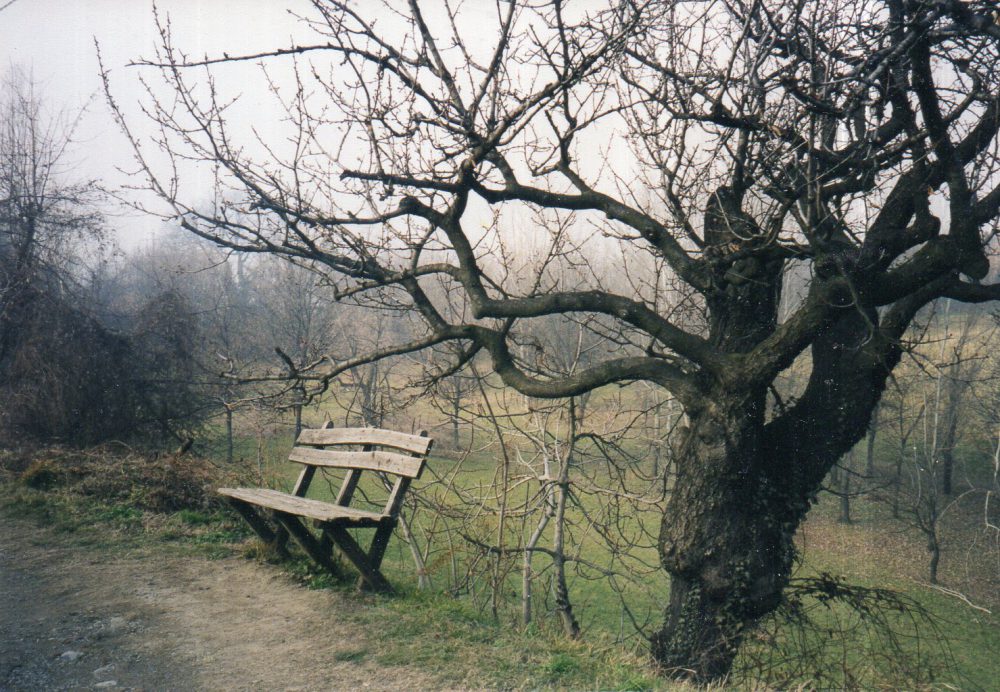
Pictures of Italy '11 031          If you have ever walked with very young children, toddlers perhaps or even one just learning to walk, you have had to practice extremes of patience. How well I remember, as a mother of five, the small hand in mine as we went for a walk. I’d have one of my hands on the handle of the stroller to be ready when little legs tired, the other clutching the hand of the child. They all wanted to walk, of course, at least as soon and as far as they could. The snail’s pace we traveled was a wonderful test of patience. Especially if I were in a hurry.  Little children can be very insistent.

Patience and perfection don’t go together well. As a small child I wanted my hair ribbons to match my socks. It seems I have always been addicted to seeking perfection. There is a story by Edgar Allen Poe called, The Fruit at the Bottom of the Bowl. It tells of a man who was apprehended for his crime because he had worked so diligently to make sure he left no fingerprints at the scene. My insistence on having all my ducks in a row is frustrating to me as well as a bad habit. I am trying to eliminate it, and I could be doing better.

Take tidying–it’s endless if I let it be. There is another favorite story of mine: A nice couple attracted the attention of P.T.Barnum, so the story goes, and he gifted them with a brand new sofa. Sadly, the rest of their living room furniture looked shabby by comparison, so they scrimped and saved and bought new. Then they had to paint the living room, and so it went until everything in their home was new except—you guessed it the no longer new, now shabby sofa. Tidying becomes an endless process because whatever isn’t tidied shows up more vividly and urges me to continue.

So then I feel compelled to do so. The trick is to know when to stop, call it a day, and resume later. However my fear is that I won’t get back to the work at hand because other things will crop up that demand my attention. Trying to be patient with what needs doing is an important focus for me. The chief hindrance? Without wishing to, I have slowed down. I just cannot move as fast as I once did. Part of this is because being somewhat clumsy I am trying to be careful not to make mistakes, and part is because age and arthritis have affected my agility.

Patience with myself is my task now, and it’s not easy. I once had a elderly counseling client who constantly lamented that he could not move the way he wanted to. He wanted to have a young body again. I can understand his frustration. Now I am in the same boat, What I have learned, sometimes the hard way, is that the secret to having patience is to have compassion. Over the years I have taught myself to feel compassion for others who struggle. Now I need to apply it to myself. When I view my struggles with compassion, it is easier to be patient. I have realized that being kind to myself is as important as being kind to others. I am patiently working on it.

Want an autographed copy of my new book Up To My Neck In Lemons? Send me a check for $15 Postage included, to P.O. Box 171, North Grafton, MA 01536,  and learn about lemons–actual, poetical and metaphorical. Make your life’s lemons into lemonade and enjoy my book a sip or so at a time.



Living My Life in a Timely Manner

Dragonfly

Sometimes I wish I could return to the time of my childhood when there seemed to be so much more of it: The long golden days of summer, the wonderful week of school vacation, the stretch of the weekend as I got home from school on Friday. It seemed to me that there was plenty of time to get everything I wished to do done. My days stretched out to be filled with my imagined adventures, the books I loved to read, and my toys.

I don’t remember feeling pressed for time as a child.  I’m sure the grownups were however that didn’t communicate itself to me. I do remember how long it took me to learn to tie my shoes. I was three, or maybe four and my fingers didn’t work as well as they might have. I can still see my small shoes as I bent over them, fumbling with the laces until I got it right. Time wasn’t something I thought about. It wasn’t my job to do that. As an adult, however, it has become so.

One dear friend has accused me of being “time challenged.” She was politely informing me that I was usually late, or at least perhaps often so. I confess it’s true that before leaving my home I may do a few things that seem necessary to me with the result that I leave at the last minute and may actually get where I’m going a little late. This annoys my husband so I work to improve.

You think after the many years we’ve been married he’d know I am apt to shave things close to the bone when it comes to time. He prefers to get to performances, lectures, appointments or church at least a half hour early. He says it’s because in his teen years he was a reporter and liked to get to events early because it was more interesting then and the habit stuck. He says he also likes to get a good choice of seats, which I admit is a good reason.

However the way I see it, that half hour could have been put to so much better use. It always seems to me that there are many things I could have gotten done at home before leaving, while instead I must sit in a waiting room,  pew or theater seat twiddling my thumbs as people come and go, the choir rehearses or I watch the ads on the movie screen. Being on time requires a certain amount of self-discipline, to be sure, and it is also polite. However arriving at a party or someone’s home half a hour early may be inconvenient to the host or hostess.

Because I find it fascinating as a subject, I’ve written a lot of poetry about time. I find it to be a strange accordion, expanding and contracting according to its own rules. Sometimes I look at the clock and think I have a whole hour to get everything done. Then I look again what seems to me fifteen minutes later, only to discover forty five have passed and I didn’t get half of what I planned finished. Perhaps time does challenge me, still, it’s a learning process and I do enjoy learning.


Want an autographed copy of my new book Up To My Neck In Lemons? Send me a check for $15 Postage included, to P.O. Box 171, North Grafton, MA 01536,  and learn about lemons–actual, poetical and metaphorical. Make your life’s lemons into lemonade and enjoy my book a sip or so at a time.

Love Has Many Forms and Faces

Stephen and Tasha by Kim 3          One of the more famous of the poems Elizabeth Barrett Browning wrote to her Robert as they fell in love begins, “How do I love thee? Let me count the ways.” It has always been a favorite of mine. I even set it to music and played it on my guitar in the days I sang in coffee houses and for parties.  Love can be given in many ways, and all of them are valid and special because each person has his or her own way of giving love. When I pay attention and see how love is given, it is a wonderful lesson to be cherished. Watch very small children; toddlers give us wonderful examples of the giving of unconditional love.
The gifts of love are so special. My home has loving presents from friends and family that come from their love and I cherish the giver as I see, wear, or use them. The kind words I hear, or receive in emails or cards and letters never fail to warm my heart. The love I have shared with my beloved husband for nearly forty years is an important part of my every day experience. I think of him as my always valentine. Love whether brotherly, romantic or spiritual nourishes my heart as well as the heart of us all.

Valentines’ day is an annual reminder that love is a vital part of our lives. I know that as I live with love and give it, I grow happier and more content. A wise teacher once told me, “You don’t have to like everyone but you must love everyone.” When I first heard this I thought a lot about what it meant. How do I love everyone? Especially how do I love those that annoy, irritate or even do awful things, whether to me or to others? In time I have taught myself to do this. I learned how as I grew more aware when I wasn’t loving and deliberately corrected myself, replacing criticism with unconditional love. I am still learning.

When I practice unconditional love, love without judgment and with compassion, even unlikable people can be loved. I don’t have to like them, or like how they act. Nor do I have to approve of anything about them. I can simply open my heart and see them as another human being, however troubled or awful, and envision them surrounded in the light of love. If I feel they ought to be punished I can say I hope they get what they deserve, without specifying.

When my children were small and had been naughty, I might not have liked their behavior yet though I might punish them, I loved them all the same. Often their bad behavior came from ignorance or was a test of boundaries. When I make an effort not to judge another person regardless how I might feel about them, I enhance my ability to give that kind of love. Unconditional love grows from practice. Just as I could punish my child’s bad behavior and love them still, I can give my unconditional love to anyone, and as to punishment, that’s not my job. I can have faith that eventually what goes around will come around, and sooner or later, so it will.

Clearing the past helps manifest the future

          It’s helpful to begin the new year with a clean slate. However in order to do that, it is important to deal with any situations or setups that are connected with or derived from the past. If I don’t clean up what I need to from the past, I will have created a big mess that impedes my progress in the year to come. I learned this the hard way one year when I accumulated a huge pile of items that needed to be filed because I had never found the time to do it conveniently. Thus I had an inconvenient task to deal with. This year I have been dilatory about filing new poems where they were meant to go. When I have done this a little at a time organizing them is much easier.

          The Jewish New Year, Rosh Hashanah begins with a thorough cleansing and refurbishing of the entire home, most especially the kitchen. This is a symbolic way of wiping the slate clean for new beginnings. I now know the value of this. Being thorough  with this process, however does take time. Though I have accomplished some of my cleaning up, much remains to be done. For instance, I have yet to go through and scrub down my refrigerator. While I have every intention of tackling this task soon, unfortunately I haven’t found the right time just as yet.

          Still, nothing in there has developed an odor to alert me to an inedible substance that must be discarded. As far as I can tell I have kept up with my leftovers, and there is nothing lurking in its back for me to dispose of. Sadly, my refrigerator does not hold as much as I wish it did. Whenever I do a big shopping I usually have to reshuffle whatever is on the shelves in order to fit in the new items, and that tends to keep things current. I need to do this especially when adding to my freezer which needs to hold things like shrimp on sale as well as an assortment of the good frozen organic vegetables we like so much.  

          I have gone over my desk, organized it and thrown out the various lists, notes and other accumulated paper that were not current. I also threw away a bunch of pens that no longer wrote and put away the ones that did. In addition I purged my wallet of coupons that were not valid because they were past the expiry date. We still have some Christmas gifts that we have not yet managed to connect with their recipients; however I am confident that this will happen in good time. There are still drawers to tidy, and my filing cabinet to go through.

          I can think of more and more if I try. There are writing projects on my computer I haven’t looked at in some time. I could discard them or continue to consider them. There are old poems I could look at and decide whether to keep, revise or eliminate. Yet where do I stop? I might go on cleaning and clearing until summer if I kept at it. At some point I must decide what is enough and what will be too much. Soon I need to stop and decide it’s time to move forward. The space garnered by elimination will help me and that’s a good reason to do so.

The Eyes of Perception

Corner Reflections medBecause I was very different in my interests as well as my life circumstances from that of many of my classmates I was badly bullied in grade school. However what was worse was that I had no good way to respond to my classmates’ unkind behavior. It wasn’t until I discovered meditation that I acquired a way of controlling not only my reactions and responses but also of avoiding the potential complications of thoughtlessly spontaneous and perhaps provocative words and actions.

As I grew in my ability to see what was in my mind and/or heart before I made things worse for myself, I also discovered ways to make my life much happier and less complicated by negative thoughts and emotions. Some believe that meditation is a form or religion or at least connected with it. However it is actually a form of exercise for the mind. As physical exercise preserves the body, so meditation practice helps to preserve the mind.

Is my glass half full or half empty? Believe it or not, that depends on the nature of the thoughts I have concerning both the glass and what is in it. Am I looking with feelings or thoughts of fear of emptiness? Am I anticipating or being grateful for what is in the (metaphorical) glass? My days go better when I am aware of what is going on within me.

Since nearly fifty years ago when I began practicing meditation, I have become able to be much more aware of my thoughts and feelings. It is a great help to my ability to remain calm and aware during difficult circumstances. I’m still working to remain conscious of my inner processes, and I expect to do so for the rest of my life. Working on the mind is like doing scales on the piano. A good musician must keep on practicing.

When I find myself dreading an activity or event, I can remind myself that fear is False Evidence Appearing Real. My “glass of hope” will then appear to me to be half full rather than half empty. When I feel a sense of joy as well as of gratitude concerning whatever might be approaching, I will have a “glass half full” of optimistic feelings. This approach has the effect of helping me to get the best from whatever does happen, even if that differs from my expectations. The same is true concerning what someone might be saying to me: I can better monitor my responses and reactions.

When I am mindful—aware of what is going on in my mind and heart, I have more control over what I do or say next. If I am able to anticipate my words or my inner reactions to what is happening or to what someone is saying, I am better able to control them. Thus I can to avoid potential mistakes as well as difficulties. In addition, when I am able to take advantage of my perceptions, I may ward off the far larger problems that might otherwise evolve were I not able to see clearly or to be prepared with positive words or actions.


The Beauty and Bounty of Fall


Autumn Blaze

One house we lived in had a window in the upstairs bathroom with a view of trees and fields. Each year in August I would look out this window in anticipation of the bright red patch that always appeared in an otherwise green expanse of a maple tree. It seemed that much brighter for being surrounded by the remaining green leaves. Later the rest of the tree would turn red, yet there was something very special for me about that first splash of color.

Perhaps that is because it heralded my favorite time of year. I cherish the first tinges of red and yellow beginning to blossom in the trees by the roadside. It is truly said that the strong colors of fall echo the pastel shades of spring except that they are strong and vivid. I have also noticed that in the weeks before the autumn colors emerge, the green of tree leaves takes on a grayish look that hints at the ageing of the leaves, preparing them for their ultimate brilliance. The other colors are present in the leaves all along. When the cooler weather comes, the green disappears and the red and yellow take over.

Fall colors are lovely and bright. Pumpkins, squash, chrysanthemums, apples, and fiery leaves are all part of its panorama. Highway vistas of hills plumped up with pillows of brilliant hue are a delight to drivers and passengers alike. As spring is a time of tentative melodies and pastel colors so fall is loud and strident, its colors are bold, its thunders vibrate around us. Farmstands open up and share their bounty with passers by. In more rural areas little collections of garden produce appear by the side of the road with prices and trustful boxes for payment.

When I was a child I delighted in scuffing through the rustling leaves. I loved the sounds and the tastes of fall. The sweet concord grapes that grew on the fence around my great aunt Alice’s garden tasted so wonderful. I was equally happy to breathe the slightly sharp air of fall that held a tinge of the frosts to come. I didn’t care much for raking the leaves, however I got paid to do it and that helped. I never tended my parents’ gardens, nor was I asked to. Later when I had a garden of my own, as fall emerged I hurried to pick the last tomatoes as well as the remaining marigolds. However I paid someone to rake the leaves.

Busy squirrels scurry around storing up food for the winter. Some alas are harvested by swiftly traveling automobiles. These provide a feast for the crows, so nothing is wasted. Autumn is a time for all of us to store food. My mother busily canned and later froze her garden produce. When I had a large freezer I did too. I loved the feeling of providing for my family. Now I can’t store much food for the future, however I can take advantage of the seasonal plenty. I got out my old Fanny Farmer’s cookbook and looked up apple recipes. We had Apple Brown Betty for supper. Yummy! Fall is my favorite time of year and I rejoice in its bounty as well as its beauty.

Self Respect Helps Us Gain Happiness and Inner Peace.

20180829_105011

A friend of mine recently shared this quote from her late father: “I do not count how far I walk, but the time I spend when walking.” To me this demonstrates a wonderful sense of self-respect. Self-respect can be tricky to acquire. It grows when others say kind words, yet if I feel lacking or insufficient, I will not accept nor believe others when they compliment or praise me. With a greater sense of comfort within myself, I can more easily accept others kudos. It also helps greatly when I am not looking through a veil of worry, guilt, or wanting to please. It takes time to recognize and then dissolve that veil.

Small children have a natural sense of self-respect. They may begin to lose it if they do not get good feedback from the adults around them. On the other hand, with too much praise they can become overly egoic, which is why parents have for ages been chary with or even withheld praise. This attitude of disparagement was practiced for generations by well meaning parents. For example, when I proudly played my mother a song I had just learned on my newly acquired guitar, she responded: “That’s nice, now when will you begin to write your own.”

Fortunately I was used to this kind of ‘praise’ and did not take it to heart. My mother meant well. She was only imitating her parents’ behavior. I tried hard not to act this way with my children. It isn’t easy being a parent. Good or bad, the examples from our own upbringing are hard wired into our consciousness. My mother struggled all her life with almost crippling sense of self consciousness brought about by her stern upbringing. I had to unlearn much of what she had demonstrated to me, and in the process I discovered the essence of respect for others: detachment from rigid ideas concerning how I think others ought to appear or behave.

One day my two girls were small and we were out with a neighbor and her children. She looked at her watch: “We must get back or the children will miss their programs.” I was taken aback. I never thought that children might have a special desire that would transcend parental priorities. I was raised in a time when children had hardly any say in what they did or when they did it. Light dawned and I incorporated this new attitude into my child rearing.

As time went on, I perceived another negative aspect of myself. I noticed how unkindly I reacted to the perceived failures of others. I began to work to develop a stronger sense of compassion as well as respect for the effort rather than criticism of the result. What I have learned is that when I am comfortable with my own sense of self-respect I can see more clearly the results of my actions; I am not looking through a veil of worry, guilt, or wanting to please. I have also recognized how important it is to feel compassion for myself as well as for others, and this is an important aspect of my ongoing learning process.

Keys to Patience

20180828_145205There is a joke I remember hearing some time ago to the effect that when a minister repeatedly prayed to God for patience, God sent him an incompetent secretary. He ought to have known better. Patience training is best experienced when I am in situations requiring patience. How else can I learn? There is no other way I know of.

Motherhood is good for learning to be patient. Certainly patience is needed when caring for small children. They take their time, as they need to do. I still vividly recall my walks with toddlers when they were small. Once they refused to stay in the stroller, I had to move at their pace because there was no way they could walk faster than their short legs could carry them.

Those days are long over. Now it is my turn. I need to walk more slowly because no matter how much I would like them to, my legs simply do not move with the speed they used to. I remember how fast I used to walk at one time. I was even proud of it. When did I begin to slow down? Age creeps up on us when we are not expecting it.

There are lots of books on what to expect when you are expecting a child or when one is born and you need to cope. Someone needs to write a book on what to expect as you age. Perhaps it could be titled Aging for Dummies. There is much more to aging than physically slowing down. While I work at being patient with myself in various situations, it is not easy.

Of course we all age differently. Still, it might be useful to know more about what can happen to the body not to mention the mind. Most of my relatives aged well. That is to say they were vigorous and active while they lived. However, I have passed the age they were they left this life, and I do not remember them ever mentioning how they felt as age advanced upon them.

Because at the time I wasn’t thinking about aging, It did not occur to me to ask them. When we are young or even middle aged, the country of old age is a foreign place. How it feels and how it causes us to act are mysteries we cannot plumb without experiencing aging for ourselves. Still it might be nice to have some guidance. Patience is a high priority.

At least I can contribute things I have learned that may help. Depending on how much patience I have time passes either quickly or slowly. So rather than focus on how I dislike waiting, if I observe my surroundings, it is easier to be patient. I also recognize that the more patience I have with myself the easier it is to be patient with others. One of the secrets to achieving patience is distraction. Another is respect. That respect is usually linked with compassion, something that seems to have come with age and as I have worked for it. When I respect my limitations or those of another, patience comes easy. Above all else what really matters is one simple thing: practice, and aging gives me plenty of that.

Benefits and Liabilities of Aging

Sunfloer bowed downWhen I was little my grandmother used to take me with her to visit her friends. Among them were two sisters who had never married but lived together in a pretty home with a nice porch. They used to give me cookies and cambric tea–milk, sugar and a wisp of tea in a delicate china cup. My own mother was physically strong and after my father passed on lived alone and drove herself between Florida and Maine even in her eighties.

These and many elders of my early years presented an image of healthy, hearty behavior. My grandmother used to do fancy dives into the swimming pool of the beach club she occasionally took me to. My great aunt played golf and tennis and had silver cups to show for it. I had teachers with white hair who were wise and good natured. My life has brought me many examples of vital elders who carried on their lives energetically.

Just recently I attended a small reunion for my high school classmates. I was impressed with their fortitude and vigor. As we visited together I enjoyed renewing my acquaintance with theses women with whom in our teens I had shared time, space, and teachers. It was quite special to be with my contemporaries. I found that even after all these years we still had much in common besides our age and the school we had attended.

The life paths we had taken had varied widely, yet we all shared a dedication to improving the world and being of help when needed. Born when we were, we had grown up with different mores and rules of behavior than those of today. As a result we have had to make many adjustments. When people do not grow with the changes that accumulate around them, they become bitter and crabby. It seemed to me that none of us had.

No doubt we all had our share of aches, pains and limitations. At our age some of that is to be expected. However I didn’t hear anyone complain about their health even though one of us used a walker and another had both vision and auditory issues of a serious nature. One of the blessings of age can be the ability to deal creatively with one’s limitations. Patience can come more easily when one has lived a long time.

The benefits of accumulated years are a kind of grace that can make up for the increasing changes that as we age limit activities, not to mention movement. Speaking for myself, I would say that patience tops the list of these benefits—not only patience with others but also patience with myself. In addition, being able to wait out a difficulty, the knowledge that time helps heal as well as facilitate, and the ability to listen to and soothe those who live with greater immediacy and impatience are some of the benefits I cherish as I grow on in years.

Saying Goodbye Gets Easier with Time and Experience

Peace Village Bridge Reflection Most children have no concept of time and little to no understanding of loss, not to mention the concept of “goodbye.” Ironically however, one of the first things a mother teaches her baby is to wave “bye bye.” When we put them to bed for the night we are teaching them about leaving and being left. The first skill a child learns in the high chair is to drop things over the edge. At one level the life of any human being from birth onward is one long saying of goodbye.

          We leave childhood behind and with it many of the beliefs and rationalizations with which we grew up. As we grow older and seek out knowledge for ourselves, we often abandon our old ideas and perhaps even our cherished beliefs. We move away from old neighborhoods and old friends, we meet new situations and learn new ways to cope, saying goodbye to old ways and old situations. As we grow on in years, over and over we find ourselves, sometimes happily, sometimes sadly having to say goodbye.

Recently Stephen and I attended a graveside funeral for a long time friend. It was a lovely occasion with many in attendance, some of whom had entertaining stories about him to share. He was well loved and had traveled the world; he had lived his life to the fullest. This may be why before he died he could say to at least one friend: “I’m looking forward to the next adventure.”

The Waterside Cemetery in Upton where his physical presence on earth will rest in a plot overlooking the pond where he used to fish, is a lovely, peaceful place. There, together with his other friends we said goodbye to the earthly remains of our friend and then went to a nearby function room to celebrate his life and share our memories of him. An important part of a funeral and afterward is to share stories about the deceased that help recall his life with love and joy.

Saying goodbye to someone I’ve known for a long time, though perhaps not been close to feels strange. When I haven’t seen a person in some time and then they pass on, I have trouble remembering they’re gone. Just the other day when I drove past the former address of a dear departed friend I was almost persuaded to stop and ring her doorbell. I had to remind myself that no, she no longer lives there, and no, I can’t visit for a cup of tea.

As I gain in years I find myself saying goodbye more frequently, both to people and to certain aspects of my life. My bucket list has grown shorter. There are things I once thought I wanted to do that I now do not wish to, like go up on an air balloon. I once believed it would be fun to go on a three months ocean cruise. Not any longer. Vigorous gardening is a thing of the past. Still, as I miss all to which I have said goodbye, I am reminded to cherish all that still remain.