 When I was a child one of my favorite occupations was to rearrange my mother’s pantry shelves. I delighted in doing this. It seems to me that I was born with a need to accomplish. In many ways, this has been a source of my happiness and a way of making myself feel good. I can remember when I was a young mother that time spent in the kitchen helped to heal any disappointment or dismay. Baking cookies for my children did wonders for my spirits and helped keep me cheerful. Even simple tasks like the ironing I did then were useful to me in lifting my spirits.
I learned long ago that whenever my spirits need lifting I have a choice. Beyond dwelling on whatever it is that may be bothering me, I can seek happiness or I can stop and look around me for something to be grateful for or to enjoy. When I do I have taken a significant step toward being kind to myself as well as making myself feel better. But there is more: I can keep reminding myself to take note of the many things to appreciate that surround me. My happiness is made up of small smiles harvested daily.
While the link between accomplishment and happiness is still strong within me, this other link is even stronger: the opportunities to notice what makes me happy. It functions for me whenever I notice whatever is beautiful around me; it is delivered in the joy I receive when I walk with Stephen in the mornings and listen to the birds twittering and chirping around us. When I get a phone call or an email from a friend I haven’t seen or heard from for a while, my heart fills and I smile. I feel happy when I read the morning newspaper and find interesting stories from it to share with my husband.
It is truly said that happiness does not work as a goal. If for instance I buy something I have wanted, it may make me happy for a little while yet that kind of happiness does not last. Not unlike taking a drink of alcohol or indulging in sweets, the good feelings gained this way dwindle soon. This diminishment is one of the stimuli for addictive behavior. Once the good feeling is gone it is normal to wish for more in order to regain or prolong it. This experience leads many people to practice self-destructive behaviors.
However, the happiness that comes from the appreciation of what is given is not addictive nor can it be sought. It comes from the practice of awareness, of noticing some small joy or gladness that comes to us as a kind of gift. It also helps to have an understanding of what makes us feel happy so that we can take extra care to notice it when it is given to us. I must open my eyes and ears to notice the beauty around me in order to appreciate it. I need to remember to look out the window to see the lovely sunset when it glows there. This kind of happiness lasts beyond the experience and nourishes me always.

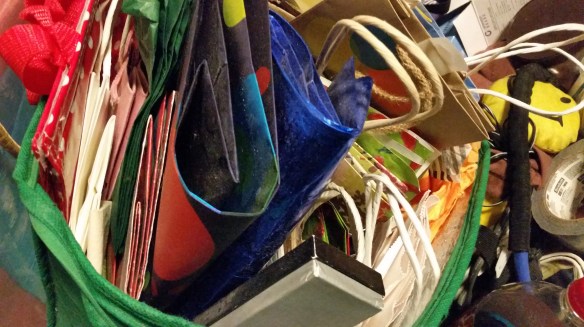 When my mother and I went to Russia in 1991 among the places we visited was the Hermitage Museum in St. Petersburg. It was very impressive. My favorite part was the room with six Rembrandts. Sitting among them was an extraordinary experience. As we left we bought some postcards and other souvenirs and when none seemed to be forthcoming, asked for a bag to put them in. The cashier gave us a sour look then finally dug out a used plastic bag– an obvious treasure from her hoard and placed our items in it. Recycled bags were more common there than new ones were then.
 When I was a child a friend of my mother’s gave me the dresses that that her twins had outgrown. Because they were dressed alike, I had to wear two of whatever came my way. In the days when I was growing up, thrift meant making do with what was available. Aside from the fact that while my family had enough, they weren’t exactly wealthy, there was a war on and many things, including clothing and shoes were rationed.
 Once upon a time I wrote a poem about the eyes of love. It began: “consider with the eyes of love.” Though at that time I hadn’t yet learned about the difference that the qualifying word unconditional makes, what I meant by love in the poem actually was unconditional love. My parents and grandmother loved me very much. They were also quite critical of me, as well as of others they loved and otherwise thought well of. Unconditional love means just that—no criticism, no conditions on the love. It also to me means looking at others as well as at myself without a disapproving attitude.
 Pujakins