Source: Fall In Its Variety
Fall In Its Variety
Fall in its variety fills the air with bright, brimming over with an ecstasy that brings us joy..
 The light shines upon the leaves and it reflects into our hearts.
 Then the leaves dance and their brightness makes us sing.
 Singing fills the air; light glistens echoing our song.
 Until we too sigh and sweetly lie down to rest.
Hospitality by Tasha Halpert
 As she does whenever she comes to the States, our friend from Denmark was visiting us. Over a lunch I had enjoyed making for us all, we had fun catching up on our recent activities. She was exclaiming over the food, saying how good it was and how happy she was to be with us. “I love cooking for my friends,” I replied. I do. It is one of my favorite occupations. Stephen and I both enjoy entertaining friends, and making meals for them is a big part of my joy.
She commented that she too enjoyed cooking for her friends. She then went on to say that her experience here in the States was that when they were entertaining, many people seemed to prefer taking people out to eat rather than preparing food for them at home. She said that in Europe it was more common to prepare dinner for their guests at home and less common to take them to a restaurant. I thought this was an interesting commentary, and I wondered what it indicated about Americans.
Around the holidays, the newspapers overflow with advertisements for meals to which you are supposed to bring your whole family. Alternatively, supermarkets and other providers of food advertise “home cooked” meals delivered to your door. My parents would never have considered eating anywhere for the holidays but at the home of a relative. Eating out was only for very special occasions, perhaps to celebrate a victory or a special anniversary.
Thinking back on my childhood years I remember that when my parents entertained it was usually relatively spontaneously and for cocktails before luncheon after church or dinner. Afterward our guests either went home or to a restaurant. My mother did not like to entertain and seldom had people for dinner parties. She had had a lot of that as a young child in her parents home and had been as it were inoculated against it. Her mother had given her all sorts of jobs to do related to making ready for guests, none of which she particularly enjoyed.
Her father had been in he diplomatic service in Germany prior to World War II and they had lived all over the globe. Her mother had entertained at lavish dinner parties with food prepared by a cook or catered. To my mother fell the task of setting the table, arranging flowers and so on. Later she and her two sisters would be called upon to perform musically for the guests. No wonder she disliked parties.
My first husband didn’t care to entertain either. We had one big party a year. it. My cooking was confined to the family. I have found it wonderfully different with Stephen. He has always loved to entertain and there have been many times in our lives together when I never knew how many would be sitting down to dinner. Because I have plenty of supplies on hand, this has never bothered me. To be sure, I enjoy dining out, especially as someone’s guest, however I am very happy to eat loving prepared home cooking.
Fall Reflections by Tasha Halpert
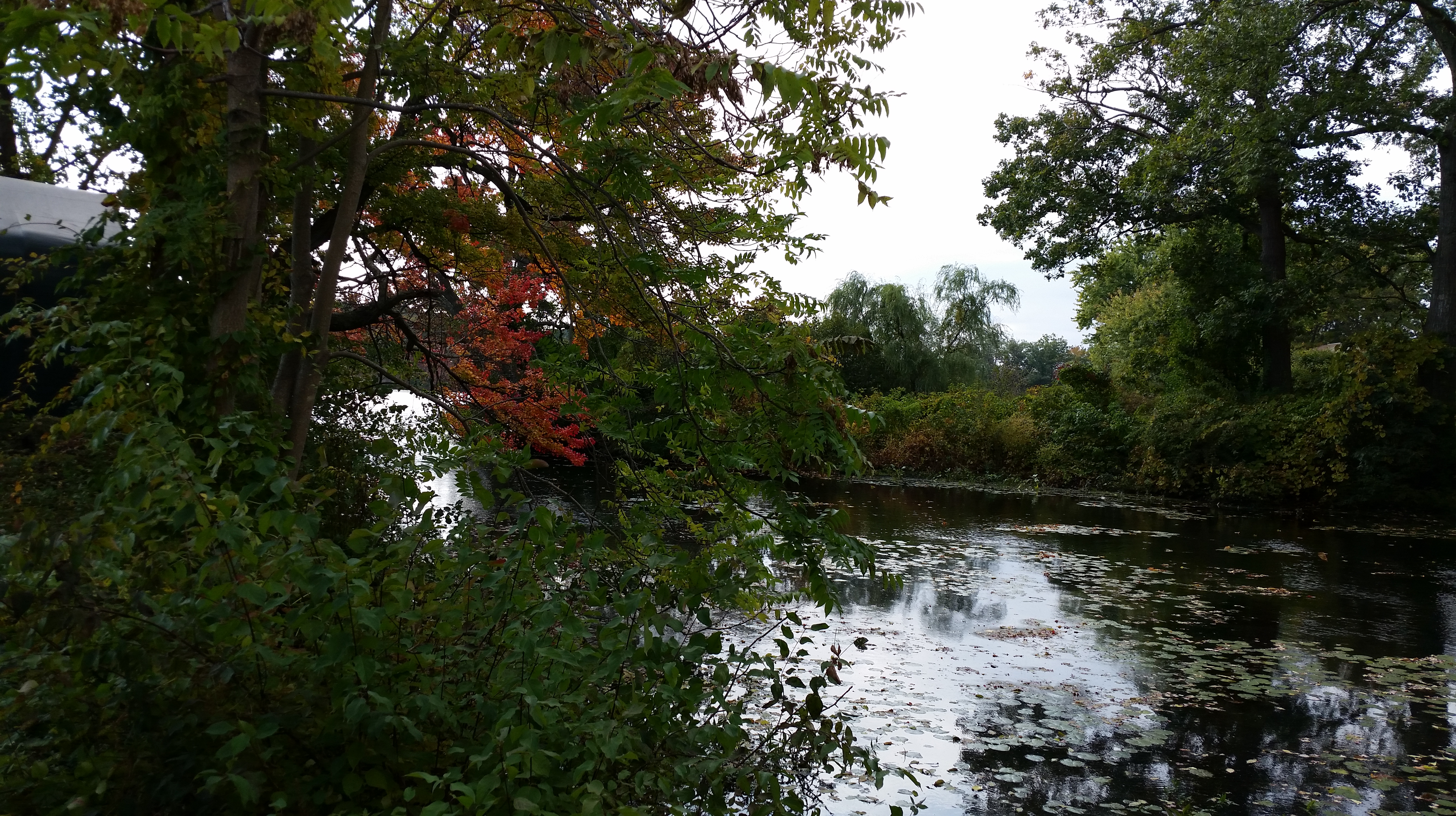 As a child I looked forward to fall. I enjoyed the swish of the leaves as I shuffled through them and the crisp air redolent of the smell of burning from people’s yard clean ups. Each year I collected colorful leaves and treasured them until they dried up and crumbled. When my children were small we collected our favorites and ironed them between sheets of waxed paper. We’d tape them on the glass storm door or onto windowpanes. The wonderful variety of colors and the way the each leaf is uniquely designed by nature has always fascinated me.
Recently, driving down the highway I gazed with pleasure at the vista of the changing leaves. In some places they had already turned, and the autumn colors had emerged in a blanket of bright hues. However, in a few places summer’s green still predominated. Then I noticed an outstanding patch of red in the midst of a section of green leaves. It stood out so strongly that my eyes were drawn to it and lingered until I had driven past it. That particular section of leaves seemed so vivid compared with the usual display of roadside color.
The patch of brilliantly red leaves I had just passed wasn’t especially large, yet it overpowered my attention in a way that the conglomeration of greater color had not. As I drove I thought about the difference between it and the other colorful leaves that lined the roadside. I realized it was the contrast that made it so strong. I was reminded of how Shakespeare spoke of the light of a candle in the darkness saying: “So shines a good deed in a naughty world.” There is something about contrast that enhances the presence of what is outstandingly lovely to experience. The same is true of scarcity or of specialness; these enhance the way something is experienced.
I realized that my attention had been drawn to the brightness of the red against the darkness of the green. A hillside of lovely fall leaves is a beautiful sight to behold, yet without contrast my eyes soon grow used to it; I don’t see the view with as much interest or delight. The same thing applies to taste. If all the food on my plate is bland, it all begins to taste the same. If it is either entirely crunchy or entirely smooth I don’t enjoy it as much. With what I hear, the same applies: What makes Beethoven’s music so special to me is the interplay of loud and soft, thunderous and sweet.
This is also true with regard to life in general. I enjoy it when things go smoothly, when everything falls into place, when people show up when they’re supposed to. I am grateful for the excitement of winning, the feelings of accomplishment when I am praised. Yet without at least temporary failure, without glitches, without the serendipity of strange twists and turns, life would not be nearly as interesting or as vital. While I may lament a loss or mourn a missed opportunity, because of that contrast I am even more grateful for my gains and my successes.
Watching the Pot by Tasha Halpert
I have always been exceedingly curious. This is one of my chief characteristics and while it has occasionally gotten me in hot water, most of the time it has only added spice to my life. Why people do things and what makes them tick has from my childhood been a vital interest of mine. I also enjoy observing people as they go about their business, especially in public. When I commuted on the train between my high school in Boston and my home on weekends I used to sketch my fellow passengers.
I was fortunate that my mother encouraged my curiosity. Children’s curiosity is precious and while it can also be annoying, it is important to encourage this trait. My brother did all sorts of experiments that unbeknownst to my parents could have either set the house on fire or blown it sky high. Fortunately, that never did happen. He grew up to be a wonderful scientist and together with his wife has written many helpful books.
Most all of the world’s great discoveries began with someone saying, “What if…” and then following up with an investigation or an experiment. I find it fascinating to read about some of these people, like Edison, for instance, who when something didn’t work, never felt he had failed but only that he had discovered another way not to do something. One person who inspired me was Mr. O’Connor, my 6th grade teacher. “Okie” used to demonstrate scientific principles with wonderful and seemingly magical experiments.
 I hope never to lose my desire to investigate. For instance, just for fun the other day I decided to see if a watched pot really would boil. I put some water in a pot, turned on the stove, and then observed the tiny bubbles as they gathered on the bottom. I wondered if they would change into large ones. They didn’t. As I watched and waited, I looked for it to boil, keeping my eyes glued to the water. After a time it actually did, so I proved to myself that the adage truly was inaccurate.
To be sure, most of the time when I put water on to boil I don’t bother to watch it. When I prepare a meal, I do several things at once–chop vegetables, stir up ingredients, and so on. Who has time to watch a pot boil? Still as I told my daughter when she laughed at me, I wanted to do this as a scientific experiment. I was intrigued by the thought of observing the pot to see if it would boil while being watched. Since it did, I also wondered why that saying has persisted.
I had to conclude that perhaps the saying had something to do with the nature of anxiety it represents and the tendency to keep lifting the lid to see whether or not the contents have come to a boil. Since I didn’t have a lid on the pot I was watching, I didn’t interfere with its ability to boil either. Nor was I anxious. I was simply observing. Perhaps that is the secret: to observe without interfering might not hinder the boiling process.
Shine On Harvest Moon by Tasha Halpert
Shine On Harvest Moon by Tasha Halpert

Once upon a time harvesting was done by hand. The farmer and his helpers scythed their way through their fields or picked their way through their orchards and gardens, gathering in grain, fruit and vegetables to store away or take to market. Most children today have no idea what a scythe or a flail is, or how to winnow. Yet though the ways of doing it have changed, fall is still harvest time, and we look to the shortening days to gather in what has grown.
In the month of September the harvest full moon shines brightly. At that time there are often gatherings and parties. The bright moon reminds us to say goodbye to the summer growing season and greet the time of reaping. This applies both that which we have planted earlier in the year and been tending, and that which has grown from the seeds we have planted in our lives. It is time to begin to reap what we have sown and tended over the last months.
For children today fall means school and the beginning of lessons. At one time in the past children too worked in the fields helping to bring in the harvest. I remember when I was small, my mother put up jars of fruit and vegetables. She made jelly from grapes and other fruit gathered locally. My great aunt’s gardener harvested and stored root vegetables in root cellar dug into the earth of her garden. In our basement was a small barrel of potatoes also harvested from her garden.
Although i no longer have a garden, every spring I look forward to the swelling of buds and the growth of all the nature around me. I also feel a sense of creativity blown in by the winds that stir up the soil and stimulate the air. In my mind I plant the seeds of projects I hope to accomplish as well as plan what I hope to learn in the months ahead. Spring is a time of promise. In the springtime of life youthful ardor makes ambitious plans for what is to be designed and built.
Then it is time to carry out the plans made and take care of the seeds planted. Tending the garden of my life is a task I have grown into as the years have gone by. In the beginning I was much less organized. I took on more than I could sensibly handle; all too often I planted too many seeds. As I grew to understand the folly of my ways I learned better no matter how hard I tried, what I could and what I could not accomplish. The knowledge and the understanding I have gained has also been part of the harvest of my years.
Friendships both seasonal and perennial are another important aspect of the seeds planted earlier in my life. The bounty of my experience as I have learned and grown is another. My most precious gain of all is perhaps the unfolding knowledge of who I am and what I can do as well as the extent of my potential. As I look back to the springtime of my life I realize how richly rewarding the harvest from my garden is, and how very grateful I am for it all.
A Place of Peace by Tasha Halpert
 It is easy to get caught up in the busyness of everyday life. For me it is often difficult is to pause and to take the time for an opportunity to do some self exploration. Such an opportunity was recently offered me. At first I found myself wondering how I could fit it in to my schedule, as well as make sure Stephen would have good food to eat while I was away. Yet because it included time to be with my daughter I didn’t hesitate long before saying yes.
She invited me to go with her to a spiritual retreat at a very special center in the Catskill mountains in New York State. Peace Village, a tranquil place of residence halls and meeting rooms is run by the Brahma Kumaris, a worldwide organization that originated in the 30s in India. The organization is devoted to self study and progress toward enlightenment. The Brahma Kumaris have created an atmosphere there that is highly conducive to personal growth.
At one time I studied and taught yoga. Later after we moved to Grafton my husband Stephen and I for many years had an inner peace center in our home where we held weekly meditations as well as what we called Peace potlucks, monthly. Stephen and I meditate almost daily, so I anticipated enjoying my time at the retreat which was said to include that as well as other opportunities to learn and to grow.
My happy expectations were fulfilled. During the three day retreat called By Ourselves In Company, the twenty-five of us were given a exercises designed to help us to become better acquainted with ourselves, as well as other techniques we could use to learn and grow. The participants were all ages and in all stages of life, more women than men, and several married couples. There were chances for us to interact and to learn from one another’s experiences as well as to be by ourselves and explore our own responses and reactions. The process was well designed and helpful.
Most special for me was the opportunity to do something with my daughter that we could share in as well as share. She leads a very busy life and while we do get to see one another often, it is always in the context of our days. The atmosphere the Brahma Kumaris have created in Peace Village is gentle and flowing. There is no hustle or bustle, no noise or stressful energy. On the hour music would play and everyone would stop what they were doing, breathe and reflect on the presence of the moment.
Here it was easy for me to absorb the lessons given as well as to learn to know myself better. The lack of distraction was key in helping me to focus. Yet what I really learned there was how important a peaceful atmosphere is to the nurturing of my being. The challenge will be to recreate it or at least to bring about some of the elements of that peace in my daily life so that I can continue to learn to see and to know myself more clearly.
Me and My Subconscious by Tasha Halpert
 I was excited when my daughter invited me to go to a weekend conference with her in upstate New York. It would be a wonderful opportunity for us to spend time together. She leads a very busy life and I was pleased to have this treat in store. This being a time of year when the weather is unpredictable, I was unsure about what clothing to bring. However, there were certain items I knew it would be important for me to take and I began by assembling my list of what these would be.
Once I finished it, I mentally ran over the list of these essentials I knew would be vital to my comfort and well being. One was my pillow, because I don’t sleep as well if I don’t have it. Another mainstay of my life is the various supplements I take daily to support my health and well being, as well as my homeopathic remedies. Then it was time to figure out what to choose for clothing. This would depend on the weather where we were going. Advance weather reports can be reliable, however you never know.
As I moved around my bedroom I found myself mentally saying, “I must not forget–.” When I heard that I went “oops, that was definitely the wrong approach. “I must remember,” I corrected myself. I have learned that it is important to put one’s wishes and hopes in the affirmative rather than the negative. My subconscious mind hears what I say and does its best to fulfill my every wish, however a positive statement works better than a negative one.
One help I have in making correct choices is that of my subconscious mind. My kindly subconscious is very good about helping me along. This might sound odd yet there is a vast amount of information available from this part of me and I have access to it because I have learned to work with it.
Working with my subconscious is like having an invisible friend. This inner friend helps me by pointing out what I need to see or giving me suggestions to do what seems good. I’ve been fortunate in having learned to listen to this part of myself, and I’ve had plenty of practice in doing that. It’s not all that difficult, it’s just a matter of letting my intuition surface alongside my thinking mind and listening to what it has to offer.
My intuition is a function of my subconscious. This part of my mind holds all the subliminal information I absorb and process as I go about my daily doings. It also has access to any stored memories and accumulated data I may not be consciously aware of. The more I’m able to access this part of my mind the better I can function. It’s like having two hands to use instead of one. So as I pack for my weekend away I allow for what I know I need to remember as well as what I think I might need. Together me and my subconscious will pack successfully and whatever I might forget won’t be that important.
And God Bless the Caterpillars by Tasha Halpert
And God Bless the Caterpillars
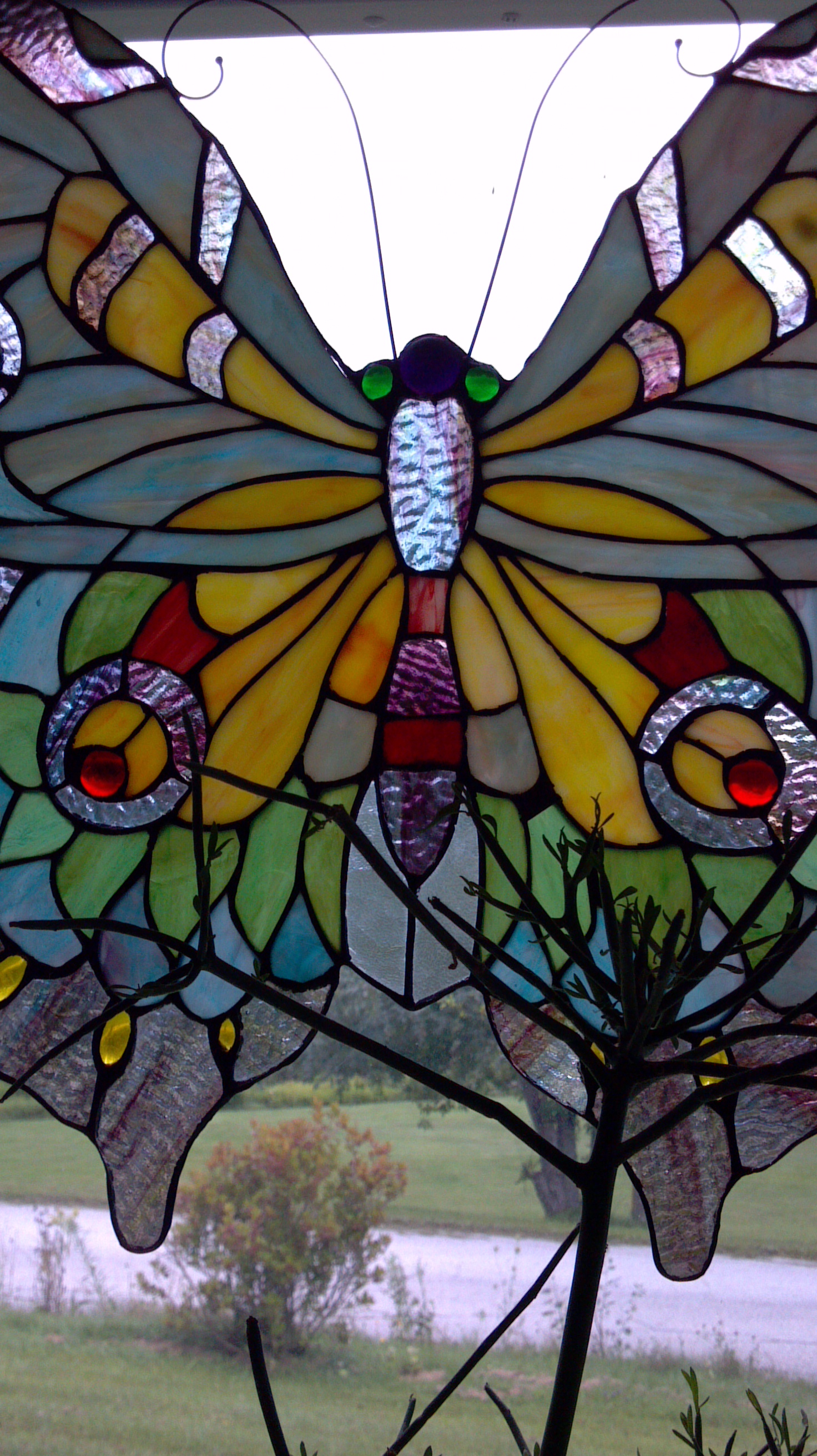 My dandelion headed five-year-old is saying his prayers. He includes the caterpillars in their jars on the window sill. We had filled the jar with what we hoped was the appropriate leaves for food and twigs to climb, and each night we prayed for them. The time was 1968, and my son was one of five, active bright friendly loving children.
The caterpillars munched, spun cocoons on the twigs, and were quiet. We waited in vain for butterflies to emerge. Together we concluded that caterpillars did not do well in captivity and perhaps it was better for them to go free. Lessons on many levels were learned from the experience. I don’t know whether my son remembers the caterpillars, but he is now a grown man with a strong sense of curiosity, a fine capacity for observation and a desire to do some good in the world. The eager child lives on in the man.
One day the family visited someone who had guinea pigs. Naturally the children were fascinated and the pet shop that sold us our first pair agreed to buy back progeny. I was delighted at the opportunity to give the children a first hand lesson in biology, and all went well until we elected to do a breeding experiment. Unfortunately our breeding program coincided with a glut of guinea pigs at the pet shop. My living room filled up with boxes holding a total of fifteen furry squeakers and any time the refrigerator door opened, a chorus of squeals filled the house.
In the process my oldest daughters found out first hand that one cannot always rely on original solutions but must plan for contingencies, and of course they had graphic experience in where babies come from! Now that they have had their own children, they have fostered the same sense of adventure in their offspring and have carried on the same love affair with nature.
Nature is a great teacher of many things, and the care with which it is arranged has a significant message for us. We are part of the cycles of emergence, growth, and return to the whole. We circulate life energy the way a tree does. Once we believed we were in charge but this conviction is eroding with our recognition of the results of that belief. Our attunement to the part we play in the natural order of life seems to me to be more important than ever to our growth as healthy, positive human beings.
Parenting seems best learned by experience. Children are resilient. With goodwill, grace and good luck most of us will succeed in raising well adjusted children. Doing what we most enjoyed with our youngsters often results in happiness for all, but observing and participating in the processes of nature can easily and quickly return us to the joys of childhood as well as bring us pleasure in the present.
Looking together at snowflake crystals, searching for seashells, tenderly weeding small gardens—the days of my companionship with my children are cherished memories. I learned as much from them as they did from me. Nature is a great teacher and I am grateful to her for the lessons I learned as well as the beauty I have received. I am proud, too, of my children for their positive attitudes and approach to life, much of which was learned at Mother Nature’s knee. And I say with my son, God bless the caterpillars, God bless them all.
 Pujakins