GPS Adventures and Misadventures

Red TracatorLong ago when I first used to drive myself places I hadn’t been before, following directions I had been given, I used to get lost three or four times until I found my way. Later on I would try to use a map, however having issues with right and left and getting them mixed up, I often just had to rely on asking wayward strangers for help. Then the GPS came along and it seemed miraculous to simply plug in my destination and tell the kindly machine to take me to it. Alas sometimes it works differently than one might expect. Which is what happened to me and some friends on our way to a performance in Medfield.

That evening I climbed into their car with my friends and we set off with time to spare to our destination. “Isn’t it wonderful to have a GPS,” I said, “I never get lost any more.” My friends agreed and as the driver plugged the address of the performance we were going to into the GPS, we settled back for the ride. Chatting amiably, we drove down 495. I pointed out a highway sign indicating the town of our intended destination, however the GPS took us past it, so we obeyed and proceeded to follow the directions as they unfolded.

They continued to unfold at length until we found ourselves passing a sign that said “Welcome to Rhode Island.” That can’t be right,” the driver said. We all agreed that certainly something was wrong. We turned around, and headed back the way we had come. The GPS continued to direct us. As it chattered on we found ourselves laughing harder and harder. Eventually we found our way to our intended destination. However, although we had originally allowed plenty of time to get there, we were half an hour late for the performance and all the seats were taken. There was standing room only.

Two of us, including me had hips that would not allow us to stand for a long period of time. Reluctantly we turned around and headed back to my apartment. Fortuitously the GPS was able to find us an ice cream stand on the way and we stopped for a treat. “I think we cursed ourselves by praising the GPS,” one of my companions remarked. “And we could have taken the route you pointed out,” said my other friend. We all agreed that it was probably wise to follow a map as well as the GPS, and returned home.

We could have been more upset but it really was quite funny the way the GPS kept saying things like, “Your destination is in X number of miles,” as it led us farther and farther away. At the time we turned around it was still insisting we only had three miles to go. Why it chose to take us somewhere that was clearly not where we intended to go is still a mystery. However, while we didn’t get where we were going in time to do what we intended, we had a lot of fun riding around laughing hysterically as the GPS attempted to do what it clearly did best, direct us where it wanted us to go.


Perspective Makes All the Difference

Cherry Blossoms on a rainy dayAt the time I was born my mother was newly come to the US, a bride of less than a year. Except for my father, she was very much alone in a big city, and I was her only companion for quite a while. I have often thought that my persistently positive perspective on life may have had its roots in my trying to cheer her up when she was sad and missing her family and friends back in her home country. Over the years since I have come to understand the power of a positive perspective on a potentially negative situation or experience.

This has become essential to my work. When I tell people I am a writer, they often ask me what I write. If I say I write essays, it sounds as though I am writing from a scholarly point of view. If I say I do inspirational writing, it sounds as though I am coming from a religious perspective. In truth, what I am doing in my columns is to simply present a different or alternative point of view from that which some might take about any given situation or experience. I write to be helpful, but it is self help I write about. Helping others to help themselves is my intention and my goal.

There is little we can do about circumstances. Daily life presents us with issues and difficulties we must deal with. The school of experience is our ever-present teacher, one we cannot escape no matter what we do. I’ve often felt that maturity or adulthood truly begins when we’re willing to learn from this teacher rather than moan, groan and feel as though we are victims of fate, circumstance or those who might perpetrate it. It is a lot easier to complain than it is to “bite the bullet” and admit there might be something to learn from any given situation.

I believe the expression “bite the bullet” comes from battlefield medicine when in the days gone by the surgeon had to amputate or otherwise operate without anesthesia. After whiskey was poured liberally into the patient, a bullet was put between his jaws to bite down on as a way to keep from crying out. Whether this is actually true or not it makes a good metaphor. When our focus is put not on complaint or disappointment but on what can be gained from whatever is happening to us, coping becomes easier and wisdom more accessible.

In my own life right now I am dealing with a change in lifestyle and a need to take better care of myself. I have learned that much of what I used to take for granted, I no longer can. Exercise is not an option it is a necessity. I need to do additional work on my body to restore it to better working order. I could complain, or even bemoan my fate. Instead I rejoice that I now have a good way to lose weight, that I can become stronger and healthier with effort and that it is good and helpful to be made to do that. Therefore I bless these circumstances and state firmly that I am exceedingly grateful for them.

Pleasure Can Take Many Forms

As regular readers of my column know by now, my mother really did not like to cook. She did what she had to do to feed her family. However, at least as far as I can remember preparing meals gave her no pleasure. Nor did she want my father to cook because, she said, he burnt everything. Perhaps he was impatient or perhaps he wasn’t watchful. I don’t know because I never saw him in the kitchen except to mix cocktails.

The only household chore I ever knew him to do was to polish the silver. My mother refused to do that and I do not blame her in the least. It is a dirty, tedious job. My father however seemed to enjoy it. I have a memory of him in an apron made from black and white striped mattress ticking material, vigorously polishing some of the lovely silver items he had inherited or been given by family members.

I on the other hand have always derived great pleasure from preparing food, baking, and providing meals for loved ones. For years I collected recipes. In the 80’s I wrote a cookie cookbook as well as a completely refined sugar free general cookbook with many recipes I had created. In those desserts I used only honey or maple syrup. Now even that kind of baking, along with a lot of other recipes I enjoyed making over the years, is history.

Recently I was diagnosed with a medical condition that requires severely restricting my carbohydrate intake. This has resulted in a major upheaval in both my eating and my cooking. In addition to sugars I have had to stop eating rice, pasta and potatoes. Thus I have had to eliminate many favorite comfort food recipes. I can no longer eat the Chinese fried rice I specialized in, the home fried potatoes or the shrimp scampi I enjoyed making as well as eating.

Then along came some difficult news. This caused a reaction I did not expect. I found myself in a depressed state and developed new aches and pains. I kept asking myself why was this happening? Then I realized I had been limiting most of my pleasure to cooking and eating. This is not to say I wasn’t doing fun things or having enjoyable experiences other than with food, however, I had concentrated principally on food related pleasure. I no longer regularly practiced other experiences I found pleasurable, like playing my harp or coloring.

Pleasure can rebalance the body’s ph and help keep us healthy. So now I am working to discover ways besides eating and cooking to give myself pleasure. In so doing I have rediscovered hobbies from the past like embroidery and begun to watch favorite old TV shows we have on DVD. I am spending more time with my harp, simply playing for the pleasure of it rather than working to learn tunes. I got out my coloring books and blank paper pads and began to color and as well as to draw. As time goes by I expect to enjoy new pleasures as well and look forward to discovering them. Meanwhile I already feel better.

The Only Constant is Change

20150911_183519Peace Village Sunflfowers Past Present Future

A wise teacher of mine once said, “The only constant in life is change.” This sounds like an oxymoron, or contradiction in terms, yet it surely has been true for me in my adult life. From the time I left home to be on my own I have had to embrace a sense of flexibility concerning my expectations. It may have helped that to begin with I grew up in New England where the weather can go from a shower to sunshine and back to a shower again in quick succession.

When I was a child I lived a protected life. Even the living room furniture stayed the same, as did the pictures on the walls. The people around me were the same also. Death was distant and spoken of only in whispers. There were no TV images of soldiers fighting and dying or talk of murders and fires. The war then was a distant rumble, its only evidence being the occasional blackouts’ and my dad in his air raid warden helmet roaming the neighborhood to warn of any light showing through the darkened windows of the inhabitants nearby.

When the war ended there was still not much difference in my life except for the packages my parents sent to their relatives overseas. They were stuffed with clothing and edibles that could travel, tied with bales of twine to keep them from being opened. This stable childhood did not really prepare me for the life of change I have lived as an adult. However, I have no quarrel with my experiences and quite to the contrary I believe they have benefited me in very tangible ways.

My first husband and I did quite a bit of traveling wile he fulfilled his army obligations as an ROTC student. We settled in one house only to find ourselves moving a number of times before our lives again settled down. To be sure, dealing with the energies and aptitudes of five children provided plenty of opportunities for unexpected adventures. As I approached my forties I felt confident that I knew exactly what was going to happen in my life. However, again my expectations were turned around and new adventures began.

After Stephen and I moved to Grafton and founded our center for inner peace I often found myself hosting the conglomeration of people who would drop by for a swim or a chat and of course be invited to stay for supper or even the night. We took in anyone who showed up at the door and needed it some inner peace. I always had plenty of food on hand, and I didn’t mind in the least especially as long as people helped out when we needed them to.

Lately without knowing what or how I have felt that something is going to change in my life. However it seems quite impossible to plan ahead for it because whatever does happen is never quite what I expect. For instance, how could I foresee that Stephen’s acquisition of one pot of a few succulents two years ago would multiply into a garden of pots and many more varieties? I do welcome whatever is next. My only expectation is that as good as it has been in the past so it will be as in the future or perhaps even better.


The Importance of Self Care

Teddy Bear 2

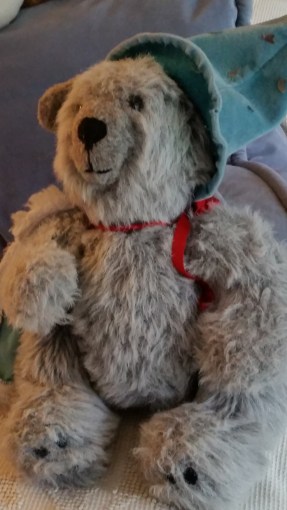
As children we are often told to be kind, to be sharing and giving, and to show our love to others by how we treat them. We are seldom told to care for or to love ourselves. I remember as a child sending for a nurse kit from Quaker Oats. It was advertised on a radio program I listened to every weekday. I liked the idea of being a nurse. It was a way to care for others, as I was told to do. After my little kit came I bandaged up my teddy bear and treated him to a hospital stay as I played nurse in my little white cap and apron.

As young people we feel invulnerable; we can go for a night without sleep and hardly notice. Unless we have allergies or some medical condition, eating whatever we like is the rule rather than the exception. We seldom need to sit and rest after exertion but can continue on as if we were made of steel. I was in my late forties when I began to realize I could no longer treat my body as if it were some kind of machine that could go on and on.

I began to notice that if I didn’t pace myself I would need to slow down or even stop in the middle of my efforts to get everything done. This bothered, even annoyed me. I didn’t like to stop. I wanted to do what I wanted to do when I wanted to do it. Then I had a real wake-up call: I got an excruciating pain in my neck and shoulder that wouldn’t go away. It took a number of chiropractic treatments and a lot of rest before I was able to move without hurting. The experience was extremely unpleasant. I finally got the message: I had been treating my body badly, and I needed to change my attitude.

First and foremost I realized I heeded to stop and rest between efforts. I also began to notice that when I ate certain foods I was uncomfortable; when I didn’t get enough sleep I was dragging. While this annoyed me, I had to admit it was important information. I realized that while it was strong and able my body needed a different kind of attention. Rather than treat it offhandedly as a machine that just needed fuel and occasional maintenance, I needed to treat it kindly, as if it were a faithful animal that was carrying me where I needed to go. I also had to accept its messages as needs and wants rather as impediments to what I wished to do when I wished to do it.

The importance of my self care grows with each passing year. Movement I used to take for granted has become an effort. There are even things I can’t easily do at all any more. But what is more important is that I remember to do what I need to do for my comfort as well as my health: Rest between efforts, meditate, take time to sit with my feet up, put in my eye drops, drink enough water, eat enough fiber, avoid what I can no longer comfortably digest. My list could go on and on, however I’ve made my point. Self care matters. More importantly, remembering to care for myself means I can continue to care for others, and that most of all is a good reason to do so.

Tasha Halpert

A Valentine to Lost Loves

dscf0142

When I was eight years old my dear nurse, Emily left to get married. She had taken care of me since I was around eighteen months of age and was in most respects my second mother. She was a practical nurse. That meant besides looking after me, she helped with household chores as well as driving me where I might need to go. She was a devoted caretaker and when she left I missed her sorely. While my own mother loved me dearly, she loved me in her own way. Unlike Emily she was not a physically affectionate person. Also she had much higher expectations of me than Emily did.

When I was twelve, my friend and classmate Sally went away to boarding school. A bookish, unathletic, somewhat plump child, I had no interest in the things my classmates did, and neither did she. As a result from the third to the seventh grade we formed a team of two, and I defended her from the bullies that taunted her for her shyness. I missed her sadly. She lived in a big house by the ocean and our idyllic summers were spent swimming and playing tennis in her private court. Her freezer always held a tub of ice cream and we could make cones when we wanted. When we reached sixteen and I began dating, despite my efforts to remain close, we drifted apart. She had been my best and only friend. She remained distant.

Once I was married and had children I became friends with woman whose two boys were around the age of my two girls. We all went everywhere together. She had a wonderful voice and we used to sing folk songs at our children’s school. We even performed in a contest. Very close, we spoke on the phone almost daily. Then for some reason she became angry with me and disappeared from my life. For months I was devastated. Later on I had another friend I went to the beach with each day. Sadly, after several years she went back to Germany and never returned. By then I was beginning to learn what it was to lose someone I loved, and how to handle it; I was able to recover faster.

Throughout my long life I have had many opportunities to learn to live with loss. I had to come to terms with son’s death when he was twenty-eight, and as I grew older, my parents passing. More lately have come the deaths of others I loved. As time has gone on, these experiences have helped me learn to let loved ones go with a more peaceful heart. I have discovered that I do not need to stop thinking about them, nor do I need to regret their absence. I can take the images of them together with the memories of our time together and put them lovingly in a special album I keep in my heart. Then when I wish to I can open it, turn the pages and smile as I remember with joy the good times we had and the love we shared.

Tasha Halpert

The Eyes of Unconditional Love

heart-and-bellsOnce upon a time I wrote a poem about the eyes of love. It began: “consider with the eyes of love.” Though at that time I hadn’t yet learned about the difference that the qualifying word unconditional makes, what I meant by love in the poem actually was unconditional love. My parents and grandmother loved me very much. They were also quite critical of me, as well as of others they loved and otherwise thought well of. Unconditional love means just that—no criticism, no conditions on the love. It also to me means looking at others as well as at myself without a disapproving attitude.

My dear mother had most probably inherited her critical outlook on life from her highly critical mother who made frequent remarks concerning how she well as others looked. In her eyes one’s stomach was not supposed to be anything but flat as a pancake, one’s waist slender, etc. I at one time wondered why, when she was quite thin my mother wore a girdle. Then I learned it was because she believed bulges were not to be tolerated. She used to try with little success to get me to wear one. They were so uncomfortable, I wouldn’t. Eventually she too stopped wearing one.

My father too had his viewpoint. Once I acquired them my eyeglasses became an issue for him, especially when I was dressed up. I can hear him now as he aimed his camera, saying, “Take off your glasses and look pretty.” Thus whenever I was in my party clothes the glasses I wore from the third grade on became an issue for me, making me think I ought to take them off in order to look properly attractive. He was also particular about my hair, which was supposed to look smooth and symmetrical–properly arranged in a tidy manner.

My grandmother had very strong ideas about what it was to act like or to be a “lady.” When I was twelve, inspired by my first experience of being paid for it, I decided to earn money giving the puppet shows I wrote and performed for birthday parties. My grandmother quickly put an end to this. She told me sternly that ladies didn’t work. Then she gave me a twenty-dollar bill and said, “Now you don’t have to earn money.” She had grown up in a household where as she informed me, if a log rolled off the fire she rang for a maid to come in and put it back. While she did volunteer work, she had never earned money.

The critical eye that I inherited from my family persisted for a long time. It took me years to be aware of it. Then I had to learn to stop the little voice in my head that called attention to whatever deviation from the “norm” of beauty I perceived. To begin with I applied this to my view of others. Gradually I learned to do this for myself as well. The eyes of unconditional love do not see critically but with an understanding that for good reasons, we are all perfect just the way we are. These days the eyes I see through are my own, and I look out upon the world with love. As well, when I look in the mirror now, I smile.

Tasha Halpert

Cherish Every Moment with Loved Ones

tashas-birthday-party-at-dianasI remember going to church with my mother on Sundays, and how uncomfortable the kneeling benches were. She was a devout Catholic and thought God would punish her if she didn’t go faithfully. As a result we went to my father’s church, an Episcopalian one on special holidays only after we went to early mass at my mother’s church. My fondest memories of her are centered on Christmas eve when she played her violin and we sang carols in front of our tree.

While I do have many memories from my childhood I wish I had more. I can remember my late mother telling me stories about things that happened or that I did that I had no memory of, but that she had cherished herself. Children do not realize that things will change, that what is will not be there forever and must be noted or it will be lost.

The other day Stephen and I were out with my daughter and her fiancé for dinner and a movie. As we sat over pizza afterward, I thought to myself how wonderful this all was, and how much I was enjoying it. I reminded myself to cherish the moment. We never know when something will end, or at least change so that it is no longer available. I did not always feel this way; it is something I have learned from experience.

When my children were little I was a busy mother with five young ones and a husband who traveled on sales calls. When I look back on our lives together I realize my mind was too filled with thoughts of all that I needed to do to be present with them and what they were doing. I know I missed much of what I would cherish now if I could remember it. This is a lesson that can only be learned from experience.

I realize how much I may have missed in my life by not being present. A friend once said to me, “I always take special care to enjoy myself at your home because then when things change I will have no regrets.” We moved away and she went back to South America; we have lost touch. Most likely I will not see her ever again, yet because of what she said she has a presence still in my heart. When I see again someone that came to our home years ago for gatherings or classes and remembers us, and it makes me glad.

Recently I have lost a sister and a sister in law to death as well as a number of friends and acquaintances. At no time did I know when last I was with that person that I would not set eyes on her or him ever again. I am aware more than ever that when I am with someone I know, and especially someone I love that it is vital to be mindfully present, or I will miss out and regret that I did not take advantage of the time I had with him or her. Change is the law of life; nothing stays the same. Every moment is precious, most especially when we are with those we love.


Driving Through the Past to the Future

grafron-photo-2          Children have little to no sense of the future, and they don’t have much of a past to remember. They live mainly in the present moment and that is why they might say, “I want it now!” because that is the time they know most about. For adults as they age, the past may tend to trail behind them like a long scarf. For them all too often it may be more vital than the actual present. The future may seem a vague, perhaps even fearful place to contemplate.

When I think about my childhood I have a collage of images: things I did, places I lived and played, those where I worked at learning. My adult past is far more present because it is more recent, especially the time I have lived here in Grafton. Because I have been in one place for twenty six years, my memories are attached to particular places. Some of these have changed others have not. All of them are in some sense present in my mind.

Recently, as I was driving through town on my way to the library, I looked around, remembering. When we first arrived here twenty six years ago, quite a bit was different. There was a furniture store where we bought our wicker porch set. There was a bookstore where we browsed and purchased a variety of books. There was a drug store with a marble soda fountain, where we found things to buy that we needed.

Some of the places I’ve mentioned have gone through several different transformations since. Yet my mind still holds the memory of what they looked like then. It’s almost as if in some way they still exist because I remember them so vividly. Yet it does not do to dwell to long on the past, or in it. If I become disappointed because the bookstore is no longer there, I cheat myself. I obscure the enjoyment of what is there because I am drenching it in regret.

As I drove through the past of my remembering, I was also driving toward the future. The years that we have spent here in this town have been good ones in our lives. Each place we have lived has held both difficulty and joy, sad memories and happy ones. I have no regrets about leaving any of them behind for where we are now. In my mind I can see, like an overlay, all the different times and places that have been and still are part of my life here.

The past and the future are not divided from one another; rather they are a seamless whole through which I travel at will. What is most important is to keep my eye on the present moment. If I don’t I am liable to lose my way or get into an accident. The present moment, while a product of all that has gone before, has its own uniqueness. It may bring me something I need to do in the future, or possibly something from the past that needs my attention. Either way, the present moment can help me to live mindfully and do the best I can.


Acceptance of What Is Can Be Learned

Cabbage with holes           I began at an early age to learn my role as a would be peacemaker. My parents were both very special and wonderful people, yet they had a lot of differences and often had trouble bridging them. As the eldest and only child by a number of years I had a good deal of practice as a kind of go between for them when there were difficulties to be dealt with. In addition I often found myself with my hands over my ears while my parents attempted to resolve their differences at the top of their lungs. Loving both of them dearly, I was often at a loss as to how to make things better. Most of all I had to deal with my desire for things to be different, and my inability to make this happen.

Fast forward to the present. I recently found myself in the midst of a situation that was very uncomfortable, yet that I could nothing to change. Like all the other times in my life going back to when I was a small child and this was the case, it felt very similar. So in addition I had to deal with these echoes from the past as well as the experience of the present. My nature as a peacemaker, has always made it difficult for me to deal with conflict. This time, as I often do, instead of facing the situation that I was confronted with squarely, I kept wishing things were different.

To be sure that is a natural reaction. Few among us are willing to face a difficult situation without feeling regret as well as the desire to change it in some way to make things easier on everyone. Yet sometimes even with the best of intentions from all concerned, whatever is going on will continue. If I could have accepted this, I would have been better able to come to terms with what was happening. As it was, I had to work hard just to stay calm and keep from trying to help. I have been reflecting on this ever since.

The best that anyone can gain from dealing with a situation where one can do nothing is to allow for a greater sense of compassion to emerge in the heart. A wise woman once quoted me this ancient Hebrew saying: “If there were no grief to hollow out our hearts, where would there be room for joy?” As I have grown older and experienced more grief as well as regret, which is a precursor to grief, I have recognized that there is a treasure to be gained from it. Yet the treasure must be dug out from beneath the stubborn, unyielding crust of denial.

The denial can only be dealt with by my conscious acceptance of my inability to make anything different. As I accept what is and interweave it with threads of compassion, I can come to terms with my own sense of powerlessness, as well as with the pride that weeps over that, and the need to simply let go. The road cannot always be smooth. If there is no grit under the wheals, they will slip and slide without progress. The sandpaper that smooths the rough wood brings out the beauty of the grain. As I allow it to my heart can surely learn to grow.