What is there to Fear?

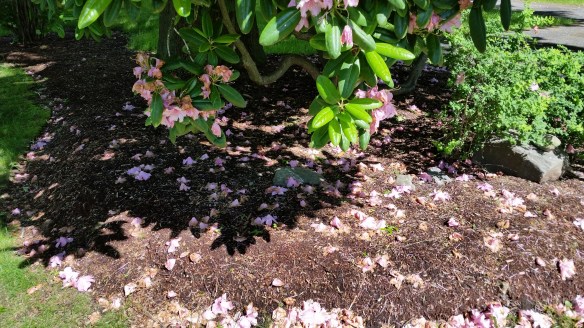
As above so below, pink flowers

The acronym for fear is False Evidence Appearing Real. I learned this a few years ago and I think of it sometimes when I am tempted to be afraid of or afraid for what appears dire. Life presents plenty of scenarios that could give us the shivers if we let it. Right now, the bogeyman is the Coronavirus. Please understand, I am not downplaying the importance of avoiding this virus, what I am concerned about is the climate of fear that surrounds something we are told is not more dangerous than a bad cold to most, though it can kill vulnerable people. Unfortunately, so can many germs, easy to encounter at all times. It is also said that using sanitizers is not helpful and might even make you more vulnerable. Soap and water are always effective.

However, in order to maintain your good health you need to take all the measures you have been told to take ever since you were old enough to care for yourself. Number one, of course is to get enough sleep. I can’t emphasize this enough. Do what it takes for you to get to bed for a restful eight or nine hours of slumber. If you have problems sleeping, check out the effective homeopathic non-addictive, no-side-effects aids to sleep. Your local health food store has them, and they are not expensive. Some mild stretching before bed sends me gently off to slumber, as does alternate nostril breathing. Google this for more information. It works well for me. I learned it, then taught it in my yoga classes some years ago. And of course, wash your hands frequently, especially when out in public.

I wish I had known about this breathing technique when I was between eight and ten, or perhaps even earlier when I suffered what might be called Night Terrors. I would lie in my bed quaking with fear about an imagined tragedy I believed would take my parents from me. One of these waking nightmares stemmed from a radio program I heard when I was in the second grade and home from school with a cold. I still remember the room I was in and the radio that told what was probably a tale of some kind, about the building of a tunnel that collapsed and drowned people. If I had called out to my parents, I would have been scolded, so I just coped as best I could. Perhaps this is how I learned to be courageous later in life.

When my children were small there was plenty that I might have feared, however, I had confidence in their behavior and their choices. I continue to do so. As I grow older, much could cause me to be afraid. Any ache or twinge could turn into a crisis if I let it, but I don’t allow myself to tie into that negative thinking. It’s also true that when I face what seems fearful, it dwindles and becomes much less threatening. When I say to myself, “I am safe now in this moment,” I can realize the truth of that and do whatever is necessary to stay that way. Taking sensible precautions is one thing, hiding under the bed is another. Keeping your immune system strong works best to help you avoid catching any germs. Negative thinking is counter-intuitive to that. I refuse to take fear into my heart or into my thoughts.
 

Be Your Own Valentine

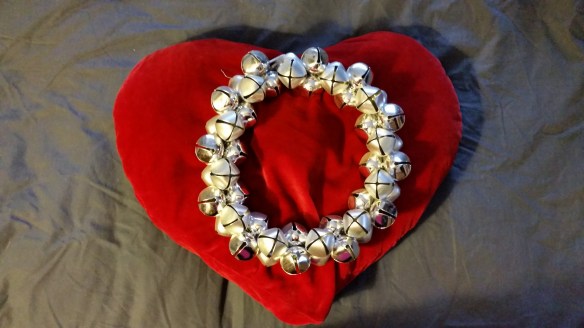
Heart and BellsWhen I was growing up it was the custom for valentine cards and gifts to be sent unsigned. I believe this was a tradition that dated back many years. The custom of celebrating Valentine’s Day goes back even further, to ancient Rome. It originated in a festival of the time called Lupercalia, after Lupercus, a nature god of the Romans who resembled the Greek god Pan. It also has roots relating to Juno Februata, honoring Goddess Juno. Then, young boys and girls drew lots to see who they would be partnered with for the year which began in March. The Christian church opted to keep the holiday and rename it, calling it after a saint who may or may not have existed.

I remember that one year when I was around the age of twelve, I received a lovely red, heart shaped compact. No one in my household would admit to giving it to me, although I suspected it had been given me by my father. He swore up and down that he hadn’t done it, and at the time I believed him. He had a very convincing way about him and made an excellent actor.  I remember seeing him in at least one locally produced play when I was growing up. He had an affinity for the theater.

When I was in the early grades, paper valentines were placed in a red and white crepe paper decorated box.  Someone was chosen to be postman and distributed the cards to the room full or classmates. There was no talk of partnering, nor of love, per se. Rather it was all about who got the most cards. Later on, I had fun making my own valentines and sending or giving them, and I have done this for many years. Many purchase them. Commercial valentines have been in use since 1800, and Worcester claims to be the originator of early ones, though others have made that claim as well.

My first husband and I met on a day early in February long ago. I wanted to send him a valentine, however, I could nothing but find only a humorous one. Although it was not very nice, it was all I could find so I sent it anyway. Fortunately for the five children we later produced, it didn’t ruin the relationship. Perhaps it was meant to be. The arrows of Cupid, a god of love also known by Greeks as Eros, sometimes do hit the mark. The Greeks have six words that express love: Eros: or sexual passion, Philia: family love or deep friendship, Ludus: or playful love like for children, Agape: or spiritual love/love for everyone, Pragma: or longstanding or enduring love, and Philautia: or love of the self.

The average Westerner saying, “I love…” may be expressing affection, or a preference—I love ice cream, or aptitude–I love to exercise. All these fit our definition of it. And they are all conditional upon our personal choices. Yet spiritual or unconditional love, the most difficult form of love is also the most beneficial for both giver and recipient. This is the love that endures. When I give myself the valentine of unconditional love, I can be much more loving to everyone else. In addition, I do not take issue with any faults, but instead regard with compassion the struggles of the one who is loved and express patience without expectation.


Competition Versus Cooperation

chickens.jpgI’ve never been a competitive person. Usually a sense of competition kicks in around the age of four, when a child gains a clear understanding of “me” and “mine.” Even then there is often a desire to share unless the child is surrounded by competitors. When I was growing up competition was the rule and the idea of a game that required cooperation instead was unknown. I did not enjoy the competitive world I grew up in.

Even as a child I disliked competition in sports. One reason was that I wasn’t very agile or well-coordinated and thus most often chosen last for any team. Another was that it made me sad that someone had to lose in order for someone to win. I played board games yet not with a keen desire to win. For instance, Parcheesi which was a popular game when I was young was best won by blocking opponents and rendering them helpless. I never enjoyed doing that. For me, that was like punishing someone or hurting them.

My mother was a fierce competitor. She loved games and was good at them. She played Bridge and Mahjong with her friends. With me she played card games and Chinese checkers, which she played without mercy, making no allowances for youth or inexperience. She played to win, regardless. As a result, I did learn to play a good game of Chinese checkers. Fast forward to my adulthood. I still resisted competition when I could. Unfortunately, my children invariably made me enter the tired Mothers Race at the fourth of July games. in the town where they grew up. I came in last no matter how hard I tried.

My children’s father was very competitive. He encouraged the children while they were still quite young to play on teams and to compete. He even started a girls’ softball league in the town where we lived.  My daughters and then my sons all strove to do well in order to make him happy. He cherished their ribbons and trophies and often coached their various teams to victory. As a loyal mom I used to attend their tennis matches and their and baseball and ice hockey games, cheering along with the other parents and trembling for fear they would lose and be sad.

Regardless whether or not they won, I was glad whenever the games or matches were over. Certainly, my children learned much from their years playing tennis, hockey, and baseball. They had fun and met other children they would not have met otherwise. I am not regretful for them, though I do feel there are other ways to have fun that they might have enjoyed as well. I was too busy keeping up with household and child caring duties to do much about that.

Competition is said to be a good learning experience for children. Today even little ones barely out of toddler years are put on teams to play at various sports. For competitive people that’s good. For those like me, not so much. On the other hand, it is possible to play games in the spirit of cooperation. Team efforts in sports are only one way. There is also a cooperative way to play many games, and that is to play to see how high the score can rise. Scrabble can be played that way, and I know that’s how I would prefer to play it.

It’s Hearty Soup Weather

2014-09-16 15.36.53 During most of history, people ate what they had put away for the winter in their cellars and barns. In Colonial New England, unless someone had a greenhouse a midwinter salad was unheard of. In the Middle Ages in Europe and Russia, fasting during Lent was a necessity because what little food was available to most by late winter had to be hoarded and used carefully. People ate with the seasons. Forty years ago on a late spring trip to Russia with my mother I recall cabbage being served to us daily. It keeps well if properly stored.

Root vegetables can stay fresh for months. Turnips, Carrots, Rutabagas and winter squashes keep when in a cold place. I recall the root cellar in my Great Aunt Alice’s large garden—a deep hole with a wooden cover where vegetables could be safely stored for the winter months. I prefer to eat with the seasons. I feel healthier eating root vegetables often in fall and winter.

One thing special thing about fall is that my appetite returns and I can eat more without gaining weight. Those extra calories burn to keep me warm. However I do not eat more empty calories: i.e. desserts, snacks, sweets. Instead I eat more vegetables and healthy carbohydrates. Soup calories are always good fuel for the body. Hearty fall and winter soups are made with root vegetables, winter squash, beans, and other appropriate ingredients.

Sturdy herbs like thyme, oregano, rosemary and tarragon add flavor and food value to these soups as well. I begin most of my soup recipes by sautéing chopped onion, finely chopped celery, and ground garlic (not garlic powder, that has less flavor) in butter and olive oil. The mung beans in this recipe can be found at any health food store if your market does not carry them, and are a nice change from the more commonly used lentils or other kinds of beans.

My mung bean soup is a little different from the average bean soup. For this hearty recipe sauté ½ cup onion and 1 cup celery chopped small in 2 Tbs olive oil and 2 Tbs butter until transparent. Add 1 tsp each of thyme, rosemary, curry powder, and ground garlic . Stir in 2 cups peeled, chopped firm potatoes and 1 cup or more sliced carrots. Add 2 cups beef broth, and 4 cups water. Bring to a boil and simmer for an hour or so, until vegetables are tender and soup is tasty.

Cauliflower has become popular lately. I have seen versions of it prepared in many ways. This is my cauliflower soup: Thinly slice ½ to ¾ of a large cauliflower and 1 or 2 large carrots. Simmer in 2 cups water until soft. Meanwhile, Sauté 1 medium onion and 6 cloves garlic chopped, black pepper and your choice of seasonings in olive oil. Mash simmered vegetables and add sautéed ones. Add 2 cups chicken broth. If desired, thicken with leftover mashed potato or a roux made from 2 Tbs butter and 2 Tbs flour stirred over medium heat, with 1 cup added liquid of your choice stirred until smooth and thick.

The Importance of Self Acknowledgement

Fall Dandelions

It can be frustrating when you cannot do something that you have done all your life with ease. I’ve been putting on my own clothes for most of my life. However for the first two weeks I was home from the hospital, I wore the same simple garment every day. It went over my head without effort and kept me adequately clothed. As time went on I could wear more elaborate clothing until finally I could pretty much dress myself in whatever I wished to wear, all except for my shoes and socks. That required more bending than I was capable of.

Shoes and socks seem simple, do they not? Everyone can manage them. I have a distinct memory of learning to tie my shoes as a child. I know I was still only three, because I was attending nursery school at the time. My memory is of bending over my shoes until I had learned to wind the shoelaces into bows that would keep them tied. I didn’t have a choice in the matter. In my mind I can see the bedroom I slept in with my caregiver and feel my sense of frustration as I tried over and over again to tie those laces until at last I succeeded. Then oh, how happy I felt. I can still remember that too.

Just recently I had another small victory. I was able to put on my left sock all by myself. To do that sounds so simple. Yet it was the final step since my hip replacement two months ago, in my being able to get myself entirely dressed without help. To be sure up until now Stephen has been ever so kind about assisting me. Yet regardless how kind someone helping you is, it is very appealing, at least to me, to be able to do something I have always been able to do, by myself once more.

My parents weren’t generous with their praise of my accomplishments. They always informed me I was supposed to do well. They were apt to say, “Now that was quite good, can you do better next time?” They thought this was how to encourage me to try harder or at least keep on trying. I, on the other hand, believe strongly in praise. My children’s father taught me this. No matter how wretchedly the children he coached performed, he found a way to say some encouraging words. His teams invariably did well and I think this was one of the main reasons.

Not many of us have a coach in life to praise us, so it is up to us to pat ourselves on the back when we need encouragement, and more importantly, when we need to be acknowledged. It is not only permissible but also important to take note of our personal victories, most especially to do so for ourselves. We need to feel good for ourselves, not because someone else has praised us. When we recognize our successes we can build on them with a sense of satisfaction. When we feel satisfied with our performance we do not need to seek praise elsewhere but instead can feel good and be happy because we know for ourselves that we have done our best.

Mourn and Move On

Fall Maple Gold 2 When I was small I had a small cemetery. It was beside the church I had set up in a corner formed by a chimney and the wall of a small greenhouse. My family lived in the country. We had chickens and at one time some ducks. Baby chicks died and I buried them  there as well as the other assorted creatures whose deaths went unmourned except by me. My acquaintance with death came early and in a natural way. This was of help to me later.

Laurens Van der Post, a South African author whose writing I respect, once wrote, “There are some things we never quite get over, however once in a while we go back, pat them on the head and say, ‘How are you doing old fellow?'” In this instance he was speaking about his time in a Japanese prison camp, where he was very cruelly treated. I have remembered this quote for many years. It has been very useful in reminding me not to dwell on past grief, yet not to suppress it. The recent unnecessary death of a poet friend helped me to recall this.

When anyone special o us dies, it reminds us of others of whom we are fond who have left us. Yet it is well to remember them with joy rather than regret. I will treasure in my heart my friend’s funny emails and his amazing adventures. He was a unique character with a huge, loving heart and a mission to try to help every woebegone that crossed his path whether or not they deserved to be helped. He also had a way of getting into trouble. As well he had several bad habits, one of which resulted in his premature death. Rather than blame him for his foolishness I will bless him for his courage in pursuing his life the way he wanted to—whether I thought it was a good way or not.

When you live a long life as I have, you do “lose” people that you have, for one reason or another, outlived. Whether these were members of your family or your friends, along with the current grief the sadness of their passing may easily come to mind. In addition, in our lives there are other instances of departure or absence: the job we didn’t take or did, the home we bought or didn’t, the gift we meant to give, even the words that went unsaid or the ones we wish we had not spoken. The grief engendered by regrets small and large can consume us if we let it.

It is important for us to grieve and let go. It is vital not to carry these burdens any longer than necessary. There is a Zen story of two monks who came to a stream where they found a woman who was afraid to cross it. One monk picked her up, carried her over the stream and set her down. As they continued, his brother monk began to berate him for touching a woman’s body. Finally the first monk turned to his friend and said, “I set the woman down a while ago. You are still carrying her.”  There is no need to carry our grief endlessly. We can let it be on a shelf in our memories and then once in a while, go back and pat it, and say, “How are you doing, old friend?” And then go on to find a happy memory to continue on with.

Dealing with Anticipation

Flower -1 bud  The appointment for my hip surgery was made more than three months ago. Now its time has come. While I feel positive about the outcome of the experience, I also feel a tiny bit apprehensive. Everything I have heard about the surgery from those who have had it done has been good. I even ran into someone who had the procedure done by the same doctor I have and she said hers had gone wonderfully and she was very pleased.

However, my mind has been twirling around the upcoming surgery for all the months I have been waiting. My thoughts have revolved endlessly about what I will be unable to do and for how long, as well as what I will need to have prepared and so forth and so on. Now as one who tries hard to be in the present moment as much of the time as possible, this has been a real teaching situation. Present moment mindfulness is not something to be practiced only during meditation. It is a frame of mind to be kept in place all through the day.

I once met a man who said, “Whenever I think about what is upcoming, and dread it, it always seems much worse than it turns out to be.” The fear of the unknown is what drives the dread. The silly part is that anticipation has no actual basis in fact, and therefore it  is inaccurate. Only when the experience has arrived can it be truly judged. Otherwise its truth is obscured by what we feel rather than whatever the facts may be.

There is an acronym for fear that reads: “False Evidence Appearing Real.” This is a good description of fear. The so called evidence is usually a product of our active imagination, warnings by people who are trying to be helpful, past experience that may not be applicable here, or feelings of inadequacy. When we think about what is upcoming if we can recognize this for ourselves we can think about it in a more positive way.

As a child I used to enjoy anticipation. I would think about going to the circus, something that happened once a year, with great joy. I looked forward to going to the library to get a pile of new books to read. An avid reader, I often devoured a book a day whenever I could manage to get the time to do so. School vacations were a great source of anticipation. Before they arrived they always seemed to stretch out invitingly and even when they were over there were more to be looked forward to

There was one form of anticipation that was unpleasant. That was when I had done something I shouldn’t and my mother would say, “Wait ’til your father gets home!” Even though he was a kind man, I knew whatever punishment was coming would be more severe if he administered it. My anticipation of the surgery is not with dread, however, but with joy. I look forward to more mobility, less pain and a better sleep at night. Meanwhile I am trying hard to stay as focused as possible on the present moment.


Small Blessings Bring Joy

Dandelion and pebblesKittens grow up and become cats. They learn to use their claws on the furniture, and then they reach a point where if we do not pay attention, they may produce more kittens. Snow falls, gets turned by snowmen by eager, mittened fingers, and then when the sun comes out and the cold retreats, they melt. I wash the dishes, polish up the burners on the stove and sigh, remembering that there will soon be more dishes to wash and something will fall on the cooking surface and smell of burning if I don’t notice it before I begin to cook again.

It is important to me to take notice of how nice it is to have an empty sink and a clean stove. If all I do is think about doing it over again I will miss the feeling of how nice it is to have done with my small tasks. They can become routine, done without thinking, and without appreciation for the effort as well as for the result. When I take the time to notice, I feel better about myself and about my life in general.

When spring comes and the first bluebells and crocuses poke up through the thawed ground, how wonderful it is. We say, “Spring is here.” And it is. Yet spring turns to summer. Then we rejoice in the longer days and firefly strewn nights, until the hours of daylight begin to shorten again. Fall’s bounty of color comes and then goes.  It is good to appreciate what we have while we have it because as a wise teacher of mine used to say, the only constant is change.

It’s easy to take for granted small blessings that pass quickly. We do it all the time without thinking. We’re actually more likely to take notice of what is wrong than what is right. I’ve read that our brains are wired that way for self-preservation. It’s important to make note of the danger lurking nearby—is that a wild beast? Or see the car coming a little too fast as we are about to cross the street. However, our built in warning system can override our joy.

Just recently the wild roses bloomed. Their sweet smell permeated the air by my back porch. I made sure to take time to enjoy their scent. Now the petals have turned brown and I have to wait until next year to enjoy them again. Still, I do have the memory, and although it does not have an actual scent, it can still bring back the pleasure of what I enjoyed when the petals were fresh.

If I am focused on regret because the roses have passed, it is more difficult for me to remember the joy they brought me. As well, I might not be able to take advantage of some new and pleasant experience that could await my notice. Small blessings do not announce their presence with a shout but rather with a whisper. The bright dandelion by the side of a building might go unseen and unappreciated if I am not aware of its gift. If I am only looking at the trash around it, I might not see it all. Small blessings bring joy.

Remembering to be Thankful

Laura Dove A         While at Thanksgiving we are reminded to be grateful, that is surely not the only time to do so. it is vital to remember to be thankful frequently each and every day of our lives. For some time now I have begun and ended each day with this little prayer: “Thank you for this day and for all my days.” As often as possible each and every day I remind myself to acknowledge my gratitude for any good experience and even those that might not have been so good, because of the knowledge gained.

Recently we were saddened to hear of a friend who died suddenly and unexpectedly just as she was starting a new life with her spouse. Within the past few weeks we have heard news of other friends who are ill or whose lives have been disturbed or changed for the worse. Each time I hear such things, while I say a prayer for those affected, I am also reminded to be grateful for my relatively tranquil, happy life. In this present moment I have so much to be thankful for. When I survey my daily life, even with all its ups and downs, I am reminded to express that gratitude.

My late newspaper editor used to say, “Health is wealth.” How right he was. What are a few aches and pains compared to long term, probably painful illness or worse, an approaching end to life? What’s a broken washer compared to the loss of a parent or of a dear friend? It is so easy to take one’s blessings for granted, to think of them as ordinary or just a part of life. There is an old saying, “I complained because I had no shoes until I saw a man who had no feet.” While I am thankful for what I have, I am also grateful for what I do not have to endure.

There is such joy to be had in a tasty breakfast of a Sunday morning shared with one’s partner. Were this scene to end suddenly and abruptly I would deeply regret having lost even a moment of our time together through inattention . There is no way to know ahead when one’s end will come, when all of a sudden there will be no more time. I have read of a Native American tradition to greet each day with the phrase, “This is a good day to die.” Some might think this is a morbid attitude. To me it says, “Pay attention, live fully in this and every moment.”

Quite simply, though we don’t like to think about it, we begin to die the day we are born. With the increase in medical knowledge the life span of human beings has been greatly extended, still one day life will end for us all. One of the benefits of mindfulness meditation is that when it is practiced, it becomes easier to pay attention. I am grateful for this practice and to the teacher that taught it to me. It behooves us all to remember that every moment we have whether uncomfortable or comfortable, sad or happy, sour or sweet is a precious gift to treasure and to be thankful for.

Mothers are Everywhere and Always

Family women 1989My mother did not have good training for the task of mothering. Her mother was the wife of a diplomat and spent her days doing what she needed to do to support my mother’s father in his position. Her children were cared for by nursemaids and tutors. I knew her briefly: a proper, formal woman who came to live briefly in the states in the late forties. I was a young teen at the time, not very interested in this elderly person. Now of course I wish I had asked her more about her life. She returned to Germany and passed on soon after. Ill prepared as she was, my mother did the best she could, and I honor her for it.

When I think of the word mother, I envision a womanly figure with her arms around a child, though not necessarily her child.  Many women without children do their share of mothering. One definition of mothering is taking care of or caring for someone. The nature of the caring embraces many actions. A mother cat keeps her kittens close, yet disciplines them as well. A human mother hugs her child and also disciplines that child—hopefully in a loving manner. Mothers of all kinds help children learn limits and learn to respect them.

Growing up, I was fortunate in being given a great deal of unlimited physical freedom. Nobody minded when I climbed trees or played explorer in the marshes behind our home. As long as I stayed on the property I could do as I liked. The few times I ventured off I was punished. However, my punishments were not cruel, only restrictive: being confined to my room for a long period. I’m sure my mother kept an ear out for me while I played, in case I needed her. She was at home with me and my siblings. Today’s mothers are fortunate if they can do that. In some respects not being able to makes mothering harder now.

I went on to have children of my own; all of my girls are now mothers themselves. Sometimes they need me to mother them; sometimes they even mother me. Mothering does not end when the child is an adult. However as many a mother must discover, mothering must be modified if one does not wish to annoy one’s children. There is a fine line between caring for someone you love and overdoing it: smothering versus mothering. Kindness is defined by how it affects the recipient; helicopter parenting, as it is called can have negative results of all kinds. Limits are for parents as well as for children.

Teachers mother students; some animals have been known to mother young ones not of their kind; I was comforted by the trees I spent hours sitting in– reading, and writing poems. Mothering is of the heart–the heart of the receiver as well as the giver. A difficult childhood results when the mother is unhappy or ill prepared for motherhood. It is easier to judge one’s childhood experience as an adult. Also, not only women can mother. Men can as well. I see them, infants on their backs or in a stroller, tending little ones in a loving manner. On this Mothers’ Day In my heart I honor all those who have mothered me, and I am grateful to each and every one.