The Climate of Violence We Live In

Icy Branches

Growing up I read fairy tales featuring ogres and ferocious creatures, yet I knew they were not real. Besides the hero or heroine always won, often through trickery and clever alternatives to violence. I grew up protected from discussion of ugly or violent happenings. I’d hear, “Nicht fur das Kinder,” (not in front of the child) Then I would be sent away so the grownups could talk.

As a mother I brought up my children to work things out peacefully. There was no fighting allowed in our back yard or the combatants were sent home. Before TV and its depiction of worldwide conflict and violence, American children were not directly exposed to war and cruelty. Sadly, while there have always been violence, cruelty and destructiveness in our world, only recently has it been so blatantly displayed. Today’s youngsters will never remember a time of peace.

Watching the Olympic Games, I found it inspiring to see the athletes of today carrying on its tradition of peaceful competition rather than conflict between countries. Unfortunately, despite peaceful athletic competition, today’s youth is growing up in a climate of violence. Most newspapers feature that. Good news is often buried somewhere within the paper almost like a footnote. What has the acceptance of conflict as perhaps the only way to resolve issues done to young minds and hearts?

Yet it is not only the immediate media we encounter daily that contributes, there is also the tenor of our language. We speak of “fighting” bad conditions, disease, and what we dislike in the world. Killing is a casual term for stopping or eliminating: “kill” that article or image. The majority of video games seem to be about fighting and destruction. Comic books and illustrated novels have similar themes. When I was growing up there were curbs on the ugly and the dreadful. There was a comic code whose job it was to protect the young.

Now there seem to be no limits and no safeguards for young minds. When I was young we had bomb drills in our schools, yet the war was far away and no immediate threat. Today children have drills to rehearse for someone coming into the school and shooting them. How can this make them feel? A friend spoke of their child in college as being potentially unsafe in his school. No one ought to have to go through life feeling fearful, yet that is how things seem to be today.

Fear and anxiety separate us from one another. Love and acceptance bring us together. While no one person can make more than a small difference, whatever any of us can do to generate peaceful acceptance of each other’s differences and live in cooperation with each other contributes to a happier world. Where conflict resolution is taught in schools, violence greatly diminishes. Let us do what we can to encourage a climate of peace. Youth no longer bathed in violence will be free to see the world differently and react toward it accordingly.

I welcome your comments and/or questions.


The Discipline of Remembering

Garden Conversation042

I can clearly remember lying in my bed upstairs and wishing I was able to stay up and be part of whatever was happening. I also remember sitting at the table, a boiled egg or perhaps worse, a piece of liver before me—things I had no desire whatsoever to put in my mouth. If I wanted to leave the table I had to finish whatever I was given. One way I managed was to cut the liver into small pieces and swallow it whole. I can’t remember how I dealt with the egg.

My life as a child had lots of discipline in it. Authority figures held sway over my life. Often it was a parent: “Time to go to bed,” or a teacher: “Be sure to do your homework in a timely manner.” It never occurred to me that these disciplinarians were stand-ins for what comes when we are adults. In my innocence I thought discipline had to come from someone telling me what I had to do, not that one day I would need to tell myself.

Unfortunately for my childhood dreams, I need to enforce my own discipline in order to function in the world in an orderly manner. There is really no one that can do it for me. As a child I dreamed of the day I would be my own boss, as I thought of it then. I yearned for the day there would be no one to tell me I had to go to bed if I didn’t wish to, or make me eat something I didn’t wish to eat. Of course that is how a child thinks and the reality does not occur to us because as children we simply cannot conceive of it.

I remember thinking how grand it would be to be a grownup with no one to tell me what to do and when to do it. I could, I believed do whatever I wished, whenever I wished to do it. Children are so innocent. Little did I know then what I had to remember to do for myself when there were no more grownups to tell me and I was the grownup. As an adult I find discipline needs to be addressed often. For instance, there is the discipline of deadlines. If I wish I can ignore them though I do so to my peril. There is also the simple discipline of my body, which needs to sleep eat and go to the bathroom, occasionally at inconvenient times.

As I have grown older it seems to me there are more and more things I need to do each day in order to maintain my health and sanity. These require me to remember them as well as to do them. Lists help, yet were I to write everything I need to do daily down, it would be a lengthy list indeed. Practicing the discipline of remembering is perhaps the most important one of all, and in addition to doing my exercises and taking my vitamins, I practice this each and every day.

Intentions, Resolutions and Reminders

Dead Branches and reflections 2

Growing up I was somewhat clumsy and awkward. I was always tall for my age—I stopped growing at the age of twelve and was even taller than most of the boys in my class, who soon outgrew me. My parents also thought I was careless. I wasn’t really, just lacking in experience. I also had poor proprioception. That word defines an actual sense: awareness of where one is in space and how much effort is being put out. I once embarrassed myself dreadfully when my best friend’s mother asked me to help her set the table, by pulling it completely out of the sideboard and dumping its contents on the floor.

While I outgrew the awkwardness and with the aid of yoga even became quite graceful, I still struggle with the proprioception. However I found that mindfulness helps greatly with that. Centering myself, slowing down, and practicing deliberate awareness when I am moving around or even pouring water from a pitcher into a glass, is a must. Over the years I have tried to make this a habit, like washing my hands with frequency, especially lately.

The flu season has made it vital to remember to wash my hands each time I return home, especially when I’ve been touching things like Grocery cart handles, restroom doorknobs and even counters or tabletops. The other day in a restaurant a woman near us was coughing with frequency into her hand as well as into the air around her. We are told that washing hands well is more effective than using sanitizers and better for our health.

I learned this the hard way. Last week I picked up a germ that invaded my sinuses and hit my right eye causing me great pain and rendering me unable to read for any length of time. As a result I have strongly resolved to wash my hands carefully not only when using any restroom but especially immediately upon arriving home. I hope to avoid not only the flu, but any other germs.

Resolutions are better kept when we have a reminder to do so, and a deliberate intention is well bolstered by any negative experience that happens when we haven’t. Hand washing is now an imperative for me, and while I regret the suffering and pain of my illness, I am grateful for the positive reinforcement of my intentions. Powerful reminders are not always pleasant, however they certainly are useful. Making lists helps too. Without a list my intentions, let alone whatever I have resolved to do may be forgotten.

Getting older has its good and its bad aspects. Becoming wiser by virtue of experience is helpful. Becoming more mindful as a result of that experience helps greatly also. On the other hand, becoming forgetful is a nuisance. However, my lists do help considerably. The trick is to remember to write things down and then also to look at the list. When I was a young parent in order to stay on top of things I had to outwit my children. Now instead in order to stay awake and aware I have to outwit myself.

The Gift of Christmas Giving

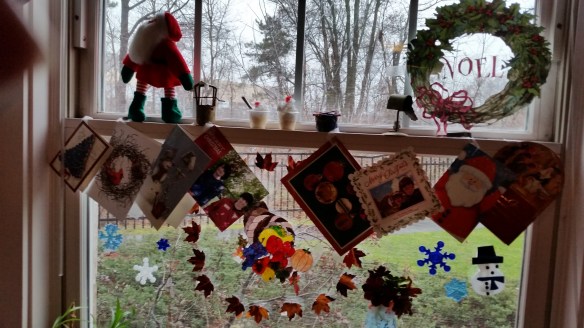
Laura Dodge's Christmas windowOne of my fond Christmas memories is of my dad sitting by our living room fireplace wrapping and addressing his Christmas gifts to his workers and others with whom he had a working relationship. He was a horticulturalist and his company was on the North Shore where there were many fine estates and special gardens. He was good at designing views and helping the owners of the estates and their caretakers maintain their trees and shrubs.

His gifts ranged from cartons of cigarettes to bottles of whiskey and included neckties and other smaller items of clothing. Some were for the gardeners of the estates, some for those who worked under his supervision. His men and their foreman got the more expensive gifts. Each one was carefully wrapped and labeled. When I grew old enough to help him I delighted in doing so. All things having to do with Christmas have always been special to me.

Many years ago, on the advice of a spiritual teacher, I began cultivating an attitude of gratitude. This practice has since become much more popular, featured in books and by Oprah, on Facebook groups and on a variety of other sites. There is even a lovely, inspiring site devoted to the expression of gratitude called Gratitude.org. It features all sorts of good news together with thoughtful comments and teachings, as well as poetry.

As Stephen and I drove home after delivering the last plate of Christmas gift cookies, I thought how grateful I was to have an opportunity to acknowledge as my dad did, the kindness of those who had been of help. My token plates of cookies seem a small return for all that these people have done for us, yet they are at least a tangible offering on the alter of my gratitude.

Also, since I was a small child I have been the recipient of much for which I am grateful now, even though at the time I was not aware of the benefit. When I have the opportunity to do so, I acknowledge in my heart those who have been kind to me in the past as well as in the present. Some of them have passed out of my life and some have simply passed away. I remember them with gratitude and say a prayer for their happiness wherever they may be.

Thanksgiving is a fine time to be aware of that for which we are grateful, yet Christmas is my opportunity to express that gratitude in a tangible way to those whose generosity I hope to acknowledge. My life would not be what it is without the help I have received along the ways Those who have in the past, those in the present and even those in the future deserve my thanks as well as whatever I can do to pay it forward in gratitude for those who are too far for me to bring them cookies.


Riding a Time Machine into the Past

Reflections in SummerWhat fun it would be to hop onto a time machine and return to the Christmas shopping of my childhood, after I had turned eight. How I enjoyed buying my parents small stocking presents at Grants and Woolworth’s. I want to return to the days when the ten dollars I had saved up sufficed to purchase about everything I wanted to buy for them. Maybe there would even be enough left over for an ice cream cone. I loved the way the store smelled when I walked in, and the overflowing counters with the glass part in front to make sure items didn’t fall off.
I didn’t mind no longer believing that Santa filled the stockings, because it was such fun to wrap up my inexpensive gifts to fill them for my parents. Best of all would be to write notes on them the way they did. I bought Ponds cold cream and vanishing cream each year. I think they were ten or twenty cents each.

My mother told us a joke once about the latter. It seems a child took off all her clothes, rubbed her whole body with vanishing cream, and then went downstairs where her parents were hosing a party. The polite guests pretended not to see her. The next morning she told her mother gleefully that vanishing cream really worked. My twelve year old self thought that was very funny.

My time machine would whisk me back to my Great Aunt’s dining room with all the relatives gathered together and finger bowls brought in at the end of the Christmas meal–often roast beef with Yorkshire pudding. Sometimes there would be a plum pudding brought in and ignited after brandy was poured over it. The dancing flames were blue and very exciting. I didn’t care much for the plum pudding but the had sauce with it was pretty good.

It would take me down the snowy streets with the sparkling stars way up high, and the carols on the radio. Those times seem quite simple compared to now. The television had only a few channels, and the programs didn’t play all night but ended with a test pattern. Mothers mostly were at home. Most had only one car per family, and my mother’s friends met bi monthly for lunch and chitchat over their mending.

In my time machine I would also visit the wondrous Daniel Lowe’s department store in Salem with all the glittering silver and crystal when you walked in. I did no Christmas shopping there. Salem was the big city to me and we seldom went. Nearby Beverly was smaller. That was where the Woolworth’s and the Grant’s were, as well as Almay’s department store. We did some of our shopping there. In those less frantic times no one thought to purchase gifts until a few weeks before Christmas. The stores waited until after Thanksgiving to decorate for the holidays or play Christmas music. However, that was then. Though different from that time, now has its delights as well. While the past is fine to visit, I wouldn’t wish to live there.

Weeds are Flowers Too

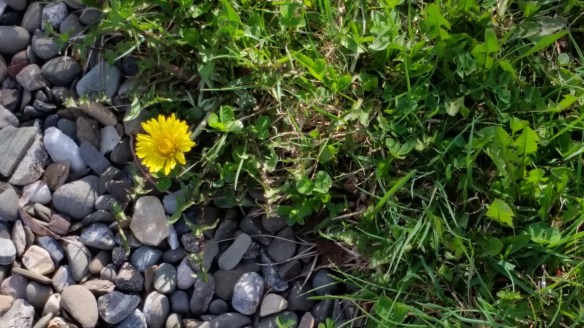
Dandelion and pebbles

When I was growing up there was local horticultural society in our town. They had a show every year, and I participated in the children’s class, always happy to compete for the prize money awarded. One easy win was to collect 50 wildflower species and label them. This was easy for me, as we lived in the country and there were plenty of them around in August when the show was held. I diligently combed the fields around our home and won. First prize: five whole dollars, was a princely sum for a ten or twelve year old. Later when I studied the medicinal qualities of wild as well as cultivated herbs I learned to value them even more. Now though I no longer live in the country I still feel fond of the weeds I studied as a child.

Each spring, whenever I walk through the series of parking lots across the street from my building, my eye is drawn to the weeds decorating the barrier between two of the lots. All year long I watch them grow, flower, and then succumb to the cold, their length still softening the hardness of the barrier they have grown against. I also often notice the weeds growing next to concrete highway dividers. They struggle up through tiny cracks in the pavement, signaling the persistence of nature against human concretization. Soon now snow will fall and the remaining stalks I see when I walk will cast their shadows on the snowfall, reminding me of the inevitability of spring regardless of the current winter weather.

Despite the gardener’s dismay, weeds are flowers too. In addition to their roadside beauty, their seeds feed birds and the roots and leaves may be medicinal and even nourishing. Many of the weeds we have today formed a significant part of the diet of those who lived here before the Europeans arrived. The early settlers who planted them to harvest for food and medicine brought others. The virtues of a plant that we call a weed may be many. Now that I no longer have a garden I can appreciate their beauty even more. A weed is by definition something that grows wild, that grows where it has not been deliberately planted: an unwanted, uninvited guest in the garden. In a metaphorical sense, weeds could be defined as the unwanted catalogues that keep arriving in the mail, the undesired emails that show up in my inbox, or even those annoying begging or advertising phone calls from telemarketers.

How are these flowers in the garden of my life? Perhaps because as I eliminate them, they call me to pay better attention. I could also see them as helping me to be grateful that once they are gone I have more space and a better awareness of what I wish to keep for myself. These weeds are persistent in the gardens that we call our lives. However at least they do not require my bending over to remove them or to dig out their roots. As I appreciate the beauty of the actual weeds when I see them so too I can rejoice for that beauty that comes uninvited yet welcome to my view.

Walking Through My Mother’s Life

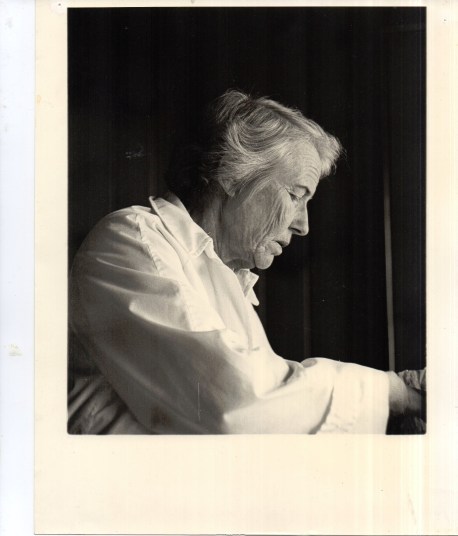
Mom profile by Nina005The medium sized cardboard carton was waiting for me to open and sort through the contents. My mother lived to the age of ninety eight, and it looked as though she never threw anything out that she received in the mail. I had brought it back with me from the storage unit in South Carolina. It contained paper of all sorts, including old photographs, that she had seen fit to keep for many years. Until I opened it I had no idea just how long those years had been.
Now for weeks and then months it had waited for me to go through it. In an effort to motivate myself I kept moving it around. I knew it would take the better part of several days to do, and I was reluctant to set aside other tasks to address one that had no deadline. Finally I put it where I could not ignore it: right under my desk. I had to look at it every time I sat down to do anything. Finally I got tired of looking at it and set to my task.

Some of what I found was reminiscent of my mother’s life in the 40’s and 50’s: bills and sales slips from department stores, electric bills and bills for milk delivery, drycleaning, and so on. The prices of things from those days were interesting. It was both surprising and sad to see what a dollar used to buy.

The names of the stores brought back memories of being with my mother when I was small, taken along on shopping trips. To my young eyes, the department store was a wondrous place holding all sorts of interesting things to look at. She also kept paid bills for expenses related to her art and the galleries she had under her own name. I set these aside for my daughter who is planning a future retrospective exhibit of her grandmother’s art.

The quantities of letters on thin airmail paper were impossible to read. Plus many of them were in German or Spanish. The dates on some envelopes went back to before my mother married my father. It seems she had quite a collection of boyfriends and there were many letters, some I could decipher a little addressed to her in endearing terms. It amazed me that she had managed to keep and haul around that collection for so long. The earliest went back more than 70 years. I had a wonderful walk through her life and times, and I found myself happy to have been able to touch into my own memories of those days..

It seems to me that things were far more innocent then. There were rules to be followed. These had been handed down from generation to generation and applied as long as life was stable and people’s roles mostly well defined. There was more safety in living that way. There are people who wish it were still like that today, however their numbers are dwindling. Once change begins it cannot be stopped or the results will be like a cancer that devours its host. Growth often comes about with pain. However, the freedom of being out from under the rigidity of the life my mother lived with is precious. I am grateful for it.


Making My Own Music

A musician by avocation, from the time I was a young child I was usually involved in some kind of music making. I’ve always loved to sing, and I can remember singing to my mother when I was quite small. At my grade school, weekly music classes the teacher played the piano as we sang British folk songs and music from Gilbert and Sullivan, typed and collected into a loose leaf notebook. Later the same teacher gave me private piano lessons. These ended after two years for two reasons: I found the practice songs to be boring and my mother, an amateur musician and child prodigy on the violin, disliked my fumbling attempts at learning the piano. She didn’t even like it when I played around on the piano keys, making my own music for myself. She would scold me for “making noise” as she called what I thought of as music.

Later I sang in various choruses at various schools and then in my church choir. To my delight one year my then husband bought me a guitar for my birthday. I began teaching myself to play. There followed a number of years playing and singing in coffee house, at hootenannies, and then professionally for parties and special occasions. I even volunteered at the local hospital, playing for the patients every week or so. My mother seemed pleased that I was following in the family musical tradition. Encouraged by her, and a poet by inclination I began to write my own songs. The melodies were simple, reminiscent of the many folk songs and hymns I had sung over the years.

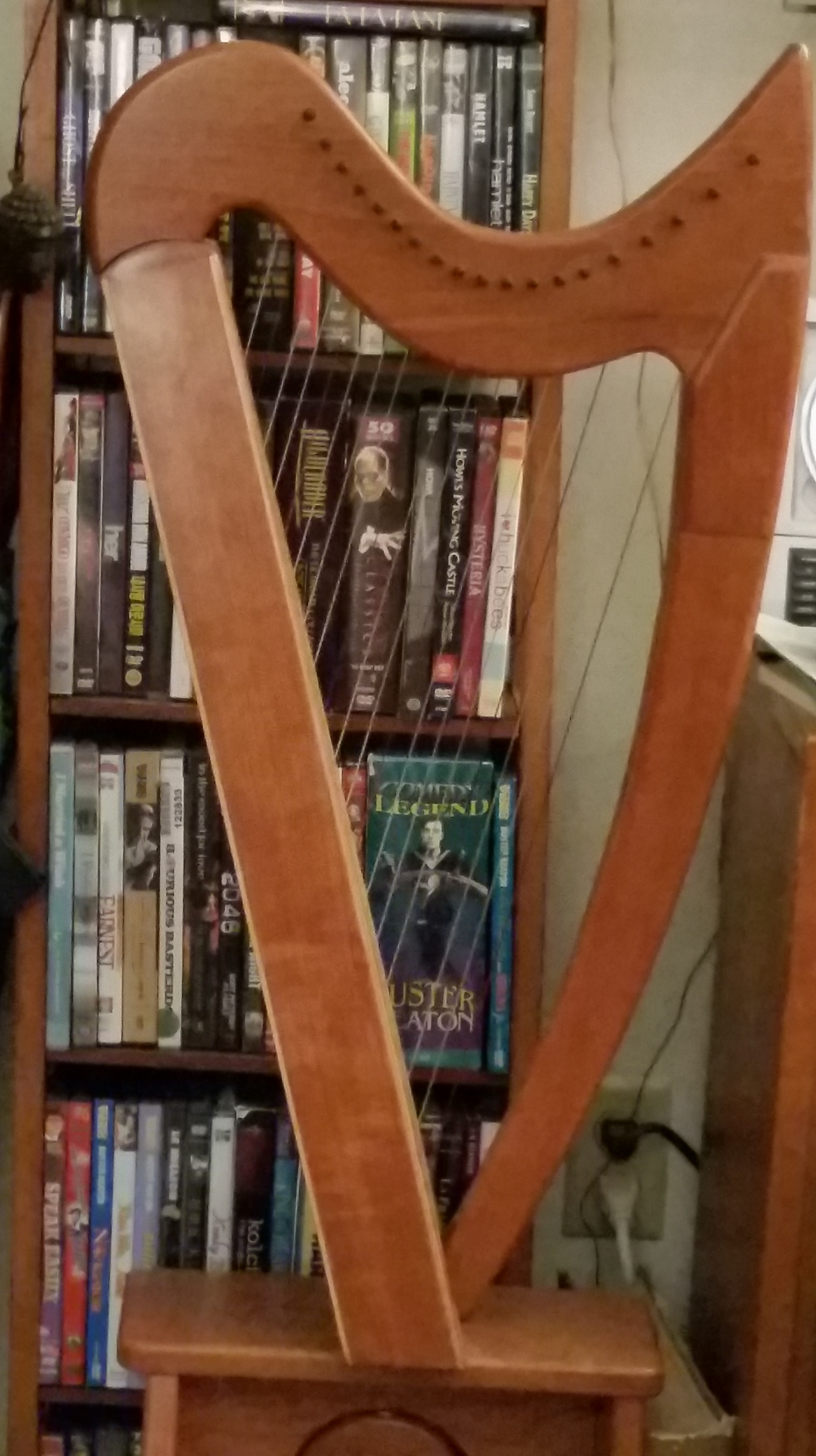
Although I enjoyed playing the guitar, from the time I was a young child the idea of playing the harp had attracted me. However the many strings of the large harps looked difficult compared to the guitar and surely transporting one would be a nightmare. Then I injured my shoulder and because of the position required for me to play it, had to retire my guitar. After reading many articles on the importance of keeping the older brain alive, and disliking the recommended suggestion to do crossword puzzles, I decided to try a smaller folk harp. Searching the internet I discovered a lap harp with a playable nineteen strings and purchased it from the maker along with a book to learn from.

I spent a respectable amount of time teaching myself the initial songs and techniques. As I advanced, the lessons became increasingly difficult. I realized I was losing interest in playing. I felt frustrated and began to neglect my harp, even allowing it to get out of tune. My mother’s former diatribes from the days I used to play on the piano rather than practice my lessons had come back to haunt me. Then one day I realized I didn’t have to play actual songs, I could do ass I liked. I could just enjoy myself, making musical sounds; I could play for fun. I began to do that. Spontaneous tunes emerged in my head and then from my fingers. Now playing my harp has become a treat and the music I make from my heart has become a daily joy.

What will you Harvest from this Year

onions-on-display

I remember my mother cutting up fruits and vegetables and filling her large canning kettle with jars. The kettle steamed away, filling the kitchen with warmth and making my mother perspire. The jars were later stored against the cold winter months on shelves in a kind of rough closet in our cellar. There was also a small barrel of potatoes there and one of my tasks was to go down occasionally and pick off their sprouts.

Too, my mother made wonderful jellies from the fruit that grew on my great aunt Alice’s trees. A lawyer, my great grandfather was also an amateur student of horticulture. He planted all sorts of fruit trees as well as grape vines, vegetables and flowers all of which were tended to by a gardener. He would bring fruit to my mother that she processed to make the clear jellies we ate with our Sunday meals.

I think of my mom and her tasks at this time of year when fruits and vegetables reach their peak and are harvested. Long ago Pilgrims and Native peoples dried food to preserve it. Later on many housewives filled glass jars, heating them until the food within could be kept for use in the winter. Today the same people who might in the past have canned and preserved it will freeze the extra produce that they cannot use right away. People with gardens are putting food by in order to have healthy, homegrown meals for the winter months. We who live where the seasons prevail have always done this.

These days to be sure food of all kinds is plentiful in every season year round, and if we do not have a garden from which to harvest, we are less likely to preserve the fall harvest against the winter. However, there is more than one kind of harvest to be made at this time. If we have planted ideas in the spring, and tended them during the summer, they may have matured enough by the fall to be gathered in and made use of during the rest of the year. If we have projects we have worked on, ideas we have been developing, stories or poetry we have been evolving; now is the time to get them out there for the final testing, checking or editing.

We no longer live in an agrarian society, and yet the seasons are still a part of us. Their energy need not be confined to the actual planting, tending and gathering of food. For while we may not plant actual seeds to grow, tend, harvest and preserve, we can use the energy of the seasons to generate what we need to nourish our own lives and the lives of others. The seeds of our efforts whether edible, useful, or otherwise productive can be sown in the spring for our eventual harvest and use in the fall. Then during the winter months they can supply what we need to sustain us and keep us from the cold.

Tasha Halpert


Memories of a Very Special Neighbor

Laura Dodge's Dancing Dolls        I grew up in the country, and the only neighbor I really knew was my Great Aunt Alice, because we lived in a smaller home on part of her property. There were no children for me to play with except some siblings across the street. My parents did not know theirs and I was not permitted to invite them in or to go to their house. To be fair, they were not a very kind bunch. There were two sisters and their brother, who was rather rough. They went to a different school than I did and I had very little in common with them. It is lovely to have neighbors, and once I had one who was special indeed.

I was recently able to get back in touch with this neighbor of many years ago. Her children and mine were of an age and we lived in a small town on the North Shore of Boston. In our suburban neighborhood our houses were only a few yards apart. Some days when I was upstairs, even without the windows being open I could hear her playing her recorder. A musician and an artist by avocation, she had a dachshund that she had taught to accompany her when she played happy birthday on the piano.

We were able to share only a couple of phone calls in the few months I had rediscovered her. Now has come the news that she has passed on. Memories of our years as neighbors flood back to me. One favorite is the time I was grilling a boned leg of lamb on my charcoal grill in the back yard. To my dismay I looked out and saw her German shepherd running off with it in his mouth. She bravely rescued it from him, cooked it for her family and gave me another leg of lamb that was even then roasting in her oven. Many times after that over cups of tea we laughed together, remembering.

Our children played together in our yards and she shared produce from her garden with me. Generous with her time and energy, she taught me a lot about sewing, and helped me whenever I was stuck trying to do something too advanced for my sewing machine skills. She helped me out when my younger children were born, brought food and kept me company. I was sad when she sold her house and moved away. Later after he was grown and on his own she took in my late son and as he helped her with hers, taught him a lot about gardening. I was very grateful to her for her kindness to him.

No matter how long someone you may cherish lives–and she was 92 when she passed on, it is never long enough to do and say all the things you wish you had done and said. I have to be content with what remains of my memories and of the conversations we had before she went to her final rest. She was a very special friend as well as a wonderful neighbor and I am sure many besides me have fond memories of her. A giving, sharing person, she set a good example for everyone who knew her. She lived a kind and caring life and will I am sure continue her loving ways now that she has her angel wings.