 When I was little my grandmother used to take me with her to visit her friends. Among them were two sisters who had never married but lived together in a pretty home with a nice porch. They used to give me cookies and cambric tea–milk, sugar and a wisp of tea in a delicate china cup. My own mother was physically strong and after my father passed on lived alone and drove herself between Florida and Maine even in her eighties.
These and many elders of my early years presented an image of healthy, hearty behavior. My grandmother used to do fancy dives into the swimming pool of the beach club she occasionally took me to. My great aunt played golf and tennis and had silver cups to show for it. I had teachers with white hair who were wise and good natured. My life has brought me many examples of vital elders who carried on their lives energetically.
Just recently I attended a small reunion for my high school classmates. I was impressed with their fortitude and vigor. As we visited together I enjoyed renewing my acquaintance with theses women with whom in our teens I had shared time, space, and teachers. It was quite special to be with my contemporaries. I found that even after all these years we still had much in common besides our age and the school we had attended.
The life paths we had taken had varied widely, yet we all shared a dedication to improving the world and being of help when needed. Born when we were, we had grown up with different mores and rules of behavior than those of today. As a result we have had to make many adjustments. When people do not grow with the changes that accumulate around them, they become bitter and crabby. It seemed to me that none of us had.
No doubt we all had our share of aches, pains and limitations. At our age some of that is to be expected. However I didn’t hear anyone complain about their health even though one of us used a walker and another had both vision and auditory issues of a serious nature. One of the blessings of age can be the ability to deal creatively with one’s limitations. Patience can come more easily when one has lived a long time.
The benefits of accumulated years are a kind of grace that can make up for the increasing changes that as we age limit activities, not to mention movement. Speaking for myself, I would say that patience tops the list of these benefits—not only patience with others but also patience with myself. In addition, being able to wait out a difficulty, the knowledge that time helps heal as well as facilitate, and the ability to listen to and soothe those who live with greater immediacy and impatience are some of the benefits I cherish as I grow on in years.
 Yankee thrift originated long before the pilgrims arrived on these shores. Being of a saving nature is a key to survival in tough times no matter when or where they occur. In today’s opulent, throwaway society times thrifty behavior isn’t very fashionable, however, I am happy to practice my version of it. My mother, though not a Yankee, certainly was a great example of that kind of behavior. I try to emulate her, though I do not go to the extremes she did.
 Most children have no concept of time and little to no understanding of loss, not to mention the concept of “goodbye.” Ironically however, one of the first things a mother teaches her baby is to wave “bye bye.” When we put them to bed for the night we are teaching them about leaving and being left. The first skill a child learns in the high chair is to drop things over the edge. At one level the life of any human being from birth onward is one long saying of goodbye.
 My parents taught me much by their example. My father served in many capacities as a volunteer. He was generous with his time, talents and energy. He read for a radio station that served the blind; for many years he held the position of treasurer for a non-profit orchestra; and he helped out in various capacities at the church to which he belonged.
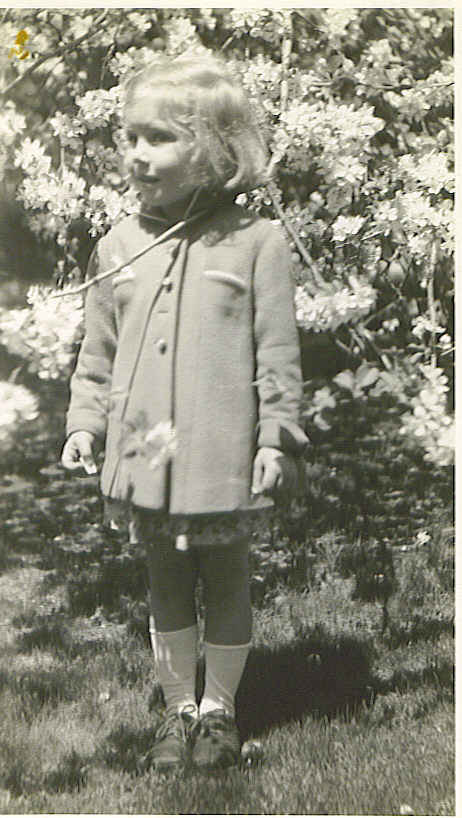 and death or even disaster was to be spoken of, someone would say, “Not in front of the children.” The subject would be changed or I would be told to go off and play so the adults could continue their discussion. Yet because we had animals, death and change were part of my life. I witnessed the drowning of baby ducks and the demise of baby chicks. It was hard when a dog got into my pet rabbits’ pen and maimed them. My aunt’s gardener had to–as I was told, “put them out of their suffering.” Death was no stranger to my childhood. I am neither uncomfortable with it nor afraid of it.

 Pujakins