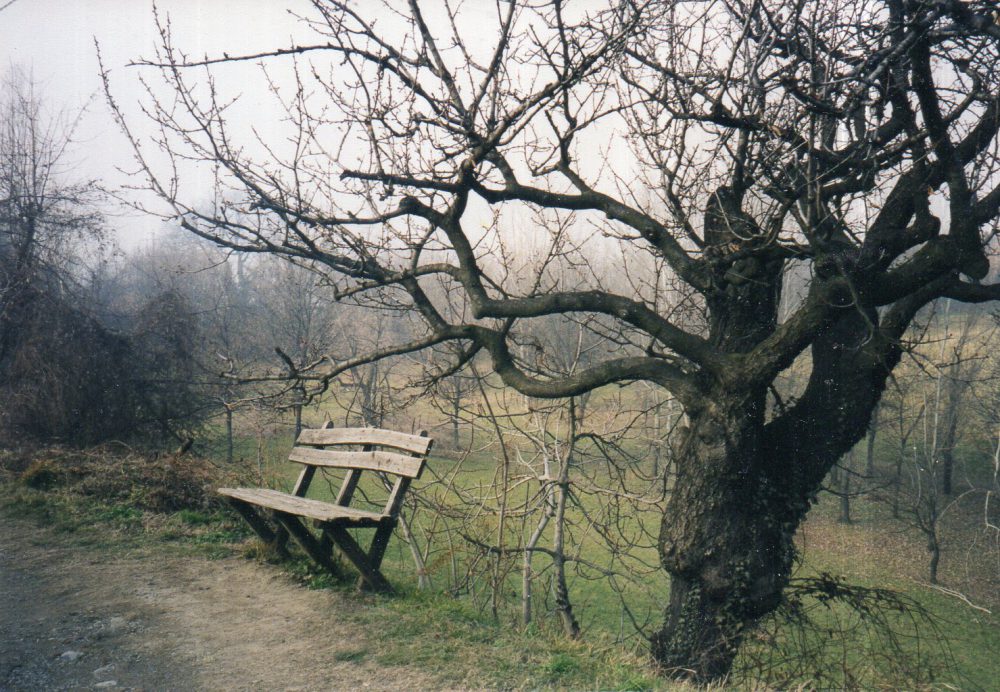

Sometimes I wish I could return to the time of my childhood when there seemed to be so much more of it: The long golden days of summer, the wonderful week of school vacation, the stretch of the weekend as I got home from school on Friday. It seemed to me that there was plenty of time to get everything I wished to do done. My days stretched out to be filled with my imagined adventures, the books I loved to read, and my toys.
I don’t remember feeling pressed for time as a child. I’m sure the grownups were however that didn’t communicate itself to me. I do remember how long it took me to learn to tie my shoes. I was three, or maybe four and my fingers didn’t work as well as they might have. I can still see my small shoes as I bent over them, fumbling with the laces until I got it right. Time wasn’t something I thought about. It wasn’t my job to do that. As an adult, however, it has become so.
One dear friend has accused me of being “time challenged.” She was politely informing me that I was usually late, or at least perhaps often so. I confess it’s true that before leaving my home I may do a few things that seem necessary to me with the result that I leave at the last minute and may actually get where I’m going a little late. This annoys my husband so I work to improve.
You think after the many years we’ve been married he’d know I am apt to shave things close to the bone when it comes to time. He prefers to get to performances, lectures, appointments or church at least a half hour early. He says it’s because in his teen years he was a reporter and liked to get to events early because it was more interesting then and the habit stuck. He says he also likes to get a good choice of seats, which I admit is a good reason.
However the way I see it, that half hour could have been put to so much better use. It always seems to me that there are many things I could have gotten done at home before leaving, while instead I must sit in a waiting room, pew or theater seat twiddling my thumbs as people come and go, the choir rehearses or I watch the ads on the movie screen. Being on time requires a certain amount of self-discipline, to be sure, and it is also polite. However arriving at a party or someone’s home half a hour early may be inconvenient to the host or hostess.
Because I find it fascinating as a subject, I’ve written a lot of poetry about time. I find it to be a strange accordion, expanding and contracting according to its own rules. Sometimes I look at the clock and think I have a whole hour to get everything done. Then I look again what seems to me fifteen minutes later, only to discover forty five have passed and I didn’t get half of what I planned finished. Perhaps time does challenge me, still, it’s a learning process and I do enjoy learning.
Want an autographed copy of my new book Up To My Neck In Lemons? Send me a check for $15 Postage included, to P.O. Box 171, North Grafton, MA 01536, and learn about lemons–actual, poetical and metaphorical. Make your life’s lemons into lemonade and enjoy my book a sip or so at a time.
 In St. Paul’s well known Letter to the Corinthians, Book 1, Chapter 13, he speaks of the nature of true charity. He lists ways to give and to each he adds “and have not true charity” (to paraphrase) “what I do is hollow and meaningless.” His description of true charity is the equivalent of a definition of unconditional love. The giving of love in unconditional ways means we do not expect anything back from our giving, nor do we make any judgments about those to whom we are giving.
 Days and nights are equal now that it’s the Equinox, and it’s time to think balance. Green vegetables bring cleansing to the body and help eliminate the winter accumulation we inherit from the cold months. The following recipes can help. It’s good to connect with each season by serving the seasonal fruits and vegetables. This recipe uses dandelion greens, available in markets in the spring and later in your yard all later spring and summer,(though not tasty while they blossom) and either Asparagus or any leafy green such as kale, collards, curly endive, Swiss chard or spinach.
 Someone once said, “Point a finger at someone else and you will be pointing four at yourself.” That is what we do when we judge someone else. However this is exquisitely easy to do. In fact, most of us do it all the time. For instance, how many of us who need to lose a few pounds look at an overweight person and say silently, “How could he or she get so out of shape?” I know I used to be guilty of that. Now my thought is, “Oh that poor person, how difficult it must be for him or her.”
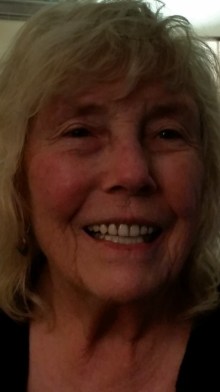 My young daughter asked if she could draw a portrait of me. I sat in the living room, smiling as she drew studiously, being very careful in her five year old way, to get everything just right. Suddenly she ran over, peered at my face and then went back to her drawing. Her pencil went dot, dot, dot on the paper as she put in her final touches. Proudly she showed me the portrait. To my dismay, the dots were a representation of a recent break-out around my lips.
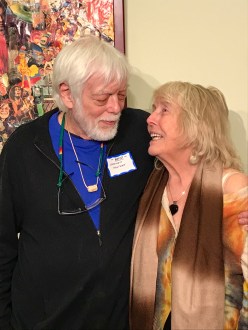 One of the more famous of the poems Elizabeth Barrett Browning wrote to her Robert as they fell in love begins, “How do I love thee? Let me count the ways.” It has always been a favorite of mine. I even set it to music and played it on my guitar in the days I sang in coffee houses and for parties. Love can be given in many ways, and all of them are valid and special because each person has his or her own way of giving love. When I pay attention and see how love is given, it is a wonderful lesson to be cherished. Watch very small children; toddlers give us wonderful examples of the giving of unconditional love.
 Apples are versatile and make for good cold weather desserts. They are relatively inexpensive and always available, plus they are very good nutrition. Needing inspiration for an apple dessert, I checked through my cookbook collection looking for a different way to make one. Because I try to avoid pie crust, I’m not a pie baker. Apple crisp, though very tasty, gets boring. I found that the recipes in my cookbooks for Apple Pan Dowdy and similar concoctions called for too much starch for a healthy diet.
 My introduction to using a computer came abruptly. The son of a friend dropped one he had built on my desk and said, “Here you need this.” He left me without giving me any instructions beyond how to turn the machine on and off. This was back in the nineties when I still happily typed my columns on a typewriter and delivered them by hand. I imagine you can sympathize with how it was to try to apply what I knew about typing to this newfangled mechanical servant! Fortunately he did come back to teach me until I began to learn better how to manage. It certainly took patience—his and mine.
 Pujakins