Saying Goodbye Gets Easier with Time and Experience

Peace Village Bridge Reflection Most children have no concept of time and little to no understanding of loss, not to mention the concept of “goodbye.” Ironically however, one of the first things a mother teaches her baby is to wave “bye bye.” When we put them to bed for the night we are teaching them about leaving and being left. The first skill a child learns in the high chair is to drop things over the edge. At one level the life of any human being from birth onward is one long saying of goodbye.

          We leave childhood behind and with it many of the beliefs and rationalizations with which we grew up. As we grow older and seek out knowledge for ourselves, we often abandon our old ideas and perhaps even our cherished beliefs. We move away from old neighborhoods and old friends, we meet new situations and learn new ways to cope, saying goodbye to old ways and old situations. As we grow on in years, over and over we find ourselves, sometimes happily, sometimes sadly having to say goodbye.

Recently Stephen and I attended a graveside funeral for a long time friend. It was a lovely occasion with many in attendance, some of whom had entertaining stories about him to share. He was well loved and had traveled the world; he had lived his life to the fullest. This may be why before he died he could say to at least one friend: “I’m looking forward to the next adventure.”

The Waterside Cemetery in Upton where his physical presence on earth will rest in a plot overlooking the pond where he used to fish, is a lovely, peaceful place. There, together with his other friends we said goodbye to the earthly remains of our friend and then went to a nearby function room to celebrate his life and share our memories of him. An important part of a funeral and afterward is to share stories about the deceased that help recall his life with love and joy.

Saying goodbye to someone I’ve known for a long time, though perhaps not been close to feels strange. When I haven’t seen a person in some time and then they pass on, I have trouble remembering they’re gone. Just the other day when I drove past the former address of a dear departed friend I was almost persuaded to stop and ring her doorbell. I had to remind myself that no, she no longer lives there, and no, I can’t visit for a cup of tea.

As I gain in years I find myself saying goodbye more frequently, both to people and to certain aspects of my life. My bucket list has grown shorter. There are things I once thought I wanted to do that I now do not wish to, like go up on an air balloon. I once believed it would be fun to go on a three months ocean cruise. Not any longer. Vigorous gardening is a thing of the past. Still, as I miss all to which I have said goodbye, I am reminded to cherish all that still remain.
The Preciousness of Remembering

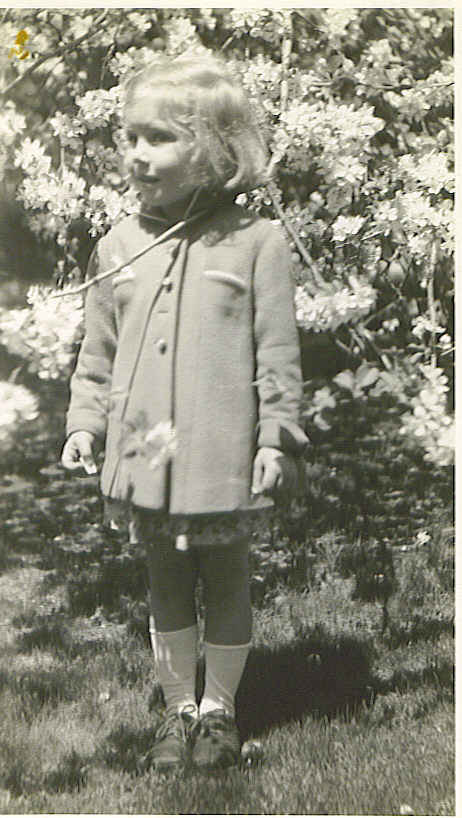
When I was a child Little Tasha 4and death or even disaster was to be spoken of, someone would say, “Not in front of the children.” The subject would be changed or I would be told to go off and play so the adults could continue their discussion. Yet because we had animals, death and change were part of my life. I witnessed the drowning of baby ducks and the demise of baby chicks. It was hard when a dog got into my pet rabbits’ pen and maimed them. My aunt’s gardener had to–as I was told, “put them out of their suffering.” Death was no stranger to my childhood. I am neither uncomfortable with it nor afraid of it.

Still, it does have an effect. The recent passing of a dear friend has brought a sense of immediacy to my relationships, and prompted a renewed sense of attention to my way of thinking about life. She and I used to speak each morning except Sundays. More than once I said to Stephen, “One day the phone will not ring at 9:30 every day.” Then indeed that day did come. While I miss my friend, I know she is in a much more comfortable and happy place than she has been for some time. Though I do miss her calls I also rejoice for her.

I am happy to have pleasant memories of our time together. That is the saving grace of partings. It is also a reminder to focus when I am with a dear one and to be present in order to have something to remember. More and more as I get older I have come to realize that endings come whether we want them to or not. We have no way of knowing whether or not any given conversation, meeting or interaction with another may be our last. I do not say this because I have a morbid fear of endings but rather as a reminder that any time we spend with another may be significant.

When we are children we have no understanding of how it is that things change or perhaps end. That ignorance may even be important to children’s comfort and sense of security. Most adults grow accustomed to change and learn to flow with it. It may be an aspect of maturity in human beings to be able to do that. In my life there have been many changes I could never have anticipated. Being able to adapt to them has been crucial to my happiness. Developing a sense of detachment to an anticipated condition of permanence has been not only valuable but also essential.

When I was a child, I could buy an ice cream cone for a nickel. Now even the smallest one costs 50 times that. The decor in my parents’ living room changed once in my memory. Today many people redecorate frequently. Then divorce was rare, people stayed at the same job for most of their lives, I could go on and on about how it used to be. My point is that change is more than ever a constant in most lives. For our comfort it is important to be able to deal with all forms of change, whether of décor or of circumstances. When I make the time to focus my attention and to appreciate what is happening, whether with a relationship or an experience, I have much less regret when it ends.

We Need Both Darkness and Light

Shadow fenceWhen I first learned to read I fell in love with the printed word. After that I devoured as many books as I could get my hands on. Like many children, once in bed at night after I was supposed to be sleeping, I hid under the covers and read by flashlight. If I woke up ahead of my parents as I often did, I did, I pulled up my shade for more light, or perhaps again used my flashlight. Reading wherever I was every chance I got, I accumulated knowledge and stimulated my imagination giving me a rich childhood and a good basis for expansion as I grew older. I still love to read however I no longer use a flashlight under the covers nor do I fear the approaching footsteps of a parent suspicious of my eagerness to go to bed.
As I have grown older, darkness has taken on more of an impact for me. The dark winter hours mean I sleep more, which is enjoyable. However, nowadays I need more light to see by. With the onset of Daylight Saving and then the Equinox that is on its way, I will enjoy the longer hours of light. I appreciate being able to see more clearly later and later in the day. Yet were it not for the contrast of darkness or the shadows cast by the light, it would be more difficult for me to perceive the size, shape, and outlines of objects around me. Also, without the dark hours of winter the trees and perennials would not get the rest they need to rebirth themselves in the spring. As do I, nature needs both to function properly.

Darkness is as necessary to us as light. It is what helps us define and manage the world around us. Early in their development as we attempt to shield our children from making mistakes we teach them about right and wrong. Sometimes this is a tricky proposition. As one of my teachers used to say, there are no absolutes. We teach our children and young adults not to kill or cause harm or hurt to others. But then they join the armed services and find themselves given a gun to aim at someone who is called the enemy. So in that instance killing is right or so they are told now. Could that have something to do with why so many individuals return from combat with troubled minds?

The Equinox presents us with equal hours for day and night. After March 20th the days will be longer than the nights until the process reverses with the Solstice in June. Meanwhile the world around us will begin to wake up from its long winter sleep in the dark. Balance in all things and the achievement of that balance is one of the important goals of the universal natural process of growth and decay. In addition we too participate in this process as we learn and grow, shining the light of our understanding on the darkness of ignorance. It is the contrast between them together with our moral compass that guides us toward the wholeness that is made up of both sun and shadow, darkness and light.


Saying Goodbye to our Friend

Laura Dodge's Dancing DollsAs we were moving into our Forest Lane apartment, we needed to assemble some of our new furniture. My tools had not yet made it over to our new home so I went knocking on my neighbors’ doors to see if I could borrow a hammer. Met with headshakes in the negative at each one I tried, I arrived at the last one. A spry older woman with a wonderful smile opened it. “Yes,” she said, “I have a hammer I can lend you.” That was approximately ten years ago and the beginning of a wonderful friendship with my neighbor Laura Dodge. I loved her spunk and her bright mind, but most of all I treasured her kind heart.

Over time as we visited and got to know one another, she told me her entertaining stories and shared her crafts with me. She also at my request shared space in her freezer with me. Over her protests I paid her “rent” in fruit sweetened jams and frozen desserts. She also had Stephen and me to tea and made popovers and other treats for us. I have recipes of hers in my collection that she wrote out in her tiny script. When she visited us in our apartment she admired my husband Stephen’s art. “Would you like to try collage?” he asked, and handed her a canvas. “Here, have fun.” She began to turn out wonderful collages of her own, asking for guidance from her teacher, as she called Stephen.

As her canvasses mounted and her skill increased, Stephen arranged for her to have art shows two years running at a restaurant in Worcester. Many came to her openings and admired and purchased her collages. We invited her to our birthday parties and she became popular with our friends. Everyone loved her stories. We included her in some of our shopping trips, took her to the Worcester Art Museum, and through a car wash, which she said was a first for her. When at Stephen’s suggestion she began to make dolls, we had fun helping her with designs. Eventually we loaned her a cabinet to keep them in.

When we met she was quite able physically, considering. As time went on and her physical health became worse, she couldn’t get out as much as she used to. Many of the evenings that she was home I would go down and visit with her. She had pain in her legs and in her back. At her request, I did some energy healing for her, singing to her and using my hands to remove painful energy and replace it with healing energy.

The day came when she could no longer live by herself. When she moved out we were both sad to part. We moved too very shortly, yet we kept in touch by telephone nearly every day. It was always a joy to hear the stories of her life and daily doings. Despite her many ailments and illnesses, she was so very filled with life. One of my favorite things she told me was, “It’s a small life, but I make it interesting.” Laura was an inspiration to me and to many others as well. I will miss her always.

Do you have a story to share with me or a suggestion for a column? I love hearing from readers. Send me an email at tashahal@gmail.com.

The Climate of Violence We Live In

Icy Branches

Growing up I read fairy tales featuring ogres and ferocious creatures, yet I knew they were not real. Besides the hero or heroine always won, often through trickery and clever alternatives to violence. I grew up protected from discussion of ugly or violent happenings. I’d hear, “Nicht fur das Kinder,” (not in front of the child) Then I would be sent away so the grownups could talk.

As a mother I brought up my children to work things out peacefully. There was no fighting allowed in our back yard or the combatants were sent home. Before TV and its depiction of worldwide conflict and violence, American children were not directly exposed to war and cruelty. Sadly, while there have always been violence, cruelty and destructiveness in our world, only recently has it been so blatantly displayed. Today’s youngsters will never remember a time of peace.

Watching the Olympic Games, I found it inspiring to see the athletes of today carrying on its tradition of peaceful competition rather than conflict between countries. Unfortunately, despite peaceful athletic competition, today’s youth is growing up in a climate of violence. Most newspapers feature that. Good news is often buried somewhere within the paper almost like a footnote. What has the acceptance of conflict as perhaps the only way to resolve issues done to young minds and hearts?

Yet it is not only the immediate media we encounter daily that contributes, there is also the tenor of our language. We speak of “fighting” bad conditions, disease, and what we dislike in the world. Killing is a casual term for stopping or eliminating: “kill” that article or image. The majority of video games seem to be about fighting and destruction. Comic books and illustrated novels have similar themes. When I was growing up there were curbs on the ugly and the dreadful. There was a comic code whose job it was to protect the young.

Now there seem to be no limits and no safeguards for young minds. When I was young we had bomb drills in our schools, yet the war was far away and no immediate threat. Today children have drills to rehearse for someone coming into the school and shooting them. How can this make them feel? A friend spoke of their child in college as being potentially unsafe in his school. No one ought to have to go through life feeling fearful, yet that is how things seem to be today.

Fear and anxiety separate us from one another. Love and acceptance bring us together. While no one person can make more than a small difference, whatever any of us can do to generate peaceful acceptance of each other’s differences and live in cooperation with each other contributes to a happier world. Where conflict resolution is taught in schools, violence greatly diminishes. Let us do what we can to encourage a climate of peace. Youth no longer bathed in violence will be free to see the world differently and react toward it accordingly.

I welcome your comments and/or questions.


The Dark Time is The Ideal Time to Rest

The trees outside my window have lost most of their leaves. Some few still cling to their branches as a result of the late warm weather, however not many. The leaves are being released from their branches. The tree has sealed off the part where the stem contacts the twig and the leaves are subject to the whims of the wind. Thus the trees move from active participation in growth and expansion to rest and restoration, solidifying what has been gained. Nature is sensible that way, bringing opportunities for alternative modes of being. Most animals as well as insects are in their burrows or nests, resting from the work of gathering and consuming food as well as maintaining the dwelling.

Once there was no electricity to keep us humming along 24/7. In many cases native peoples in the North went into quasi hibernation mode in the winter. Later, although torches and candlelight provided evening illumination, early bed times were likely. Judging from how I feel, the human body seems to be inclined toward seasonal rest. I always seem to sleep longer and even more soundly during the darker hours between November and February. I find that my body is happy with the additional rest. However I am fortunate that I do not have to answer to a time clock at work or an alarm clock at home that tells me I must rise and get moving regardless whether or not my body would prefer to stay under the covers.

We humans do love the light. Throughout history various cultures have provided and still do provide their own opportunities to invoke it during the dark hours. In our Western European culture, our holidays devoted to light in one form or another commonly include Halloween, Thanksgiving, Christmas and New Years. Hanukah comes to us from another part of the world, as does Kwanzaa, a recent addition. The Internet can provide information concerning the many other celebrations of light that are not as common now because they have faded or been forgotten. These include interesting customs—some of which have come down to us, that include all kinds of symbolism as well as special dances and other activities. All these opportunities help counter the inevitable lethargy brought on by the dark hours.

Although I do not count the years, I still celebrate my birthdays. Now I have another celebration coming up, and I am reminded that as a result of the numerous autumns I have lived through, the leaves of my days are indeed falling. Little by little they flutter down, gathering on the ground in colorful heaps. I have also noticed that as the days of my life increase, I am slowing down. I do not get as much done; I need to rest more. Sometimes this is frustrating. These days are precious and the daylight needs to be made use of. Still I need to be kind enough to myself to allow for the rest I need to keep up my strength, most especially as the days of autumn dwindle and the dark hours grow longer.

Perspective Makes All the Difference

Cherry Blossoms on a rainy dayAt the time I was born my mother was newly come to the US, a bride of less than a year. Except for my father, she was very much alone in a big city, and I was her only companion for quite a while. I have often thought that my persistently positive perspective on life may have had its roots in my trying to cheer her up when she was sad and missing her family and friends back in her home country. Over the years since I have come to understand the power of a positive perspective on a potentially negative situation or experience.

This has become essential to my work. When I tell people I am a writer, they often ask me what I write. If I say I write essays, it sounds as though I am writing from a scholarly point of view. If I say I do inspirational writing, it sounds as though I am coming from a religious perspective. In truth, what I am doing in my columns is to simply present a different or alternative point of view from that which some might take about any given situation or experience. I write to be helpful, but it is self help I write about. Helping others to help themselves is my intention and my goal.

There is little we can do about circumstances. Daily life presents us with issues and difficulties we must deal with. The school of experience is our ever-present teacher, one we cannot escape no matter what we do. I’ve often felt that maturity or adulthood truly begins when we’re willing to learn from this teacher rather than moan, groan and feel as though we are victims of fate, circumstance or those who might perpetrate it. It is a lot easier to complain than it is to “bite the bullet” and admit there might be something to learn from any given situation.

I believe the expression “bite the bullet” comes from battlefield medicine when in the days gone by the surgeon had to amputate or otherwise operate without anesthesia. After whiskey was poured liberally into the patient, a bullet was put between his jaws to bite down on as a way to keep from crying out. Whether this is actually true or not it makes a good metaphor. When our focus is put not on complaint or disappointment but on what can be gained from whatever is happening to us, coping becomes easier and wisdom more accessible.

In my own life right now I am dealing with a change in lifestyle and a need to take better care of myself. I have learned that much of what I used to take for granted, I no longer can. Exercise is not an option it is a necessity. I need to do additional work on my body to restore it to better working order. I could complain, or even bemoan my fate. Instead I rejoice that I now have a good way to lose weight, that I can become stronger and healthier with effort and that it is good and helpful to be made to do that. Therefore I bless these circumstances and state firmly that I am exceedingly grateful for them.

A Wreath of Remembrance

winter-red-and-green          The season of lights, as this time of year could be called, holds many holiday traditions and celebrations. In my home we combined my mother’s German heritage with my father’s American one. We opened our larger gifts from friends and family on Christmas eve, while the stockings that held presents from Santa were opened on Christmas morning.
My mother had played the violin since she was a young child. On Christmas Eve after a light supper of finger food and sweets we gathered around the piano and she played carols while we sang. Silent Night was always sung in German. To this day I more easily remember the German words to this familiar carol. I remember once as people knelt for Christmas eve communion in the Episcopal church I attended then, singing it as I played on my guitar.

Recently as I listened to the wonderful Holiday concert presented by the Claflin Hill orchestra in Milford a rush of remembrance from other times and places swept over me. An image of my mother with her violin tucked under her chin standing by the piano in our dining room playing Silent Night floated into my mind. I felt nostalgic tears prickle behind my eyelids. As the strains of the lovely music flowed on, so did the memories.

My mother loved the lights and other decorations people put on and around their homes for the holidays. I remember one year we drove around together looking at the sparkly holiday homes. I could feel her joy as well as my own as together we appreciated the colorful displays of lights. Another memory surfaced of when my eldest was nearly a year old. Whenever we were in the car on a December evening I would hold her up to the window to see the glowing lights. Her first words at almost a year were her version of mine: “Pitty Light.”

Holiday memories are often tied to music. One year I was to be in the Christmas Pageant at my school, and sing a solo. I had come down with a sore throat and could barely croak. Somehow I got through it. I remember squeezing my best friend Sally’s hand, tears streaming down my face as I sang the best I could. Too, I remember how in the 2nd grade I was to play a little angel in another pageant and my parents took me with them to Florida, leaving the day of the play. I was so sad. Happily I also remember sitting in another school auditorium listening as my own children sang solos in their concerts.

Now many years have gone by, and many things are different. Each year brings new traditions into the mix, new opportunities to add memories and images to be woven into my wreath of remembrance. Old and new merge into a timeless sense of inner joy that brightens and burnishes the present moment. Although many familiar faces may no longer be visible at my table, or certain traditions available to share in the same way, these remain part of my holidays, and they bring their share of joy to the celebration.

By Tasha Halpert

Taking Account of the Gifts of the Moment

fall-leavew-and-light

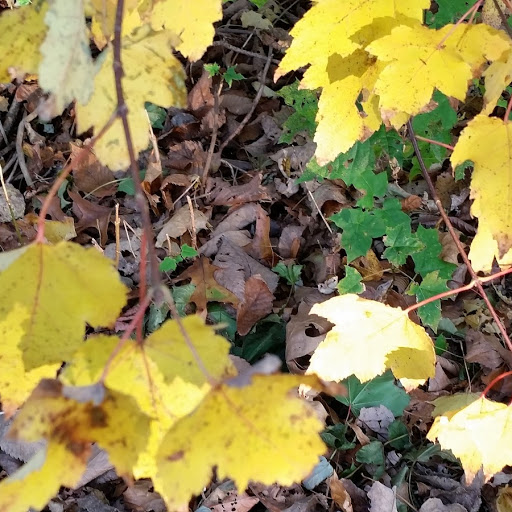
          The maple tree outside my window has been late in turning. I worried the leaves might fall off before they changed color. Then one morning as I pulled the curtain aside I saw they had indeed made their transition to gold. Later in the day the sun shone through them and the brilliance of the leaves was a sight to behold. I stood gazing at them, grateful for the beauty of that moment and of the very special loveliness that is fall in New England.

I feel fortunate to have grown up in this beautiful part of the country. Fall has always been special to me. I remember as a child collecting bright leaves and ironing them between pieces of waxed paper to preserve their colors. I did the same with my children when they were small, and we would hang the leaves up in a window to let the light shine through them. When I went thorough my mother’s correspondence amongst the letters was one from me with some colorful leaves. Being in Florida she said she missed them, so I sent her some.

Lately driving on the country roads near where we live I find it difficult to keep my eyes on the road. The scenery is breathtaking. The foliage of the trees makes billowing waves of color; the rounded mounds of the distant leaves heaped one upon the other simply take my breath away. How easy it might be to get lost in my inner dialogue and miss this.

My mind, like most has a way of getting busy with thoughts concerning what is or is not to be done, or has or hasn’t been finished. Lately I’ve improved. I used to find myself making lists in my head and missing out on a lot of what I might have appreciated had my eyes had been focused outward rather than inward. Once I got into the habit of noticing what my mind was doing it became easier to tame its tendency to run away with my attention and keep me from seeing what was happening around me.

When I take the time to look there is always something interesting to see. Naturally when I am driving I must keep some of my attention focused on what I am doing. Providentially, while looking to the road itself I see what is in front of me. Too, when I am with someone if I pay attention to what he or she is saying or how they are feeling instead of thinking about what I am going to say next, it is much easier to be fully present and aware of my companion.

I’m coming up on a birthday this month, and what I realize about getting older is that it gets easier each year to be patient, to be aware, and to be present insofar as I am able. For this I am thankful. I may never know what I have missed in the past when my mind wandered off and took my attention with it, yet I can make it a practice to keep myself in the here and now. That way I can appreciate whatever there is to be enjoyed in any given moment.

Take care for each breath and love each heartbeat, Tasha


Cherish Every Moment with Loved Ones

tashas-birthday-party-at-dianasI remember going to church with my mother on Sundays, and how uncomfortable the kneeling benches were. She was a devout Catholic and thought God would punish her if she didn’t go faithfully. As a result we went to my father’s church, an Episcopalian one on special holidays only after we went to early mass at my mother’s church. My fondest memories of her are centered on Christmas eve when she played her violin and we sang carols in front of our tree.

While I do have many memories from my childhood I wish I had more. I can remember my late mother telling me stories about things that happened or that I did that I had no memory of, but that she had cherished herself. Children do not realize that things will change, that what is will not be there forever and must be noted or it will be lost.

The other day Stephen and I were out with my daughter and her fiancé for dinner and a movie. As we sat over pizza afterward, I thought to myself how wonderful this all was, and how much I was enjoying it. I reminded myself to cherish the moment. We never know when something will end, or at least change so that it is no longer available. I did not always feel this way; it is something I have learned from experience.

When my children were little I was a busy mother with five young ones and a husband who traveled on sales calls. When I look back on our lives together I realize my mind was too filled with thoughts of all that I needed to do to be present with them and what they were doing. I know I missed much of what I would cherish now if I could remember it. This is a lesson that can only be learned from experience.

I realize how much I may have missed in my life by not being present. A friend once said to me, “I always take special care to enjoy myself at your home because then when things change I will have no regrets.” We moved away and she went back to South America; we have lost touch. Most likely I will not see her ever again, yet because of what she said she has a presence still in my heart. When I see again someone that came to our home years ago for gatherings or classes and remembers us, and it makes me glad.

Recently I have lost a sister and a sister in law to death as well as a number of friends and acquaintances. At no time did I know when last I was with that person that I would not set eyes on her or him ever again. I am aware more than ever that when I am with someone I know, and especially someone I love that it is vital to be mindfully present, or I will miss out and regret that I did not take advantage of the time I had with him or her. Change is the law of life; nothing stays the same. Every moment is precious, most especially when we are with those we love.