 One of the more famous of the poems Elizabeth Barrett Browning wrote to her Robert as they fell in love begins, “How do I love thee? Let me count the ways.” It has always been a favorite of mine. I even set it to music and played it on my guitar in the days I sang in coffee houses and for parties. Love can be given in many ways, and all of them are valid and special because each person has his or her own way of giving love. When I pay attention and see how love is given, it is a wonderful lesson to be cherished. Watch very small children; toddlers give us wonderful examples of the giving of unconditional love.
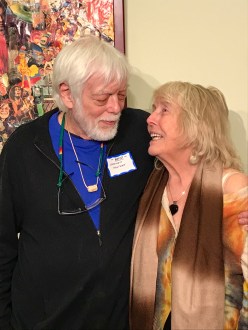
The gifts of love are so special. My home has loving presents from friends and family that come from their love and I cherish the giver as I see, wear, or use them. The kind words I hear, or receive in emails or cards and letters never fail to warm my heart. The love I have shared with my beloved husband for nearly forty years is an important part of my every day experience. I think of him as my always valentine. Love whether brotherly, romantic or spiritual nourishes my heart as well as the heart of us all.
Valentines’ day is an annual reminder that love is a vital part of our lives. I know that as I live with love and give it, I grow happier and more content. A wise teacher once told me, “You don’t have to like everyone but you must love everyone.” When I first heard this I thought a lot about what it meant. How do I love everyone? Especially how do I love those that annoy, irritate or even do awful things, whether to me or to others? In time I have taught myself to do this. I learned how as I grew more aware when I wasn’t loving and deliberately corrected myself, replacing criticism with unconditional love. I am still learning.
When I practice unconditional love, love without judgment and with compassion, even unlikable people can be loved. I don’t have to like them, or like how they act. Nor do I have to approve of anything about them. I can simply open my heart and see them as another human being, however troubled or awful, and envision them surrounded in the light of love. If I feel they ought to be punished I can say I hope they get what they deserve, without specifying.
When my children were small and had been naughty, I might not have liked their behavior yet though I might punish them, I loved them all the same. Often their bad behavior came from ignorance or was a test of boundaries. When I make an effort not to judge another person regardless how I might feel about them, I enhance my ability to give that kind of love. Unconditional love grows from practice. Just as I could punish my child’s bad behavior and love them still, I can give my unconditional love to anyone, and as to punishment, that’s not my job. I can have faith that eventually what goes around will come around, and sooner or later, so it will.

 I love the berries, peaches and plums of summer. I eagerly await and devour local strawberries as they appear at our farmstand. My ‘fridge fills with blueberries and raspberries, then with luscious cherries, peaches and plums as they ripen. Of course I enjoy our special local corn, which reaches it peak as summer wanes. The foods of the local farms are my favorite aspect of summer. What I don’t like about summer is the heat. It discourages my consumption of food and causes me to do as little cooking as possible.
 There is a joke I remember hearing some time ago to the effect that when a minister repeatedly prayed to God for patience, God sent him an incompetent secretary. He ought to have known better. Patience training is best experienced when I am in situations requiring patience. How else can I learn? There is no other way I know of.
 When I was little my grandmother used to take me with her to visit her friends. Among them were two sisters who had never married but lived together in a pretty home with a nice porch. They used to give me cookies and cambric tea–milk, sugar and a wisp of tea in a delicate china cup. My own mother was physically strong and after my father passed on lived alone and drove herself between Florida and Maine even in her eighties.
 Yankee thrift originated long before the pilgrims arrived on these shores. Being of a saving nature is a key to survival in tough times no matter when or where they occur. In today’s opulent, throwaway society times thrifty behavior isn’t very fashionable, however, I am happy to practice my version of it. My mother, though not a Yankee, certainly was a great example of that kind of behavior. I try to emulate her, though I do not go to the extremes she did.
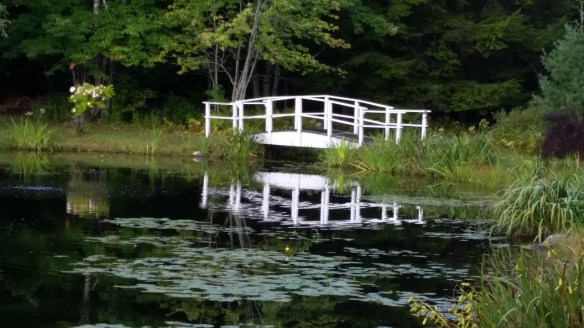 Most children have no concept of time and little to no understanding of loss, not to mention the concept of “goodbye.” Ironically however, one of the first things a mother teaches her baby is to wave “bye bye.” When we put them to bed for the night we are teaching them about leaving and being left. The first skill a child learns in the high chair is to drop things over the edge. At one level the life of any human being from birth onward is one long saying of goodbye.
 On the rare occasions when I have been without anyone to cook for except myself I found that I had very little interest in making my own meals. While I truly love to cook for my friends and my family, in my experience, it brings me been little to no pleasure to cook just for me. Lately, I haven’t had to deal with that problem, and while I hope I won’t have to in the future, if I do, I will try to think differently. This attitude may be why most if not all of the retirement and assisted living communities have food plans included in their fees, as well as dining rooms that serve up to three meals a day.
 When we call our planet Mother Earth we are speaking the literal truth. Although our bodies grew inside and were birthed by a human mother, the elements that comprise it are derived from the substance of earth. The mother of us all, whether as individuals or collectively, is our planet. One of the names of our mother is Gaia. There are many who believe she is a living entity in which, along with every other living thing—animate or inanimate, we are cells.
 Pujakins