The Many Kinds Of Love

Peace Village retreat 7eart cropped2Saint Valentine may or may not have actually existed. In fact, research reveals that there were not one but three Saint Valentines in all, with various details to their lives and deaths though all were martyred. The general information on the Internet indicates they were killed for performing marriages that had been forbidden by the Emperor Claudius the Cruel. It is also said that the Christian church took advantage of a popular pagan festival of that month, substituting the celebration of St. Valentine’s beheading.

Saint Valentine and Valentines’ Day aside, romantic love, while nice to have in one’s life is not necessarily the most satisfying. I recall how one day a dear friend was bemoaning his recent breakup with his former girlfriend. “Nobody loves me,” he mourned. “I love you,” I replied. “But you love everybody,” he retorted. I sighed and nodded. I had wanted to cheer him up. However he seemed determined to be sad. Many crave romantic love and are not comforted by the fact that they are loved in other ways

According to the Internet, the Sanskrit language has 96 words for love, ancient Persian has 80, Greek has three and we have only one. What a sad state of affairs! There are synonyms that express a loving feeling for someone or something: fondness, affection, adoration, and so on. Regardless, they do not adequately describe the love of a child for its parents, of the attachment many feel for their animal companions, or even of where they live. You probably would not say, “I am fond of my baby, my cat, or feel affection for my home,” you would usually say, “I love…”

The fact that we have no other word for it means that we apply the term “love” to many situations and individuals. We say we love this or that or them, yet we do not mean we have romantic feelings. Does this weaken the impact of the word? My friend’s dismay when I told him I loved him might indicate that the love I had for him was somehow not as desirable or as important as the love of his girlfriend. Yet my feelings for him were actually less tinged with judgment and more comprehensive than the ones he craved to hear from her.

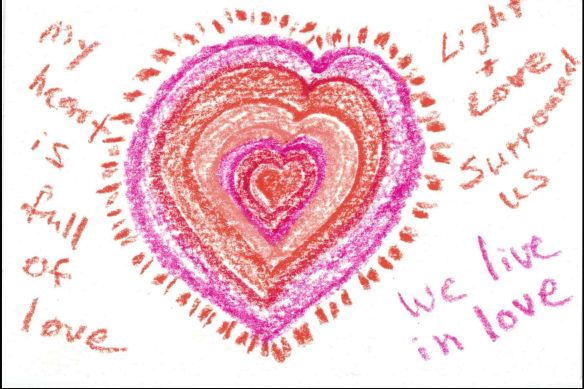
Unconditional love or in Latin Caritas and in Greek Agape may be the most important of the kinds of love we can express for others or even for dwelling places or animals. That kind of love carries no criticism or parameters, no qualifiers or desire for any return. It is simply and purely love in its most beautiful form. When we are at our most loving is when we can give this love to others. It has the power to transform and to heal as well as to uplift. It is this love that the martyred St. Valentine back in the days of Rome portrays to us. Perhaps his love for others as he expressed it before he was executed might be seen as an example for us all.


 

The Discipline of Remembering

Garden Conversation042

I can clearly remember lying in my bed upstairs and wishing I was able to stay up and be part of whatever was happening. I also remember sitting at the table, a boiled egg or perhaps worse, a piece of liver before me—things I had no desire whatsoever to put in my mouth. If I wanted to leave the table I had to finish whatever I was given. One way I managed was to cut the liver into small pieces and swallow it whole. I can’t remember how I dealt with the egg.

My life as a child had lots of discipline in it. Authority figures held sway over my life. Often it was a parent: “Time to go to bed,” or a teacher: “Be sure to do your homework in a timely manner.” It never occurred to me that these disciplinarians were stand-ins for what comes when we are adults. In my innocence I thought discipline had to come from someone telling me what I had to do, not that one day I would need to tell myself.

Unfortunately for my childhood dreams, I need to enforce my own discipline in order to function in the world in an orderly manner. There is really no one that can do it for me. As a child I dreamed of the day I would be my own boss, as I thought of it then. I yearned for the day there would be no one to tell me I had to go to bed if I didn’t wish to, or make me eat something I didn’t wish to eat. Of course that is how a child thinks and the reality does not occur to us because as children we simply cannot conceive of it.

I remember thinking how grand it would be to be a grownup with no one to tell me what to do and when to do it. I could, I believed do whatever I wished, whenever I wished to do it. Children are so innocent. Little did I know then what I had to remember to do for myself when there were no more grownups to tell me and I was the grownup. As an adult I find discipline needs to be addressed often. For instance, there is the discipline of deadlines. If I wish I can ignore them though I do so to my peril. There is also the simple discipline of my body, which needs to sleep eat and go to the bathroom, occasionally at inconvenient times.

As I have grown older it seems to me there are more and more things I need to do each day in order to maintain my health and sanity. These require me to remember them as well as to do them. Lists help, yet were I to write everything I need to do daily down, it would be a lengthy list indeed. Practicing the discipline of remembering is perhaps the most important one of all, and in addition to doing my exercises and taking my vitamins, I practice this each and every day.

Intentions, Resolutions and Reminders

Dead Branches and reflections 2

Growing up I was somewhat clumsy and awkward. I was always tall for my age—I stopped growing at the age of twelve and was even taller than most of the boys in my class, who soon outgrew me. My parents also thought I was careless. I wasn’t really, just lacking in experience. I also had poor proprioception. That word defines an actual sense: awareness of where one is in space and how much effort is being put out. I once embarrassed myself dreadfully when my best friend’s mother asked me to help her set the table, by pulling it completely out of the sideboard and dumping its contents on the floor.

While I outgrew the awkwardness and with the aid of yoga even became quite graceful, I still struggle with the proprioception. However I found that mindfulness helps greatly with that. Centering myself, slowing down, and practicing deliberate awareness when I am moving around or even pouring water from a pitcher into a glass, is a must. Over the years I have tried to make this a habit, like washing my hands with frequency, especially lately.

The flu season has made it vital to remember to wash my hands each time I return home, especially when I’ve been touching things like Grocery cart handles, restroom doorknobs and even counters or tabletops. The other day in a restaurant a woman near us was coughing with frequency into her hand as well as into the air around her. We are told that washing hands well is more effective than using sanitizers and better for our health.

I learned this the hard way. Last week I picked up a germ that invaded my sinuses and hit my right eye causing me great pain and rendering me unable to read for any length of time. As a result I have strongly resolved to wash my hands carefully not only when using any restroom but especially immediately upon arriving home. I hope to avoid not only the flu, but any other germs.

Resolutions are better kept when we have a reminder to do so, and a deliberate intention is well bolstered by any negative experience that happens when we haven’t. Hand washing is now an imperative for me, and while I regret the suffering and pain of my illness, I am grateful for the positive reinforcement of my intentions. Powerful reminders are not always pleasant, however they certainly are useful. Making lists helps too. Without a list my intentions, let alone whatever I have resolved to do may be forgotten.

Getting older has its good and its bad aspects. Becoming wiser by virtue of experience is helpful. Becoming more mindful as a result of that experience helps greatly also. On the other hand, becoming forgetful is a nuisance. However, my lists do help considerably. The trick is to remember to write things down and then also to look at the list. When I was a young parent in order to stay on top of things I had to outwit my children. Now instead in order to stay awake and aware I have to outwit myself.

Making Priorities and Cheering Deadlines

Porch Icicles 3When my children were small it was easy for me to set priorities. First and foremost they were related to the needs involved in parenting. Children let you know when they must have something, whether it is changing, food or the toy they saw on TV. Sometimes they yell until they get it. Later on they can be more subtle yet any concerned parent can figure these things out sooner or later and if they do not they will find out eventually what is needed.
Now it is much more difficult for me to figure out my priorities, especially if there is not a deadline connected with the task. I looked up the definition of deadline. It is a printing term that was originally connected to the size and shape of the type the press was using. Anything that went beyond a certain limit was “dead.” Later the term was adopted by editors and related to time rather than type. I find deadlines to be very useful in forming priorities.

One of my New Year’s resolutions is to pay better attention to priorities. For instance, when something needs doing I need to do it in a timely manner and not put it off, only to discover that I have missed out or messed up in some way. One small example is coupons. They have dates on them; if I do not keep an eye on the dates they go by and the coupon is useless. No doubt many of my readers have the same issue.

I once read an article that suggested that when getting ready for a party one ought to put the most important things to do last because then they would surely get done. While is merit in that idea, and I have tried it for myself, what works for a party may not when it comes to everyday life. It’s been my experience that something I believed would take a certain amount of time actually took longer, and when I am working with a deadline that can be a problem to be dealt with.

On the other hand sometimes absent a deadline, it can be difficult to know what constitutes a priority. Vacuuming comes to mind, as does dusting. Of course if someone is coming over for a visit, cleaning and tidying become a priority. Then there is the email load. If I fail to answer an email sooner than later will there be a problem? It can be tricky to decide. Then there are the bills: Paying a bill involves a deadline and I hope not to put it somewhere I will forget about it and pass the deadline, thus accumulating interest or worse, a fine.

Nowadays I am thankful the Public Library sends out Internet reminders when a book is due. This is a great improvement on my having to remember the date it must be returned by. I can even look it up on line to do the renewal rather than make a phone call or perhaps drive to the library itself to do the renewal. The bottom line to my prioritizing is to rejoice for deadlines I have and make lists that will remind me to work on that which does not.


The Time Thief

Clock

The Thief of Time has struck again. Where has this past year gone? Some of it was taken up with appointments, some with shopping and of course, cooking. My emails take up a considerable amount of it, however that’s my fault because I like to answer each one, even if only with a quick acknowledgement. To be sure before I had a computer I had a considerable snail mail correspondence, however my letters were generally longer than my emails usually are. To me time is a precious commodity and one to be cherished.

Is there ever enough time to do what I’ve planned to do? Stephen says there’s a man who comes by, and stands outside on the back porch with a basket. He uses it to stash away the time he steals. If I could catch hold of him I’d ask him what he does with it and if he’d please stop. I sure could use the minutes he steals from me, and perhaps many others as well. Haven’t you ever wondered where that last hour went? Or even the last day? Well now you know.

Stephen and I call him the Time Thief. He seems to be most active twice a day: when I get up—the hour that seems to vanish between rising and breakfast or the doings of the day, and the hour of 10 PM when I start to get ready to go to bed. Somehow when I do get between the sheets, much more time has passed than I anticipated. This time thief can be very frustrating. All too often I plan on getting certain things done by such and such a time and lo and behold, the time thief has stolen away some of the minutes I thought were mine. I think I’ve even heard him chuckling.

There are whole books written about better time management, but they do not take the time thief into account. I know of no other explanation for my failure to have the hours and minutes I believe I need to do what I plan to do. Of course I never plan too many tasks to fit the amount of time they require, do I? Me? No, never! On the other hand, I feel sure that if I am able to plan more carefully or move a little faster or somehow eliminate a task or two from my list I will have managed my existing time better.

My conundrum may have something to do with getting older. Do I actually move more slowly than I used to? Could it be that my body simply does not whisk through my tasks as fast it once did? Having no way to measure the past, I find myself unsure. Do I do things more carefully than once I did? That would be a plus. Perhaps my reach simply exceeds my grasp and I am more ambitious than realistic in the goals I set for myself.

To that end I have devised two resolutions for 2018. First I resolve to be more mindful of priorities and not leave important things for the last minute. And second I will be more mindful of the passing of the time and outwit the time thief that way. Who knows, one day I might even be able to catch hold of him and then I’ll have a great handle on a good source for more time.


The Gift of Christmas Giving

Laura Dodge's Christmas windowOne of my fond Christmas memories is of my dad sitting by our living room fireplace wrapping and addressing his Christmas gifts to his workers and others with whom he had a working relationship. He was a horticulturalist and his company was on the North Shore where there were many fine estates and special gardens. He was good at designing views and helping the owners of the estates and their caretakers maintain their trees and shrubs.

His gifts ranged from cartons of cigarettes to bottles of whiskey and included neckties and other smaller items of clothing. Some were for the gardeners of the estates, some for those who worked under his supervision. His men and their foreman got the more expensive gifts. Each one was carefully wrapped and labeled. When I grew old enough to help him I delighted in doing so. All things having to do with Christmas have always been special to me.

Many years ago, on the advice of a spiritual teacher, I began cultivating an attitude of gratitude. This practice has since become much more popular, featured in books and by Oprah, on Facebook groups and on a variety of other sites. There is even a lovely, inspiring site devoted to the expression of gratitude called Gratitude.org. It features all sorts of good news together with thoughtful comments and teachings, as well as poetry.

As Stephen and I drove home after delivering the last plate of Christmas gift cookies, I thought how grateful I was to have an opportunity to acknowledge as my dad did, the kindness of those who had been of help. My token plates of cookies seem a small return for all that these people have done for us, yet they are at least a tangible offering on the alter of my gratitude.

Also, since I was a small child I have been the recipient of much for which I am grateful now, even though at the time I was not aware of the benefit. When I have the opportunity to do so, I acknowledge in my heart those who have been kind to me in the past as well as in the present. Some of them have passed out of my life and some have simply passed away. I remember them with gratitude and say a prayer for their happiness wherever they may be.

Thanksgiving is a fine time to be aware of that for which we are grateful, yet Christmas is my opportunity to express that gratitude in a tangible way to those whose generosity I hope to acknowledge. My life would not be what it is without the help I have received along the ways Those who have in the past, those in the present and even those in the future deserve my thanks as well as whatever I can do to pay it forward in gratitude for those who are too far for me to bring them cookies.


Shopping for, not at, Christmas

Christmas Tree 17-1The house I grew up in from the age of four on had a funny little built in cupboard off the upstairs hall, My parents called it the box closet. It was lined with narrow shelves, perfect for small boxes. I was told the gardener whose cottage this was originally, used them to ripen fruit. My parents kept boxes of different sizes that could be reused there, as well as to hide presents until Christmas came around. That’s how I got into the habit of doing my shopping for Christmas all year.

“Where do you do your Christmas shopping,” asked my physical therapist as she and I worked on helping my hip get better. I shook my head and smiled. “We don’t,” I told her, “At least not in the usual sense. We collect Christmas gifts all year long from wherever we find them—yard sales, thrift shops, white elephant tables, or any other alternative shopping experience you can think of. It’s more fun that way.”

In one sense what that means is that Stephen and I think about Christmas and people we like to give to, all year long. It is such fun to think about and to give presents. Many of our dear friends live at a distance from us, so we end up spending as much money on postage as we do on the gifts. What we save by not shopping in stores will most likely get spent on the mailing of them. However, we’ve avoided much stress and discomfort.

One can of course shop from catalogues and the Internet, and many do and will. Christmas catalogues flood our mailbox from October on. I used to try to tell them not to send me any, however no one paid any attention, so I gave up. I know you can also specify which you want to receive; however that too becomes tedious. I figure at least the printers and designers are making money producing them, so I don’t feel too bad about throwing them away. . It’s too easy to order and then be disappointed when the item is not what you thought.

Occasionally I buy a gift for Stephen from a catalogue–usually because he saw it and pointed it out to me. I seldom purchase from them for anyone else. I peruse one or two of my favorites but most go into the trash. While they are filed with lovely enticing pictures and descriptions, for the most part I prefer the physical experience of seeing and touching my purchases.

I find Christmas shopping at retail stores to be daunting. There is too much to see and think about. They are too full of hopeful shoppers trying to cross people off their Christmas lists. The glittery items do not attract me; I prefer to give useful, practical gifts. That’s what I like to receive. Furthermore, most children have lots of toys and games as well as stuffed animals. Our friends and relations often receive books we have found at the Friends of the Library. By supporting alternative spending there and elsewhere, we recycle and reuse. This is really a gift to Mother Earth as well, and surely she deserves one too.

The Wonderful Jacket

Tasha in hood 2Those of us who come from New England are familiar with Yankee thrift: use it up, make do, or do without. I am of a conserving nature, having in addition to a Yankee father, a German mother born at the outset of WWI. Nothing was ever wasted in the house I grew up in. I thrived on hand-me-downs and thrift shop finds. Over the years I have accumulated clothing items I am happy to see again when their season rolls around. I often develop a fondness for clothing that has served me well.

Recently as I pushed my wagon through the aisles of a grocery store, I saw a woman standing by the meat counter in a unique and lovely white furry jacket. “I can’t resist telling you I think your jacket is magnificent,” I told her. She laughed and said it was from the 70’s, yet she could never bear to part with it. “Nor should you,” I replied. We each continued on our way, pushing our shopping carts in opposite directions.

I smiled to myself. I was wearing a jacket I have had for close to thirty years. It is a fairly ordinary, black, nylon one, with some very useful pockets. Black fur edges the hood. It is warm and comfortable, and probably unremarkable as jackets go. However the story of how I acquired it and what has been done to it since makes it special.

On a trip to the Cape many years ago, Stephen and I were in a consignment shop, poking around. I saw the jacket hanging on a rack, and figured I might be able to use it. I took it down, intending to try it on. “If you can zip it up you can have it,” said the woman behind the counter. I looked down at the zipper and saw that it was slightly frayed on the bottom and could be a bit challenging. When I tried it on I liked the feel of the jacket and resolved to see if indeed I could zip it.

Very carefully I inserted the frayed end into the metal slot and continued to be careful as I zipped it all the way up. The saleswoman was good at her word and gave me the jacket without charge. In the ensuing years I went on zipping it up carefully until finally one year I invested in a new zipper. Along the way parts of the jacket lining began to wear out. I was fortunate in having friends who at different times were able to repair the worn places in the lining so that it looked almost new.

Now when I put on my wonderful warm winter jacket I remember my friends and their generous work on my behalf. I also think how fortunate I was to have found it, been able to zip it up and to have it still after all these many years. What keeps me warm in it is more than the lining or the material, it is the memories and the love of friends that has been sewn into it. How could I ever part with this jacket? I believe I never could, nor do I ever wish to.


Giving Thanks is not just for Thanksgiving.

Deb's party food 2When I was growing up we usually said grace only at Thanksgiving, Christmas or on other very special occasions. I don’t remember any special discussion of gratitude in my family. God was often presented as a punitive figure, rather like my dad—as in or God will punish you for that, see if He doesn’t, and “Just wait until I tell your father what you did…” The church I grew up with emphasized being sorry for one’s sins and saying prayers for the protection and preservation of my family and myself. All that changed when I was in my mid thirties and I learned about the virtue of gratitude and its importance for a happy life.

I began giving thanks on a daily basis after a phone conversation with a wise older friend. She told me that rather than complain about what I thought I was lacking, I needed to be grateful for what I did have: good food to eat, a roof over my head, a comfortable bed to sleep in, warm clothes to wear, and so on. She reminded me how important it was to give thanks for the simple yet necessary blessings most take for granted. I believed her. Now these many years later, I am very grateful to her. An attitude of gratitude leads to true happiness.

When we focus on whatever there is in our lives that brings happiness, healing, kindness or friendship we are emphasizing that aspect in our lives. When we complain about our difficulties we are focusing on our lacks and our problems, most of which we can do little to nothing about. There is no happiness in dwelling on our misfortunes. When we do emphasize what is good in our lives it seems magically to increase. Giving thanks for that which we have as well as that which we do not have is an important key to a good life.

Gratitude for the bounty in our lives has been the theme of harvest celebrations throughout the ages. The Pilgrims did not host the first Thanksgiving ever, just their first one here in this country. Giving thanks to a higher power is common to nearly every religious or spiritual path. Most have some kind of ceremony to honor the powers that be that provide them with support and sustenance. After all, if the rains do not fall or the sun does not shine our food will not grow. Not a gardener myself, I know how grateful I am to the market and the farmstand that provide me with good, fresh food.

More than anything else I am grateful for the love that has come to me over the years. I have been extremely fortunate in the people I have met and with whom I have had the opportunity to interact. My friends, past, present and even future are important to me. I am thankful for each and every one. While some of those for one reason or another have vanished from my life, the experience of their past love remains to bless me with its warmth and the joyful memories of our happy times together. I am grateful for that good and for the dear ones still in my life.

The Dark Time is The Ideal Time to Rest

The trees outside my window have lost most of their leaves. Some few still cling to their branches as a result of the late warm weather, however not many. The leaves are being released from their branches. The tree has sealed off the part where the stem contacts the twig and the leaves are subject to the whims of the wind. Thus the trees move from active participation in growth and expansion to rest and restoration, solidifying what has been gained. Nature is sensible that way, bringing opportunities for alternative modes of being. Most animals as well as insects are in their burrows or nests, resting from the work of gathering and consuming food as well as maintaining the dwelling.

Once there was no electricity to keep us humming along 24/7. In many cases native peoples in the North went into quasi hibernation mode in the winter. Later, although torches and candlelight provided evening illumination, early bed times were likely. Judging from how I feel, the human body seems to be inclined toward seasonal rest. I always seem to sleep longer and even more soundly during the darker hours between November and February. I find that my body is happy with the additional rest. However I am fortunate that I do not have to answer to a time clock at work or an alarm clock at home that tells me I must rise and get moving regardless whether or not my body would prefer to stay under the covers.

We humans do love the light. Throughout history various cultures have provided and still do provide their own opportunities to invoke it during the dark hours. In our Western European culture, our holidays devoted to light in one form or another commonly include Halloween, Thanksgiving, Christmas and New Years. Hanukah comes to us from another part of the world, as does Kwanzaa, a recent addition. The Internet can provide information concerning the many other celebrations of light that are not as common now because they have faded or been forgotten. These include interesting customs—some of which have come down to us, that include all kinds of symbolism as well as special dances and other activities. All these opportunities help counter the inevitable lethargy brought on by the dark hours.

Although I do not count the years, I still celebrate my birthdays. Now I have another celebration coming up, and I am reminded that as a result of the numerous autumns I have lived through, the leaves of my days are indeed falling. Little by little they flutter down, gathering on the ground in colorful heaps. I have also noticed that as the days of my life increase, I am slowing down. I do not get as much done; I need to rest more. Sometimes this is frustrating. These days are precious and the daylight needs to be made use of. Still I need to be kind enough to myself to allow for the rest I need to keep up my strength, most especially as the days of autumn dwindle and the dark hours grow longer.