Spring is a Time for Awakening

Maple ree flowers and leaves 1Though I am fonder of some than of others, for me every season has its unique blessings. Autumn has always been a favorite of mine because I like the crispness of the air and the vivid colors that paint the scenery. However, the cycle of the seasons produces different feelings in everyone and we all have our favorites. It may be that as a poet I am more sensitive to or pay more attention to the change of the seasons because I feel it so keenly. Winter for me is a time for rest and often for extra sleep. The dark hours encourage it. During the winter, like the bare branched trees and the hibernating creatures, I am less active and more inclined to quieter occupations.

It’s easy to sleep late in the winter. The light does not come through the curtains until morning is well advanced. Chilly weather does not encourage leaving warm covers for frigid floors. Yet as the light hours grow longer and the dark ones shorter, the day calls to me sooner and sooner. Reluctant as I may be to get up from my bed, it becomes less alluring to linger than to rise into the day. Even as the trees and the birds greet the brightening weeks, with the spring, something in me begins to wake up.

Winter encourages me to make soups and stews. My pantry and refrigerator are stocked with warming foods. With the advance of spring I think more about salads and lighter meals. I toss the cold weather recipes that I have accumulated yet not found time to make and clip out more recent ones geared to fresher, less sturdy meal components. Now that I can see it, when I look around at the winter dust on shelves and surfaces, I feel more diligent about eliminating it. Somehow when I can’t see it, it is so much easier to ignore. Now it no longer is.

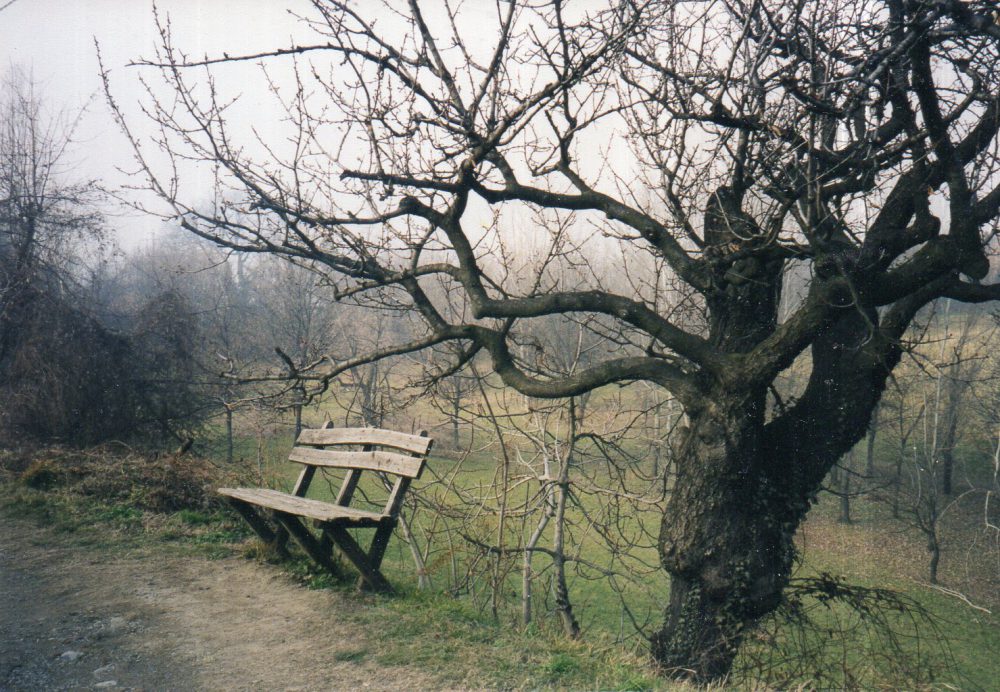
When I was out and about, my eyes had become accustomed to bare trees sleeping in the cold. All winter I admired the still shapes of the bare branches against the sky. Now as the trees blossom and leaf out, they seem to be dancing with joy. The spring breezes flutter the trees’ new emerging clothing as they dress themselves in their fresh spring wardrobes. When I go about my errands, my heart sings along with the turning wheels of my car.

When I used visit my daughter in Italy, she would come into my room of a morning to waken me from my jet-lagged sleep. She would open the curtains and turn to me as I clung to my pillow. “Wakey, wakey,” she’d say with a smile. Finally I’d open my eyes and greet the day, glad to be awake and alive, ready for a new adventure. Spring feels like that. It is time to pursue the new, the untried, the innovative. Time to put away the darker, heavier winter clothes and put on light, bright colors and fabrics, to free the feet of boots and don sandals. Time to awaken to the new season and to rejoice in it.
Rejoicing in the Advent of Spring

dogwood blssoms 2Spring arrives in a dilatory fashion. Like fall, it is a back and forth season. In addition, some years spring arrives early, sneaking up on us and forcing us to get out our warm-weather clothes much sooner than we think we are going to need them. In another year like this one, we begin to feel weary of our winter wardrobe and yearn for the spring clothes still put away in closets or storage places. There is no telling when the weather will change. Spring is a fickle season, whether daily or yearly. I have written a lot of poetry about the way spring behaves.

I am fond of fall. I have written a lot of poetry about that season also. It is actually my favorite of the four. As it begins I delight in the cool crisping of the air, especially welcome after the moist heat of August. However, fall does not have the same kind of excitement to it that spring does. Fall colors are loud and obvious. The autumn brilliance blares from the hillsides like the brass in an orchestra. Spring is delicate; violins and flutes, with an occasional clarinet announce the softly evolving colors that slowly permeate the landscape. Where fall is blatant, spring is subtle.

These days as I drive along the roads between towns I enjoy watching the ends of the tree branches slowly green and redden, highlighting their tracery against the sky. There is a maple outside my bedroom that’s the first thing I see when as I open the curtains. Lately I have been watching the ends of the twigs turn green and then begin to unfold into maple flowers. I know these will in turn eventually fall and produce the seeds we call maple keys. Do children still peel the ends open and stick them on their noses as I remember doing?

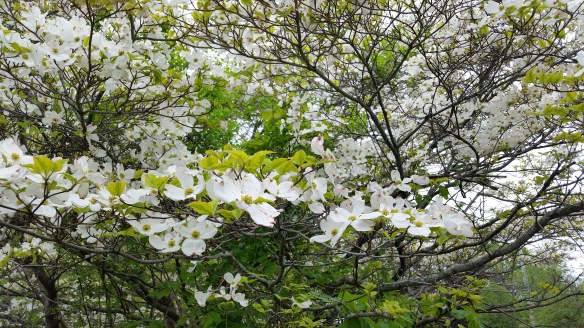
Spring is an opportunity to get out and enjoy a walk. It is a treat to amble along the sidewalks of my town’s neighborhoods and see the flowers springing up in the gardens around town. Daffodils and jonquils, hyacinths and tulips abound with their lovely colors. The magnolia trees with their glorious pink and white flowers along with the dogwoods that come into bloom make me feel almost giddy with their generous bouquets of blossoms. How happy the bees must be to put an end to their long winter nap and emerge into activity.

The blooming of the lovely spring trees and flowers is also apt to stir up allergies in those who are vulnerable to them. This makes the spring season a lot less pleasant for some. Stephen and I have been fortunate to have the help of homeopathic remedies that alleviate the discomfort and sometimes even eliminate it. Still, the loveliness of the season may be some consolation to allergy sufferers. I am so glad to see the arrival of spring. Early or late no matter how long it has taken once it gets here all is forgiven, winter is forgotten, and we can rejoice in the glorious beauty of spring.


Be Careful What You Wish For

Beach Reflections

My parents occasionally visited friends who had a swimming pool. It was surrounded by tall trees and was seldom warmed by the sun, so the water was invariably quite cold. However I was used to swimming in the ocean, which as any New Englander knows, is considered warm if it gets into the 60’s. My parents did not swim in the pool. My mother did not like the cold water and my dad was more interested in conversation with their friends. I swam and played in the water to my heart’s content and only reluctantly left the pool when my lips had turned blue with cold.

My grandmother belonged to a swim and tennis club situated on the ocean. In addition to providing access to the beach it also had a saltwater pool. I loved that pool as well and was always thrilled when my grandmother invited me to go there with her. They had very good club sandwiches too, crusts removed—something my mother never served. In addition she insisted I eat my crusts, telling me they were good o me. What a treat it was. Also I felt elegant sharing lunch with my grandmother in the rustic clubhouse. It was probably these two pools that implanted in my mind the desirability of owning one.

One day Stephen and I came to Grafton to find a home and the real estate agent showed us a lovely house with a pool. While we both liked the house and the land around it, I was particularly excited to actually have a swimming pool of my own. My unstated yet nevertheless real wish had come true. My childhood memories of swimming and playing in the water had morphed into an opportunity to bask in the ownership of a pool I could swim in whenever I wished to.

Little did I know then the outcome of that wish fulfillment. At first the pool seemed wonderful. I could swim in it to my hearts content. Then I discovered that it needed daily maintenance, together with chemicals. We purchased a device that helped clean the pool, yet it still had to be skimmed and occasionally vacuumed. The reality of how much it cost to maintain and how much work that was began to emerge. There was so much we did not know about pools, especially old ones, and how to keep them in pristine condition.

People swam with seawater still in their suits. Difficult to eradicate black mold grew in the pool. The sides began to crumble. We patched them as best we could. The finishing touch came when friends brought their teenaged sons over and the resultant hours of cannonballs loosened the old, outdated concrete lining until it flapped back and forth. We inquired about repairs and were told it would cost as much as a new pool: in the tens of thousands. Faced with that we opted to eliminate the pool, filling it in. Thus ended the dream, resulting in a lesson learned. Needless to say I became less eager to make wishes. However, when I do, I am very careful to consider what their fulfillment might entail.

Dust is Visible in the New Light of Spring

Spring water           One day years ago as a relatively new bride I returned to the apartment I shared with my then husband and our baby to find my father sweeping the rug.

“What are you doing?” I asked him.

“Cleaning the rug,” he replied.

“Oh,” I said. I didn’t have a vacuum and didn’t know any other way to clean the rug. Now I did. I had never seen anyone sweep a rug before. My dear father smiled at me and suggested that perhaps Santa might provide me with a vacuum. I don’t remember if he did or not, but my father bought me my first washing machine some years later. He was a generous man. Also, I never saw him do any cleaning in the home I grew up in, so his sweeping was a great revelation to me. I have never learned to love housework but I have learned to do it more efficiently–except for dusting.

While I welcome spring and the new light it brings, I also recognize the need to dust. The new brighter light coming from a sun now, in the Northern Hemisphere, higher in the sky shines on all the surfaces in our apartment that have been neglected over the winter. Dusting is not my specialty. I have a tendency to get impatient or careless and damage or knock over items on shelves and surfaces. Stephen is far better at dusting than I, and thankfully he is willing to do it—in his own time. Sometimes this means waiting a bit.

Spring cleaning has a long, honorable history. I am thankful I do not have to haul my rugs out, drape them over a clothesline and beat them with a rug beater. These are now antiques. I remember them as being woven out of wood, like baskets, in the shape of several round circles intertwined. They had handles and were sufficiently sturdy to raise the dust from the rug and into the air to land heaven knows where—hopefully not back on the rug.

Before central heating or cleaner electricity and oil as opposed to wood fireplaces and coal furnaces, a good housewife washed down room walls every spring to remove grime from smoky fires and particles of soot delivered from heating vents. I remember coal being delivered to a coal bin in the cellar every fall. Now an oil burner has replaced that coal furnace. Cobwebs too needed to be removed. Windows had to be washed. Ammonia was in common use for cleaning them in days gone by. Horrid stuff! Now a vinegar/water spray does the job.

I am grateful for my vacuum cleaner, for the size of my apartment that needs much less work to clean than either of my past houses, and for a helpful husband who is willing to clean with me. The only thing I remember my dad cleaning was the silver. He polished it all himself because my mother would not. It is also true that we often had a cleaning person come; yet sadly it was my mother’s nature never to be satisfied no matter how well the job was done. I am grateful both that it’s not a hundred years ago, and that spring is on the way.


Celebrating the New Season of Life

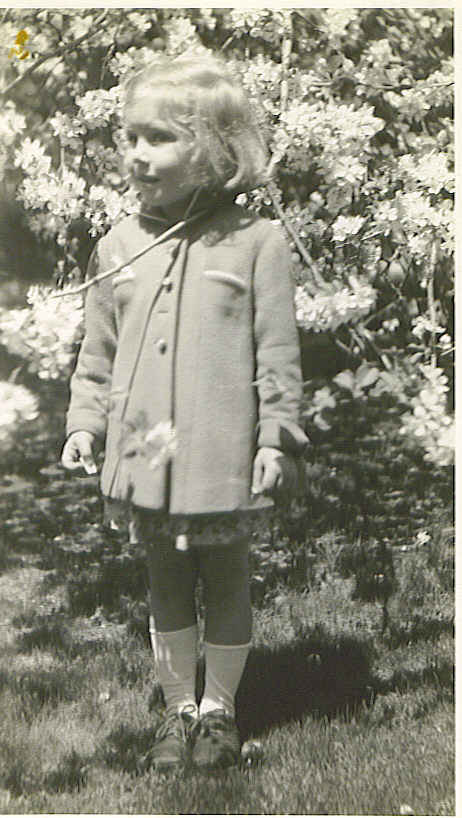
Peacae Village Forsythia 1When I was a young child Easter was an exciting time. I got to wear new clothes and a big straw hat. I remember one with a pretty grosgrain ribbon around it. The ribbon hung down in the back and in my memory it is blue. At Christmas and Easter we attended my father’s church as well as my mother’s. I liked his best. Not only did they sing hymns but also at Easter geraniums lined the church driveway for children like me to take home after the service. Then we would go to a relative’s for lunch and there would be candy after dessert. My mother did not approve of candy so we seldom had it at home unless someone brought it. That was my Easter celebration.
Easter and spring are synonymous. From time immemorial people have found ways to celebrate the coming of the warmer, lighter days and the passing of the dark, cold ones. When primitive cultures worshipped personalities that embodied seasons, they honored their gods and goddesses of spring, summer, fall and winter. Celebrations throughout the world centering on spring, especially in cold climates, had much in common with today’s Christian Easter.

The rising of Christ from the dead ends the period of self-deprivation or fasting known as Lent. The rebirth of the garden and the growth of new life is echoed in the Christian Easter observance. In the days before refrigeration and supermarkets, because the garden and the fields were bare and brown Lent was observed willy-nilly. In the cold climates all there was to eat were stored, dried vegetables, roots and grains. Nothing green was available. The growth of the first plants was something to be hailed as individuals foraged and found fresh vegetable matter to eat after the long winter months.

There was great cause to rejoice in the coming of the longer light and the warmer days. Different cultures evolved their own observances centering around their own deities and beliefs. Many of these customs have come down to us and are part of our observances today. The ways we celebrate our Easter, similar to our Christmas celebrations have become a conglomeration of the various cultures from which we derive our present day civilization. However they are all a reflection of the original reasons to celebrate: the coming of a time of growth and renewal after a period of hardship and sacrifice.

These customs all contain the affirmation that growth and change will proceed uninterrupted, and that the ultimate harvest will be a good one. The bunny that brings the Easer basket is Germanic in origin, a favorite of the goddess of spring. The symbolic eggs too come from there, as well as from other places representing symbols of new life. When you buy marshmallow Peeps or chocolate eggs, you echo the innocence of that beginning. The purchase of new clothes too is symbolic as is the Easter feast common to most families. What seems meaningful is not how we celebrate but that as from time immemorial we acknowledge the wonderful coming of warmer weather and brighter days for all.

Befriending Ourselves

Bridge reflected

For the most part very young children are naturally generous. This may be because they do not yet have a strong sense of individuality or perhaps because they feel others will enjoy what they find tasty or enjoyable, whether a cookie or a cherished plaything. Later on they lose this openheartedness and fight to keep what they believe is theirs. At this point most parents teach them to be polite and sharing. This lesson becomes a kind of inner imperative that guides us as adults. We learn to feel better when we obey this inner morality and as a consequence often end up depriving ourselves in favor of giving to others.

When was the last time you bought yourself a present—not something practical but something you wanted and didn’t think you ought to spend the money for? You might even have recently bought a gift for someone else that you would have liked to give yourself, and yet didn’t quite dare to for fear of your own disapproval. Most of us have been taught to think of others before thinking of ourselves. While that is a nice way to behave it often leaves results in making us feel deprived or at least somewhat resentful.

Giving to others is praiseworthy. Depriving ourselves to give to others is not. It often results in our feeling the other person ought to be more grateful than they may be…especially if the other does not know how you sacrificed to do that. The reason we too often give to others at our own expense is that it feels nicer to do for others. It gives us good feelings because we’re acting in accordance with what we feel is the right thing to do. But is it? I believe it is important or even necessary to treat ourselves as we would a friend.

Long ago I met and studied with a teacher that taught me about this. It was the beginning of a friendship between myself and me. I learned that if I listened to a wee small voice inside me I would receive true guidance toward correct behavior when it came to giving to or acting for myself. I am not speaking of being selfish or self-centered. There is a big difference between befriending oneself and spoiling oneself. I do not believe in self indulgence to a point of neglecting others, only in being fair about the balance between giving to others and giving to myself.

The real key here is that balance. I can tell when things get out of balance because that inner voice will cry out in pain or sorrow. I may feel neglected or ignored even when I am actually not. Learning to hear that inner voice requires giving up the righteous feelings I get from self-sacrifice and instead asking myself what I really want to have or do instead. I can ask myself if is this how I would treat a friend? The answer comes as a knowing or an understanding. Then my actions are guided by what is good for all concerned including me. When I am my own friend I treat myself the best way I can, and I am happy and content.

The Preciousness of Remembering

When I was a child Little Tasha 4and death or even disaster was to be spoken of, someone would say, “Not in front of the children.” The subject would be changed or I would be told to go off and play so the adults could continue their discussion. Yet because we had animals, death and change were part of my life. I witnessed the drowning of baby ducks and the demise of baby chicks. It was hard when a dog got into my pet rabbits’ pen and maimed them. My aunt’s gardener had to–as I was told, “put them out of their suffering.” Death was no stranger to my childhood. I am neither uncomfortable with it nor afraid of it.

Still, it does have an effect. The recent passing of a dear friend has brought a sense of immediacy to my relationships, and prompted a renewed sense of attention to my way of thinking about life. She and I used to speak each morning except Sundays. More than once I said to Stephen, “One day the phone will not ring at 9:30 every day.” Then indeed that day did come. While I miss my friend, I know she is in a much more comfortable and happy place than she has been for some time. Though I do miss her calls I also rejoice for her.

I am happy to have pleasant memories of our time together. That is the saving grace of partings. It is also a reminder to focus when I am with a dear one and to be present in order to have something to remember. More and more as I get older I have come to realize that endings come whether we want them to or not. We have no way of knowing whether or not any given conversation, meeting or interaction with another may be our last. I do not say this because I have a morbid fear of endings but rather as a reminder that any time we spend with another may be significant.

When we are children we have no understanding of how it is that things change or perhaps end. That ignorance may even be important to children’s comfort and sense of security. Most adults grow accustomed to change and learn to flow with it. It may be an aspect of maturity in human beings to be able to do that. In my life there have been many changes I could never have anticipated. Being able to adapt to them has been crucial to my happiness. Developing a sense of detachment to an anticipated condition of permanence has been not only valuable but also essential.

When I was a child, I could buy an ice cream cone for a nickel. Now even the smallest one costs 50 times that. The decor in my parents’ living room changed once in my memory. Today many people redecorate frequently. Then divorce was rare, people stayed at the same job for most of their lives, I could go on and on about how it used to be. My point is that change is more than ever a constant in most lives. For our comfort it is important to be able to deal with all forms of change, whether of décor or of circumstances. When I make the time to focus my attention and to appreciate what is happening, whether with a relationship or an experience, I have much less regret when it ends.

We Need Both Darkness and Light

Shadow fenceWhen I first learned to read I fell in love with the printed word. After that I devoured as many books as I could get my hands on. Like many children, once in bed at night after I was supposed to be sleeping, I hid under the covers and read by flashlight. If I woke up ahead of my parents as I often did, I did, I pulled up my shade for more light, or perhaps again used my flashlight. Reading wherever I was every chance I got, I accumulated knowledge and stimulated my imagination giving me a rich childhood and a good basis for expansion as I grew older. I still love to read however I no longer use a flashlight under the covers nor do I fear the approaching footsteps of a parent suspicious of my eagerness to go to bed.
As I have grown older, darkness has taken on more of an impact for me. The dark winter hours mean I sleep more, which is enjoyable. However, nowadays I need more light to see by. With the onset of Daylight Saving and then the Equinox that is on its way, I will enjoy the longer hours of light. I appreciate being able to see more clearly later and later in the day. Yet were it not for the contrast of darkness or the shadows cast by the light, it would be more difficult for me to perceive the size, shape, and outlines of objects around me. Also, without the dark hours of winter the trees and perennials would not get the rest they need to rebirth themselves in the spring. As do I, nature needs both to function properly.

Darkness is as necessary to us as light. It is what helps us define and manage the world around us. Early in their development as we attempt to shield our children from making mistakes we teach them about right and wrong. Sometimes this is a tricky proposition. As one of my teachers used to say, there are no absolutes. We teach our children and young adults not to kill or cause harm or hurt to others. But then they join the armed services and find themselves given a gun to aim at someone who is called the enemy. So in that instance killing is right or so they are told now. Could that have something to do with why so many individuals return from combat with troubled minds?

The Equinox presents us with equal hours for day and night. After March 20th the days will be longer than the nights until the process reverses with the Solstice in June. Meanwhile the world around us will begin to wake up from its long winter sleep in the dark. Balance in all things and the achievement of that balance is one of the important goals of the universal natural process of growth and decay. In addition we too participate in this process as we learn and grow, shining the light of our understanding on the darkness of ignorance. It is the contrast between them together with our moral compass that guides us toward the wholeness that is made up of both sun and shadow, darkness and light.


Saying Goodbye to our Friend

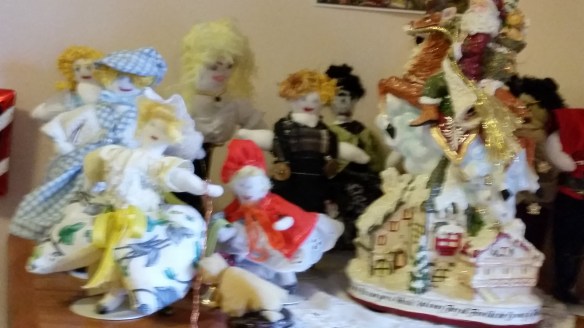
Laura Dodge's Dancing DollsAs we were moving into our Forest Lane apartment, we needed to assemble some of our new furniture. My tools had not yet made it over to our new home so I went knocking on my neighbors’ doors to see if I could borrow a hammer. Met with headshakes in the negative at each one I tried, I arrived at the last one. A spry older woman with a wonderful smile opened it. “Yes,” she said, “I have a hammer I can lend you.” That was approximately ten years ago and the beginning of a wonderful friendship with my neighbor Laura Dodge. I loved her spunk and her bright mind, but most of all I treasured her kind heart.

Over time as we visited and got to know one another, she told me her entertaining stories and shared her crafts with me. She also at my request shared space in her freezer with me. Over her protests I paid her “rent” in fruit sweetened jams and frozen desserts. She also had Stephen and me to tea and made popovers and other treats for us. I have recipes of hers in my collection that she wrote out in her tiny script. When she visited us in our apartment she admired my husband Stephen’s art. “Would you like to try collage?” he asked, and handed her a canvas. “Here, have fun.” She began to turn out wonderful collages of her own, asking for guidance from her teacher, as she called Stephen.

As her canvasses mounted and her skill increased, Stephen arranged for her to have art shows two years running at a restaurant in Worcester. Many came to her openings and admired and purchased her collages. We invited her to our birthday parties and she became popular with our friends. Everyone loved her stories. We included her in some of our shopping trips, took her to the Worcester Art Museum, and through a car wash, which she said was a first for her. When at Stephen’s suggestion she began to make dolls, we had fun helping her with designs. Eventually we loaned her a cabinet to keep them in.

When we met she was quite able physically, considering. As time went on and her physical health became worse, she couldn’t get out as much as she used to. Many of the evenings that she was home I would go down and visit with her. She had pain in her legs and in her back. At her request, I did some energy healing for her, singing to her and using my hands to remove painful energy and replace it with healing energy.

The day came when she could no longer live by herself. When she moved out we were both sad to part. We moved too very shortly, yet we kept in touch by telephone nearly every day. It was always a joy to hear the stories of her life and daily doings. Despite her many ailments and illnesses, she was so very filled with life. One of my favorite things she told me was, “It’s a small life, but I make it interesting.” Laura was an inspiration to me and to many others as well. I will miss her always.

Do you have a story to share with me or a suggestion for a column? I love hearing from readers. Send me an email at tashahal@gmail.com.

The Climate of Violence We Live In

Icy Branches

Growing up I read fairy tales featuring ogres and ferocious creatures, yet I knew they were not real. Besides the hero or heroine always won, often through trickery and clever alternatives to violence. I grew up protected from discussion of ugly or violent happenings. I’d hear, “Nicht fur das Kinder,” (not in front of the child) Then I would be sent away so the grownups could talk.

As a mother I brought up my children to work things out peacefully. There was no fighting allowed in our back yard or the combatants were sent home. Before TV and its depiction of worldwide conflict and violence, American children were not directly exposed to war and cruelty. Sadly, while there have always been violence, cruelty and destructiveness in our world, only recently has it been so blatantly displayed. Today’s youngsters will never remember a time of peace.

Watching the Olympic Games, I found it inspiring to see the athletes of today carrying on its tradition of peaceful competition rather than conflict between countries. Unfortunately, despite peaceful athletic competition, today’s youth is growing up in a climate of violence. Most newspapers feature that. Good news is often buried somewhere within the paper almost like a footnote. What has the acceptance of conflict as perhaps the only way to resolve issues done to young minds and hearts?

Yet it is not only the immediate media we encounter daily that contributes, there is also the tenor of our language. We speak of “fighting” bad conditions, disease, and what we dislike in the world. Killing is a casual term for stopping or eliminating: “kill” that article or image. The majority of video games seem to be about fighting and destruction. Comic books and illustrated novels have similar themes. When I was growing up there were curbs on the ugly and the dreadful. There was a comic code whose job it was to protect the young.

Now there seem to be no limits and no safeguards for young minds. When I was young we had bomb drills in our schools, yet the war was far away and no immediate threat. Today children have drills to rehearse for someone coming into the school and shooting them. How can this make them feel? A friend spoke of their child in college as being potentially unsafe in his school. No one ought to have to go through life feeling fearful, yet that is how things seem to be today.

Fear and anxiety separate us from one another. Love and acceptance bring us together. While no one person can make more than a small difference, whatever any of us can do to generate peaceful acceptance of each other’s differences and live in cooperation with each other contributes to a happier world. Where conflict resolution is taught in schools, violence greatly diminishes. Let us do what we can to encourage a climate of peace. Youth no longer bathed in violence will be free to see the world differently and react toward it accordingly.

I welcome your comments and/or questions.