Life’s Patience Training

pictures downloaded from my camera 2. 148My introduction to using a computer came abruptly. The son of a friend dropped one he had built on my desk and said, “Here you need this.” He left me without giving me any instructions beyond how to turn the machine on and off. This was back in the nineties when I still happily typed my columns on a typewriter and delivered them by hand. I imagine you can sympathize with how it was to try to apply what I knew about typing to this newfangled mechanical servant! Fortunately he did come back to teach me until I began to learn better how to manage. It certainly took patience—his and mine.

How do you learn to be patient? By being patient, of course! It helps to have had little children to care for, yet not everyone gets to do that. Many of us, however work with cell phones and computers on a regular basis. They can present much need for patience. As a writer, I deal with that often. I do not have much knowledge of computers except what I have needed to learn in order to write and publish on the internet and submit to the paper.

In this time of sad stories we read and hear every day, I hope to be able to offer positive, uplifting words to help readers feel better about themselves and life. For the opportunity to do this I am grateful. That said where does the patience training come in? It has to do with the use of computers and their mysteries, and it includes the use of cell phones with their dropped calls, missed words, bad or strange connections, lack of cell towers, “roaming” charges and so on. Still, computers can be worse.

Sometimes when I start up my computer it announces that it needs a pass word. I never have put a password on my computer to start it up, so how can I find it or post it? I do keep a list of my many passwords to various and sundry sites. I even printed  it out so that in the event I have forgotten one I don’t have to go look for it on the computer while trying to use the computer to access the site. Having something in print is helpful, and keeping records in other places than on the device you are using can be equally so as I have discovered.

There is the problem of the articles that vanish because I can’t remember the titles. Sometimes a piece even disappears because I hit a key that mysteriously makes it do so.  If I am writing a column or a poem, thankfully I can retrieve my effort with the backward arrow. However if I am emailing, I have to begin again. Ah, patience training, her it comes again! I am sure my readers have similar issues to deal with, and know what I mean. The bright side, however, is the opportunity to practice my ability to be patient, and that can indeed be valuable for my life in general.

Judge Not or be Judged by your Judgment

Rocks and Flowers with ShadowsMy parents taught me much by their example. My father served in many capacities as a volunteer. He was generous with his time, talents and energy. He read for a radio station that served the blind; for many years he held the position of treasurer for a non-profit orchestra; and he helped out in various capacities at the church to which he belonged.

My mother was a careful provider and very thrifty. She was also a fine artist who valued creativity and encouraged it in others. She tried hard to do the right thing as she saw it, and did the best she could to take care of her family. However, both my parents also provided me an example of something else that I had to unlearn: they frequently passed judgment on others.

My father would point out mistakes of any kind with unkind statements like “You ought to know better than to do that,” or “How could you be so stupid as to…” usually in a scornful tone. My mother was very apt to point out faults in the appearance of others. I believe she had learned this from her own mother who was extremely focused on how she as well as her family appeared.

As a result I grew to adulthood with a judgmental attitude both about any perceived weakness and any deviation from a traditionally attractive appearance whether that of others or of myself. These attitudes of mine seemed normal to me until I began to notice that not only was I being unduly critical but also that my prejudice kept me from seeing those I judged in a more positive light.

Furthermore I realized that this habit also said something about me as well as about how I viewed others. There is a saying to the effect that if you point one finger at someone else you are pointing three back at yourself.

When I began to observe myself as I interacted with people, I also began to understand how unkind it was to look at others in a judgmental way. After this realization I began to learn to be merciful in the way I viewed others, and also the way I viewed myself. As I grew less critical and more forgiving, both of others and of myself I found I now was able to perceive previously hidden virtues where before I had seen only faults.

It is truly said that mistakes are given us as ways to learn, and that the only bad thing about mistakes is the failure to learn from them. I rejoice that I was able to discover and then unlearn these harmful attitudes. I am grateful that instead I can practice a more merciful way of perceiving both others and myself.

By its very definition a judgment closes the mind. It prevents any change in how people and their behavior or appearance can be seen. Being one who always wants to continue learning and growing I try to make sure that in the event I do find myself judging anyone that I immediately look beyond my original thought to become more open minded, less critical, and more merciful in how I am perceiving them.

We Need Both Darkness and Light

Shadow fenceWhen I first learned to read I fell in love with the printed word. After that I devoured as many books as I could get my hands on. Like many children, once in bed at night after I was supposed to be sleeping, I hid under the covers and read by flashlight. If I woke up ahead of my parents as I often did, I did, I pulled up my shade for more light, or perhaps again used my flashlight. Reading wherever I was every chance I got, I accumulated knowledge and stimulated my imagination giving me a rich childhood and a good basis for expansion as I grew older. I still love to read however I no longer use a flashlight under the covers nor do I fear the approaching footsteps of a parent suspicious of my eagerness to go to bed.

As I have grown older, darkness has taken on more of an impact for me. The dark winter hours mean I sleep more, which is enjoyable. However, nowadays I need more light to see by. With the onset of Daylight Saving and then the Equinox that is on its way, I will enjoy the longer hours of light. I appreciate being able to see more clearly later and later in the day. Yet were it not for the contrast of darkness or the shadows cast by the light, it would be more difficult for me to perceive the size, shape, and outlines of objects around me. Also, without the dark hours of winter the trees and perennials would not get the rest they need to rebirth themselves in the spring. As do I, nature needs both to function properly.

Darkness is as necessary to us as light. It is what helps us define and manage the world around us. Early in their development as we attempt to shield our children from making mistakes we teach them about right and wrong. Sometimes this is a tricky proposition. As one of my teachers used to say, there are no absolutes. We teach our children and young adults not to kill or cause harm or hurt to others. But then they join the armed services and find themselves given a gun to aim at someone who is called the enemy. So in that instance killing is right or so they are told now. Could that have something to do with why so many individuals return from combat with troubled minds?

The Equinox presents us with equal hours for day and night. After March 20th the days will be longer than the nights until the process reverses with the Solstice in June. Meanwhile the world around us will begin to wake up from its long winter sleep in the dark. Balance in all things and the achievement of that balance is one of the important goals of the universal natural process of growth and decay. In addition we too participate in this process as we learn and grow, shining the light of our understanding on the darkness of ignorance. It is the contrast between them together with our moral compass that guides us toward the wholeness that is made up of both sun and shadow, darkness and light.


Don’t Be Misled By Your Desires

Heart and BellsStephen sounded excited. “Our friend has messaged me that he got a grant for $300,000. He’s sending me the link.” I’d read about this sort of thing and was immediately suspicious. “Tell me more,” I replied. It seemed someone he knew had sent Stephen a message from Facebook telling him he could have this money, no problem. All he had to do was apply for it as a grant and it would be his. Our friend went on to say, “I have already receive (sic) my money.” I immediately noticed the incorrect grammar and pointed it out to Stephen. “Oh, probably just a slip of the pen,” he said. “I do that kind of thing all the time.” However I was still suspicious.

We agreed that I would check out the link on Facebook that Stephen had been given and immediately did. When I clicked on it what came up was a woman with a pleasant face together with a picture of an audience in an auditorium with a sign on the stage about grants. It looked very authentic and businesslike. The woman told me that all I had to do was answer a few questions and the money would be mine.

To make a long story short I strung her along with false answers to her questions which all required divulging personal information. This made me more suspicious than ever. I was eventually told that if I sent “just a little money,” as it turned out the amount depended on how much I would like for my “grant” that then I’d be all set. The amounts ranged from $50,000 to $300,000 and the money to be sent came to about 10% of the total to be received.

When I pleaded poverty she asked me how much I could come up with. When I said “nothing” she offered to get me a loan. At that point I deleted the messages, defriended and blocked the site, and reported it. Not to our surprise we soon found out that our friend’s site had been hacked. We were fortunate Stephen believed my suspicions. In my experience you do not get money for nothing. However had I been eager to receive a good sum of money just for signing up for it, I might have been fooled and divulged precious information to a crooked source.

I am fortunate in that I feel I have sufficient money, at least for my needs if not for my wants. This makes me less likely to fall into the trap this experience presented. If not, I too might have dismissed this grammatical mistake and perhaps even the several others that came with further conversation. It is easy to mislead someone who wants something badly, especially if the “gift” seems very shiny. It is also true that the offer came from someone we knew and so seemed much more legitimate than a message from some “prince” from Nigeria or fake lottery winnings that someone is supposedly handing over. However the bottom line is that the eyes with which I regarded this offer were not clouded with the desire to receive it.


Has this sort of thing ever happened to you? I’d love to hear to from you. If have a comment for me. Email me at tashahal@gmail.com

Riding a Time Machine into the Past

Reflections in SummerWhat fun it would be to hop onto a time machine and return to the Christmas shopping of my childhood, after I had turned eight. How I enjoyed buying my parents small stocking presents at Grants and Woolworth’s. I want to return to the days when the ten dollars I had saved up sufficed to purchase about everything I wanted to buy for them. Maybe there would even be enough left over for an ice cream cone. I loved the way the store smelled when I walked in, and the overflowing counters with the glass part in front to make sure items didn’t fall off.


I didn’t mind no longer believing that Santa filled the stockings, because it was such fun to wrap up my inexpensive gifts to fill them for my parents. Best of all would be to write notes on them the way they did. I bought Ponds cold cream and vanishing cream each year. I think they were ten or twenty cents each.

My mother told us a joke once about the latter. It seems a child took off all her clothes, rubbed her whole body with vanishing cream, and then went downstairs where her parents were hosing a party. The polite guests pretended not to see her. The next morning she told her mother gleefully that vanishing cream really worked. My twelve year old self thought that was very funny.

My time machine would whisk me back to my Great Aunt’s dining room with all the relatives gathered together and finger bowls brought in at the end of the Christmas meal–often roast beef with Yorkshire pudding. Sometimes there would be a plum pudding brought in and ignited after brandy was poured over it. The dancing flames were blue and very exciting. I didn’t care much for the plum pudding but the had sauce with it was pretty good.

It would take me down the snowy streets with the sparkling stars way up high, and the carols on the radio. Those times seem quite simple compared to now. The television had only a few channels, and the programs didn’t play all night but ended with a test pattern. Mothers mostly were at home. Most had only one car per family, and my mother’s friends met bi monthly for lunch and chitchat over their mending.

In my time machine I would also visit the wondrous Daniel Lowe’s department store in Salem with all the glittering silver and crystal when you walked in. I did no Christmas shopping there. Salem was the big city to me and we seldom went. Nearby Beverly was smaller. That was where the Woolworth’s and the Grant’s were, as well as Almay’s department store. We did some of our shopping there. In those less frantic times no one thought to purchase gifts until a few weeks before Christmas. The stores waited until after Thanksgiving to decorate for the holidays or play Christmas music. However, that was then. Though different from that time, now has its delights as well. While the past is fine to visit, I wouldn’t wish to live there.

The Dark Time is The Ideal Time to Rest

The trees outside my window have lost most of their leaves. Some few still cling to their branches as a result of the late warm weather, however not many. The leaves are being released from their branches. The tree has sealed off the part where the stem contacts the twig and the leaves are subject to the whims of the wind. Thus the trees move from active participation in growth and expansion to rest and restoration, solidifying what has been gained. Nature is sensible that way, bringing opportunities for alternative modes of being. Most animals as well as insects are in their burrows or nests, resting from the work of gathering and consuming food as well as maintaining the dwelling.

Once there was no electricity to keep us humming along 24/7. In many cases native peoples in the North went into quasi hibernation mode in the winter. Later, although torches and candlelight provided evening illumination, early bed times were likely. Judging from how I feel, the human body seems to be inclined toward seasonal rest. I always seem to sleep longer and even more soundly during the darker hours between November and February. I find that my body is happy with the additional rest. However I am fortunate that I do not have to answer to a time clock at work or an alarm clock at home that tells me I must rise and get moving regardless whether or not my body would prefer to stay under the covers.

We humans do love the light. Throughout history various cultures have provided and still do provide their own opportunities to invoke it during the dark hours. In our Western European culture, our holidays devoted to light in one form or another commonly include Halloween, Thanksgiving, Christmas and New Years. Hanukah comes to us from another part of the world, as does Kwanzaa, a recent addition. The Internet can provide information concerning the many other celebrations of light that are not as common now because they have faded or been forgotten. These include interesting customs—some of which have come down to us, that include all kinds of symbolism as well as special dances and other activities. All these opportunities help counter the inevitable lethargy brought on by the dark hours.

Although I do not count the years, I still celebrate my birthdays. Now I have another celebration coming up, and I am reminded that as a result of the numerous autumns I have lived through, the leaves of my days are indeed falling. Little by little they flutter down, gathering on the ground in colorful heaps. I have also noticed that as the days of my life increase, I am slowing down. I do not get as much done; I need to rest more. Sometimes this is frustrating. These days are precious and the daylight needs to be made use of. Still I need to be kind enough to myself to allow for the rest I need to keep up my strength, most especially as the days of autumn dwindle and the dark hours grow longer.

Our New England Fall


Autumn Blaze


When my children were young we used to gather colorful leaves and iron them between pieces of waxed paper to preserve them. There is something magical about the wonderful colors of fall leaves. They are everywhere, now, and people echo their beauty with doorstep pots of chrysanthemums in yellow, red, gold and rust. When I was growing up people didn’t decorate for fall or Halloween. People gave parties—I remember one year my parents gave one for adults. This was once also a popular time for divination games, which often centered around finding one’s true love.

I am enchanted by the colors of the trees at this time of year. I could almost believe that if I were pulled over by a policeman I might appear intoxicated. That’s a joke, of course, as for many years my body has not tolerated more than a sip or two of alcohol, and that only on rare occasions. No, what I would be drunk on is the beauty that glows along the roadsides. As I drive around on my errands these days, the slanting rays of the autumn sun shine through the reds and golds of the turning leaves, leaving me breathless.

I feel fortunate that I have the eyes to see it and the heart to appreciate it. I remember a conversation I had once with someone who was chronically depressed. When I said something about the beauty around us she shrugged and told me she couldn’t really appreciate it. Although she didn’t say it I could tell that she was simply too sad to do so. Her mind was totally preoccupied with her troubles and sorrows. I felt for her.

The gorgeous display that is the essence of a fall in New England is something many people travel here to see. It’s one of the reasons I prefer to live in this part of the USA. Nearly thirty years ago, before we moved to Grafton I spent seven years in Virginia. While we were there I found that the leaves that turned did not do so with much intensity, and I missed the brilliance of our autumn very much. When a great many years ago I was in southwest Texas in the fall I felt the same. I was three I have lived here in New England since I was three years old, and perhaps it is in my blood. One thing is sure: each year I look forward eagerly to the changing of the season and the beautiful colors.

One of the houses we lived in had a window that looked out over a very special Maple tree. The colors that brightened the leaves would begin with a single branch, sometimes as early as late August. How I enjoyed it when that patch of leaves burst into color. The loveliness of nature in autumn warms my heart in a way that enlivens my whole being. I am so very thankful for this special gift of loveliness, free for the gazing, billowing over the hills and presenting on yards: our New England fall.


The Many Ways to Happiness

Grafton sky 2When I was a child one of my favorite occupations was to rearrange my mother’s pantry shelves. I delighted in doing this. It seems to me that I was born with a need to accomplish. In many ways, this has been a source of my happiness and a way of making myself feel good. I can remember when I was a young mother that time spent in the kitchen helped to heal any disappointment or dismay. Baking cookies for my children did wonders for my spirits and helped keep me cheerful. Even simple tasks like the ironing I did then were useful to me in lifting my spirits.

I learned long ago that whenever my spirits need lifting I have a choice. Beyond dwelling on whatever it is that may be bothering me, I can seek happiness or I can stop and look around me for something to be grateful for or to enjoy. When I do I have taken a significant step toward being kind to myself as well as making myself feel better. But there is more: I can keep reminding myself to take note of the many things to appreciate that surround me. My happiness is made up of small smiles harvested daily.

While the link between accomplishment and happiness is still strong within me, this other link is even stronger: the opportunities to notice what makes me happy. It functions for me whenever I notice whatever is beautiful around me; it is delivered in the joy I receive when I walk with Stephen in the mornings and listen to the birds twittering and chirping around us. When I get a phone call or an email from a friend I haven’t seen or heard from for a while, my heart fills and I smile. I feel happy when I read the morning newspaper and find interesting stories from it to share with my husband.

It is truly said that happiness does not work as a goal. If for instance I buy something I have wanted, it may make me happy for a little while yet that kind of happiness does not last. Not unlike taking a drink of alcohol or indulging in sweets, the good feelings gained this way dwindle soon. This diminishment is one of the stimuli for addictive behavior. Once the good feeling is gone it is normal to wish for more in order to regain or prolong it. This experience leads many people to practice self-destructive behaviors.

However, the happiness that comes from the appreciation of what is given is not addictive nor can it be sought. It comes from the practice of awareness, of noticing some small joy or gladness that comes to us as a kind of gift. It also helps to have an understanding of what makes us feel happy so that we can take extra care to notice it when it is given to us. I must open my eyes and ears to notice the beauty around me in order to appreciate it. I need to remember to look out the window to see the lovely sunset when it glows there. This kind of happiness lasts beyond the experience and nourishes me always.

Fathers Can Be Nurturers Too

Stephen and FlowersFathers Day actually sprang to life in 1910, the same year as the day honoring mothers. However, Mother’s Day was established as the second Sunday in May in 1914 and took hold as a celebration much faster. Father’s Day also arose in other places, each unbeknownst to the other and was celebrated sporadically for many years. In 1957 Senator Margaret Chase smith proposed it be officially established the third Sunday in June. However in the end it wasn’t until 1972 that President Nixon signed a congressional resolution establishing it like Mother’s Day, on a continuing basis.
It may seem strange that it took much longer to establish a day for fathers, yet until fairly recently in our western society, their role has been more often that of the protector and provider than of the nurturer. My children’s father was a case in point. My first child was about 6 months old when I had to go out and leave her in his care. I asked him to change her diaper if need be. On my return she wore an unfolded cloth diaper, pinned at the corners with the rest of the cloth dangling between her legs. Men didn’t care for their infants then.

It delights my heart to see fathers caring for their infants or toddlers in public. I see them now in markets as well as on sidewalks, in crowds at gatherings and at the beach. This is a new phenomenon in our society and I believe it is an important step toward happier children and a more balanced family life. The tenderness of men is a strong instinct and one I am very happy to see given a chance to blossom. In many older families one or more animal companions may take the place of human children as objects of nurturing love. It is healthy to care for a dependent whether animal or human. The heart thrives on the giving of affection.

My husband Stephen has taken to fathering a collection of succulents. He has evolved a garden in pots that he tends and looks after, calling them “the babies.” Once in the years when we owned our home and had the space for it, I was the gardener in the family. Two years ago he began by purchasing one small succulent garden. It was entirely his idea and he cared for it throughout the summer. He enjoyed it so much that soon he purchased more pots and more succulents and began putting together more miniature gardens.

Now his original single pot has expanded to five and he cares for them tenderly. It makes me happy to see him visiting them several times a day, making sure they are healthy and have enough water and generally caring for them. There is no limit to the nurturing instincts of fatherhood. They can be applied to any and all of creation. Our world came into being with a combination of different energies motivated by a creative force that continues to this day. We are the gardeners here, and the more participation in its nurturance that can be encouraged, the better.

Tasha Halpert

The Importance of Self Care

Teddy Bear 2

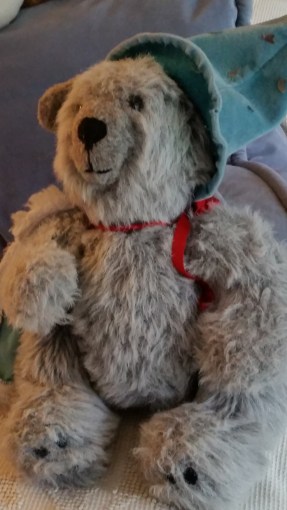
As children we are often told to be kind, to be sharing and giving, and to show our love to others by how we treat them. We are seldom told to care for or to love ourselves. I remember as a child sending for a nurse kit from Quaker Oats. It was advertised on a radio program I listened to every weekday. I liked the idea of being a nurse. It was a way to care for others, as I was told to do. After my little kit came I bandaged up my teddy bear and treated him to a hospital stay as I played nurse in my little white cap and apron.

As young people we feel invulnerable; we can go for a night without sleep and hardly notice. Unless we have allergies or some medical condition, eating whatever we like is the rule rather than the exception. We seldom need to sit and rest after exertion but can continue on as if we were made of steel. I was in my late forties when I began to realize I could no longer treat my body as if it were some kind of machine that could go on and on.

I began to notice that if I didn’t pace myself I would need to slow down or even stop in the middle of my efforts to get everything done. This bothered, even annoyed me. I didn’t like to stop. I wanted to do what I wanted to do when I wanted to do it. Then I had a real wake-up call: I got an excruciating pain in my neck and shoulder that wouldn’t go away. It took a number of chiropractic treatments and a lot of rest before I was able to move without hurting. The experience was extremely unpleasant. I finally got the message: I had been treating my body badly, and I needed to change my attitude.

First and foremost I realized I heeded to stop and rest between efforts. I also began to notice that when I ate certain foods I was uncomfortable; when I didn’t get enough sleep I was dragging. While this annoyed me, I had to admit it was important information. I realized that while it was strong and able my body needed a different kind of attention. Rather than treat it offhandedly as a machine that just needed fuel and occasional maintenance, I needed to treat it kindly, as if it were a faithful animal that was carrying me where I needed to go. I also had to accept its messages as needs and wants rather as impediments to what I wished to do when I wished to do it.

The importance of my self care grows with each passing year. Movement I used to take for granted has become an effort. There are even things I can’t easily do at all any more. But what is more important is that I remember to do what I need to do for my comfort as well as my health: Rest between efforts, meditate, take time to sit with my feet up, put in my eye drops, drink enough water, eat enough fiber, avoid what I can no longer comfortably digest. My list could go on and on, however I’ve made my point. Self care matters. More importantly, remembering to care for myself means I can continue to care for others, and that most of all is a good reason to do so.

Tasha Halpert