
Many of us inherit our tastes from our parents. I am no exception. My mother was an artist with her own gallery. There she sold her paintings and a few decorative items that included carved wooden works by my brother and his wife, that might be bought by those who came in for a look around. She primarily painted abstracts, and she enjoyed wielding her brush to music. She had a brush in her hand most of every day. She once told me she had sold paintings to people all over the world.
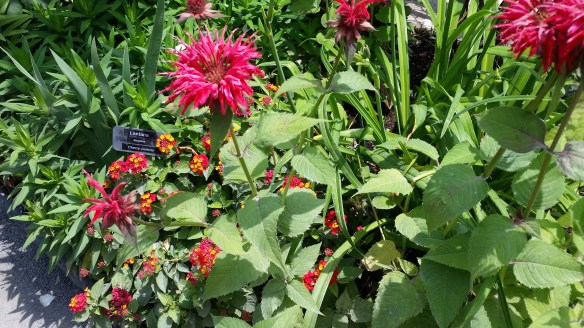
She did not normally paint in bright colors. Even her rare red and purple paintings were slightly toned down. Her subjects were simple, her canvases were uncluttered. Her personal palette was also muted. She seldom wore any colors but tan, ivory or brown. What little jewelry she wore wasn’t bold. By contrast my father liked bright, bold colors and was himself a colorful character. I inherited his tastes both in clothing and in life. I dress primarily in red, pink, and bright turquoise. I like bold earrings and bracelets. My tastes are very different from my mother’s. She preferred muted simplicity while I, like my father, like vivid complexity.
The strong colors of fall make it my favorite time of year. The beauty of fall is spread over the roads as well as the hills and meadows like a cloak of brilliant hues, and the loveliness of it resonates in my heart. All during the months of fall when I am driving, I have to keep reminding myself to keep my eyes on the road, and when I have the treat of being driven, I am ever so grateful because then I can look at the landscape without fear of landing in a ditch.
Spring is lovely too. An astute observer once wrote that the colors of spring and fall were similar, only the colors of fall were more intense while the colors of spring exhibited a pastel palette. I hadn’t considered this before, however the next spring I observed the truth of what he was saying. Still, though the spring landscape is indeed lovely, for me it does not have the poignancy of fall. Spring heralds the warmth of summer, vacations, visits with friends and relations, and playtime for many. Fall, at least in the northern hemisphere, heralds the last of the warmth. Its bright days dwindle as the hours shorten. Soon winter will be upon us, and the bleakness of that landscape.
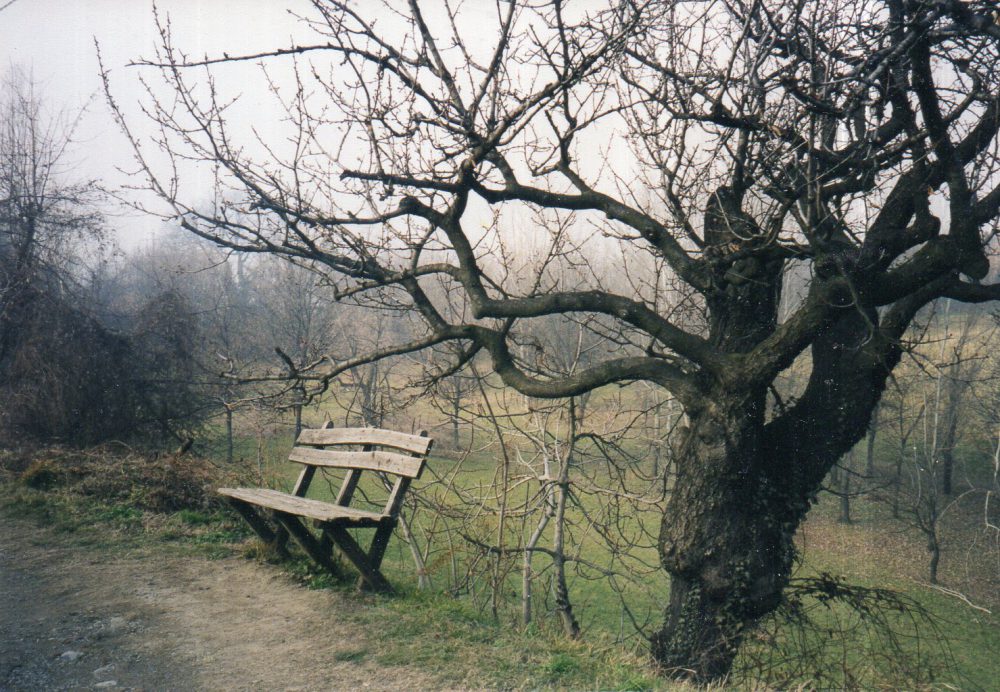
But wait, there is more. In winter, in contrast to the lush, rounded shapes of leaf burdened branches, the bare branches of the trees trace their design against the winter sky, revealing their essential shapes. Too, the dried weeds and grasses exhibit a delicacy that draws the eye, while once the flakes begin to fall their shadows decorate the snow drifts in subtle ways. Beauty does not always shout its presence, sometimes it whispers. The eye of the beholder needs to be attuned to the subtleties of beauty as well as to its obvious ones. If rather than turning my eyes inward with my thoughts I pay attention to what there is to see, I will find beauty everywhere I look regardless of the season.
 Pay a visit to the Museum of Russian Icons in Clinton MA and you will see a wonderful variety of angels as well as many saints. Ancient and modern icons from Slavic countries, collected over decades by the founder, Gordon B. Lankton, line the walls of this wondrous building. Their programs and exhibitions are special too, and their gift shop holds many interesting and often inexpensive items you will not find elsewhere. As you peruse the rooms, angels of every description, as well as saints gaze at you with farseeing eyes.
 During most of history, people ate what they had put away for the winter in their cellars and barns. In Colonial New England, unless someone had a greenhouse a midwinter salad was unheard of. In the Middle Ages in Europe and Russia, fasting during Lent was a necessity because what little food was available to most by late winter had to be hoarded and used carefully. People ate with the seasons. Forty years ago on a late spring trip to Russia with my mother I recall cabbage being served to us daily. It keeps well if properly stored.
 My parents frequently discussed decisions, disagreed often and usually did so at the tops of their voices. They were a fiery couple and yelled their feelings vociferously. We did not have any neighbors nearby and no one could hear them but me. Though there was never any physical violence between them, I do remember the day my mother hurled a plate of scrambled eggs at my father. He ducked and it sailed into the closed window behind him, breaking through it, to land and shatter on the stone terrace beneath, breaking through the wood.
 When I was small I had a small cemetery. It was beside the church I had set up in a corner formed by a chimney and the wall of a small greenhouse. My family lived in the country. We had chickens and at one time some ducks. Baby chicks died and I buried them there as well as the other assorted creatures whose deaths went unmourned except by me. My acquaintance with death came early and in a natural way. This was of help to me later.
 I disliked it intensely when as a child I was ill and had to stay home from school. It was no fun whatsoever. My mother did not believe in coddling sick people. She thought it would make them malinger. Perhaps she thought if I was bored I’d get better sooner and want to get back to school. She did not treat me with sympathy. My entertainment consisted of listening to soap operas on the radio and reading if I was allowed to. When I had the measles I spent days in a darkened room with nothing to do. It was said reading would damage my eyes
 The appointment for my hip surgery was made more than three months ago. Now its time has come. While I feel positive about the outcome of the experience, I also feel a tiny bit apprehensive. Everything I have heard about the surgery from those who have had it done has been good. I even ran into someone who had the procedure done by the same doctor I have and she said hers had gone wonderfully and she was very pleased.
 The single metal hour hand lay on the table in front of me. Stephen and I had been playing with an old clock in an effort to get it to work. However, once the hands become loosened from the mechanism that counts off the minutes, even if it still ticks, the clock is effectively broken. We took the clock apart and kept the face to use for an art project. Gazing at the pointed hour hand I wished I could think of a way to put it to use. Finally I gave it to Stephen, thinking he might be able to make use of it in a collage.
 Pujakins