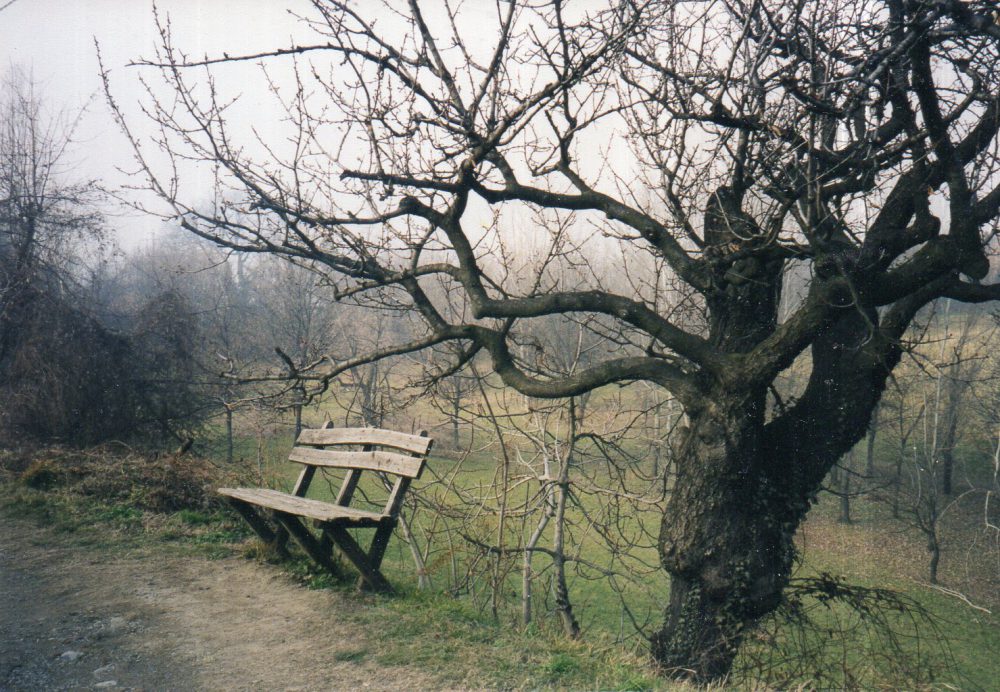
 Kittens grow up and become cats. They learn to use their claws on the furniture, and then they reach a point where if we do not pay attention, they may produce more kittens. Snow falls, gets turned by snowmen by eager, mittened fingers, and then when the sun comes out and the cold retreats, they melt. I wash the dishes, polish up the burners on the stove and sigh, remembering that there will soon be more dishes to wash and something will fall on the cooking surface and smell of burning if I don’t notice it before I begin to cook again.
It is important to me to take notice of how nice it is to have an empty sink and a clean stove. If all I do is think about doing it over again I will miss the feeling of how nice it is to have done with my small tasks. They can become routine, done without thinking, and without appreciation for the effort as well as for the result. When I take the time to notice, I feel better about myself and about my life in general.
When spring comes and the first bluebells and crocuses poke up through the thawed ground, how wonderful it is. We say, “Spring is here.” And it is. Yet spring turns to summer. Then we rejoice in the longer days and firefly strewn nights, until the hours of daylight begin to shorten again. Fall’s bounty of color comes and then goes. It is good to appreciate what we have while we have it because as a wise teacher of mine used to say, the only constant is change.
It’s easy to take for granted small blessings that pass quickly. We do it all the time without thinking. We’re actually more likely to take notice of what is wrong than what is right. I’ve read that our brains are wired that way for self-preservation. It’s important to make note of the danger lurking nearby—is that a wild beast? Or see the car coming a little too fast as we are about to cross the street. However, our built in warning system can override our joy.
Just recently the wild roses bloomed. Their sweet smell permeated the air by my back porch. I made sure to take time to enjoy their scent. Now the petals have turned brown and I have to wait until next year to enjoy them again. Still, I do have the memory, and although it does not have an actual scent, it can still bring back the pleasure of what I enjoyed when the petals were fresh.
If I am focused on regret because the roses have passed, it is more difficult for me to remember the joy they brought me. As well, I might not be able to take advantage of some new and pleasant experience that could await my notice. Small blessings do not announce their presence with a shout but rather with a whisper. The bright dandelion by the side of a building might go unseen and unappreciated if I am not aware of its gift. If I am only looking at the trash around it, I might not see it all. Small blessings bring joy.
 There is a wonderful song by the Kingston Trio from the 60’s I believe, about lemons. It contains a real truth concerning them: they must be sweetened to taste good. The chorus goes: “Lemon tree very pretty, and the lemon flower is sweet, but the fruit of the lemon is impossible to eat. Very true, and it is also true that lemons can do all sorts of things besides make good recipes..
 Of a recent Saturday, we were out and about checking the yard sales. While Stephen was perusing the items displayed there, I fell into a conversation with the person in charge. She had grown up in Grafton and spoke of how much had changed in the years she had lived here. I agreed. Although we have lived here only thirty years as of this year, we too have seen many changes. This got me to thinking about how it was then compared to how it is now.
 While at Thanksgiving we are reminded to be grateful, that is surely not the only time to do so. it is vital to remember to be thankful frequently each and every day of our lives. For some time now I have begun and ended each day with this little prayer: “Thank you for this day and for all my days.” As often as possible each and every day I remind myself to acknowledge my gratitude for any good experience and even those that might not have been so good, because of the knowledge gained.
 My mother did not have good training for the task of mothering. Her mother was the wife of a diplomat and spent her days doing what she needed to do to support my mother’s father in his position. Her children were cared for by nursemaids and tutors. I knew her briefly: a proper, formal woman who came to live briefly in the states in the late forties. I was a young teen at the time, not very interested in this elderly person. Now of course I wish I had asked her more about her life. She returned to Germany and passed on soon after. Ill prepared as she was, my mother did the best she could, and I honor her for it.
 Many years ago a wonderful little book fell into my hands. A small paperback by Claire Loewenfeld and Phillippa Back, it was called Herbs, Health and Cookery. At the time I was home caring for my five children and eager to find things to do there to make good use of my limited leisure time. Always interested in health and healing, I was fascinated to learn that the simple herbs I used to flavor my cooking could be made into teas to help in healing physical ailments. Recently I was happy to acquire a hard bound copy from the internet to replace my ancient paperback.
 On Easter after church, we usually went to dinner with my Great Aunt Alice in her big house next door to the cottage my parents rented from her. She would have a beautiful table with gleaning silver, fragile china and sparkling crystal goblets set in the large dining room she used for formal occasions. Once the soup course was done and dishes removed, people brought in to help, carried around platters of meat and dishes of vegetables. These would be followed by dessert and finally, finger bowls with a sprig of green lemon verbena floating in them. The silver candy dishes with chocolates I eagerly eyed all through the meal were finally passed around.
 Though I’ve never had it or made it myself, I remember Goldenrod Eggs–a dish made with hard boiled eggs that my mother served at luncheon parties. The eggs were carefully hard cooked—never boiled as this turns the yolks green. The whites were chopped up and stirred into a white cream sauce. This was spread over toast with the crusts cut off and made into triangles. The yolks were then pressed through a sieve and sprinkled over the top of the creamed whites.
 Pujakins